Low Humidity on Ponytail Palm: Causes, Checks & Fixes
Quick answer
Low humidity on Ponytail Palm usually shows as brown crispy leaf tips and increased spider mite risk in winter. First step: trim damaged tips, keep the plant away from heating vents, and water correctly - this desert native tolerates dry air better than most houseplants.
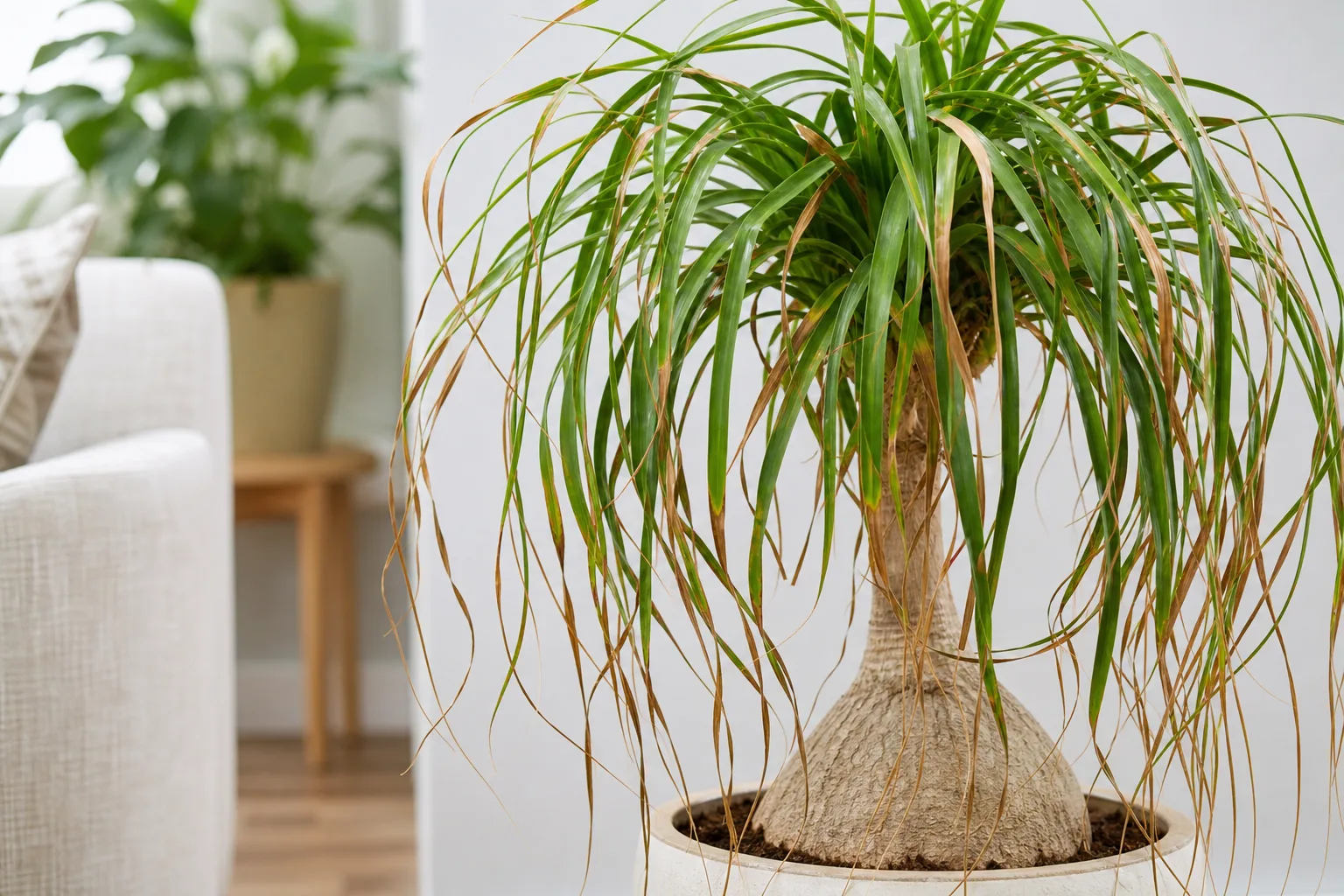
Low Humidity on Ponytail Palm: Causes, Checks & Fixes
This guide covers low humidity on Ponytail Palm. See also the general Low Humidity guide, watering, and light pages for this plant.
Low Humidity on Ponytail Palm: Causes, Checks & Fixes
Quick answer
Ponytail Palm (Beaucarnea recurvata) is a semi-desert native that prefers low humidity - not the tropical moisture levels calatheas need. Searchers who land here expecting “raise humidity” advice should do the opposite: skip the humidifier and fix vent-adjacent dry air instead.
NYBG notes that dry strap tips are less likely from low humidity than from irregular watering, low light, heat or AC vent placement, fertilizer salts, or high-mineral tap water. On Beaucarnea, rank likely winter drivers as vent microclimate and spider mites first, then underwatering, then mineral buildup, with ambient low RH alone a weaker co-factor.
First step: move the pot at least one metre away from the nearest heating register or fireplace draft. Trim existing brown tips with clean scissors, then confirm the caudex is firm and pot weight is normal before changing watering. If tips brown on wet soil or newest growth after tap watering, see brown tips for salt and watering overlap.
What winter dry air stress looks like on Ponytail Palm
Winter dry-air damage on Beaucarnea is localized and environmental - not disease or caudex rot.
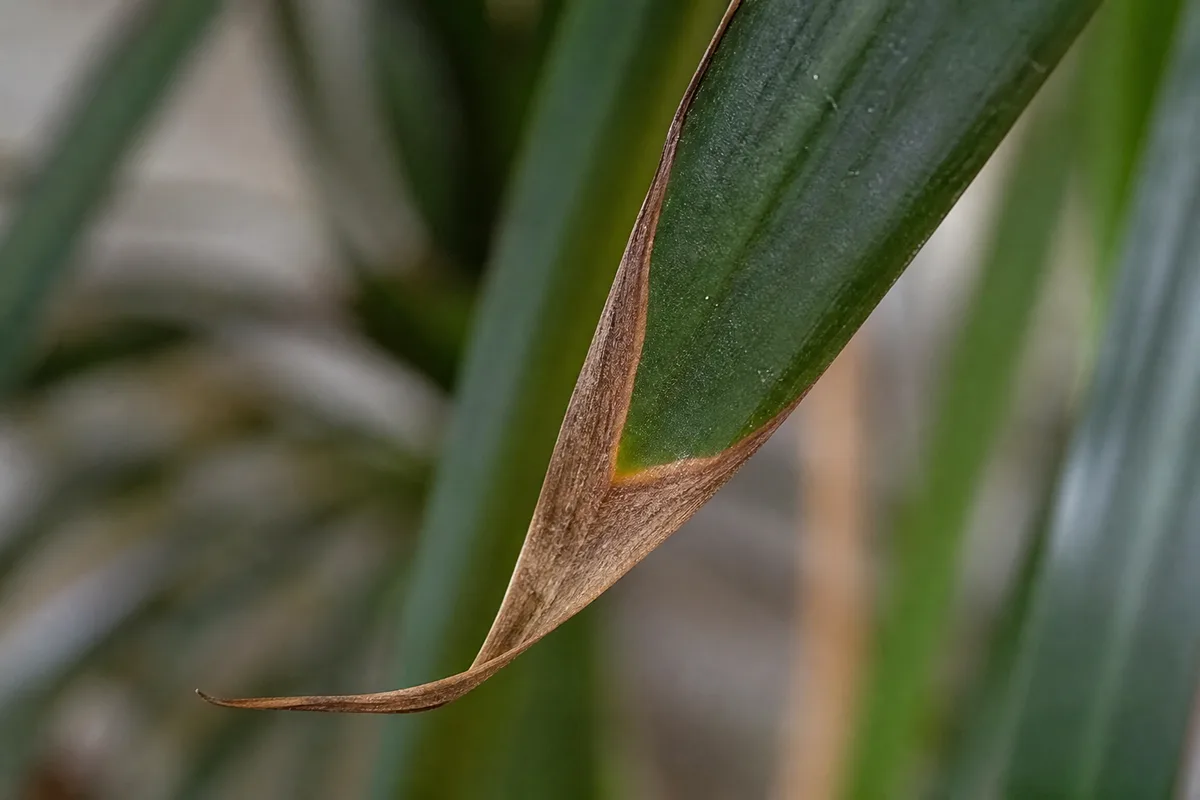
Low Humidity symptoms on Ponytail Palm - compare with healthy tissue on the same plant.
Typical vent-stress patterns:
- Brown crispy tips on strap leaves closest to floor registers, radiators, or fireplaces
- Normal pot weight and firm caudex while only outer or downwind leaves show damage
- Symptoms worsening after heat kicks on, even when the rest of the room feels comfortable
- Fine stippling or dusty leaf surfaces on the same side as a heat source - early spider mite pressure in hot dry air
What distinguishes Ponytail from tropical humidity problems:
Long strap-like leaves lose moisture fastest at the terminal points where vascular supply tapers. A fern in the same room may crisp everywhere while Beaucarnea shows tip burn only on leaves in the vent path - because the caudex still holds water reserves.
What it is usually not:
- Light, dusty pot with wrinkled caudex - underwatering, not humidity alone
- Even brown bands on newest tips after tap water - mineral or fluoride burn; see brown tips
- Webbed stippling across many leaves - spider mites; treat pests, not humidity
- Soft caudex on wet soil - overwatering or rot; humidifying makes this worse
Why Ponytail Palm is different from tropical humidity problems
Semi-desert origin and low-humidity preference
Beaucarnea recurvata evolved in semi-desert areas of southeastern Mexico with seasonally dry winters. The swollen caudex stores water for drought. NYBG states plainly: no need to mist - your plant prefers low humidity. Running a humidifier for Ponytail Palm is unnecessary and can encourage crown moisture problems on a plant adapted to arid conditions.
Strap-leaf tips and vent microclimates
Room-centre humidity can read 40% while the microclimate within 30 cm of a floor register drops below 25%. That gap explains a common winter desk-plant pattern: living room hygrometer looks fine, but strap tips on the side facing the vent crisp within weeks.
Example: a winter windowsill plant 15 cm from a floor register showed a hygrometer reading of 24% at crown height while the room centre held 42%. The caudex was firm, pot weight normal. After moving one metre from the register and trimming damaged tips - without a humidifier - clean new strap tips appeared in six weeks.
Spider mites in hot dry indoor air
Houseplant Beaucarnea is susceptible to spider mites. Forced-air heating lowers humidity and favours mite outbreaks on dust-collecting strap leaves. Mite damage can mimic tip burn with stippling before webbing appears - inspect before assuming humidity is the only variable.
When tip burn is not humidity
NYBG ranks dry leaf tips on ponytail palm as more often caused by:
- Irregular watering (too much, too little, or inconsistent)
- Light levels too low
- Placement too near heat or air-conditioning vents
- Fertilizer salt buildup
- High-mineral tap water
Low ambient humidity is less likely to be the primary driver than those factors. This page covers the vent-adjacent dry-air and mite workflow; the brown tips guide is the multi-cause hub for watering, minerals, and normal leaf aging.
How to confirm the cause
Work through this checklist before changing multiple variables:
- Vent and draft distance - Measure from the pot to the nearest floor register, radiator, fireplace, or frequently opened exterior door. Less than one metre with tip burn on the downwind side strongly implicates vent microclimate.
- Hygrometer at crown height - Place a meter within 30 cm of the strap-leaf crown, not on the opposite wall. Below 30% beside a heat source with firm caudex supports dry-air stress; above 45% at the pot with ongoing tip burn points to watering, minerals, or light instead.
- Pot weight and soil dryness - Lift the pot. A light, dusty container means stack underwatering with any dry-air stress. Heavy wet soil with browning means stop - see brown tips and watering.
- White soil crust - Mineral or salt buildup on the pot rim or soil surface suggests tap-water burn, not humidity deficiency.
- Mite stippling - Check strap leaf undersides and leaf axils for fine dots or webbing. Clean dry margins without stippling keep focus on placement; stippling means open the spider mites workflow.
- Caudex firmness - Firm caudex on a normal dry-down schedule supports environmental tip burn. Soft or mushy base on wet mix is rot - not a humidity fix.
- Seasonal timing - Did crisping start or worsen when heating began? Vent-stress damage tracks HVAC cycles rather than appearing randomly in humid summer months.
If the plant sits near a vent, the caudex is firm, and mites are absent, you likely have your answer without Ponytail Palm repotting guide or humidifying.
First fix for Ponytail Palm
Move the pot away from direct heat airflow - at least one metre from floor registers, radiators, and fireplace drafts.
This single placement change stops the microclimate that crisps strap tips faster than ambient room humidity affects the whole plant. After relocation:
- Trim brown tips with clean scissors following the leaf curve - brown areas may be snipped off per Missouri Botanical Garden guidance
- Wipe dust from strap leaves with a damp cloth to reduce spider mite habitat
- Hold watering steady on the full dry-down rhythm from the watering guide - do not overwater to compensate for dry tips
Do not buy a humidifier, mist the crown, or repot on day one. Fix placement first; reassess in two weeks based on new crown growth.
Step-by-step recovery
After relocating away from heat paths, work through secondary steps based on what your checklist revealed:
- Stabilize placement - Keep bright, sunny, warm, dry conditions near a window per Missouri Botanical Garden culture notes, but off vent paths. See the light guide for window orientation.
- Correct underwatering if present - If the pot was light, one deep soak until water runs from drain holes, then resume dry-down. Drought stacked on vent stress browns tips faster.
- Address mites if stippling appears - Isolate and wipe leaves; follow the full spider mites protocol if webbing spreads. Contact your local extension office for IPM guidance if infestation persists after relocation and wiping.
- Switch water if minerals suspected - White crust or even tip bands on newest leaves after tap watering warrants filtered or rainwater - details in brown tips.
- Hold fertilizer - Skip feeding until new strap leaves emerge clean for two weeks. Salts on stressed tissue worsen tip necrosis.
- Monitor new growth - Judge success by the next crown leaves, not old damaged tips re-greening.
Recovery timeline
Environmental vent stress on Beaucarnea resolves slowly - this is a slow-growing caudiciform.
- Week 1–2: No spread to newly opening leaves once heat paths are removed; existing brown tips stay brown.
- Week 3–4: The next strap leaf from the crown should show cleaner margins if vent stress was the main trigger.
- Week 4–8: Documented cases show clean new strap tips within six weeks after register relocation without humidifier use, on firm caudex with normal watering.
- If mites were present: Allow an additional two to four weeks after treatment before judging new growth.
Old tip tissue never re-greens. Recovery means new strap leaves with clean edges from the caudex crown. Wisconsin Extension notes brown tips are common on houseplant specimens and often reflect environmental stress - trimming improves appearance while underlying care stabilizes.
Lookalike symptoms
| Sign | Pot weight | Caudex | Leaf pattern | Likely cause |
|---|---|---|---|---|
| Crispy tips near vent | Normal | Firm | Downwind leaves only | Vent microclimate / dry air |
| Crispy tips throughout | Light, dry | Firm, maybe wrinkled | Many straps | Underwatering |
| Even tip bands on new growth | Normal | Firm | Newest leaves | Tap-water minerals - brown tips |
| Fine stippling + webbing | Normal | Firm | Scattered straps | Spider mites |
| Tip brown on wet soil | Heavy | Firm or soft | Lower/new leaves | Salts or overwatering |
| One bottom leaf only | Normal | Firm | Oldest strap | Normal aging - brown tips |
What not to do
- Do not run a humidifier for Ponytail Palm - NYBG confirms this species prefers low humidity; tropical humidity levels are unnecessary and can encourage crown moisture issues.
- Do not overwater to combat dry tips - The caudex rots on wet soil faster than tip burn harms the plant. Wet soil with browning tips means watering or salts, not humidity.
- Do not heavy-mist the crown or leaf bases - Water settling on the caudex invites fungal and bacterial rot on a plant NYBG warns to keep dry at the stem base.
- Do not trim entire strap leaves unless fully dead - partial green tissue still photosynthesizes on slow-growing specimens.
- Do not fertilize a stressed plant before placement and watering stabilize.
How to prevent winter dry-air damage
Keep the pot at least one metre from heat registers and away from fireplace drafts. Wipe strap leaves clean a few times per year - dust reduces photosynthesis and harbours mites in dry heated air.
Follow the watering guide dry-down rhythm rather than calendar schedules. Grouping with other plants offers minor microclimate buffering without changing Beaucarnea’s drought-adapted water needs.
Inspect for spider mites monthly through heating season. Accept that brown tips are common indoors - the goal is preventing spread to new crown growth, not eliminating every environmental blemish on a desert native.
Ponytail Palm is non-toxic to cats and dogs per the ASPCA, so tip trimming and relocation are safe around pets - keep sharp leaf edges away from curious mouths.
Practical checks
Urgency check
Low for tip burn alone on a firm caudex. Moderate if spider mite stippling spreads after relocation and wiping. High if the caudex softens on wet soil - switch to overwatering or rot diagnosis immediately.
Best inspection order
Heat vent distance → hygrometer at crown height → pot weight → soil crust → mite stippling → caudex firmness.
Ponytail Palm care cross-check
Bright sun, gritty mix, infrequent deep watering, small pot with drainage. Full species context in the Ponytail Palm overview.
Related Ponytail Palm problems
- Brown tips - multi-cause hub for watering, minerals, aging, and humidity overlap
- Spider mites - winter dry-air pest outbreaks on strap leaves
- Underwatering - light pot and wrinkled caudex stacked with vent stress
- Watering - dry-down rhythm that prevents both rot and drought tip burn
- Light - bright exposure without scorch when relocating off vents
When to use this page vs other Ponytail Palm guides
- Ponytail Palm watering guide - Use for routine moisture checks before assuming low humidity is the main issue.
- Ponytail Palm problems hub - Browse all 5 common issues on this species.
- Brown Tips on Ponytail Palm - Different entry point when symptoms overlap with low humidity.