Brown Tips on Portulaca: Causes, Checks & Fixes
Quick answer
Brown tips on Portulaca are usually drought in a bone-dry hanging basket during a heat wave or salt buildup in containers-not low humidity. First step: Probe soil at 2–3 cm depth and check for white salt crust before you water or flush.
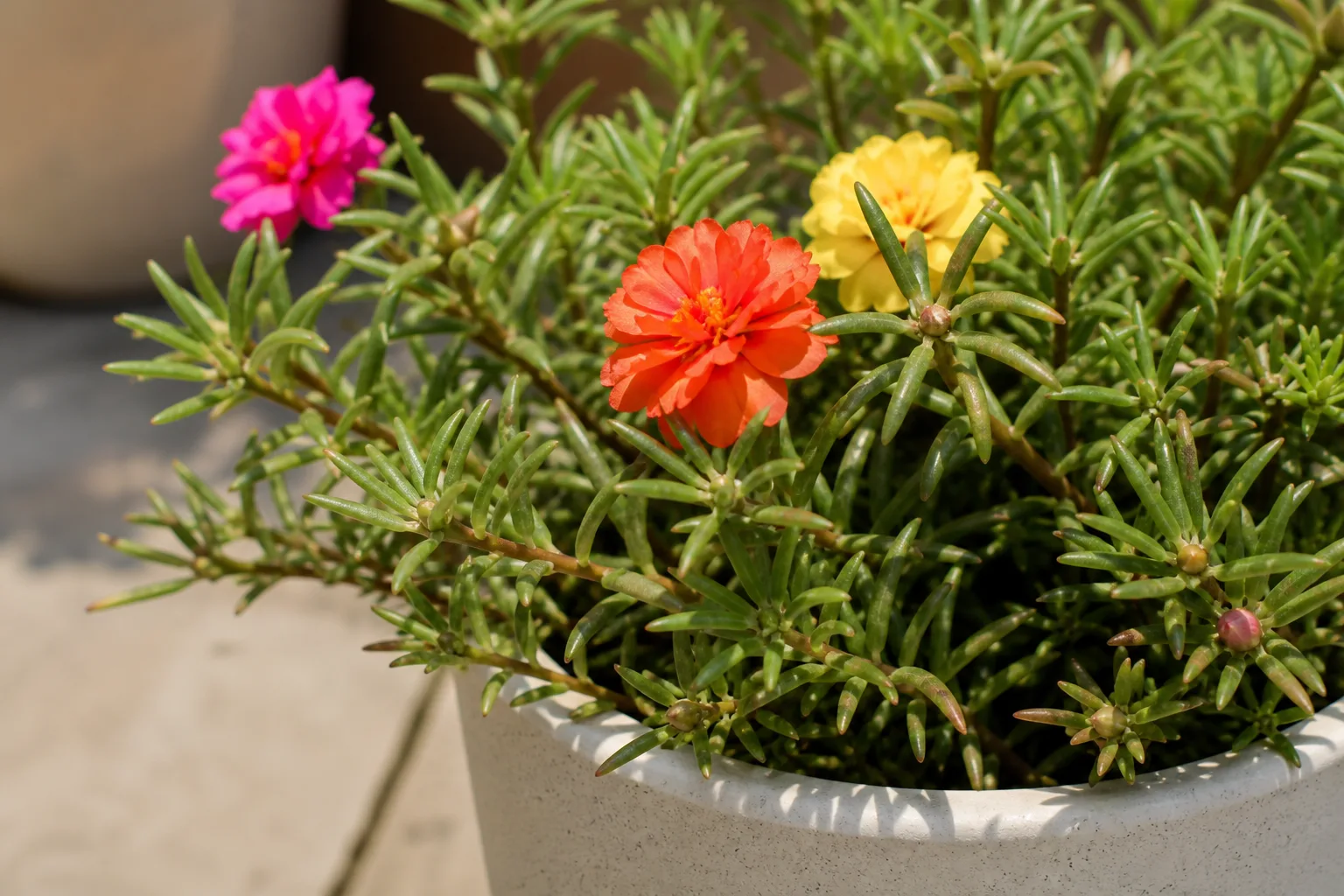
Brown Tips on Portulaca: Causes, Checks & Fixes
This guide covers brown tips on Portulaca. See also the general Brown Tips guide, watering, and light pages for this plant.
Brown Tips on Portulaca: Causes, Checks & Fixes
Quick answer
Picture a Moss Rose (Portulaca grandiflora) in a shallow hanging basket on a south-facing terrace during a pre-monsoon heat wave: outer trailers crisp at the tips by afternoon while the crown still feels firm. That pattern is classic drought in a small pot-not low humidity. Moss Rose is built for dry air and heat; crispy tips in full sun usually mean the pot went bone-dry or fertilizer salts built up, not that you need a humidifier.
First step: probe soil at 2–3 cm depth and lift the pot. Dry, lightweight mix with firm stems → drought or salt stress. Wet mix with soft stems at the base → root rot-not this page’s tip-burn triage. White crust on the inner rim after recent feeding → open the fertilizer burn guide for flush detail.
Scope of this page: Tip and margin browning on otherwise firm Moss Rose. If whole leaves turn brown or soft-not just dry tips-start at brown leaves on Portulaca. If someone blames dry air, read low humidity on Portulaca first-humidity is rarely the culprit here.
Portulaca is drought tolerant with shallow succulent roots, but small pots in scorching sun can still dry faster than stems can supply outer trailers. Brown tips are cosmetic unless paired with stem rot on wet soil.
What brown tips look like on Portulaca
On Moss Rose, tip burn shows as tan to dark brown dry tissue at needle-leaf tips or margins-not mushy, water-soaked patches. Texture is crispy when you pinch lightly; rot tissue feels soft.
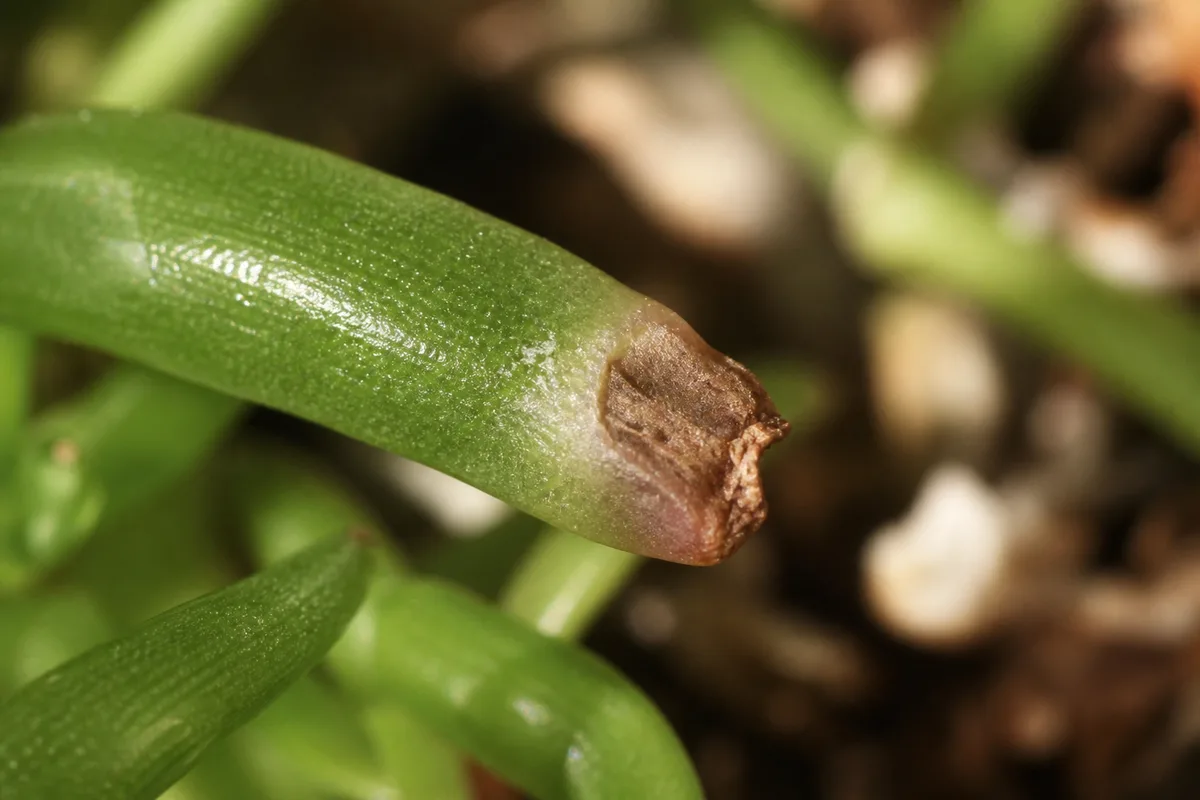
Brown Tips symptoms on Portulaca - compare with healthy tissue on the same plant.
Drought pattern: Outer trailing shoots brown first in hanging baskets; crown stems stay firm; pot feels very light; soil is dry at finger-test depth from the portulaca watering guide.
Salt burn pattern: Browning appears on many leaves at once, often within days of feeding; white or brownish crust may ring the pot rim or soil surface; soil can feel moist while tips look drought-scorched because damaged roots cannot take up water even when mix feels wet.
Sun scorch pattern: Bronze or brown on sun-facing leaf faces after moving from deep shade to blazing terrace-whole exposed surfaces, not just margins after a feed event.
Rot lookalike: Tips may brown, but the stem base turns soft and yellow on wet mix-escalate to root rot, not tip-burn fixes.
| Symptom pattern | Soil / pot | Stems | Likely cause |
|---|---|---|---|
| Dry crispy tips on outer trailers | Bone-dry, light pot | Firm crown | Drought |
| Even tip browning after feeding | Moist possible; salt crust | Firm | Salt burn → fertilizer burn |
| Bronze on sun-facing leaves after move | Variable | Firm | Sun scorch |
| Tips + soft base on wet soil | Wet, heavy | Soft at soil line | Rot → root rot |
| Fine stippling + webbing in dust | Dry | Firm | Spider mites → spider mites |
Why Portulaca gets brown tips (not low humidity)
Houseplant articles often blame brown tips on dry air. Moss Rose is a hot, dry weather annual with succulent tissue-it does not need misting. Real causes on this plant:
Extreme drought in heat and shallow pots
Proven Winners notes portulaca is shallow rooted. A 20–25 cm plastic hanging basket in full sun can bake bone-dry in two to three days during a heat wave while ground plantings stay workable longer. Trailing shoots beyond the rim transpire fastest-outer tips desiccate before the crown. Moss Rose survives brief dryness, but repeated bone-dry cycles brown tips permanently.
Salt and fertilizer buildup
Container Moss Rose in lean mix still receives weekly feeds from well-meaning growers. Salts accumulate in leaf tissues, causing dieback of leaf tips and margins when fertilizer stacks in small pots without periodic leaching. Terrace evaporation leaves white crust on rims-tip burn follows even when you think you watered enough.
Sudden sun scorch after shade
Portulaca needs six or more hours of direct sunlight. Moving a shade-grown basket to blazing afternoon sun without acclimation can crisp exposed tissue in days. This is environmental burn, not disease-and distinct from salt margins that follow feeding.
Root rot lookalike
Overwatering collapses shallow roots; lower leaves and tips may brown while stems soften at the base on wet mix. Confirm moisture before treating crispy tips as drought-see overwatering when soil stays damp.
How to confirm the cause
Work through these six checks in order. Skipping to misting or feeding stacks fixes Moss Rose cannot tolerate.
- Pot weight - Lift the container. Very light supports drought; unexpectedly heavy after days without watering suggests wet lower soil (rot path, not drought rescue).
- Soil dryness at depth - Push a finger or dry skewer 2–3 cm deep per the watering guide. Dry confirms drought possible; cool cling means wait before watering.
- Last fertilizer date - Brown tips within 7–10 days of liquid feed or slow-release at full strength strongly suggests salt burn-see fertilizer burn.
- Salt crust inspection - White or brownish deposits on soil surface or inner pot rim support excess fertilizer; absent crust does not rule out recent liquid overfeed.
- Stem firmness at the crown - Firm reddish stems with only tip browning fit drought or salt; mushy base on wet soil is rot until proven otherwise.
- Sun and move history - Recent relocation from shade to full terrace sun without gradual exposure supports scorch; stippling with fine webbing in hot dust points to spider mites.
Confirmed tip burn = dry crispy tips on firm stems with drought, salt, or scorch pattern above-not soft crown tissue on soggy mix.
The first fix to try
Pick one primary action based on what you confirmed. Stacking flush + feed + repot on day one stresses shallow roots.
If soil is bone-dry and stems are firm (drought)
Water deeply once until excess drains-about one-quarter to one-third of pot volume for a typical 20–25 cm basket. Empty saucers and bracket cups immediately. Resume the dry-down rhythm; do not switch to daily sprinkles. If mix repels water, bottom-water 30–60 minutes per the underwatering guide.
If salt crust or recent overfeed (salt burn)
Stop all fertilizer immediately. Flush with plain room-temperature water-see step-by-step below. Hold feed four to six weeks. Full salt-burn depth lives on fertilizer burn on Portulaca.
If scorch after shade move (sun burn)
Keep the plant in eventual full sun but provide afternoon shade or sheer protection for 5–7 days while tissue hardens. Do not return to deep shade-that invites rot and poor flowering.
If soft stems on wet soil (rot)
Stop watering. Do not flush a waterlogged pot-that compounds rot. Open root rot rescue instead of tip-burn fixes.
Step-by-step salt flush for Moss Rose containers
Use this when salt crust or post-feed tip browning is confirmed and stems remain firm:
- Stop fertilizer, foliar sprays, and compost tea entirely.
- Place the pot where drainage can run freely-not in a closed cachepot.
- Pour plain water slowly until it runs from drainage holes. For a typical 20–25 cm basket, use roughly 2–4 liters per pass-enough to saturate shallow roots without leaving the pot sitting in runoff.
- Wait 10–15 minutes, then repeat two more times. This leaches soluble salts from the soil in containers.
- Empty saucers and bracket cups after each pass so leached salts are not reabsorbed.
- Resume dry-down watering only when soil is completely dry at depth-often every 4–5 days in peak summer sun, but your pot sets the interval.
Do not flush if soil is already wet and stems are soft-that is a rot scenario, not salt recovery. Do not feed during flush recovery; stressed Moss Rose in poor to average soil does not need push fertilizer.
Recovery vignette (terrace grower log): A 22 cm plastic hanging basket of double-flowered Moss Rose on a Pune rail showed outer tip crisping after three weeks of daily 38°C+ heat and no watering. Pot weight was very light; soil dry at 3 cm; crown firm. One deep soak (~1.5 L until drainage), saucer emptied, full sun retained. Trailers firmed within 4 hours; new clean tips visible on inner shoots by day 10. Old brown margins remained-expected.
Recovery timeline
Mild drought tip burn: new clean tips often appear within one to two weeks after one proper soak and resumed dry-down.
Salt burn after flush: wilting on moist soil may ease within one to two weeks; moderate cases need three to four weeks before reliable daily flowering returns.
Sun scorch: damaged leaf faces stay bronze; new growth under acclimated sun should emerge without crisp margins within two weeks.
What does not recover: necrotic brown tip tissue never re-greens. Trim fully dead tips only after new growth looks stable. Wear gloves when cutting-Portulaca is toxic to pets.
Worsening signs: browning climbs from wet soil with soft stems, no new clean tips after flush, or repeated tip burn every heat wave in the same undersized pot-consider repotting into fresh gritty mix or replacing with seedlings.
Lookalike symptoms
Whole brown leaves on wet soil with soft bases are rot or overwatering-not isolated dry tips. Use brown leaves.
Humidity blame in dry terrace weather usually masks drought or salts. Moss Rose thrives in dry air-see low humidity before buying a humidifier.
Fertilizer burn overlaps heavily with salt tip browning. When white crust and feed timing match, the fertilizer burn page has deeper flush and feeding-prevention detail.
Spider mites in hot dusty conditions cause stippling and fine webbing-not always isolated tip crispness. Confirm with a white paper tap test before treating.
Normal aging may tan a few old lower tips on long trailers without threatening the plant-firm stems and stable new growth mean low priority.
Brown tips vs. fertilizer burn vs. low humidity on Portulaca
| Your question | Use this page | Use sibling page |
|---|---|---|
| Dry crispy tips in heat, light pot, no recent feed | Brown tips (here) | - |
| Tips browned within a week of feeding, salt crust | Start here, then | Fertilizer burn |
| Someone says “raise humidity” on a dry balcony | Start here, then | Low humidity |
| Whole leaves brown/soft on wet soil | - | Brown leaves |
| Outer wilt on bone-dry soil, not just tips | - | Underwatering |
Mistakes to avoid
Do not mist for humidity-Moss Rose does not need it and wet foliage plus damp soil invites rot. Do not feed heavily to “green up” burned tips-that concentrates salts on damaged roots. Do not confuse crispy dry tips with overwatering rot when stems are soft and soil is wet. Do not flush a waterlogged pot. Do not prune every brown tip on day one-partially green succulent leaves still photosynthesize until new growth stabilizes.
How to prevent brown tips on Portulaca
Monitor small pots daily during hot, dry weather using finger depth and pot weight from the portulaca watering guide. Feed lightly at planting only; Moss Rose thrives in lean, fast-draining mix. Flush containers every few months in hot terrace setups where evaporation concentrates salts.
During monsoon cool weeks on Indian balconies, evaporation slows-pots that needed water every four days in May may stretch to ten days or longer. Pull back rather than copying peak-summer frequency; constant dampness in overcast weeks browns crowns through rot, not through humidity deficiency.
Keep plants in full sun with gradual acclimation when moving from shade. Accept that tip burn on outer trailers is a common early warning in shallow baskets-fix rhythm before tips spread inward.
When to worry
Low urgency for cosmetic tip burn on firm stems. Escalate if browning spreads with stem softness on wet soil, if new tips brown within 48 hours of feeding despite flush, or if stippling and webbing confirm mites. Chronic tip burn every heat wave in the same small pot suggests undersized container or chronic under-watering-review portulaca overview container guidance.
Portulaca care cross-check
- Watering rhythm: Portulaca watering guide - dry-down authority for terrace containers
- Salt-heavy cases: Fertilizer burn
- Humidity confusion: Low humidity
- Whole-leaf browning: Brown leaves
- Wet-soil collapse: Root rot
- Drought rescue detail: Underwatering
- Hub entry: Portulaca overview
Trailing Moss Rose in hanging baskets dries fastest at the outer tips-water when fully dry at depth, not on a calendar.
Related Portulaca guides
For baseline care that prevents tip burn, start with the portulaca overview and watering guide. When symptoms overlap salt damage, humidity myths, or whole-leaf decline, use the sibling links in the comparison table above rather than repeating fixes from this page.
Related tool
Use the Plant Problem Diagnosis Tool to narrow causes for brown tips on this plant before changing multiple variables at once.