Heat Stress on Prayer Plant: Causes, Checks & Fixes
Quick answer
Heat stress is plausible when a Prayer Plant develops persistent daytime curl, limp foliage, or new crispy margins after exposure to a hot window, direct sun, or a warm air vent. Move it to steady bright indirect light, then check soil before watering: a dry mix needs a thorough drink, but a moist mix does not.
Heat Stress on Prayer Plant: Causes, Checks & Fixes
This guide covers heat stress on Prayer Plant. See also the general Heat Stress guide, watering, and light pages for this plant.
Heat Stress on Prayer Plant: Causes, Checks & Fixes
Quick answer
Heat stress is plausible when a Prayer Plant (Maranta leuconeura) starts curling, drooping, or developing new crispy margins after a hot spell or a change in where it sits. Common indoor triggers include direct sun through glass, a pot warmed on a sill, or hot air blowing from a vent. Heat is often only part of the problem: bright sun, dry air, and a root ball that dries quickly can compound it. Oregon State Extension notes that heat stress in plants is worsened by drought, wind, and intense sun; the Prayer Plant itself is sensitive to direct sunlight and low humidity. (Oregon State Extension describes these compounding stresses; NC State lists Prayer Plant sensitivities.)
First move: shift the pot out of direct sun and away from hot or drying airflow into a stable bright-indirect-light spot. Then check the mix before watering. If it is dry, water it thoroughly and let the excess drain; if it is already moist, more water can make root stress worse. A wilted leaf is not proof that the pot needs a drink.
How heat stress shows up on Prayer Plant
Look for a pattern and a recent exposure, not one symptom in isolation. A Prayer Plant exposed to too much heat or sun may show:
- leaves that stay cupped, rolled, or limp through the daytime rather than opening after the room cools;
- dry, brittle brown margins or tips, especially after the pot has been in a hot window or next to forced air;
- pale, tan, or scorched patches on the side facing the glass, where direct sun and heat overlap;
- faster-than-usual drying of the pot, followed by drooping or leaf-edge crisping; or
- a cluster of new symptoms after a heat wave, relocation, a heater turning on, or a change in window exposure.
This combination supports a heat-related problem, but it does not prove one. Brown margins can also follow low humidity, irregular watering, soluble fertilizer salts, or water-quality issues, and UC IPM lists several of these alongside sun or heat through a window. (UC IPM’s houseplant guide lists these lookalikes.) On Prayer Plant, direct sun is a particularly useful clue because NC State describes the species as intolerant of it; the Royal Horticultural Society recommends filtered or indirect light. (NC State on direct-sun injury; RHS cultivation guidance.)
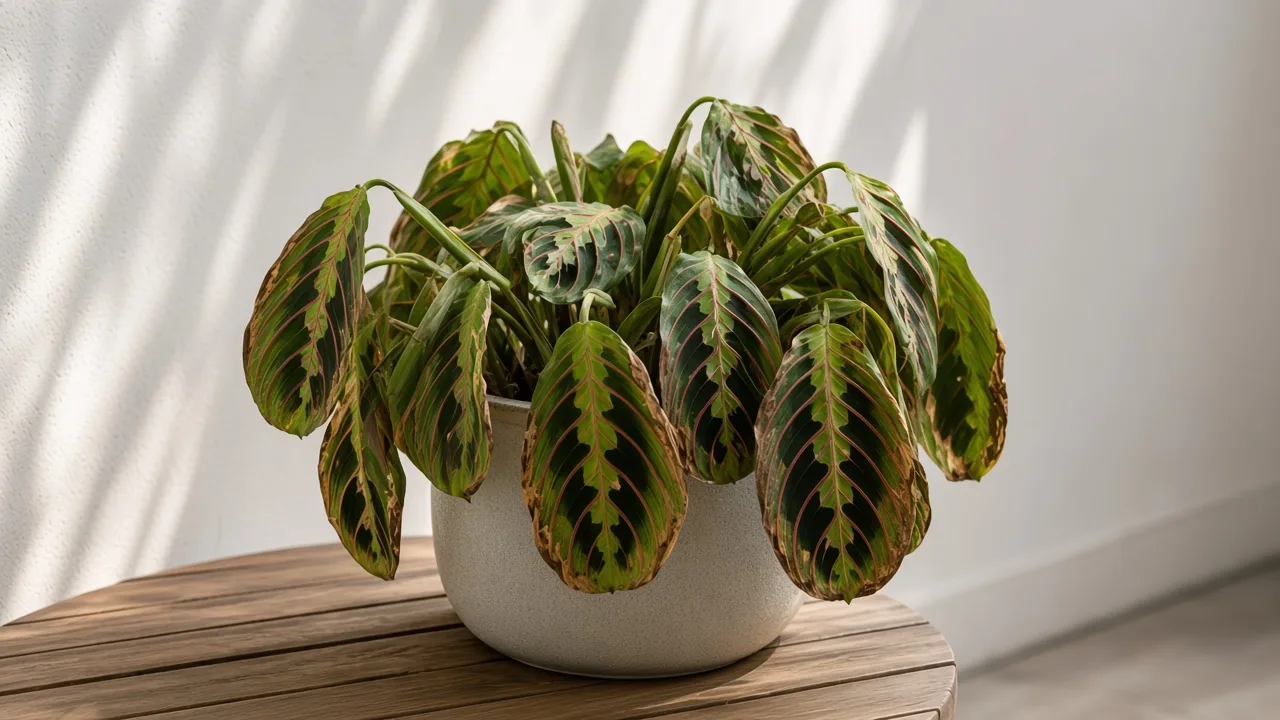
The photographs on this page show examples of symptoms, not a diagnostic test. The hero image shows a Prayer Plant with broadly drooping, cupped foliage and brown margins beside a bright window. The macro image shows one leaf with a dry, brown edge against the plant’s patterned green blade. That damage can fit heat or sun exposure, but it can also occur when dry air or root-zone water stress is involved.
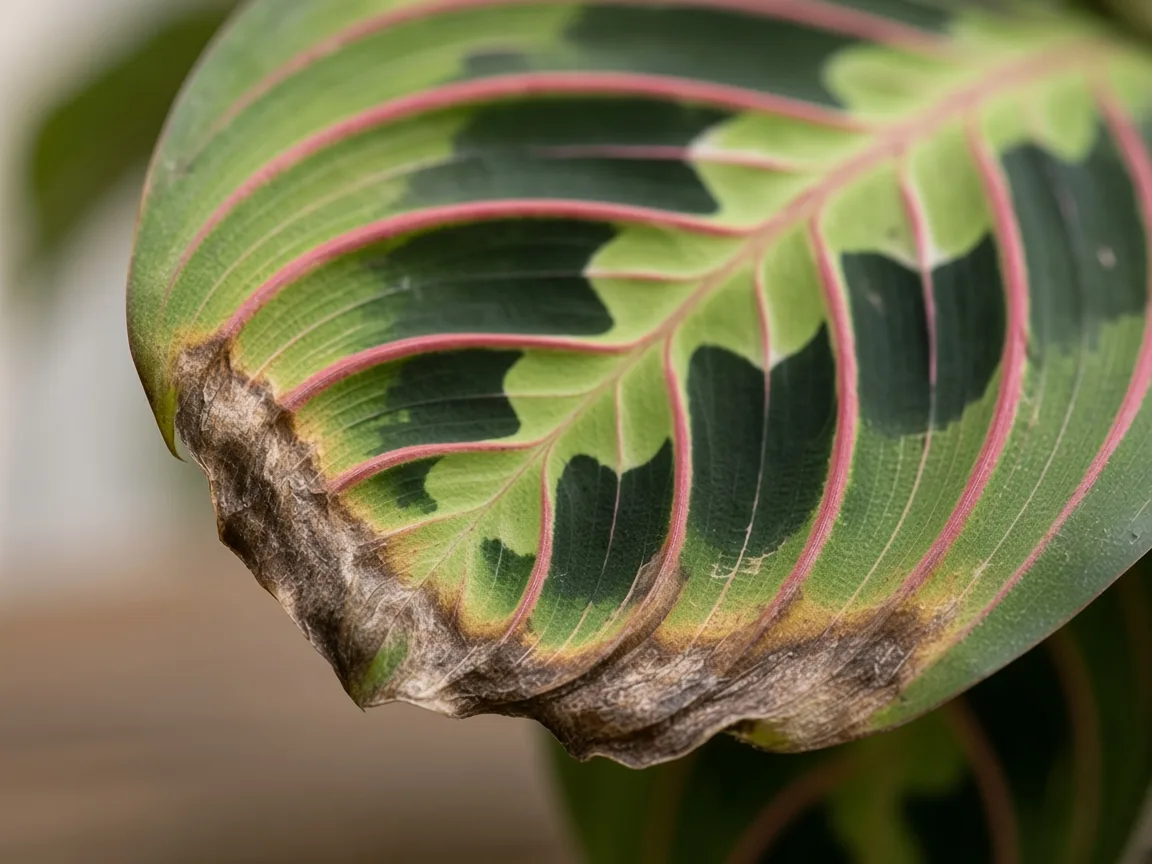
The macro image shows crispy brown tissue along one leaf margin; compare the distribution of damage across the whole plant before deciding what caused it.
Confirm the cause before changing care
1. Reconstruct the exposure
Think back over the days before symptoms appeared. Did the plant move closer to a south- or west-facing window? Did a heat wave arrive, a heater turn on, or a vent begin blowing toward the leaves? Does the pot sit on a hot sill or in sun that shifts across the room in the afternoon? University of Missouri Extension warns that hot air from a register or radiator can brown houseplant leaf edges and sometimes cause leaves to drop. A normal room thermostat may miss the warmer air or surface beside the plant, so compare conditions at leaf height during the hottest part of the day. (Missouri Extension on hot airflow around houseplants.)
2. Separate hot-window scorch from dry-air edges
Damage concentrated on the window-facing side, especially pale or tan patches after direct sun, points toward light and radiant heat. More even crispy tips and margins across the plant can instead reflect low humidity, missed watering, or salts. These causes can overlap: Prayer Plant prefers high humidity and bright, indirect light, and high fluoride or excess fertilizer can also burn its leaves. (NC State’s Prayer Plant profile; Iowa State on brown edges and multiple causes.) A hygrometer placed beside the foliage can show whether the air is unusually dry; a single crispy leaf cannot.
3. Check the root ball, not just the leaves
Feel the soil a little below the surface and lift the pot to judge whether it is light or still heavy. Prayer Plant prefers evenly moist soil during active growth, but not standing water; Illinois Extension cautions that water should not remain around its crown because stems can rot. (Illinois Extension’s Prayer Plant care notes.)
- Dry mix and a light pot: heat may have increased water loss, or the plant may simply have missed a watering. Water slowly until excess comes from the drainage holes, then empty the saucer.
- Moist mix and a heavy pot: do not add more water just because the leaves droop. Root damage from persistently wet mix can prevent the plant from supplying leaves with water; the symptoms may resemble drought. Virginia Cooperative Extension describes this distinction for container plants. (Virginia Cooperative Extension on water-stress diagnosis.)
- Wet soil plus soft stems, sour odor, or yellowing: investigate root or crown trouble and use the Prayer Plant overwatering guide or root rot guide, rather than repeatedly watering a wilted plant.
4. Rule out normal leaf movement and pests
Prayer Plant leaves naturally lift and fold when it gets dark, then open as light returns; that daily movement is not itself heat damage. (RHS describes the plant’s nighttime folding.) If leaves remain curled during the day but the room is not hot, compare the curling leaves guide and low-humidity guide. Inspect undersides for fine stippling, webbing, or insects; those signs point toward a pest rather than heat alone. See spider mites on Prayer Plant.
A safe first response
- Remove the immediate heat load. Move the pot out of direct sun, away from hot glass, and out of the path of a heater, radiator, or vent. Choose bright indirect light rather than a dark cupboard. If it has been in strong sun, avoid putting it straight into a completely dark corner; filtered light reduces exposure while preserving a usable growing location. Oregon State Extension recommends moving containers into shade during heat stress, while warning that prolonged heavy shade can make plants stretch. (Oregon State Extension’s heat-wave guidance.)
- Water only if the mix is dry. Use room-temperature water and wet the root ball evenly, allowing free drainage. Do not leave the pot standing in water. If the center of the root ball is still moist, wait and recheck after the plant has cooled; extra water is not a cooling treatment.
- Keep conditions steady. Avoid moving the plant repeatedly between hot sun, cold air conditioning, and dark rooms. Keep it away from both hot drafts and cold blasts. A stable warm indoor location with indirect light is a better recovery spot than rapid swings.
- Raise humidity gently if the air is dry. Prayer Plant requires high humidity, according to NC State, and Illinois Extension likewise recommends warm, humid conditions. A room humidifier or grouping plants can help raise the air moisture around the foliage. Keep water from pooling in the crown, and do not rely on a wet pebble tray as a substitute for correcting direct sun or a hot vent.
- Pause fertilizer and unnecessary repotting. Fertilizer salts can burn Prayer Plant leaves, and repotting adds another stress while the plant is already adjusting. Resume routine feeding only after it has stabilized and new growth is progressing.
Recovery and what to expect
Existing brown, brittle, or bleached tissue will not become green again. The first useful sign is that new damage stops appearing after the exposure is corrected. Over the following weeks, watch for leaves that open normally in daylight and new growth without fresh scorch. Keep partly green leaves while recovery is underway; remove only tissue that is fully dead or likely to tear. Use clean scissors and avoid stripping several leaves at once.
Do not set a fixed watering schedule from a heat forecast. Check the root ball more often during hot, bright weather because the mix may dry faster, but water according to its actual moisture. The Royal Horticultural Society advises moderate watering and a moist but well-drained growing medium for Maranta leuconeura; Illinois Extension says to keep it evenly moist in active growth and allow more drying between winter waterings. (RHS growing conditions; Illinois Extension seasonal watering guidance.)
If leaves continue to collapse despite a cooler, indirect-light location and an appropriately moist root ball, broaden the diagnosis. Check for pests, poor drainage, or root damage and use the Prayer Plant problems hub or Plant Problem Diagnosis Tool. Severe stem softness, a spreading foul odor, or rapid decline across the crown warrants prompt root inspection.
Prevent another heat episode
- Keep the plant in bright indirect light, away from hot afternoon glass and direct sun. See the Prayer Plant light guide for placement help.
- Keep the pot away from heating vents, radiators, and other warm air streams. Hot forced air can dry leaf edges even when the room feels comfortable to you.
- Check leaf-level temperature and soil moisture during the hottest part of the day when a heat wave is forecast; adjust the location first, then water only as the mix needs it.
- Maintain humid air around the foliage while keeping the crown and potting mix from sitting in water. The Prayer Plant overview summarizes its general care needs.
- Turn a plant gradually when correcting a one-sided exposure. Do not suddenly move a low-light-adapted plant into strong sun.
- Trim only old, fully dead tissue after conditions stabilize. For pale patches limited to the sunny side, compare the sunburn and scorched leaves guide; for recurring crispy edges without a hot exposure, see brown tips.
Related Prayer Plant guides
- Prayer Plant overview
- Prayer Plant light guide
- Prayer Plant watering guide
- Low humidity
- Brown tips
- Sunburn or scorched leaves
- Curling leaves
- Overwatering
- Root rot
- Spider mites
- Prayer Plant problems hub
- Plant Problem Diagnosis Tool
FAQs
What does heat stress look like on a Prayer Plant?
Leaves may stay cupped or limp during the day, and exposed edges can turn dry and brown. Treat these as clues, not a diagnosis: direct sun, low humidity, dry soil, poor roots, and fertilizer salts can look similar. Check for a recent heat or light exposure and inspect the mix before changing care.
What should I do first if my Prayer Plant is hot and wilted?
Move it away from direct sun, hot glass, and forced air into bright indirect light. Feel the mix: water thoroughly only if it is dry, let excess drain, and empty the saucer. If the mix is already moist, do not add more water; let the plant cool and reassess later.
Should I water a Prayer Plant more during a heat wave?
Check the root ball rather than following a calendar. A hot room may make the mix dry sooner, but a wilted plant in wet soil can have damaged roots and may worsen if watered again. Water when the mix is approaching dry at the surface while remaining slightly moist deeper down, then drain the pot.
Are Prayer Plant leaves folding at night a sign of heat stress?
Usually not. Prayer Plant leaves naturally lift and fold in darkness, then open as light returns. Heat-related curl is more concerning when leaves remain cupped or limp through the day, develop new scorched areas, and the change follows a hot or sunny exposure.
Will heat-damaged Prayer Plant leaves turn green again?
Crispy brown tissue and bleached scorch marks do not repair. Recovery means the damage stops spreading and new leaves emerge without fresh browning. Keep partly green leaves while the plant stabilizes; trim only fully dead tissue with clean scissors.