Small Flowers on Prayer Plant: Normal Blooms and Checks
Quick answer
Small flowers are normal for Prayer Plant (Maranta leuconeura): its blooms are naturally inconspicuous, and indoor flowering is uncommon. If the leaves and stems look healthy, do not try to enlarge the flowers with extra fertilizer or direct sun. First check whether buds are opening normally or drying and falling before they open.
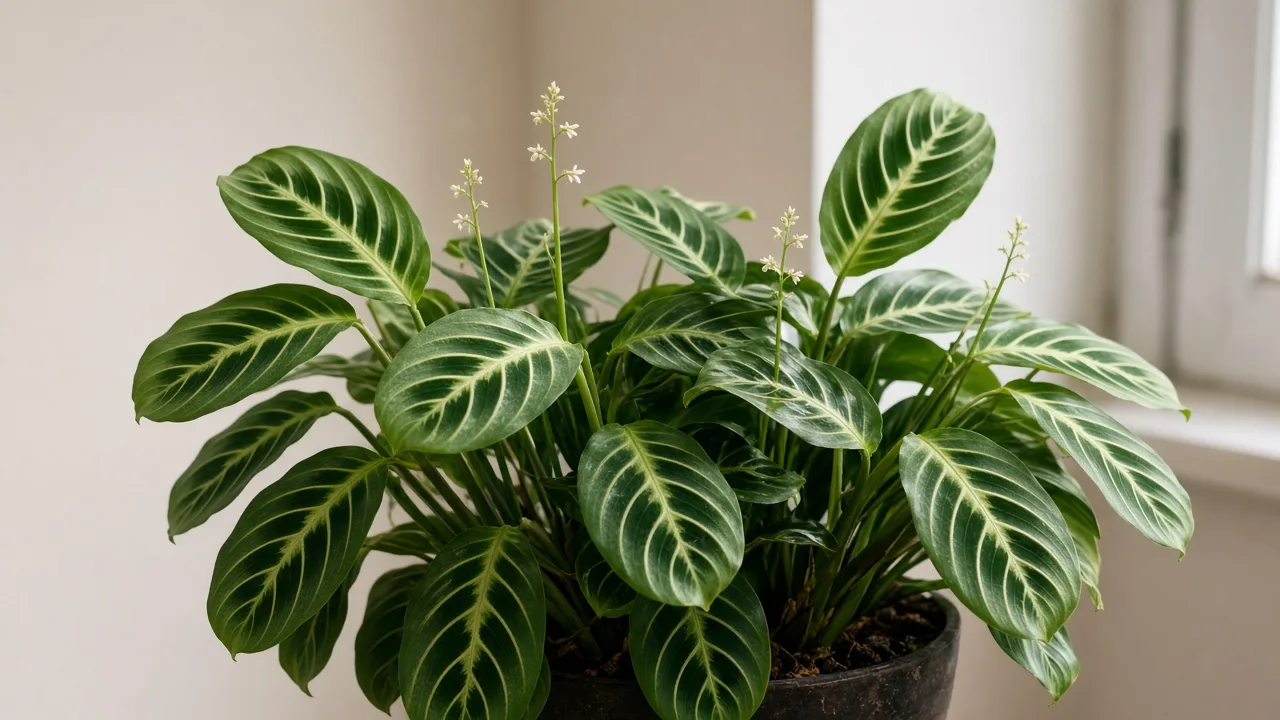
Small Flowers on Prayer Plant: What Is Normal and What to Check
This guide covers small flowers on Prayer Plant. See also the general Small Flowers guide, watering, and light pages for this plant.
Small Flowers on Prayer Plant: What Is Normal and What to Check
Quick answer
Small flowers on a Prayer Plant (Maranta leuconeura) are usually normal, not a sign that the plant is failing. NC State Extension describes the blooms as small and insignificant, and indoor flowering is not required for a healthy plant. Maranta is grown mainly for its patterned leaves.
First look at the whole plant. If leaves remain firm and patterned and the flowers open on slender stalks, leave the care routine steady. If buds dry before opening, stalks soften, or the leaves are also yellowing or drooping, investigate those separate symptoms instead of trying to make the flowers bigger.
What small flowers look like on Prayer Plant
Maranta blooms are much less showy than the foliage. The Missouri Botanical Garden describes white, two-lipped flowers with purple spots on slender spikes; they may be easy to overlook among the leaves.
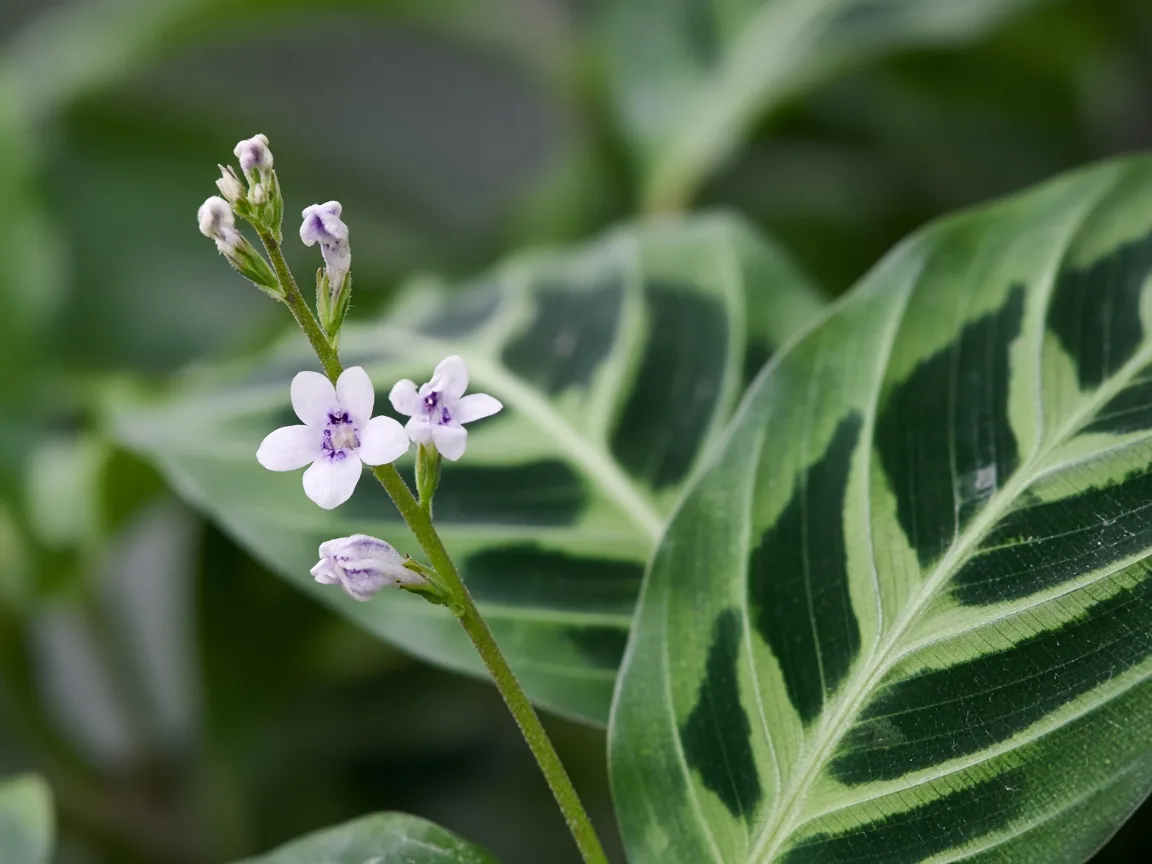
Small pale blooms on a Prayer Plant are naturally modest beside its patterned foliage.
The Royal Horticultural Society also describes small tubular white-to-purple flowers. The flowers may appear in summer, but are unusual on a houseplant and less prominent than its leaves. Seeing tiny blooms, by itself, is therefore different from seeing buds dry up or flowers deteriorate.
Why Prayer Plant flowers are small
The small scale is part of the plant’s normal flowering habit. Prayer Plant is cultivated chiefly for its leaves, and reputable plant references describe the flowers as insignificant or uncommon indoors. Gardening Know How notes that the blooms are white with purple spots and sit on slender spikes; a second horticultural overview describes similarly tiny pale flowers on slender stalks. These descriptions agree with the extension and botanical garden references above.
Flower size is not a useful measure of Prayer Plant health. Judge the plant by its leaves, stems, and soil condition. A healthy plant may bloom only occasionally indoors, so the goal is to support steady foliage rather than force a larger display.
Small blooms or a different flower problem?
Compare the flower’s condition and the rest of the plant before changing care:
| What you see | How to read it | Next step |
|---|---|---|
| Tiny flowers open on firm stalks; leaves look normal | Typical Maranta bloom | Leave the routine steady. |
| Buds shrivel or fall before opening, or open flowers fade quickly | Flower decline, not just small size | Check moisture and placement; see faded flowers on Prayer Plant. |
| No stalks or blooms appear, while the plant otherwise grows normally | No-flower pattern | Read why Prayer Plant may not flower; a lack of blooms alone is not a failure sign. |
| Leaves also fade, droop, or develop brown edges | A leaf-care issue may be present too | Match the leaf symptom to the Prayer Plant problems hub. |
Do not mistake the plant’s leaves, which fold upward at night, for flowers or buds. Flower stalks rise separately from the leaf blades; if you are unsure, inspect the base of the suspected stalk without pulling or bending it.
What to check before changing care
If the plant has both small flowers and declining growth, check the conditions that affect the whole plant. The RHS recommends filtered or indirect light, while NC State advises bright indirect indoor light and warns that strong direct sun can bleach the leaves. Neither source recommends exposing Maranta to harsh sun to enlarge its flowers.
Check these points in order:
- Look at new leaves and stems. Firm stems and normally patterned new leaves suggest the plant is doing well even when flowers are small. Yellowing, drooping, or soft stems deserve their own diagnosis.
- Check the light at leaf level. Move a plant from a dim corner toward bright, filtered light if its foliage is also weak or faded. Avoid a hot, sunny window that can scorch the leaves.
- Feel the potting mix. Prayer Plant prefers moisture without waterlogging. Keep the mix evenly moist during active growth and let excess water drain; Gardening Know How cautions against soggy soil. Follow the Prayer Plant watering guide for its regular routine.
- Look for a timing pattern. Blooming can be seasonal, and houseplants may flower infrequently. The Missouri Botanical Garden and RHS both describe seasonal blooms that are uncommon indoors. Do not compare a few open flowers with the larger, longer-lasting blooms of unrelated houseplants.
What to do about small flowers
If the flowers are small but open normally and the foliage looks sound, do nothing special for the blooms. Keep the plant in suitable indirect light, water according to the mix’s moisture, and continue ordinary care. There is no need to repot a healthy Prayer Plant or alter its environment just because the flowers are modest.
If you have confirmed a separate care problem, correct that one condition first. For example, improve the light only when the plant is actually in a dim location, or adjust watering only when the mix is repeatedly drying too far or staying wet. The Prayer Plant light guide and watering guide cover those routines in more detail.
What not to do
- Do not add extra fertilizer to enlarge blooms. NC State warns that overfertilization can burn Prayer Plant leaves. Keep to the plant’s normal feeding schedule in the Prayer Plant fertilizer guide.
- Do not move it into direct sun to force flowering. Strong sun can bleach or damage the foliage, while bright filtered light is the safer placement.
- Do not combine repotting, heavy feeding, and a major location change when the only concern is naturally small flowers. Several changes at once make it difficult to tell whether a real plant problem is improving.
- Do not cut off healthy stalks unless you prefer the appearance. Remove a spent stalk with clean scissors if you want; it is optional.
When to use another guide
Use this page when flowers are open but look small. If unopened buds dry up or open flowers fade unusually fast, start with faded flowers on Prayer Plant. If the plant has not flowered at all, see no flowers on Prayer Plant. For other symptoms, begin at the Prayer Plant problems hub or the main Prayer Plant care page.
Related tool
Use the Plant Problem Diagnosis Tool to compare small flowers with a separate leaf, stem, or soil symptom before changing care.
Related Prayer Plant guides: light, watering, fertilizer, faded flowers, and no flowers.