Thin Stems on Prayer Plant: Causes, Checks & Fixes
Quick answer
Prayer Plants naturally have short, rhizomatous stems and long leaf stalks called petioles, so slender stalks alone do not prove a problem. If new petioles are getting longer, farther apart, paler, or leaning toward one light source, compare them with older growth and try brighter indirect light first; investigate the crown and roots only if tissue is soft or the plant also declines.
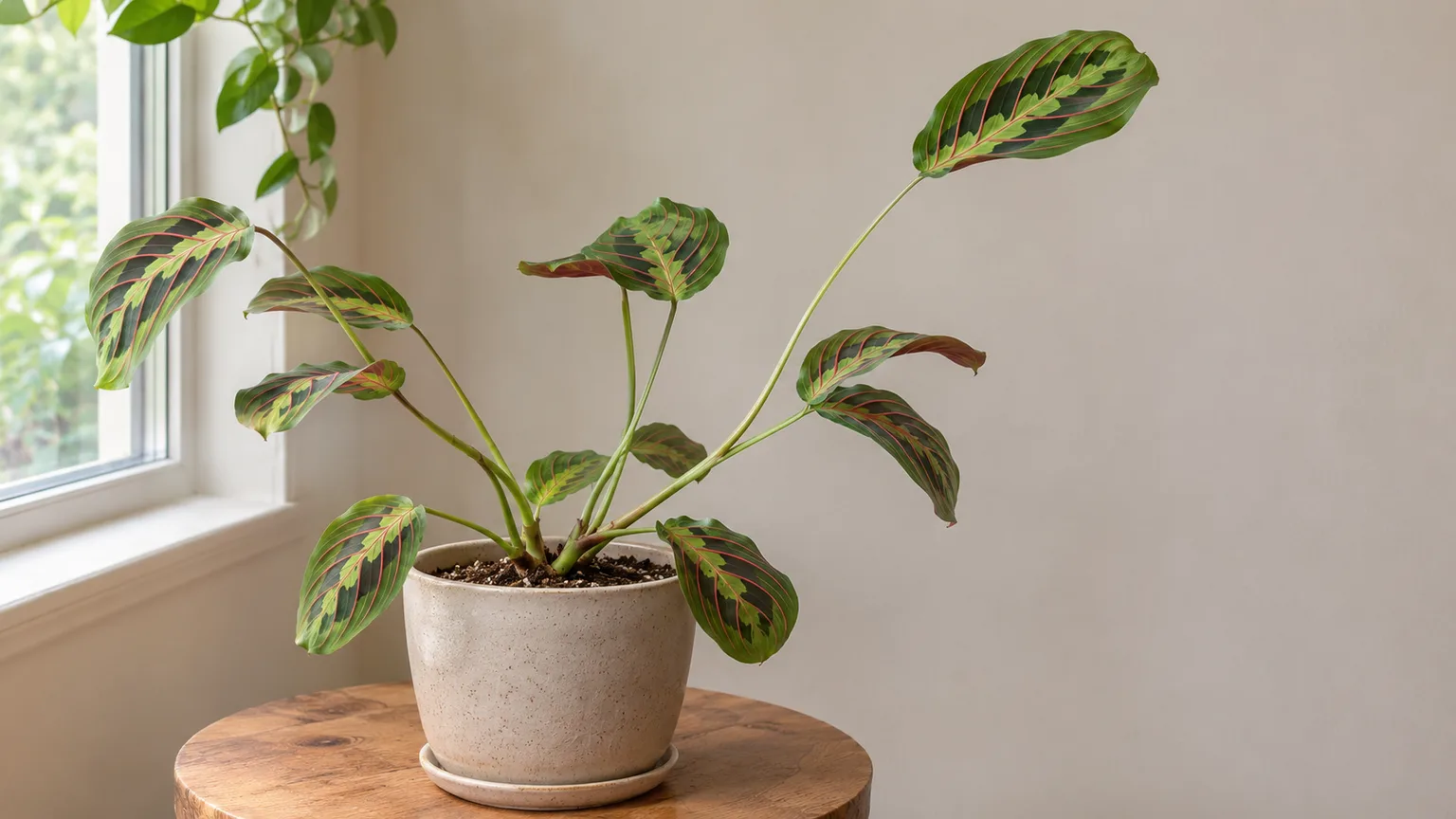
Thin Stems on Prayer Plant: Causes, Checks & Fixes
This guide covers thin stems on Prayer Plant. See also the general Thin Stems guide, watering, and light pages for this plant.
Thin Stems on Prayer Plant: Causes, Checks & Fixes
Quick answer
A Prayer Plant (Maranta leuconeura) does not grow like a woody-stemmed houseplant. Its true stems are short and rhizomatous, while each leaf rises on a long petiole, so a firm, slender stalk can be normal. NC State describes these short stems and long petioles as part of the species’ structure (NC State Extension).
Treat the change as a possible growth problem only when the newest petioles are increasingly long or widely spaced, the clump leans toward a window, or new leaves are smaller or paler than older leaves. If that pattern fits and the stalks remain firm, move the plant gradually to brighter indirect light. Maranta tolerates lower light, as Gardening Know How notes, but bright filtered light supports its foliage (Royal Horticultural Society; Gardening Know How).
Related: thin-stems symptom guide covers other plants. For a Prayer Plant, start with the care overview if you need to review its normal growth habit.
What “thin stems” means on Prayer Plant
The stems at soil level are not usually the long, visible parts people describe as “thin stems.” Most of what looks like a stalk is a leaf petiole. The plant naturally forms a low, spreading clump, rather than a single upright cane; the RHS also describes Maranta as a rhizomatous, clump-forming perennial (RHS plant profile).
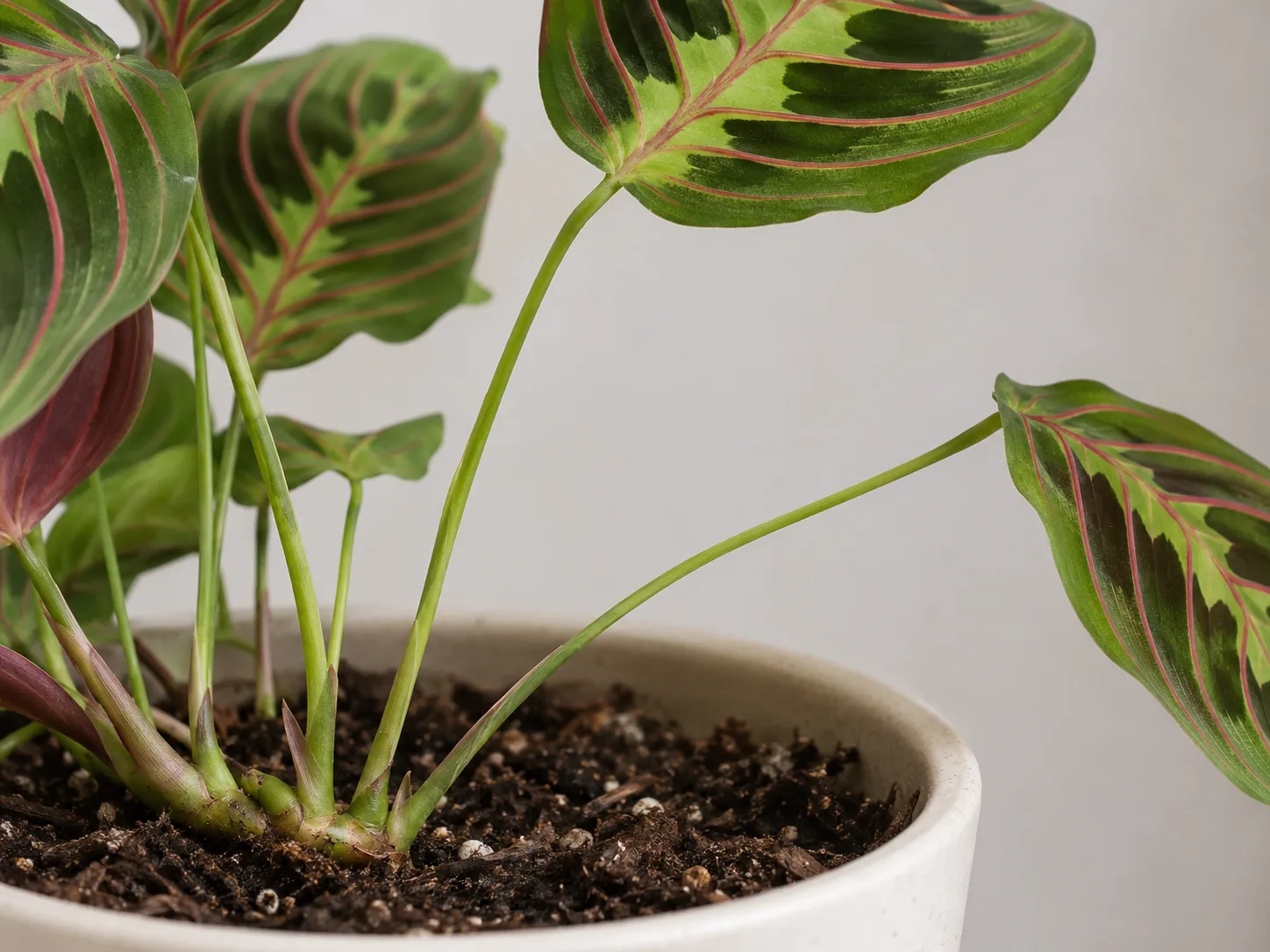
Slender petioles are normal; compare the newest growth with the plant’s own older leaves before deciding it is stretched.
A single long petiole, or the plant’s regular leaf movement at night, is not enough to diagnose a problem. Look for a trend: new stalks becoming longer and more widely spaced, uneven reach toward one side, and leaves that are smaller or less richly patterned. General houseplant guidance describes low-light etiolation as elongated, weak growth, but that pattern should be treated as a clue here—not proof from stalk thickness alone (The Sill on leggy growth).
Check the pattern before changing care
- Compare new and old petioles. Look at several leaves from the crown. If the newest ones are similar in length and firmness to older growth, slenderness may simply be normal form. Progressive elongation and wider spacing make a light-related change more plausible.
- Notice direction. A clump leaning toward one window suggests it is responding to uneven light. Plants can stretch toward a light source when exposure is insufficient, a common pattern in indoor plants (Epic Gardening’s overview of leggy houseplants).
- Feel the petiole base and crown. Firm tissue without a sour smell is different from a collapsing crown or soft, dark petiole bases. If the potting mix stays wet and the plant yellows or wilts, inspect drainage and roots; NC State notes that root rot can occur in poorly drained soil. Use the Prayer Plant overwatering guide and root-rot guide for those signs.
- Check placement and recent changes. A move away from a window, seasonal dimming, or a light source coming from only one side can explain a new lean or stretch better than an assumed nutrient shortage. For placement, compare your setup with the Prayer Plant light guide and the broader not-enough-light checks.
Do not diagnose a fertilizer problem from thin petioles alone. Also avoid watering more simply because a stalk looks weak: check the potting mix and pot weight first using the Prayer Plant watering guide.
First fix when new growth is stretched
If the petioles are firm but progressively longer, farther apart, or leaning toward a window, first give the plant brighter indirect or filtered light. Move it a little closer to a bright window or filter the exposure with a sheer curtain; avoid harsh direct sun. The RHS recommends bright filtered or indirect light for Maranta, and NC State warns that direct sun can bleach its foliage.
Make this one change and watch the next leaves. An elongated petiole will not become compact again, so judge the adjustment by the shape of later leaves (The Sill’s guide to leggy growth). If the newest growth remains sparse after placement improves, or the plant begins to soften or yellow, reassess the Prayer Plant soil guide and the root zone before adding fertilizer or repotting. A soft crown, foul-smelling mix, or collapsing leaf bases calls for a root check rather than a light-only fix.
When to use this page vs. other Prayer Plant guides
Use this page when the visible concern is slender or increasingly elongated leaf stalks. If the whole clump leans but its new growth is compact, compare the plant-leaning guide. If the plant has obvious long gaps and sparse leaves, the leggy-growth guide addresses that more pronounced pattern. Yellowing or collapse in wet mix points instead to overwatering or root rot.
Related Prayer Plant guides
- Overview: use for normal Maranta growth and general care.
- Light guide: use for window placement and light adjustments.
- Not-enough-light checks: use when the location itself may be too dim.
- Plant-leaning guide: use when the clump tips or leans without clear elongated new growth.
- Watering guide: use to check moisture before watering a weak-looking plant.
- Soil guide: use when drainage or mix condition is in question.
Related tool
Use the Plant Problem Diagnosis Tool if the stalks are changing along with another symptom and you need to compare likely causes before adjusting care.