Prayer Plant Transparent Leaves: Causes and What to Check
Quick answer
Pale green or yellow markings along a Prayer Plant’s red-veined pattern and lighter rolled new leaves are normal. For a new, irregular glassy patch, first move the plant away from cold glass or a direct draft and keep it in bright indirect light. Then check whether the potting mix is staying wet; transparent tissue alone cannot confirm edema or root rot.
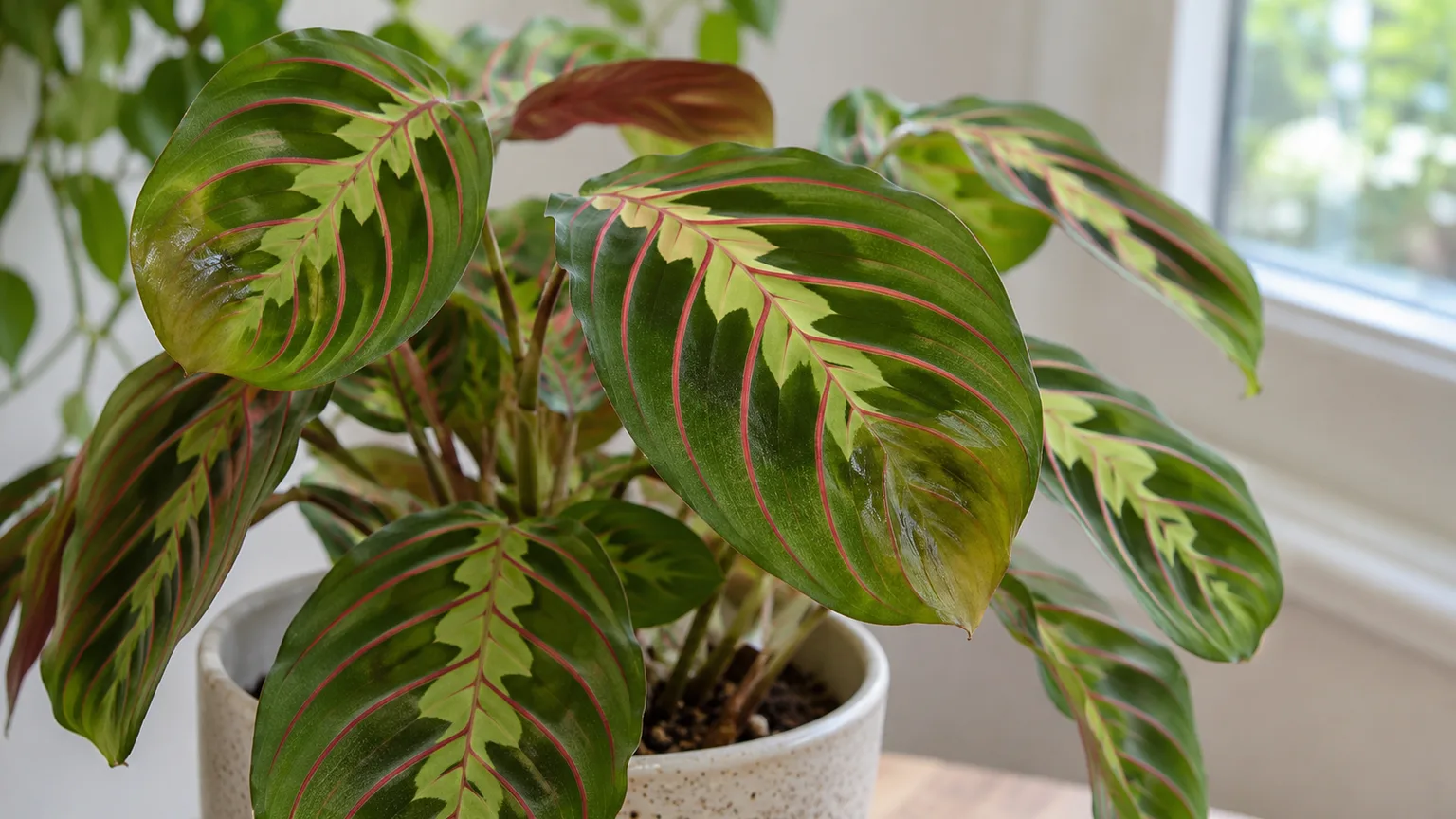
Transparent Leaves on Prayer Plant: Causes, Checks & Fixes
This guide covers transparent leaves on Prayer Plant. See also the general Transparent Leaves guide, watering, and light pages for this plant.
Transparent Leaves on Prayer Plant: Causes, Checks & Fixes
Quick answer
Pale green or yellow marks that follow the Prayer Plant’s familiar midrib pattern are usually normal Maranta coloring, not transparent leaves. NC State describes Maranta’s pale midrib variegation, red fishbone veins, and intolerance of low temperatures and cold drafts, so compare a suspicious patch with the plant’s usual pattern and recent exposure (NC State Extension’s Maranta profile). A genuinely glassy, water-soaked patch is new and irregular, often on otherwise green tissue. First move the plant to a stable warm spot away from cold window glass or a direct air-conditioning draft, while keeping it in bright indirect light. A clear-looking leaf by itself does not prove cold injury, edema, or root rot.
For the general symptom pattern, compare the transparent-leaves guide. On a Prayer Plant, the next step is to compare the leaf with the plant’s normal markings and check recent temperature and moisture changes. The Prayer Plant overview and problem index help route other symptoms.
What transparent leaves look like on a Prayer Plant
A concerning patch looks water-soaked or glassy within the leaf blade, not like the repeated pale markings that run along Maranta’s red-veined pattern. It may feel limp, and older water-soaked spots can become raised or corky. The general condition called edema can cause this pattern when roots take up water faster than leaves lose it, but it has not been established as a common Prayer Plant diagnosis; treat it as one possibility, not a conclusion (RHS guidance on oedema).
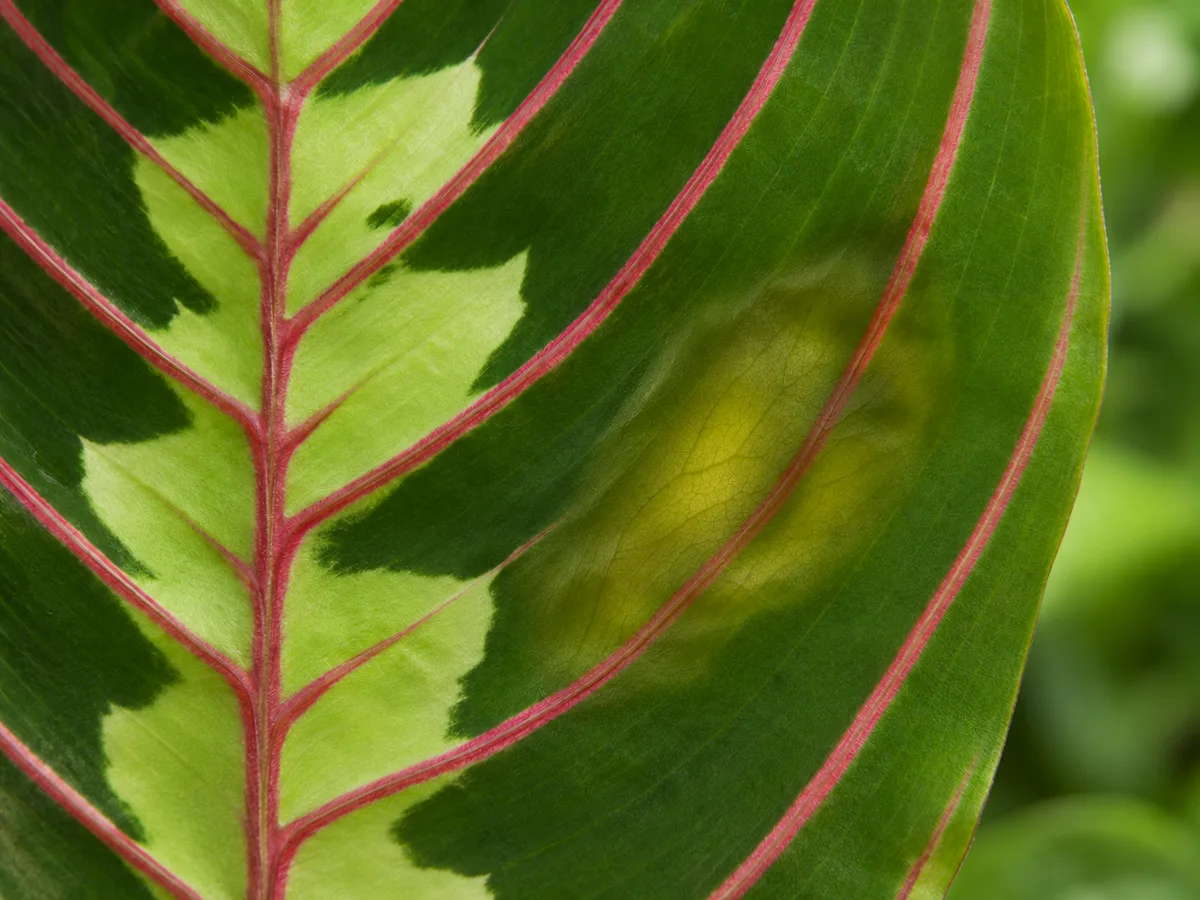
A glassy patch interrupts the green tissue; the Prayer Plant’s pale herringbone markings are normal variegation.
Maranta also sends out new leaves as rolled tubes, and its foliage folds upward at night. A partly opened leaf can look lighter or folded without being damaged; wait for it to unfurl rather than pulling it open (Gardening Know How’s Prayer Plant guide).
Why Prayer Plant leaves can look transparent
Cold exposure
Cold window glass, a draft, or an air-conditioning stream can stress this tropical plant. If the change appeared after a cold night or after the pot was moved, leave the plant in a stable warm location and watch whether new patches continue to appear. Use the Prayer Plant cold-damage guide if the timing and symptoms fit; use the draft-stress guide when exposure to moving air is the likely trigger.
Excess moisture and possible edema
Edema is a water-balance disorder rather than an infection. Extension guidance describes water-soaked spots or blisters that may later turn corky; Penn State’s account is specifically about geraniums, where warm wet soil combined with cool, humid, low-light conditions can favor the imbalance. That mechanism is useful for checking the conditions around a Maranta, but it does not show that Prayer Plants commonly develop edema (Penn State Extension’s edema guide). A practical response is to correct the condition that fits the evidence instead of treating the leaf as a contagious disease (Gardening Know How’s edema overview).
Root trouble
Transparent-looking leaves alone do not diagnose root rot. If the mix stays wet and the plant wilts or collapses, check drainage and inspect the roots only when those signs make root trouble plausible. Healthy roots are firm; decayed roots are often dark and soft, and wet soil favors root-rot fungi (University of Wisconsin Extension’s houseplant root-rot guide). Use the Prayer Plant guides to overwatering, root rot, or wilting when those are the main symptoms.
Normal markings or light bleaching
Prayer Plant leaves naturally carry pale midrib markings and prominent red fishbone veins; a regular, repeating pattern that stays firm is different from a new water-soaked patch. NC State notes that too much direct sun can bleach Maranta’s leaf color, so broad pale areas after a lighting change may be bleaching rather than translucency (NC State Extension’s Maranta profile). If the issue is fading without glassy tissue, see the faded-leaves guide or yellow-leaves guide.
The first fix: stabilize the Prayer Plant’s location
Move the Prayer Plant away from cold glass and direct drafts, and place it in steady bright indirect light. This is the safest first correction when the leaf change is new and the plant may have been chilled; it avoids adding water or repotting before you know whether the root zone is already wet. Do not put Maranta in direct sun to “dry it out,” because strong sun can bleach its patterned foliage.
Check the root zone before changing the watering routine
Feel the mix near the surface and lift the pot to judge whether it is still heavy and wet. Check that excess water can leave through the drainage holes and that the inner pot is not sitting in a cachepot full of water. Prayer Plants prefer moist but well-drained mix; letting the top layer dry slightly before watering helps avoid waterlogging without turning the plant bone-dry (The Spruce’s Prayer Plant care guide). Follow the plant’s watering guide and soil guide for its ordinary routine.
If the mix is moist and roots are firm, wait for the upper layer to begin drying before the next watering. If the plant is wilted while the mix remains wet, inspect the roots and follow the root-rot route rather than repeatedly watering or treating the leaves. If the mix is dry and the plant is limp, water the soil evenly and let the excess drain; see the Prayer Plant wilting guide for that pattern. Do not apply fungicide or pesticide to a translucent patch without signs that identify a pathogen or pest.
Recovery and what to watch
Water-soaked damage can remain visible or turn corky even after the cause is corrected. The RHS notes that affected spots can become raised and corky, and recommends improving air and soil conditions so healthy new growth can develop rather than removing affected leaves as a first response (RHS advice on managing oedema). Leave a leaf attached while it is mostly green and supporting the plant; remove it only when it is largely dead or softening.
Mark the edge of a patch or take a dated photo so you can tell whether it is expanding. A good sign is that no new leaves develop glassy areas and the next rolled Maranta leaf opens with firm tissue and its usual pattern. A worsening sign is new patches appearing alongside a persistently wet mix, widespread wilting, or soft, dark roots; prioritize that evidence over the appearance of one older leaf.
Prevent transparent-looking damage on Maranta
Keep the plant in warm, bright indirect light, away from cold panes and vents. During active growth, keep the mix lightly and evenly moist but well drained; let the surface begin to dry before watering again, and reduce watering as growth slows in winter, as NC State recommends for Maranta (NC State Extension’s seasonal care notes). Avoid leaving standing water in the outer pot. Judge long-term recovery by firm new leaves rather than expecting an injured blade to return to its original appearance.
Related tool
Use the Plant Problem Diagnosis Tool to compare the leaf pattern, recent temperature exposure, and root-zone moisture before making another change.
Related Prayer Plant guides
Use this page for a new glassy or water-soaked patch. Choose the cold-damage guide after a temperature drop, the draft-stress guide after vent exposure, or the overwatering guide when the mix stays wet. The root-rot guide is for soft or dark roots; the Prayer Plant wilting page is for loss of firmness; and the faded-leaves guide or yellow-leaves guide fits color changes without a glassy patch. For routine care, return to the Prayer Plant light guide, watering guide, and soil guide.