White Spots on Prayer Plant: Causes & What to Check
Quick answer
White marks on a Prayer Plant may be natural variegation, dried residue, leaf injury, or a less common pest or disease lookalike. First, compare another leaf and gently test one spot with a damp soft cloth; do not spray or scrub until you know whether the mark is on the surface or in the leaf.
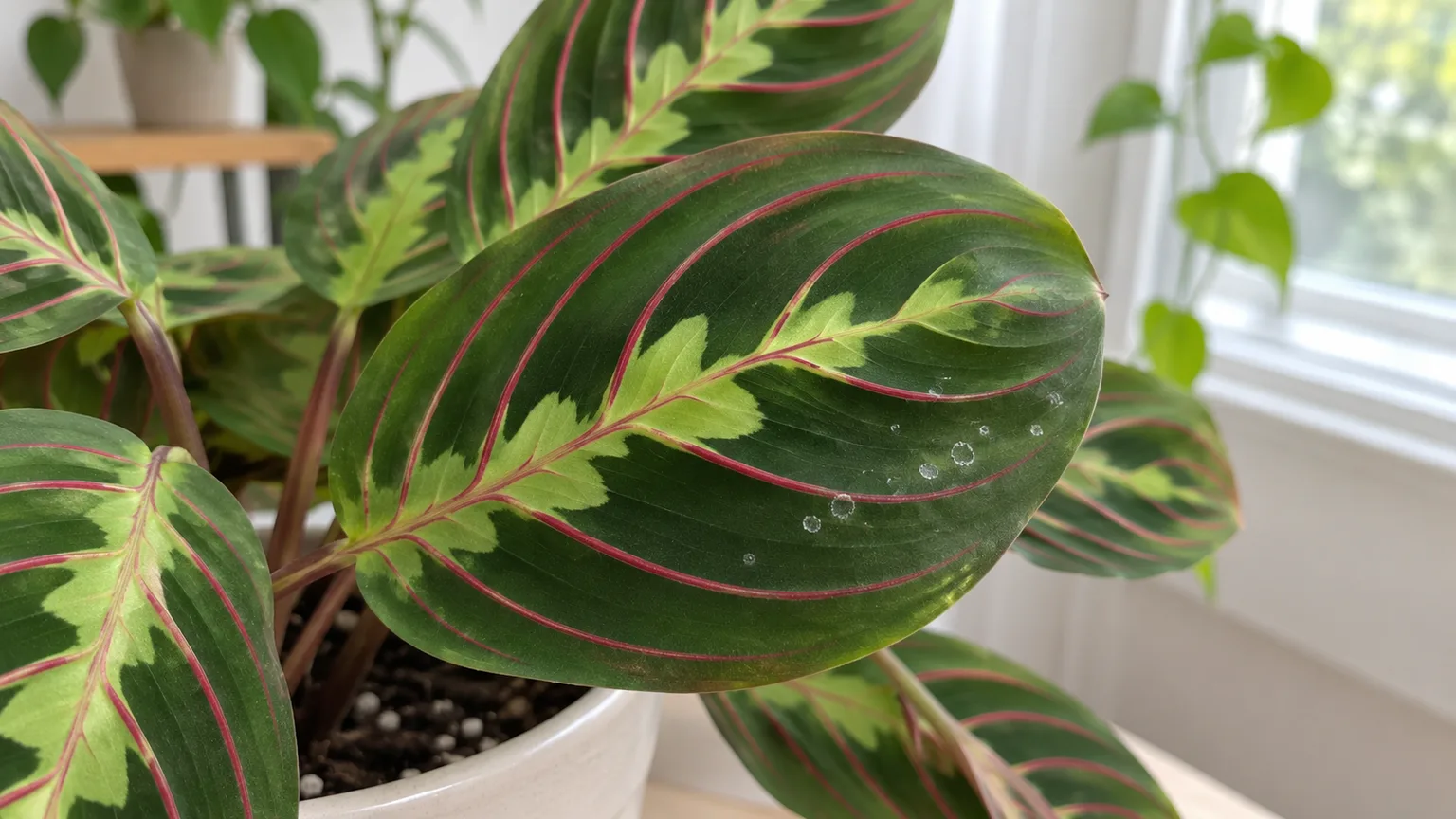
White Spots on Prayer Plant: Causes, Checks & Fixes
This guide covers white spots on Prayer Plant. See also the general White Spots guide, watering, and light pages for this plant.
White Spots on Prayer Plant: Causes, Checks & Fixes
Quick answer
White marks on a Prayer Plant can come from the plant’s natural pattern, a deposit on the surface, injury within the leaf, or—less often—a pest or disease. Maranta already has pale central markings and red fishbone veins, so compare a new mark with the usual pattern on the Prayer Plant overview before treating it; NC State describes these patterned leaves as a defining feature. The white-spots symptom guide can help compare patterns across different plants.
First, choose one new mark and gently pass a damp, soft cloth over it once. If it lifts, treat it as surface residue and check the rest of the leaf. If it does not, leave it alone and inspect a second leaf and the undersides. Do not scrub the foliage or apply a fungicide or insecticide based on color alone.
What white spots look like on Prayer Plant
The first distinction is whether the pale area is part of the leaf or sitting on its surface. Prayer Plant foliage is naturally patterned; the pale center, red veins, and cultivar-specific markings appear as part of the blade rather than as a new coating. NC State describes cultivars with broad silver-green or yellow-green central areas, so check the plant’s normal pattern against the overview photos and care notes. NC State notes that serious pest or disease problems are uncommon for Maranta, although occasional spider mites and mealybugs can occur.
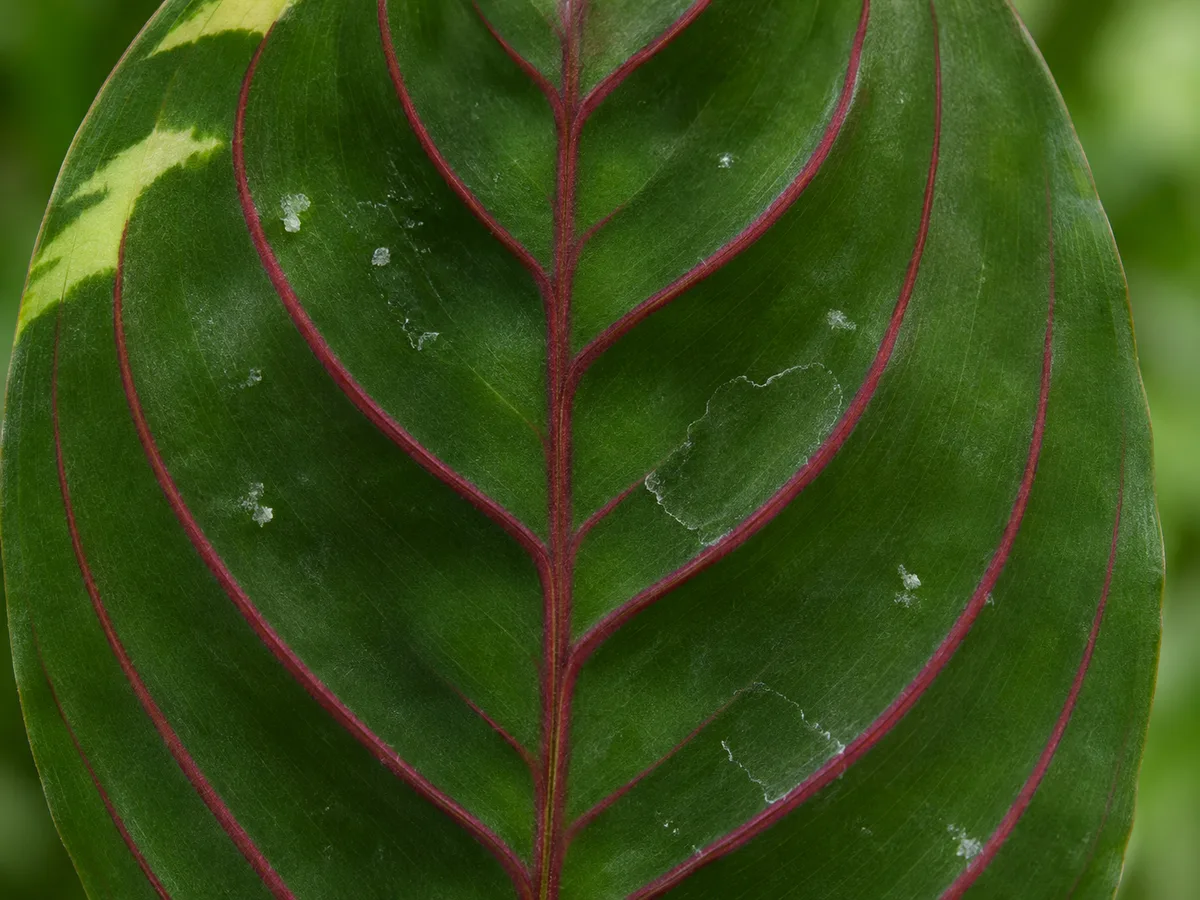
Illustrative close-up of pale surface marks. Compare them with the plant’s own stable variegation; this image is not a diagnosis of a particular disease.
Look at the same leaf in indirect daylight, then compare it with a newer leaf:
- Stable cream, silver, or light-green patterning that repeats across leaves is likely the cultivar’s variegation.
- A mark that partly lifts with one gentle wipe is on the surface. Mineral residue or dried droplets are possible; do not keep rubbing if the leaf is delicate.
- A pale or straw-colored patch that will not wipe off is more likely a change in the leaf tissue. Clemson notes that cold water or splashed water can leave white or straw-colored spots on some houseplants. If water recently hit the foliage, adjust how you water through the Prayer Plant watering guide.
- A white powdery film that spreads across the upper or lower surface is more consistent with powdery mildew than with a few isolated spots. The RHS describes powdery surface growth and notes that powdery-mildew fungi usually have narrow host ranges. A white mark by itself cannot establish that a Prayer Plant has mildew; if a spreading film is present, compare it with the separate Prayer Plant powdery-mildew guide.
Clemson describes common fungal leaf spots on houseplants as small brown lesions, sometimes with yellow margins or rings, rather than clean white dots. Water-soaked patches, yellow halos, or sticky ooze suggest a different problem and deserve a closer check instead of mildew treatment.
Check for pests before changing care
Turn over the affected leaf and inspect its veins, petioles, and the tight folds around new growth. Spider-mite feeding usually appears as many tiny pale speckles or stippling, sometimes with fine webbing near leaf joints or undersides. If you find them, follow the plant-specific Prayer Plant spider-mite steps and keep the plant apart from nearby foliage while you assess it.
Mealybugs are different: look for cottony or waxy clusters where leaves join stems, plus possible sticky honeydew. Those clusters can be mistaken for white spots when they sit on a leaf edge or fold. Compare the signs with the Prayer Plant mealybug guide; avoid applying a spray until you confirm an insect is present.
First fix for Prayer Plant white spots
The cloth test is only a check, not a treatment for every cause. If a surface mark lifts, gently wipe that leaf and stop. If it does not lift, do not scrape it off. Keep normal Prayer Plant care steady: bright indirect light, evenly moist soil in a well-drained mix, and water at the soil line rather than splashing the leaves. NC State notes that direct sun can bleach Maranta’s patterned foliage; if the pale area is a larger bleached patch on the window-facing side, review its placement with the Prayer Plant light guide.
If a powdery coating keeps returning or pest signs are present, isolate the pot while you identify the cause. Improve gentle air movement and remove fallen or badly affected material with clean scissors; Clemson recommends good air circulation and removing infected plant material for houseplant disease management. Do not sharply reduce room humidity to treat a mildew suspicion; Prayer Plant needs a humid environment. If disease remains uncertain, use the plant-problem diagnosis tool or ask a local extension service before using a pesticide. UC IPM recommends correct identification and using only products labeled for indoor use on the plant species and identified pest, following label directions.
Recovery and prevention
A mark within the leaf tissue may remain even after the cause is corrected. Judge recovery by whether new spots stop appearing and the next leaves open cleanly, not by whether an older leaf becomes unmarked. Remove a leaf only if it is mostly damaged, dying, or carrying a confirmed spreading problem; removing every leaf with normal variegation will weaken the plant unnecessarily.
For prevention, use room-temperature water and keep routine watering directed onto the potting mix. Clemson notes that splashing or cold water can cause pale spots on some houseplants, and recommends avoiding water splashed onto foliage because it can spread certain leaf-spot diseases. Keep Maranta in bright, indirect light, and allow leaves to dry promptly if they become wet. Do not change water, light, humidity, and fertilizer all at once; stable care makes new symptoms easier to interpret.
When to use this page vs other Prayer Plant guides
Use this page when the main clue is a new white or pale spot and you need to decide whether it is patterning, residue, tissue injury, a pest, or a disease lookalike. Use the powdery-mildew guide for a spreading white coating, the spider-mite guide for stippling or webbing, and the mealybug guide for cottony clusters or sticky residue. The Prayer Plant problems hub helps route other symptoms.
Related Prayer Plant guides
- Prayer Plant watering guidance covers moisture and how to water without repeatedly wetting foliage.
- Prayer Plant light guidance helps with bleaching or other changes after a move to a brighter window.
- The powdery-mildew, spider-mite, and mealybug guides cover persistent powder, pale stippling with webbing, and visible insects in leaf folds, respectively.