Why Is My Rosemary Leaning? Causes and Fixes
Quick answer
First check whether only the shoots lean toward a window or the whole root ball tilts. Rosemary can naturally grow upright or prostrate; a one-sided lean with stretched new stems often points to uneven light, while a loose or shifting base calls for a root and soil check.
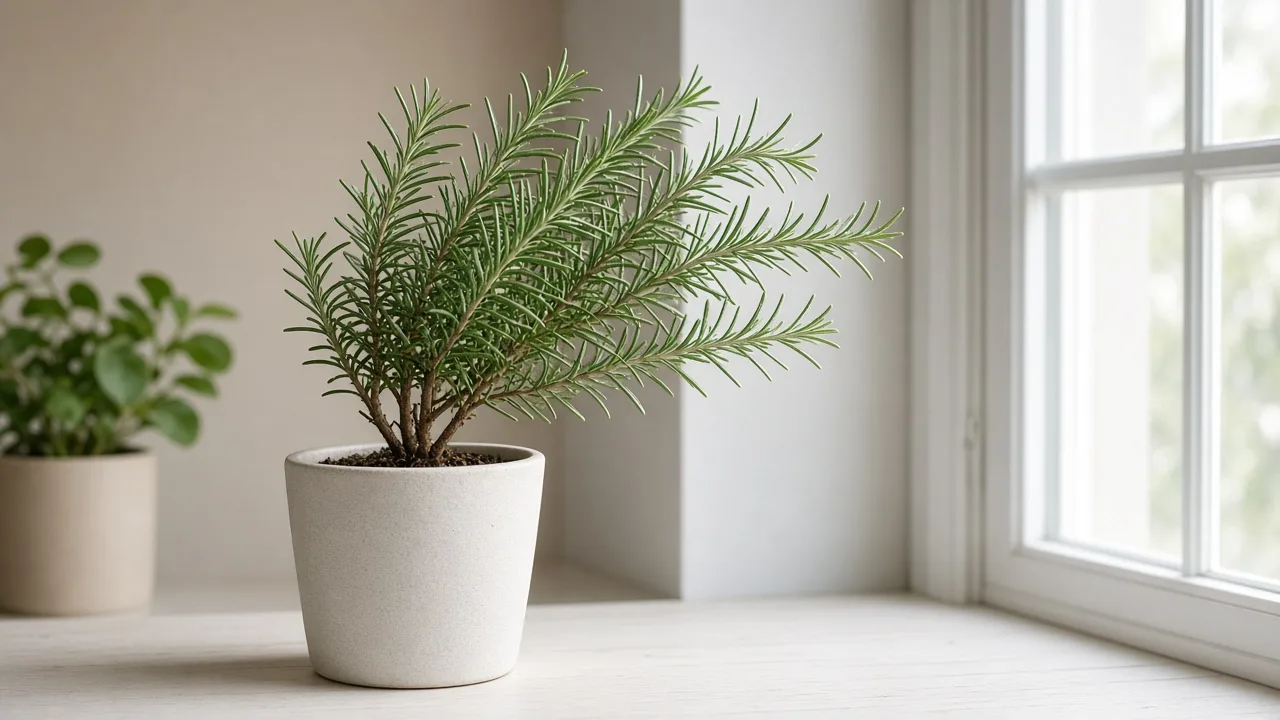
Rosemary Leaning: Causes, Checks & Fixes
This guide covers plant leaning on Rosemary. See also the general Plant Leaning guide, watering, and light pages for this plant.
Rosemary Leaning: Causes, Checks & Fixes
Quick answer
Start by tracing the lean. If the pot and root ball are steady but several new shoots point toward one window, uneven light is the leading explanation. Move the rosemary to a brighter, sunnier spot; rosemary is a full-sun shrub, and long indoor winters can be difficult when light is weak (Penn State Extension). If the root ball itself tips or rocks, inspect the base and soil before changing its position.
Rosemary is not always meant to stand straight. Some forms are naturally prostrate, while others grow upright (Penn State Extension). For general plant-leaning patterns and their causes, see the plant leaning symptom guide; this page focuses on how to tell normal Rosemary habit from a light, stem, or root-zone problem.
What a leaning Rosemary looks like
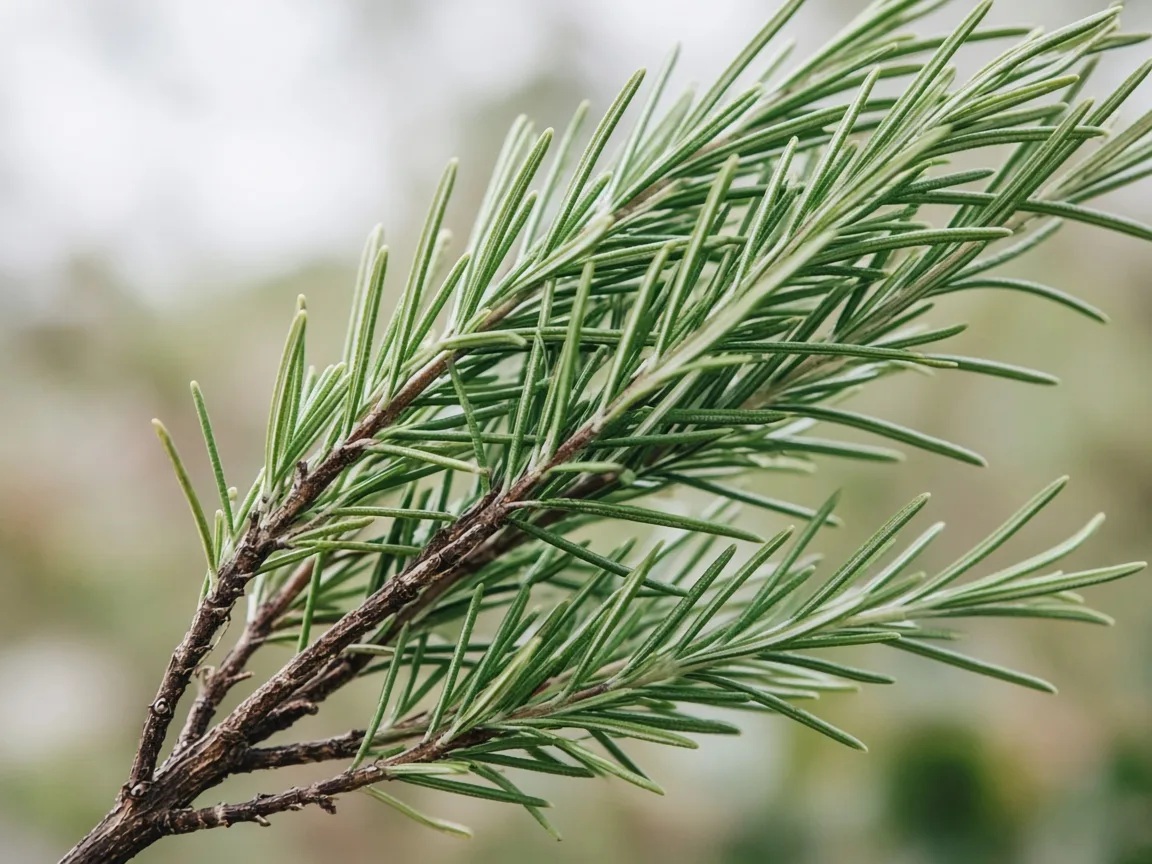
Look for where the angle begins:
- New tips curve toward the brightest side: often a directional-light pattern, especially when the pot has stayed in one position indoors. Low light can leave Rosemary with thin, floppy stems reaching toward the sun (Epic Gardening).
- The whole plant shifts at the soil line: the root ball may be loose, the pot may be too light or unstable, or roots may be compromised. Check the base rather than pulling the stems upright.
- Branches arch outward evenly: this may be the plant’s natural spreading or prostrate form, not a new problem. Some cultivars vary in habit (North Carolina State Extension).
- Older stems open and bare near the base: Rosemary can become straggly and bare-based without regular clipping (Royal Horticultural Society). That calls for gentle shape management, not a tight stake or a deep cut into old wood.
Why Rosemary leans
One-sided light and winter growth
Rosemary grown indoors may lean toward a bright window because the new growth is reaching into the stronger light. Check the direction of the newest tips, then note whether the plant was recently moved indoors, turned, or shaded by a wall or another plant. Rosemary needs full sun, and winter indoor light can be inadequate for steady compact growth (North Carolina State Extension; Penn State Extension).
This is different from a naturally prostrate cultivar: low-light leaning often has an uneven direction and weak, extended new shoots; natural spreading tends to be more even around the plant. If the stems are also long and sparse, compare the Rosemary leggy-growth guide. For pale foliage and a broader shortage of sun, use not enough light on Rosemary.
A loose or unstable root ball
If the whole plant rocks, check whether the root ball has pulled away from the potting mix, the pot has tipped, or the mix is too loose to hold the stem. A recent repot, a top-heavy canopy, or a lightweight container can all make a stable plant appear suddenly tilted. These are inspection clues, not proof of root disease.
Rosemary is vulnerable to root rot in wet, poorly drained soil (Penn State Extension). If the base is soft or dark and the mix remains damp, pause watering and check drainage before firming the plant. The Rosemary overwatering guide explains how to separate excess moisture from a dry root ball; see root rot on Rosemary if soft roots or a persistently wet mix are present.
Natural spread or an older, open plant
Rosemary’s growth habit varies from upright to prostrate, and older branches naturally become woody. A balanced outward shape on a firm base is not a leaning emergency. When the plant has become open and bare at its base, RHS recommends annual clipping to keep it compact and bushy (Royal Horticultural Society). Keep pruning light and stay in green growth rather than removing large sections of old wood.
How to confirm the cause
- Mark the direction. Look at the newest tips, not just the oldest branch. A consistent bend toward a window supports uneven light; an even outward spread may be normal form.
- Check the base. Hold the pot, not the stems, and see whether the soil and root ball move as a unit. If they do, stabilize the container and inspect the mix rather than pulling the plant upright.
- Feel the soil. Check below the surface and at the drainage holes. Rosemary should not sit in soggy mix; allow the soil to dry somewhat between waterings (Gardener Report). Do not follow a fixed weekly schedule because pots, weather, and mix change how fast it dries.
- Look for root-stress signs. Softness at the base, brown or black tissue, or a sour smell with wet soil makes root trouble more likely. If the stem is firm and the mix drains, light direction or normal habit is more likely.
- Review recent changes. Note whether the plant was brought indoors, repotted, pruned, or rotated just before it began leaning. A one-sided window exposure and a changed support are different problems with different fixes.
If the main symptom is limp foliage rather than a directional bend, compare drooping leaves on Rosemary. If growth has simply slowed without a leaning pattern, see slow growth on Rosemary.
First fix for Rosemary leaning toward light
For a firm, healthy plant with new shoots reaching toward one side, move the pot to the brightest spot available, ideally a location with at least six hours of direct sun. Rosemary needs full sun, while indoors its winter light can be limiting (North Carolina State Extension; Penn State Extension). If it has been indoors in shade, introduce stronger outdoor sun gradually to reduce sudden exposure stress.
After the move, turn the container a quarter turn every few days so fresh growth does not keep reaching in only one direction. If the plant has been in shade indoors, increase outdoor light gradually; rosemary can show yellowing or transplant shock as it adjusts to brighter conditions (Epic Gardening). Judge the correction by the direction and firmness of new growth rather than trying to force mature stems straight. A loose tie to a stake is only temporary support for a stem that might break. Leave room around the stem so the tie does not rub or constrict it.
If the root ball tilts as a unit, first stabilize the pot and check soil moisture and drainage. Rosemary in a container needs a freely draining mix and an open drainage hole (Epic Gardening). Only repot when the existing mix is compacted, staying wet, or failing to drain; staking alone will not correct a root-zone problem.
Recovery and prevention
Keep the plant in its corrected light and watch new shoots over the next few weeks. Stable stems and fresh growth pointed toward the open space are signs the change is helping. A woody branch that has already set at an angle may stay bent, and a trailing cultivar will continue to spread. Avoid trying to force mature branches upright or cutting heavily into bare wood.
Rosemary responds better to light, regular clipping than to a sudden severe reshape. The RHS notes that annual clipping keeps it compact, while plants left unpruned can become straggly and bare at the base (Royal Horticultural Society). Keep the pot stable, give all sides similar light, and let the mix dry somewhat between waterings. If the base is soft, the plant keeps worsening in wet soil, or several stems fail at the soil line, prioritize root recovery and use the diagnosis tool rather than adding more support.
When to use this page vs other Rosemary guides
Use this page when the plant’s whole shape or stems lean. Choose leggy growth on Rosemary when long, bare internodes and sparse foliage are the main issue; use not enough light on Rosemary when pale growth or weak development is broader than the lean. If leaves droop or the soil stays wet, follow the drooping-leaves or root-rot diagnosis instead.
Related Rosemary guides
- Rosemary leggy growth - for stretched stems and a bare lower canopy.
- Rosemary not enough light - for overall weak or pale growth in a dim position.
- Rosemary overwatering - for persistently wet soil and watering changes.
- Rosemary root rot - for soft roots or a collapsing base in wet mix.
- Rosemary drooping leaves - for limp foliage without a one-sided lean.
Related tool
Use the Plant Problem Diagnosis Tool to compare the lean, soil moisture, and stem condition before changing more than one part of the care routine.