Red Leaves on Rosemary: Causes, Checks & Fixes
Quick answer
Red or bronze color on Rosemary does not identify one cause by itself. First compare affected tips with older foliage, then check recent frost or cold exposure, soil moisture, drainage, and whether the plant is otherwise declining.
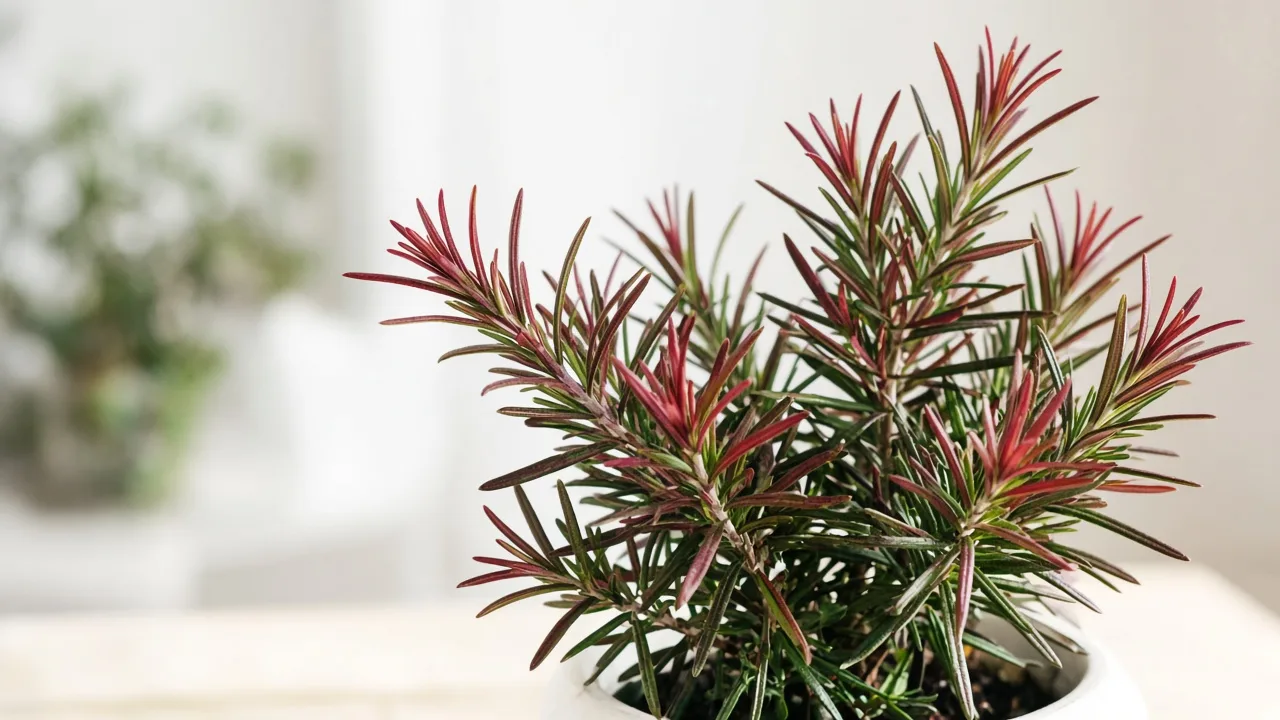
Red Leaves on Rosemary: Causes, Checks & Fixes
This guide covers red leaves on Rosemary. See also the general Red Leaves guide, watering, and light pages for this plant.
Red Leaves on Rosemary: Causes, Checks & Fixes
Red or bronze Rosemary foliage is a visible change, but the color alone does not identify a disease or a single care mistake. The sources reviewed do not establish red leaves as a specific Rosemary disorder, so use the pattern, timing, and condition of the whole plant before treating. Start by noting which shoots are affected and what changed in the plant’s environment.
What red leaves look like on Rosemary
Rosemary has narrow, leathery, needle-like leaves; compare any red or bronze areas with unaffected growth on the same plant. UW-Madison Extension’s leaf description notes dark green upper surfaces and pale, powdery undersides, so check both surfaces before deciding that a color difference is damage.
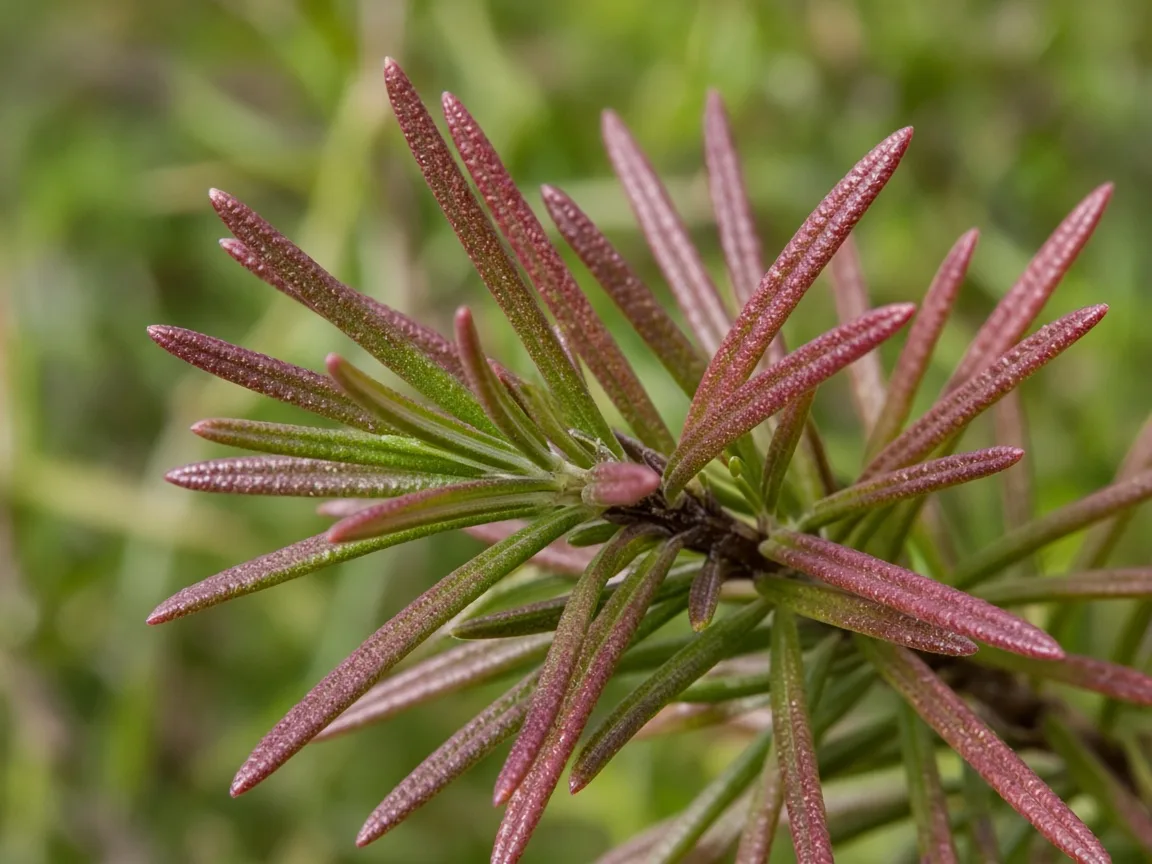
Red-bronze color is visible on these Rosemary needles; compare affected tips with older, firm foliage before choosing a cause.
Why Rosemary may show red leaves
Redness is a clue to investigate, not a diagnosis. The extension and horticultural references reviewed here describe Rosemary’s baseline foliage, growing needs, and common root or cold problems, but do not name red leaves by themselves as a specific Rosemary disease symptom. That means it is safer to look for a matching pattern than to apply fertilizer, fungicide, or a pest treatment based on color alone.
Check whether the change is limited to new tips
Mark or photograph the affected shoots and compare them with the same branches over the next several days. Note whether color is confined to the youngest tips, appears across older needles too, or is accompanied by curling, dry edges, spots, or stem changes. Firm leaves on a plant that is continuing to grow call for observation first; spreading discoloration or declining shoots call for a closer environmental check.
Review cold and frost exposure
Think back to overnight lows, a sudden move outdoors, or a cold window or draft. The RHS Rosemary guide notes that harsh frosts can damage shoots and that cold, wet soil can rot roots. Cold injury is not confirmed by redness alone: the UC IPM frost guide describes injured tissue as scorched and often brown or black, with symptoms that may become visible days after a freeze. If the red tissue later darkens, dries, or dies back after cold, record that change and wait until the extent of damage is clear before pruning.
Check the root zone before changing the watering routine
Feel the mix several centimeters below the surface and check that water can drain freely from the pot. Rosemary prefers sun and open drainage; Delaware Extension’s fact sheet recommends full sun and loose, well-drained soil. If the mix stays wet for a long time, the pot sits in runoff, or the base smells sour, investigate root stress rather than assuming the red color itself identifies the problem.
Look for other signs of a plant-wide problem
Redness paired with persistent wilt, soft stems, extensive leaf drop, or stalled growth deserves more attention than a few colored tips on an otherwise firm plant. Rosemary is susceptible to root rot, and Epic Gardening’s Rosemary guide also links overwatering and poorly drained soil with root-rot risk. This does not prove that red needles mean rot; it makes drainage and root condition useful checks when the whole plant is declining.
How to confirm the cause
Work through these checks before taking action:
- Map the color. Note whether it affects only the newest tips, older inner foliage, one side, or the whole plant.
- Check leaf and stem condition. Firm leaves with stable color differ from brittle, shriveled, spotted, or blackening tissue. Look for sticky residue, fine webbing, or visible insects as separate clues.
- Review recent weather and placement. Record frost, cold drafts, a change in window exposure, or a quick move between indoors and outdoors.
- Check moisture and drainage. Feel below the surface, empty standing water from the saucer, and confirm the drainage holes are open.
- Compare old and new growth. Take a dated photo so you can tell whether the color is spreading or new growth is emerging normally.
If the plant is stable and only a few tips are colored, continue observing while keeping its care consistent. If color advances alongside root or stem decline, address the matching care issue and consider asking a local extension service or qualified nursery to identify the plant and symptoms.
First fix for Rosemary
Make the first change fit the evidence. If the pot is persistently wet, stop watering on a calendar, empty its saucer, and let the mix dry appropriately before watering again; do not let the plant sit in water. If water cannot drain, correct the blocked drainage or move the plant to a free-draining mix and container when conditions make that safe. If the issue followed frost, move a container to a sheltered, bright location and monitor the affected shoots instead of immediately cutting them back.
Avoid changing light, water, soil, fertilizer, and pruning all at once. A single correction makes it easier to see whether the condition is stabilizing. Do not feed just to make red leaves green: the color change has not established a nutrient deficiency.
Recovery timeline
Look for a stable boundary between affected and healthy tissue, firm stems, and later growth that does not develop the same spreading damage. Use the condition of new growth and the whole plant as your measure rather than waiting for marked leaves to change color. There is no reliable Rosemary-specific recovery interval for red foliage in the sources reviewed; the plant’s weather exposure and root condition are useful parts of the record.
What not to do
- Do not diagnose a nutrient deficiency or apply fertilizer from color alone.
- Do not keep the root ball wet while trying to “flush” the color away.
- Do not spray fungicide or insecticide without seeing a matching pest or disease sign.
- Do not prune cold-affected shoots immediately if it is still unclear which tissue is alive.
- Do not make several care changes at the same time unless there is an urgent drainage or safety issue.
How to prevent it next time
To reduce recurrence, keep the light and drainage conditions from the earlier checks steady. Check moisture below the surface instead of following a fixed watering schedule, especially during cool, low-growth periods. Before a cold night, protect or shelter container plants according to local conditions, then inspect them over the following days. Keep a simple note of placement, weather, watering, and when the color first appeared; that history is often more useful than the color by itself.
Red Leaves symptom pattern
Use the global red leaves symptom guide to compare broader symptom patterns, then return to Rosemary’s growth habit and root conditions. The page’s red coloration is a starting observation, not evidence that the cause is the same across all plants.
Lookalike symptom check
When the tissue is brown, black, dry, or scorched after cold, compare it with brown leaves on Rosemary. If older leaves are yellowing while the mix stays wet, see yellow leaves on Rosemary. If the plant droops in a light, dry pot, compare underwatering on Rosemary with overwatering on Rosemary. For soft, dark roots or decline in a wet mix, read root rot on Rosemary.
Rosemary care cross-check
If red color appeared after a move indoors, check whether the plant still receives strong light and whether the pot is taking much longer to dry. For related adjustments, see Rosemary light needs, Rosemary watering, and Rosemary soil and drainage.
Practical checks
Take a clear photo now, then repeat it from the same angle in a few days. Seek an in-person diagnosis if red coloring spreads quickly with blackening, soft stems, severe wilt, or extensive leaf loss; those combined signs are more useful than color alone.
Related tool
Use the Plant Problem Diagnosis Tool to organize the visible signs and recent care changes before trying a treatment.