Transparent Leaves on Rosemary: What to Check First
Quick answer
Rosemary naturally has green needle tops and pale, fuzzy undersides, so a white underside alone is not damage. Truly glassy, limp, water-soaked tissue is a symptom, not a diagnosis. First check the potting mix about 5 cm below the surface before watering; then compare the timing with a cold night and the condition of the stems and roots.
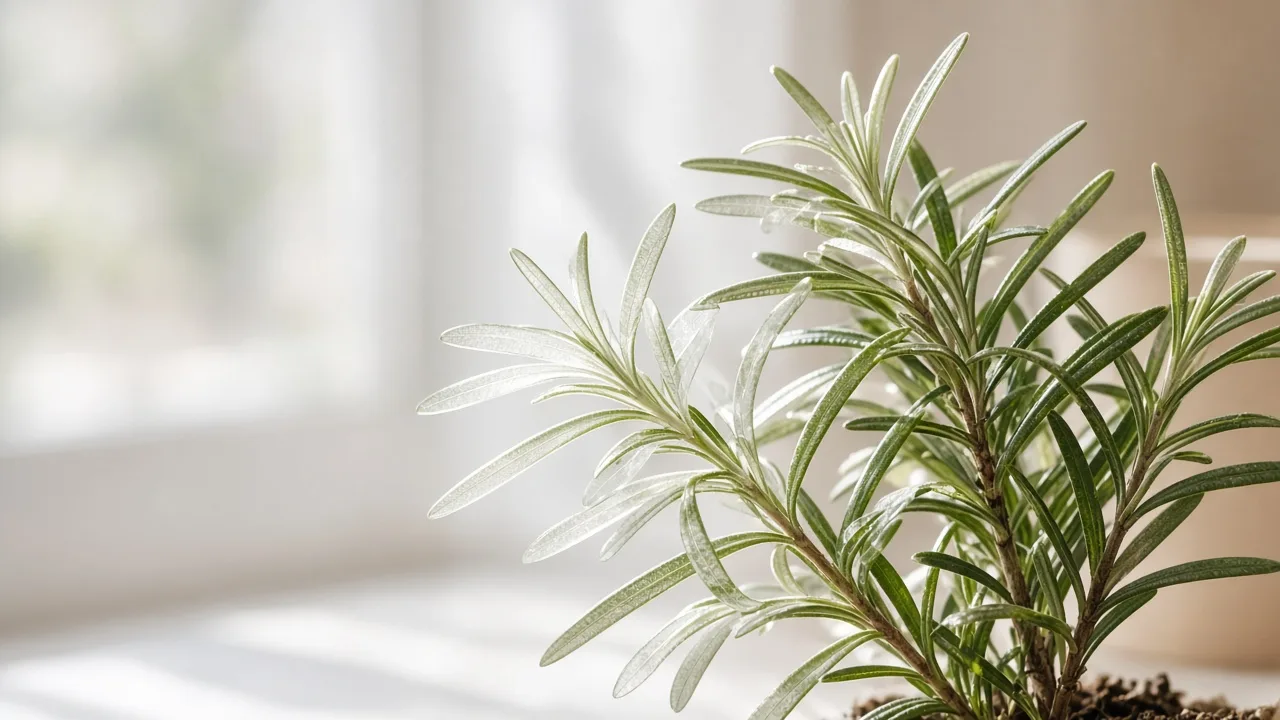
Transparent Leaves on Rosemary: Causes, Checks & Fixes
This guide covers transparent leaves on Rosemary. See also the general Transparent Leaves guide, watering, and light pages for this plant.
Transparent Leaves on Rosemary: Causes, Checks & Fixes
Quick answer
A pale Rosemary needle is not automatically a transparent-leaf problem. The upper surface should be green, while the underside is naturally white and fuzzy. A needle that looks glassy through both sides, feels limp or water-soaked, or collapses is different. That appearance does not name a disease or tell you whether the cause is cold or a wet root zone.
First, check the mix about 5 cm below the surface before watering. If it is damp, wait; Rosemary prefers dry-to-medium, well-drained soil and is vulnerable to decline in wet conditions. If the change began after a cold night, shelter a container-grown plant from another frost while you monitor the affected shoots.
What true translucence looks like on Rosemary
Rosemary leaves are narrow, evergreen needles. NC State describes the upper surface as green and the underside as white and tomentose, meaning it has a dense fuzzy covering (NC State’s Rosemary profile). That natural underside can appear pale or silvery without being damaged. Compare the same side of an affected needle with several healthy needles before changing care.
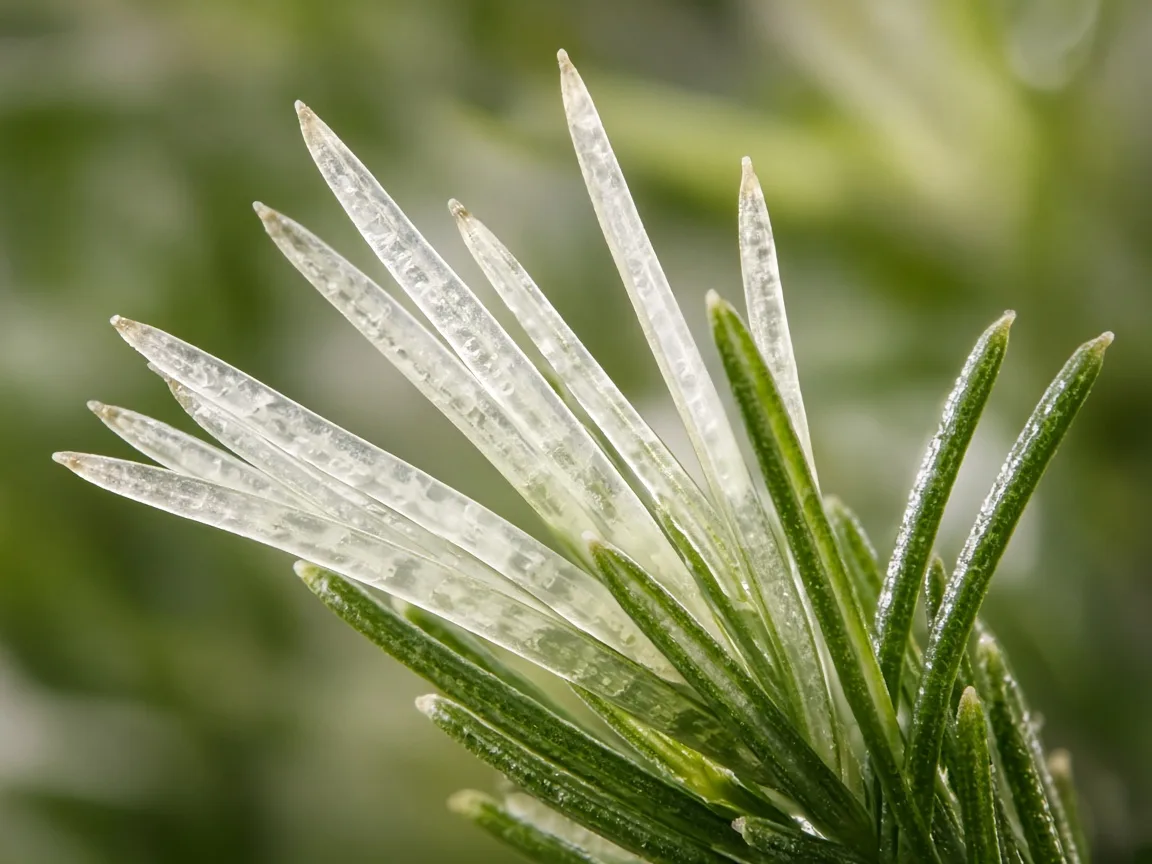
Some Rosemary needles look pale and glassy beside firm green growth; inspect both sides before deciding whether the plant is injured.
True translucence usually looks more like water-soaked tissue than a matte, fuzzy underside. It may be limp, soft, or collapsing and can later turn brown or black. Do not diagnose root rot, frost injury, or disease from clarity alone. The general transparent-leaf guide explains the symptom across plants; Rosemary’s normal leaf surface and growing conditions help narrow the cause here.
Check the timing before treating
Did the change follow cold or frost?
Note any cold snap, move to an unheated porch, or overnight exposure near a cold window. Cold injury can take days to show after a freeze; UC IPM describes affected shoots curling, turning brown or black, and dying, with foliage that can look scorched (UC IPM’s frost guidance). A translucent patch that appears after cold is a reason to protect the plant and observe it, not proof that frost was the cause.
If Rosemary is in a pot, move it to a bright, frost-free place and keep it away from a heater or cold draft. Do not cut back every pale shoot immediately. Wait until living and dead tissue are easier to distinguish, then prune only the parts that are clearly dead. The Rosemary light guide can help you choose a bright position after the cold risk has passed.
Has the mix stayed wet?
Feel the mix about 5 cm down and lift the pot if you can. A persistently damp mix, a blocked drainage hole, standing runoff, yellowing leaves, or a soft stem base makes root stress more plausible than the transparent appearance by itself. Rosemary has low tolerance for wet, humid conditions; NC State lists root rot and botrytis among its common diseases and identifies overwatering as a frequent cause of plant decline or death (NC State’s Rosemary profile). The Rosemary soil guide covers drainage, while the Rosemary watering guide helps you time the next watering by soil condition rather than by a calendar.
Gardening Know How describes root-affected Rosemary as becoming dull or yellow before leaves turn soft brown, often while the mix is still wet (Gardening Know How’s symptom guide). If that pattern matches, check whether the pot drains freely and whether stems remain firm. A Rosemary root-rot guide is the better next page if you find soft roots or a failing stem base.
Are the leaves only stippled or dusty?
Fine pale dots, webbing, or residue are not the same as a whole needle turning glassy. Inspect the undersides and the joints where needles meet stems. Rosemary can host spider mites indoors, so look for visible pests before considering a pest treatment (NC State’s Rosemary profile); a single pale patch is not enough to justify spraying.
First fix for Rosemary
Make one check before changing its routine: test the mix at 5 cm and do not water while it is damp. Rosemary is suited to full sun and loose, well-drained soil, as Delaware Cooperative Extension notes (Delaware Cooperative Extension’s Rosemary guidance); NC State likewise recommends full sun and dry-to-medium, well-drained conditions. If the pot is wet, let it drain and dry appropriately, empty any standing runoff, and confirm that water can escape through the holes. Do not repot unless the mix cannot drain or you find clear root damage.
If the mix is already dry and a cold event preceded the symptom, keep the container sheltered and avoid watering just to treat the color. The Spruce notes that Rosemary is vulnerable to root rot in overly wet or cold soil, so adding water to a cold, damp pot can compound stress (The Spruce’s Rosemary care guide). Change one condition at a time so the plant’s response stays readable.
Recovery and when to escalate
Use the symptom trend rather than a fixed countdown. After cold exposure, some injury may not become clear for several days; in locally adapted plants, new growth can replace cold-damaged tissue over the following season (UC IPM’s frost guidance). That is not a guarantee for every potted Rosemary, so judge progress by whether discoloration stops spreading, stems stay firm, and later shoots remain green.
Seek a closer diagnosis if the stem base softens, several branches collapse, the mix smells sour, or damage continues despite correcting the likely exposure. If only a few needles are affected and the woody stems and roots are firm, keep the plant stable and avoid pruning healthy growth. For broader yellowing or browning, compare the separate Rosemary yellow-leaves guide and Rosemary brown-leaves guide; those patterns may point to a different issue.
Related Rosemary guides
Use this page when the needles look glassy or water-soaked but the cause is unclear. Start with the Rosemary problems hub to compare symptoms, then move to the root-rot guide only if you find wet-root or stem-base signs. The Rosemary plant page gives the broader growing profile.
Related tool
Use the Plant Problem Diagnosis Tool to compare the visible symptom with Rosemary’s recent weather, soil moisture, and care changes before treating.