Whiteflies on Rubber Plant: Causes, Checks & Fixes
Quick answer
Whiteflies on Rubber Plant flutter from leaf undersides in a white cloud when disturbed. First step: isolate the plant the same day you see flying white insects, then wash every reachable leaf underside with lukewarm water.
Whiteflies on Rubber Plant: Causes, Checks & Fixes
This guide covers whiteflies on Rubber Plant. See also the general Whiteflies guide, watering, and light pages for this plant.
Whiteflies on Rubber Plant: Causes, Checks & Fixes
Quick answer
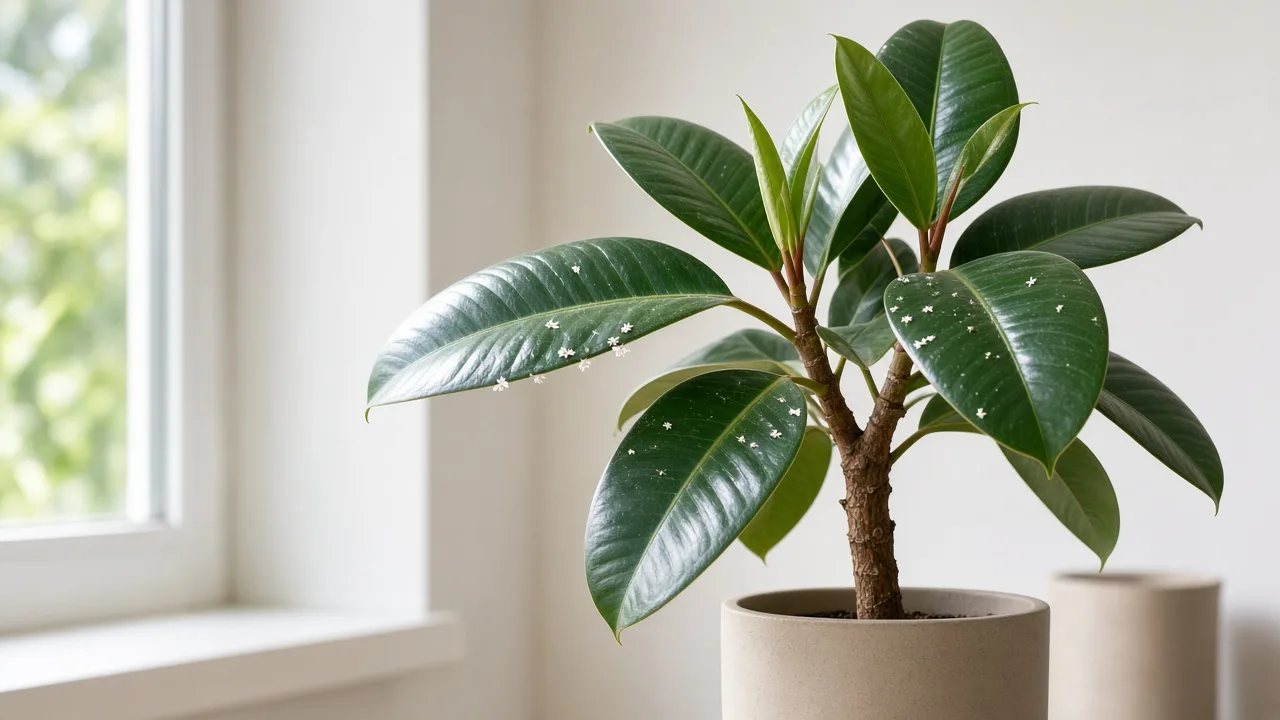
Whiteflies on Rubber Plant (Ficus elastica) appear as tiny white, moth-like insects on leaf undersides. Disturb the plant and adults flutter away in a white cloud before resettling. Nymphs look like flat pale disks glued to the glossy backs of large leaves.
For general whitefly biology and life cycle, see our whiteflies guide. On Rubber Plant, pests often hide at leaf petiole bases on thick woody stems, along glossy undersides, and inside the bright red sheaths that wrap new leaves-places a quick top-down check misses.
First step: isolate the plant the same day you see flying white insects, then wash every reachable leaf underside with lukewarm water.
What whiteflies look like on Rubber Plant
Rubber Plant leaves are stiff, leathery, and often 8 to 12 inches long with raised pale midribs underneath. Those thick petioles and the upright tree-like crown create long feeding surfaces where whitefly nymphs stay glued out of sight.
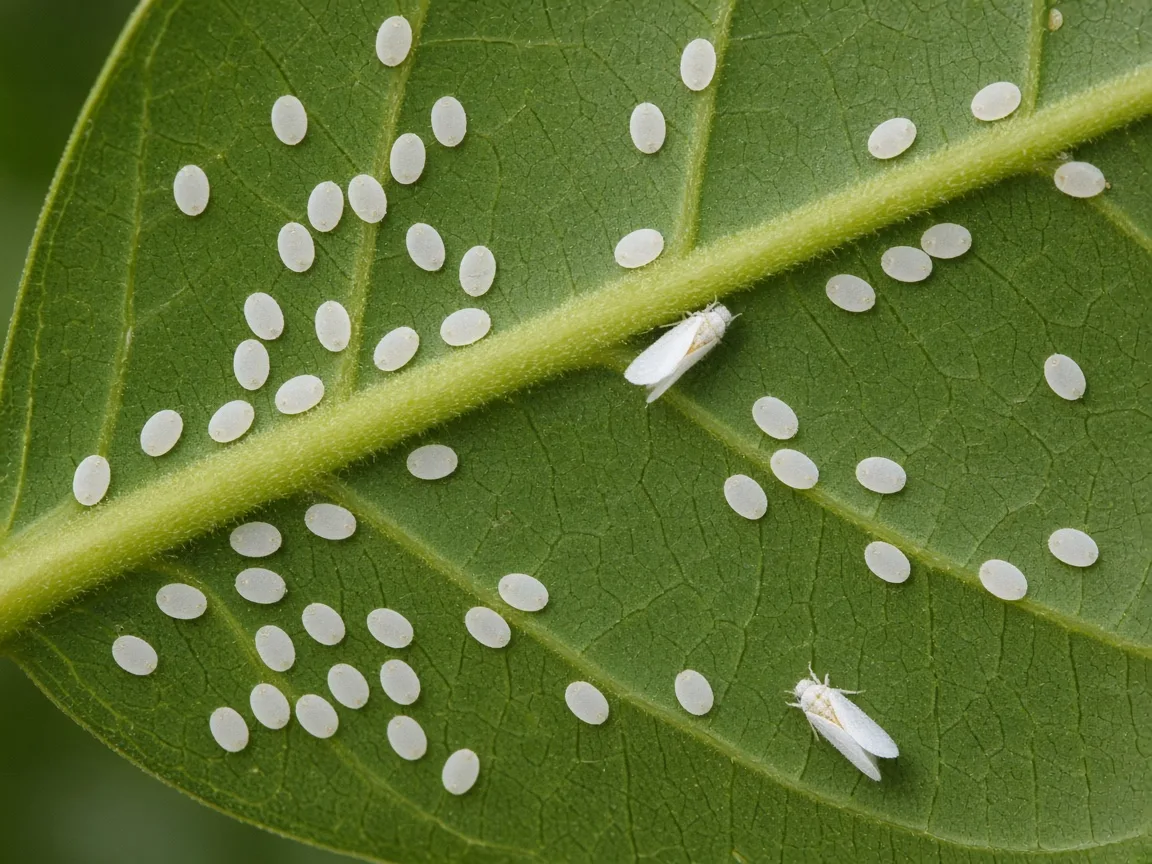
Whitefly nymphs on a Rubber Plant leaf underside-flat pale disks distinct from mealybug wax or spider mite stippling.
Typical signs on Ficus elastica:
- A white cloud of adults when you water, tap, or move leaves
- Flat, oval, immobile nymphs on leaf undersides near midribs and petiole bases
- Sticky honeydew on glossy upper surfaces or furniture below
- Black sooty mold growing on honeydew-coated leaves
- Yellowing, silvering, or stunted new growth at the crown
- Ant trails on the pot or shelf farming honeydew
Unlike spider mites, you will not see fine stippling and webbing unless mites are also present. Unlike mealybugs, there are no cottony wax clusters-whiteflies look like tiny white moths in flight and flat disks at rest.
Why Rubber Plant gets whiteflies
Whiteflies are not caused by one watering mistake. They arrive on new nursery stock, spread from nearby infested plants, and multiply in the warm indoor rooms where Rubber Plant grows year-round.
Indoor warmth removes natural checks. Heated homes lack outdoor predators and parasites that would limit whiteflies in a garden. Populations can reproduce continuously when temperatures stay mild.
Rubber Plant’s structure hides early colonies. Large glossy blades make undersides hard to see from across the room. The tree-like habit with stiff stalks and branch forks gives nymphs protected feeding sites that sprays miss if you only treat the top few leaves.
New growth is prime real estate. Tender leaves emerging from red sheaths at the stem tip attract sap feeders before the blade fully opens. A plant pushed with excess fertilizer and steady moisture produces soft tissue whiteflies prefer.
Introduction and contact spread. Whiteflies hitchhike on new purchases, shared watering trays, and leaves touching between pots. Mealybugs, scales, and spider mites are the main insect issues NC State lists on Ficus elastica, but whiteflies commonly attack many houseplants when conditions favor them.
The red-sheathed growing tip: where Rubber Plant hides whiteflies
Ficus elastica unfurls new leaves from bright red protective sheaths at the stem apex. Whitefly adults often lay eggs on the undersides of partially opened blades and on leaves still tucked inside those sheaths.
That matters because many owners inspect mature foliage but skip the crown. By the time adults fly when you water, nymphs may already cover the newest leaf and the one behind it. During treatment, peel back each red sheath gently with a hand lens and check the pale underside before it hardens to full gloss.
Work from the growing tip downward on every pass rather than treating only the lower canopy that looks worst from eye level.
How to confirm the cause
Run through these checks before buying spray:
- Cloud test - Tap or mist a leaf. A burst of tiny white insects that resettle on undersides points to whiteflies.
- Nymph check - Hold a leaf to bright light. Flat, legless, oval disks glued to the underside confirm immobile nymph stages.
- Honeydew test - Rub a glossy upper surface. Tacky residue with optional black sooty film means sap feeders, not dust or hard-water spots.
- Crown and petiole inspection - Follow the main stem from soil line up, opening red sheaths and checking where each thick petiole meets wood.
- Neighbor scan - Inspect every plant on the same shelf, especially other Ficus, hibiscus, and poinsettia-whiteflies move between hosts.
- Lookalike rule-out - No cottony wax (mealybugs), no silvery streaks (thrips), no stippling plus webbing (mites).
- Care cross-check - Overwatering on Rubber Plant causes yellow leaves without flying insects. Confirm pests before blaming culture alone.
If you see the cloud, nymph disks, and honeydew together, whiteflies are confirmed.
First fix for Rubber Plant
Move the plant to an isolated spot with bright indirect light, then wash every reachable leaf underside with lukewarm water and mild dish soap on a soft cloth.
Isolation stops adults from drifting to clean plants when you disturb foliage. A thorough underside wash dislodges nymphs and eggs that sprays would never reach on thick Rubber Plant leaves. Support each large blade with one hand while you wipe the back with the other-work from petiole base to tip.
Wear gloves if stems are cut or bruised-the milky latex sap irritates skin. Do not shower the whole pot on day one if soil is already wet; focus on foliage, not flooding the root zone. Do not apply oil or soap until you finish the first wash pass and let leaves dry.
Washing thick glossy leaves without drowning roots
Rubber Plant tolerates leaf washing better than repeated soil soaking, but its large blade size makes thorough coverage slow. Plan for twenty to forty minutes on a mature specimen the first session.
Use lukewarm water, not cold tap shock that can trigger leaf drop on Ficus. Clemson notes cold drafts can cause leaf loss on rubber plant. Wipe undersides with a soft cloth or sponge; a gentle shower in the tub works if you tilt the pot so water runs off leaves without saturating mix.
Because leaves are waxy, soap helps cut honeydew film so you can see remaining nymphs. Rinse soap off after wiping so residue does not spot glossy surfaces. Repeat the wash every three to five days through at least three whitefly generations before judging failure.
Keep the plant in isolation with a saucer that catches drips-honeydew and dislodged nymphs should not land on furniture or neighboring pots.
Step-by-step recovery
After the first wash:
- Repeat physical removal on label intervals-washing, pruning heavily infested lower leaves, or vacuuming adults with a handheld hose on low suction.
- Add yellow sticky traps near the canopy to catch flying adults without replacing washing. One trap per couple of plants is a common recommendation for light infestations.
- Apply insecticidal soap or horticultural oil only after confirming active nymphs on undersides. Cover every reachable back surface, including petiole bases and crown sheaths. Reapply at five- to seven-day intervals through at least four treatments because egg and pupal stages resist contact products.
- Remove or bag heavily infested leaves that harbor dense nymph colonies on immobile stages.
- Manage ants on pot rims and shelves if present-ants protect honeydew producers and interfere with natural enemies.
- Hold fertilizer until new growth opens clean. Soft flushes attract whiteflies back to the crown.
- Two clean weeks in quarantine before returning the plant to a shared display-check red sheaths and lower petiole bases on a weekly schedule.
If colonies cover most of the canopy after four full treatment cycles, discarding the plant may cost less than endless retreatment-especially on a specimen already weakened by root issues or repeated leaf drop.
Recovery timeline
Physical washing shows fewer flying adults within days on small outbreaks. A full soap or oil cycle with repeat applications typically takes two to four weeks. Large tree-like Rubber Plants with deep petiole crevices may need six weeks of monitoring before you declare the plant clean.
Old leaves with yellowing or sooty mold rarely regain perfect gloss. Judge recovery by firm stems, new blades opening without nymph disks at their bases, and no white cloud when you water for at least fourteen days.
Lookalike symptoms to rule out
| Sign | Likely cause |
|---|---|
| Cottony white wax in axils | Mealybugs |
| Silvery streaks and distorted tips | Thrips |
| Fine stippling with webbing | Spider mites |
| Hard brown bumps on stems | Scale insects |
| Uniform yellow leaves, no insects | Overwatering or not enough light |
Mistakes to avoid
Do not return the plant to your collection after one wash. All life stages overlap indoors-plan for repeats through multiple generations.
Do not soak soil repeatedly while fighting flying pests. Rubber Plant roots rot easily in wet mix, and leaf drop from root stress complicates pest monitoring.
Do not spray only the upper leaf surface. Nymphs feed on undersides; missing backs leaves the colony intact on glossy Rubber Plant blades.
Do not prune heavily without gloves. Latex sap is messy and the plant is toxic to cats and dogs if chewed.
Do not use outdoor pesticides indoors without label clearance for houseplants and whiteflies.
Do not ignore shelf mates. Whiteflies on one tall Rubber Plant often mean hidden nymphs on lower pots.
Rubber Plant care cross-check
While treating pests, keep baseline care stable:
- Light - Bright indirect light supports recovery. Dim corners slow new growth and extend rehab time.
- Water - Water when the top 2 inches of soil are dry. Let the pot lighten before the next drink; avoid saucers holding standing water.
- Humidity - Target 40–60%. Stable humidity reduces extra leaf-drop stress while you handle leaves repeatedly.
- Temperature - Keep above 55°F and away from cold drafts. Sudden drops trigger leaf loss that hides new nymph colonies.
- Dust - Wipe large glossy leaves occasionally between treatments. Clean surfaces make fresh honeydew easier to spot.
Fixing only the bugs while ignoring wet soil or dark placement often brings whiteflies back to the crown.
How to prevent whiteflies next time
Quarantine every new plant for at least two weeks before placing it near your Rubber Plant. Inspect undersides and crown sheaths at purchase-dealers often miss pests on large Ficus specimens.
Add whitefly checks to weekly care: one pass up the trunk with a hand lens takes minutes once you know the hiding spots. Tap a leaf each time-if no cloud appears for weeks, you are ahead of the next generation.
Keep plants spaced so leaves do not touch. Clean stakes, saucers, and shelf surfaces after a prior outbreak.
When bringing plants indoors for winter, inspect them before they rejoin the room with your Rubber Plant.
When to worry
Treat as urgent when flying adults appear every time you water, honeydew drips onto furniture daily, ants swarm the pot, or new red-sheathed leaves stall before opening. Heavy feeding on a plant already dropping leaves from overwatering or cold drafts can spiral quickly.
A few nymph disks on one lower leaf, caught early, are manageable. Scale the response to the spread you actually see-not the panic a white cloud can trigger.
Conclusion
Whiteflies on Rubber Plant hide on glossy undersides and inside red crown sheaths until a white cloud gives them away. Isolate first, wash every back surface, then follow with sticky traps and thorough soap or oil on a repeat schedule until new growth comes in clean. Stable light, correct watering, and weekly underside checks keep this tree-like houseplant ahead of the next flying generation.
When to use this page vs other Rubber Plant guides
- Rubber Plant watering guide - Use for routine moisture checks before assuming whiteflies is the main issue.
- Rubber Plant problems hub - Browse all common issues on this species.
- Yellow Leaves on Rubber Plant - Different entry point when leaves yellow without flying insects.
- Mealybugs on Rubber Plant - Use when you see cottony wax, not flying white moths.
- Spider Mites on Rubber Plant - Use when you see stippling and webbing, not a white cloud.