Low Humidity on Sago Palm: Causes, Checks & Fixes
Quick answer
Sago Palm tolerates average household humidity well-dry air alone rarely hurts it. Crispy leaflet tips usually trace to underwatering, salt in tap water, or spider mites that thrive in dry conditions. First step: probe soil moisture and inspect frond undersides before raising humidity.
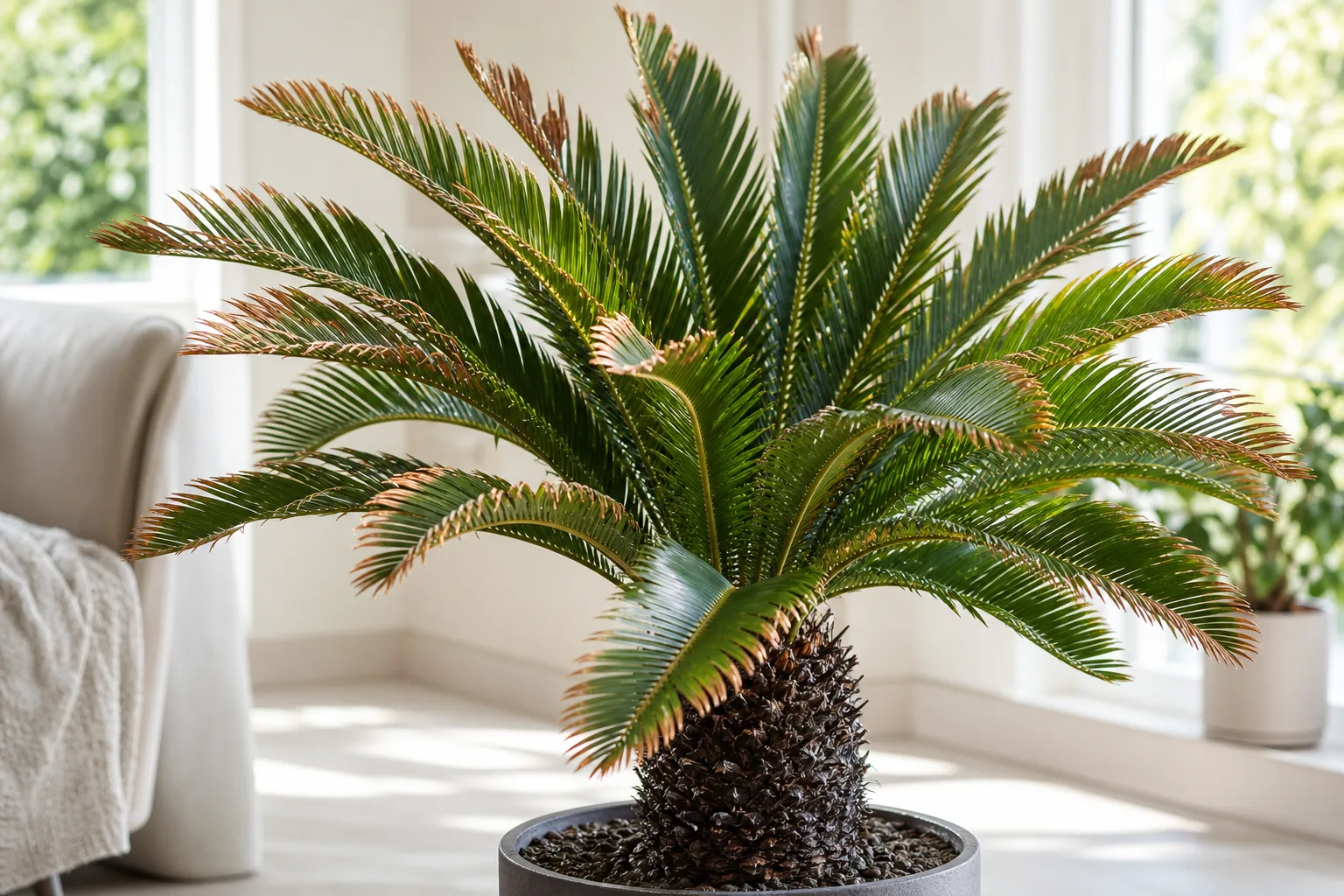
Low Humidity on Sago Palm: Causes, Checks & Fixes
This guide covers low humidity on Sago Palm. See also the general Low Humidity guide, watering, and light pages for this plant.
Low Humidity on Sago Palm: Causes, Checks & Fixes
Quick answer
Sago Palm (Cycas revoluta) is a slow-growing cycad, not a true palm-and it is far less fussy about humidity than ferns or calatheas. Average household humidity is adequate for Sago Palm overview. Most indoor Sago Palms live comfortably at 30–50% relative humidity without a humidifier.
When owners search for “low humidity” problems, they usually notice crispy brown tips on stiff, glossy leaflets or slower-than-expected new frond growth in winter. Those symptoms overlap heavily with underwatering, mineral buildup from tap water, heat-vent placement, and spider mites that thrive in dry air.
First step: probe the top 2–3 inches of soil and inspect frond undersides for mites before you buy a humidifier. If soil is bone dry and leaflet backs show stippling or fine webbing, fix watering and pests first. Dry air alone is rarely the primary culprit on Sago Palm.
What low humidity looks like on Sago Palm
Sago Palm carries its foliage in a rosette crown atop a thick, shaggy trunk. Each frond is a rigid feather of narrow leaflets with spiny tips and rolled-down margins. When environmental stress hits, damage shows on the leaflet edges first, not as soft wilting across the whole plant.
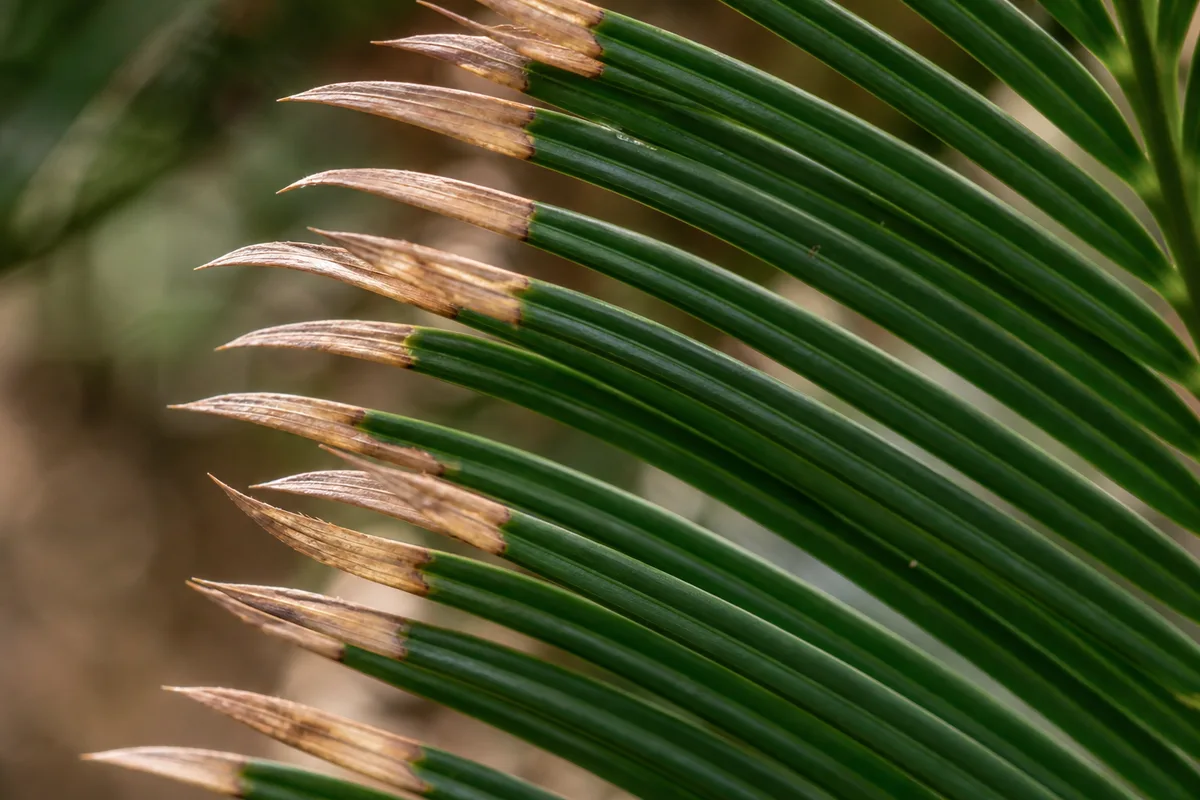
Brown crispy tips on otherwise green stiff leaflets - tip burn from dry air often overlaps with underwatering or salt burn.
Typical signs owners attribute to low humidity:
- Brown or tan crispy tips on otherwise green leaflets
- Dry, papery margins that progress slowly inward from the tip
- Slightly slower emergence of the next crown flush during heated winter months
- Leaflets near a heating vent or sunny window drying faster than fronds on the opposite side
What low humidity alone usually does NOT cause on Sago Palm:
- Yellowing of entire lower fronds with a soft, spongy trunk base (overwatering or root rot)
- White stippling with fine silk webbing on leaflet undersides (spider mites)
- Hard brown bumps on stems and frond bases (scale)
- Sudden collapse of the central new spear (crown rot, severe drought, or cold damage)
Because Sago Palm grows very slowly, tip burn can sit unchanged for weeks. That slow timeline makes it easy to assume humidity is the problem when Sago Palm watering guide or pests are actually driving the damage.
Why Sago Palm rarely struggles with dry air
Sago Palm evolved in subtropical Japan and southern China, where outdoor humidity is moderate-but as a houseplant it behaves more like a tough evergreen shrub than a rainforest understory plant. Missouri Botanical Garden notes that spider mites can be problematic in dry air, which implies the species tolerates normal indoor dryness well enough that mites, not the plant itself, are the main humidity-linked risk.
Several traits explain why Sago Palm outlasts humidity-sensitive houseplants:
- Leathery, narrow leaflets lose water slowly compared with thin tropical foliage.
- Drought tolerance when established-the plant stores resilience in its caudex-like trunk and prefers soil to dry between waterings.
- Slow metabolism means it does not constantly push tender new leaves that demand tropical humidity.
Winter heating drops indoor humidity toward 20–30%, which can accelerate tip drying-but usually only when combined with irregular watering, hard tap water, or placement above a radiator. Dry air by itself at typical room temperatures rarely kills a healthy Sago Palm.
The more dangerous moisture mistake on this plant is too much water around the crown, not too little humidity. Overwatering and poor drainage cause root rot on Sago Palm. Misting the crown daily or letting water sit in the frond rosette creates rot risk that far outweighs the benefit of slightly higher humidity.
How to confirm the cause
Work through these checks in order. Stop when you find a clear match-there is no need to stack fixes.
-
Soil moisture depth - Insert your finger or a bamboo skewer 2–3 inches into the mix. If it comes out completely dry and the pot feels light, underwatering-not humidity-is the likely driver of crispy tips. If the top is dry but the lower root zone stays wet for days, overwatering may be yellowing lower fronds while tips burn from salt stress.
-
Water source and salt crust - White crust on the pot rim or soil surface suggests mineral buildup from tap water or fertilizer. Fluoride and salts concentrate at leaflet tips as water evaporates, mimicking low-humidity burn. Flush the pot with plain water until runoff runs clear if crust is visible.
-
Placement audit - Note heat vents, space heaters, fireplace proximity, and cold winter window glass. Fronds on the vent side browning first points to localized dry heat, not whole-room humidity. Move the plant before buying equipment.
-
Pest inspection - Lift fronds gently and examine leaflet undersides and the crown center with a hand lens. Spider mites cause stippling, bronze discoloration, and webbing, especially on water-stressed plants in hot, dry conditions. Shake a frond over white paper-moving specks confirm mites.
-
New growth check - The central spear (newest emerging frond) should stay firm and green. Soft, yellow, or foul-smelling crown tissue indicates rot or severe stress unrelated to humidity. Firm crown + tip burn only = environmental or watering issue.
-
Humidity reading (optional) - A hygrometer near the plant confirms whether air is genuinely below 25% for weeks. Readings of 30–50% rule out humidity as the primary problem and redirect you to watering or pests.
If soil moisture is even, no pests appear, placement is stable, and tips still crisp in sustained sub-25% dry heat, low humidity is a reasonable secondary diagnosis.
First fix for Sago Palm
Water thoroughly when the top 2–3 inches of mix are dry, letting excess drain fully-then inspect all frond undersides for spider mites the same day.
This single step addresses the two most common drivers of “humidity” symptoms on Sago Palm: drought stress and mite outbreaks in dry air. Water-stressed plants are highly susceptible to spider mite damage, and underwatering produces the same crispy leaflet tips that owners blame on dry air.
Use room-temperature water until it runs from drainage holes, then empty the saucer. Do not mist the crown as a substitute for proper watering-wet frond bases invite rot on this cycad.
If you find stippling or webbing, rinse leaflet undersides with a firm spray of water in the morning so foliage dries by evening. Repeat every few days while monitoring. Hold off on Sago Palm repotting guide, fertilizer, and humidifier purchases until you have completed one full dry-down and water cycle and rechecked the crown.
Step-by-step recovery
Once the first fix is done, follow the path that matches what you confirmed.
If underwatering was the issue
- Resume a dry-down rhythm: let the top 2–3 inches dry before watering again indoors.
- Trim fully brown leaflet tips with clean scissors for appearance-they will not re-green.
- Wait for the next crown flush; new leaflets should emerge with clean edges, though this may take several months on a slow-growing plant.
If spider mites were present
- Continue morning rinses targeting undersides for at least a week.
- Keep humidity moderate and airflow gentle-mites prefer hot, dusty, drought-stressed conditions.
- If populations persist after rinsing, apply insecticidal soap or horticultural oil per label directions, testing one frond first. Avoid broad-spectrum insecticides that can spike mite numbers by killing predators.
If dry air and vent placement are confirmed
- Move the pot away from heating vents and cold window glass.
- A pebble tray or small room humidifier nearby can help during winter heating season-aim for stable 40–50% if tips keep crisping despite good watering.
- Skip daily crown misting; raise ambient humidity instead.
If salt or fluoride burn is suspected
- Flush the soil with several volumes of plain water over an hour, letting it drain completely.
- Switch to filtered or rainwater for a few months if tip burn continues on an evenly watered plant.
Do not increase watering frequency “because the air is dry”-Sago Palm is intolerant of overwatering and poor drainage. Wet roots plus dry air is a worse combination than stable dry-down watering in average humidity.
Lookalike symptoms
| What you see | More likely cause | Key difference from low humidity |
|---|---|---|
| Crispy tips only; crown firm | Underwatering or salt burn | Soil very dry or white crust present |
| Stippling + fine webbing on undersides | Spider mites | Damage spreads; mites visible on close inspection |
| Lower fronds yellow; trunk base soft | Overwatering / root rot | Soil stays wet; musty smell possible |
| Bleached patches on sun-facing side | Too much direct sun | Damage follows light exposure, not heating season |
| Entire fronds brown after cold snap | Frost or cold draft | Follows temperature drop below ~20°F exposure |
| Hard brown bumps on fronds | Scale insects | Bumps scrape off; sticky residue possible |
Brown tips alone are a weak signal for low humidity on Sago Palm. Always pair tip appearance with soil moisture, placement, and pest checks.
Mistakes to avoid
- Buying a humidifier before checking soil and mites - Most Sago Palms do fine at average humidity; equipment rarely fixes tip burn if watering is wrong.
- Misting the crown daily - Water sitting in the frond rosette promotes crown rot on cycads. Raise ambient humidity instead of wetting the growing point.
- Watering more often because air feels dry - Creates soggy roots while tips still burn from salts or drought cycles.
- Pruning green fronds aggressively - Sago Palm photosynthesizes through existing fronds for months. Remove only fully brown leaflets or dead fronds.
- Fertilizing stressed plants - Salt buildup worsens tip burn. Fix watering and flush the pot before feeding again in spring.
- Expecting old tips to recover - Damaged leaflet tissue does not re-green. Judge success by the next clean frond flush.
How to prevent problems next winter
- Place Sago Palm in bright filtered light for 4–6 hours daily away from vents and cold glass.
- Maintain the dry-down watering habit year-round, reducing frequency slightly in winter when growth slows.
- Scout frond undersides monthly during heated indoor season-catch mites before stippling spreads.
- Flush salts from the pot every few months if you use hard tap water.
- Accept that Sago Palm is inherently slow; one clean new frond per year indoors is normal, not a humidity failure.
Average humidity maintenance matters less than stable placement, consistent watering, and early pest detection on this species.
When to worry
Most tip browning on Sago Palm is cosmetic and correctable. Escalate your response when:
- The central new spear yellows, wilts, or smells foul - possible crown rot requiring immediate dry conditions and careful inspection, not more humidity.
- Lower fronds yellow in clusters while the trunk base feels soft - likely root rot from overwatering.
- Stippling and webbing spread weekly despite rinsing - mite population is outpacing cultural control.
- No new crown growth for a full growing season after you corrected care - may indicate root damage or chronic stress beyond humidity.
Sago Palm declines slowly, which gives you time to adjust-but crown failure is difficult to reverse. Act when the growing point shows distress, not when only old leaflet tips are brown.
Conclusion
Low humidity is an overrated diagnosis on Sago Palm. This tough cycad tolerates normal indoor air; crispy leaflet tips more often trace to underwatering, mineral-laden tap water, heat-vent placement, or spider mites exploiting dry conditions. Probe soil moisture and inspect frond undersides before changing humidity. Trim dead tips, stabilize watering, and watch the next crown flush-clean new leaflets mean your fix worked, even if damaged tips stay brown for the life of those fronds.
When to use this page vs other Sago Palm guides
- Sago Palm watering guide - Use for routine moisture checks before assuming low humidity is the main issue.
- Sago Palm problems hub - Browse all 3 common issues on this species.
- Brown Tips on Sago Palm - Different entry point when symptoms overlap with low humidity.