Not Enough Light on Sago Palm: Causes, Checks & Fixes
Quick answer
Not enough light makes Sago Palm pale, lean, and stall-with soil that stays wet too long. First step: move the pot to bright filtered sun for 4–6 hours daily; this cycad is not a low-light plant.
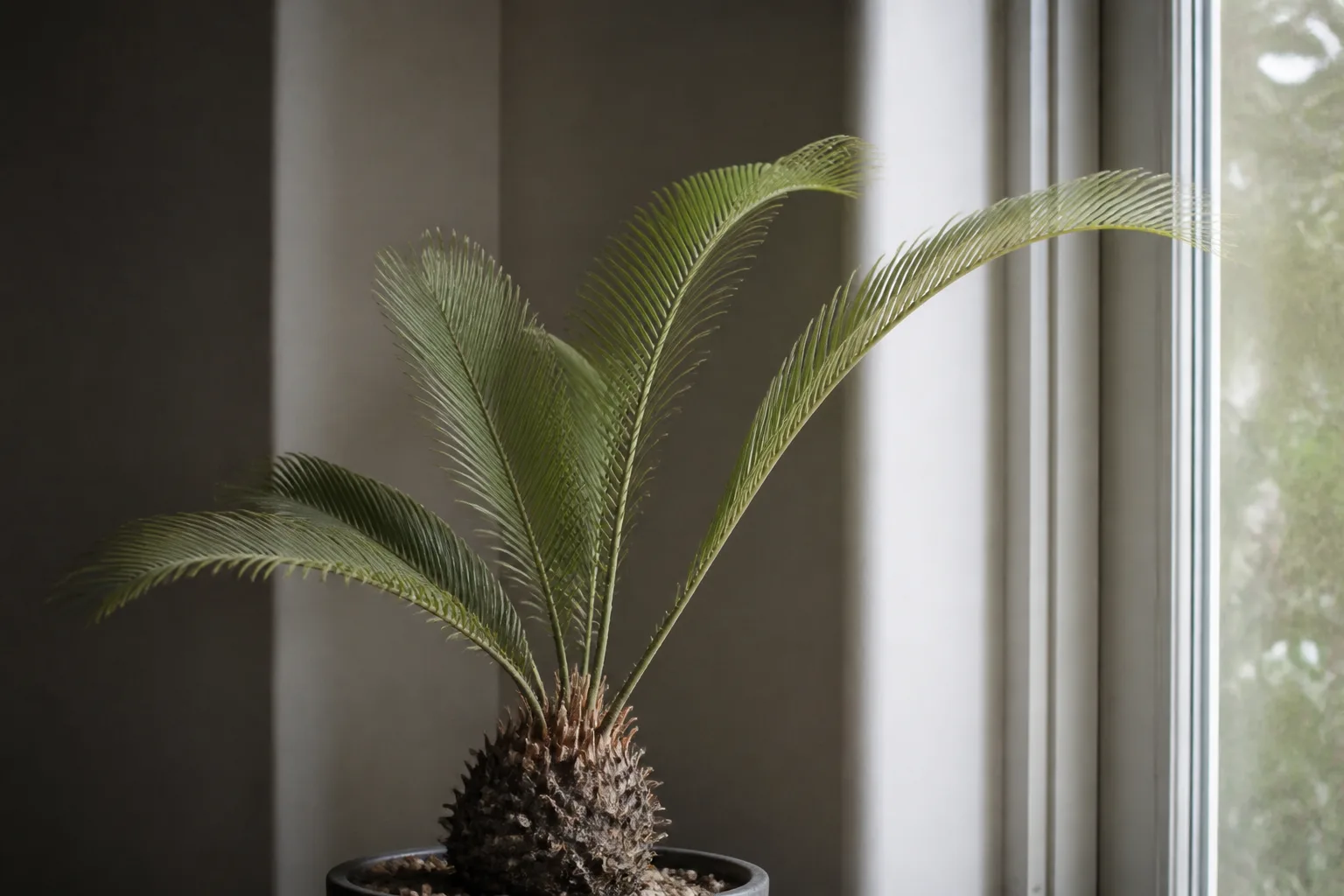
Not Enough Light on Sago Palm: Causes, Checks & Fixes
This guide covers not enough light on Sago Palm. See also the general Not Enough Light guide, watering, and light pages for this plant.
Not Enough Light on Sago Palm: Causes, Checks & Fixes
Quick answer
Sago Palm (Cycas revoluta) is sold as a tough, low-maintenance houseplant-which leads many owners to treat it like a snake plant or ZZ plant in a dim corner. That placement fails over time. Sago is a slow-growing cycad that needs bright, filtered sun for several hours each day indoors, not the deep shade of a bathroom or north-facing room.
When light is too weak, the crown stops pushing new fronds, existing leaves pale and lean toward glass, and photosynthesis slows. Slow growth means slow water use, so the same Sago Palm watering guide that worked in a sunny window leaves soil wet too long. Dim light plus damp mix is how an otherwise drought-tolerant sago develops yellow lower fronds, fungus gnats, and root trouble.
First step: move the pot to the brightest appropriate window and acclimate to stronger light over 7–10 days. Do not repot, fertilize, or increase watering on day one. Better light is the fix that makes every other care decision clearer.
What not enough light looks like on Sago Palm
Insufficient light on sago shows up as a slow pattern across the whole plant-not one random brown leaflet tip.
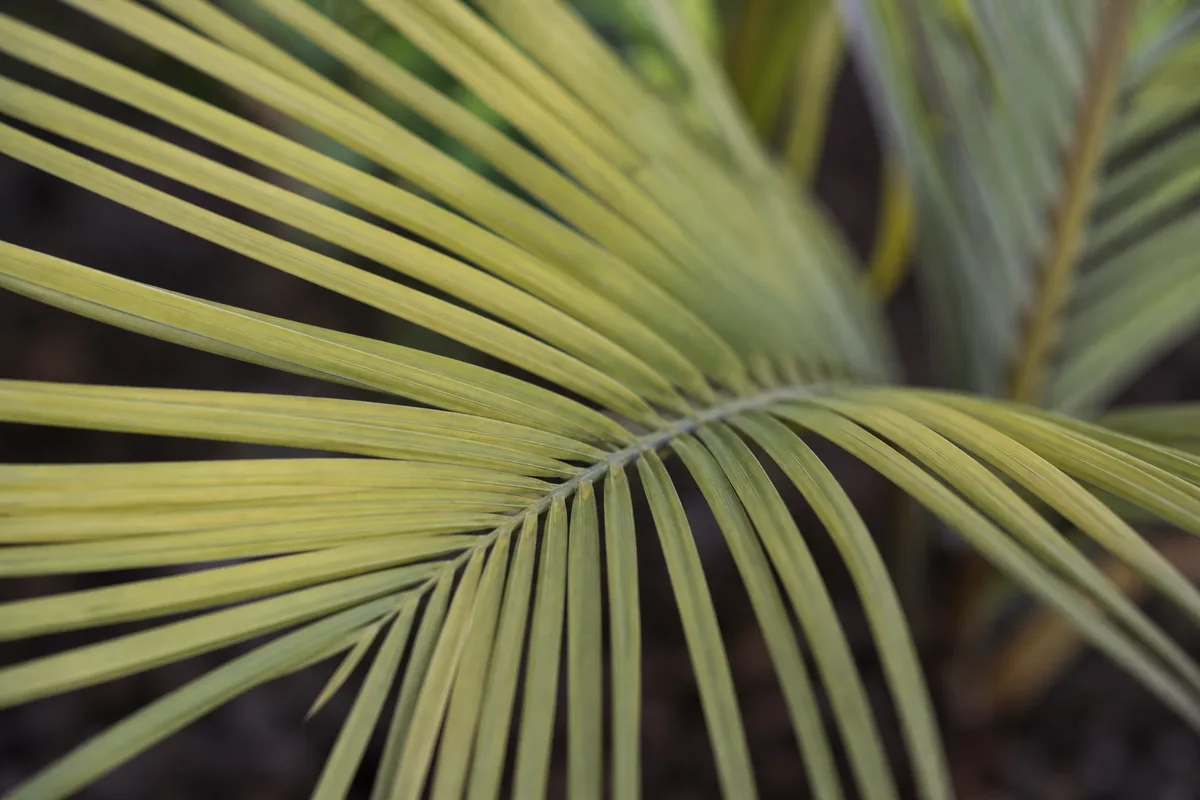
Pale dull fronds with thinner leaflets leaning toward glass - existing stretched tissue will not revert to deep green.
At the crown, watch for:
- Pale or washed-out green fronds - leaflets lose the deep glossy green and look dull or yellow-green, especially on the side farthest from the window
- Lean toward the brightest source - the rosette tilts or individual fronds arch sharply toward glass; plants stretch and lean when light reaches them from one direction, and rotating the pot does not stop new orientation within a week
- Long, soft-looking fronds - leaflets may appear thinner and less rigid than healthy sago foliage, which should feel stiff and leathery
- No annual crown flush - mature indoor sagos often produce one symmetrical ring of new fronds per year; in chronic shade, that flush may skip entirely through a warm season
- Sparse lower fronds - older leaves yellow and drop while the crown produces little replacement growth, leaving a thin silhouette
Below the soil line, the clue is timing: mix that stays damp 10–14 days after a normal watering in a dim spot. Inadequate light reduces transpiration, so the pot dries far slower than it would near a bright window.
Because sago grows slowly, symptoms creep in over months. A plant can look “fine but stagnant” for a full year before owners realize the crown has not flushed. Stretched or pale frond tissue does not revert-even after light improves. Judge recovery by new crown growth: darker color, tighter rosette, and stiff new leaflets on the next flush.
Why Sago Palm struggles in low light
Sago Palm is not a true palm-it is an ancient cycad native to southern Japan, where it grows in bright conditions with good drainage. Indoors, it belongs near bright east, west, or filtered south windows-not the low-light range where cast iron plants or peace lilies survive.
Photosynthesis drives water use. In bright filtered light, sago opens stomata, transpires, and pulls water through roots at a steady rate. In shade, that engine idles. Owners who keep the same weekly watering calendar without noticing the pot stays heavy are effectively overwatering a plant that is not using moisture. Sagos are intolerant of overwatering or poor drainage even though they tolerate drought once established.
Common situations that cause chronic under-lighting on sago:
- Placement more than 4–6 feet from the window, where light intensity drops sharply with distance
- North-facing rooms or windows blocked by buildings, trees, heavy sheers, or tinted glass
- Interior “decor” spots - foyer tables, bathroom counters, or office desks with no direct sun path
- Winter daylight shrink - same shelf all year, but shorter days cut usable hours from October through February
- Competition - taller furniture or other plants shading the rosette
- Post-move shock in reverse - sago summered outdoors in dappled sun, then brought back to a dim room without supplemental light
Low light also weakens the plant’s natural slow-growth rhythm. Young sagos may push several small flushes per year in good light; mature plants often flush once. In shade, that schedule stalls entirely, and the plant enters extended dormancy that looks like neglect but is really an energy deficit.
How to confirm the cause
Work through these checks before Sago Palm repotting guide, pruning, or feeding:
- Window direction and distance - Is the pot within 2–3 feet of an east, west, or filtered south window? North glass alone rarely supports healthy sago without grow lights.
- Filtered sun hours - On a clear day, watch whether bright light actually reaches the fronds for roughly four to six hours. Reflected room brightness is not the same as sun on the foliage.
- Crown flush history - Did the plant produce a ring of new fronds last spring or summer? No flush through two warm seasons strongly suggests insufficient light or severe root stress.
- Asymmetry test - Rotate the pot 180°. Within one to two weeks, frond tips should turn back toward the window if light is directional and too weak.
- Soil dry-down speed - After watering, note how many days until the top inch is fully dry. If the mix stays wet for two weeks in a dim corner, light and watering both need adjustment.
- Trunk and crown firmness - A firm trunk with pale, leaning fronds points to light stress alone. Soft tissue at the crown or sour-smelling wet mix suggests rot layered on top of slow water use-inspect roots before assuming light is the only issue.
- New frond shape - Yellow, crinkled, or frizzled new leaflets emerging from the crown suggest manganese deficiency (“frizzle top”), not simple low light. General pale growth across older fronds fits light or underfeeding better.
If fronds are brown and crispy on the sun-facing side in a bright window, too much direct sun may be the problem-not too little. If lower fronds yellow while soil stays soggy in a bright spot, look at overwatering first. Light deficiency fits best when growth is stalled, fronds lean toward glass, and the pot dries unusually slowly.
First fix for Sago Palm
Move the pot to the brightest appropriate location and increase light gradually over 7–10 days.
Sago coming from months in shade cannot jump straight into harsh midday sun through hot glass without scorching leaflets. Use the same acclimation principle you would for outdoor summer moves:
- Shift the pot closer to the glass by a few inches every two or three days, or
- Move from an interior shelf to an east window first, then to filtered south or west once fronds show no bleach spots, or
- Hang a sheer curtain on a south window to soften direct rays while still raising intensity
Target end placement:
- Indoors: within 2 feet of an east, west, or filtered south window where fronds receive filtered sun for 4–6 hours per day
- Outdoors (warm months only): morning sun or dappled bright shade; avoid harsh afternoon rays until acclimated
Pair the move with a watering reset, not extra water. In stronger light, the pot will dry faster. Check the top inch of mix with a finger before every drink-do not keep the old calendar from the dim corner. Never leave the pot standing in a full saucer.
Hold fertilizer until you see stable new growth or a crown flush beginning. Feeding a stalled sago in low light does not fix pale fronds and can burn roots on a plant that is not actively using nutrients.
Step-by-step recovery
Once light improves, follow this order:
- Complete acclimation - finish the gradual move before repotting or heavy pruning.
- Adjust watering - water thoroughly only when the top inch of mix is dry; in winter rest, let soil stay drier longer. Sagos prefer soil that nearly dries between drinks.
- Rotate weekly - a quarter turn prevents permanent one-sided lean while the rosette stabilizes.
- Remove only dead fronds - cut brown, fully dry leaves at the base with clean pruners. Do not strip green fronds hoping to force new growth; the crown needs existing foliage for energy until the next flush.
- Add supplemental light if windows are insufficient - full-spectrum LED grow lights 6–12 inches above the crown for 12–14 hours daily can carry sago through dark months; allow a dark period overnight rather than running lights continuously.
- Inspect roots only if the crown softens or soil stayed wet for weeks - if the trunk stays firm and mix dries at a normal pace after the light move, skip unpotting. If mix was chronically damp, unpot once to confirm roots are firm and light-colored, not brown and mushy.
- Treat frizzle top separately - if new fronds emerge yellow and distorted, test for manganese deficiency and apply a cycad-appropriate micronutrient product per label directions; correcting light alone will not fix deformed leaflets already expanding.
Recovery timeline
First two to four weeks: the plant should stop leaning aggressively; existing fronds will not regain deep green color.
One warm growing season: watch for a crown flush-one symmetrical ring of new fronds from the center. New leaflets should look darker and stiffer than the pale older set.
12–18 months: if no flush appears despite bright placement and corrected watering, reassess root health or consider grow-light supplementation through winter. Sagos are very slow; patience is normal, but indefinite stall in good light suggests another stressor.
Signs the problem is worsening: crown softness, persistent wet soil with sour smell, spreading yellow from bottom up while the center fails, or total absence of new growth through two consecutive warm seasons.
Lookalike symptoms
Manganese deficiency (frizzle top): new crown fronds emerge yellow, stunted, or crinkled with twisted or frizzled leaflet tips. Older fronds may stay green. This is a nutrient issue common on cycads in alkaline or depleted mix-not the same as general pale, leaning fronds from shade. Correct with manganese sulfate or a palm/cycad fertilizer with micronutrients; new deformed fronds will not straighten, but future flushes can normalize.
Overwatering in a bright window: lower fronds yellow while soil stays wet and may smell sour. Light is adequate; the watering rhythm is wrong. Let mix dry further between drinks and confirm drainage holes are open.
Scale or mealybugs: sticky residue, white cottony patches, or sooty mold on fronds-scale and mealybugs are common sago problems. Pests weaken plants but do not usually cause strong window-ward lean. Inspect leaflet undersides and trunk bases before moving the pot for light alone.
Normal slow growth: sago is inherently very slow-growing-a few inches of trunk growth per decade indoors. One flush per year is normal for mature plants. Do not confuse patience with pathology if fronds are deep green, stiff, and the pot dries predictably.
Mistakes to avoid
- Treating sago like a low-light plant - it survives short dim periods but will not thrive long term away from bright windows.
- Jumping straight to full south sun - unfiltered hot glass scorches leaflets; acclimate and use sheers.
- Watering on a calendar from the dim corner - soil that never dries invites root rot when photosynthesis is slow.
- Fertilizing a stalled plant - feed only after light and watering are stable and new growth resumes.
- Removing all pale fronds at once - the crown needs foliage for photosynthesis until replacement flush arrives.
- Repotting on day one - unnecessary unless roots are clearly rotting or mix has failed; light correction comes first.
- Confusing frizzle top with low light - distorted new growth needs manganese diagnosis, not just a window move.
How to prevent it next time
Place new sagos within a few feet of east, west, or filtered south glass from the start. Rotate the pot weekly for even exposure. Clean windows seasonally-grime and screens cut intensity more than owners expect.
In winter, watch for stretch or pale color as days shorten. A grow light from November through February prevents the slow decline that happens when the same summer placement becomes inadequate in shorter days.
If you summer the plant outdoors, acclimate in dappled shade first, then bring it back before frost. When it returns indoors, place it in the brightest spot you have-not the dim shelf it occupied before outdoor season.
Match watering to how fast the pot dries in current light, not last month’s schedule. Fast dry-down in summer sun means more frequent checks; slow dry-down in winter shade means fewer drinks.
When to worry
Sago declines slowly, which makes it easy to postpone action. Treat the situation as urgent when:
- No crown flush appears through two warm growing seasons despite corrected placement
- The crown feels soft or collapses inward
- Lower fronds yellow rapidly while soil stays wet and fungus gnats persist
- Trunk base shows brown, mushy tissue or sour odor from the mix
- The plant continues to lean and pale after four to six weeks in your brightest acclimated spot-root damage or chronic deficiency may need hands-on inspection
A sago with firm trunk, stable (if slow) dry-down, and improving color on the window-facing side usually has time to recover once light and watering align. Permanent damage to existing pale fronds is cosmetic until the next flush replaces the look of the crown.
When to use this page vs other Sago Palm guides
- Sago Palm watering guide - Use for routine moisture checks before assuming not enough light is the main issue.
- Sago Palm problems hub - Browse all 3 common issues on this species.
- Slow Growth on Sago Palm - Different entry point when symptoms overlap with not enough light.
- Yellow Leaves on Sago Palm - Different entry point when symptoms overlap with not enough light.