Sansevieria Moonshine Repotting Guide: When, How
Sansevieria Moonshine Repotting Guide: When, How, and Mistakes to Avoid
Sansevieria Moonshine Repotting Guide: When, How, and Mistakes to Avoid
Dracaena trifasciata ‘Moonshine’ — still sold as Sansevieria Moonshine — is marketed as unkillable, which makes repotting feel optional until something goes wrong underground. The RHS profile for ‘Moonshine’ describes an AGM-rated cultivar with stiff, upright, pale silvery-green leaves and a simple cultivation note: pot on only when pot bound. That tolerance is real. Moonshine can live years in the same container while mix compacts, salts build, and rhizomes slowly consume usable soil. Wait too long, jump two pot sizes, or repot into heavy peat while the plant sits in a dim corner, and the same slow biology that forgives neglect turns a silver showpiece into a dark green, mushy-base casualty within weeks.
This guide covers when Sansevieria Moonshine repotting is actually necessary, how pot size and gritty mix interact with this pale-leaf cultivar, how to divide pups at repotting without losing the metallic sheen, and what bright-light recovery looks like after transplant — including when root rot on Sansevieria Moonshine forces an emergency unpotting outside spring.
Why Moonshine Repotting Is Not Generic Snake Plant Advice
All trifasciata forms share rhizomatous roots and drought-built leaves. Moonshine adds cultivar-specific stakes that change how you time and finish a repot.
Silver foliage, light, and dry-down after transplant
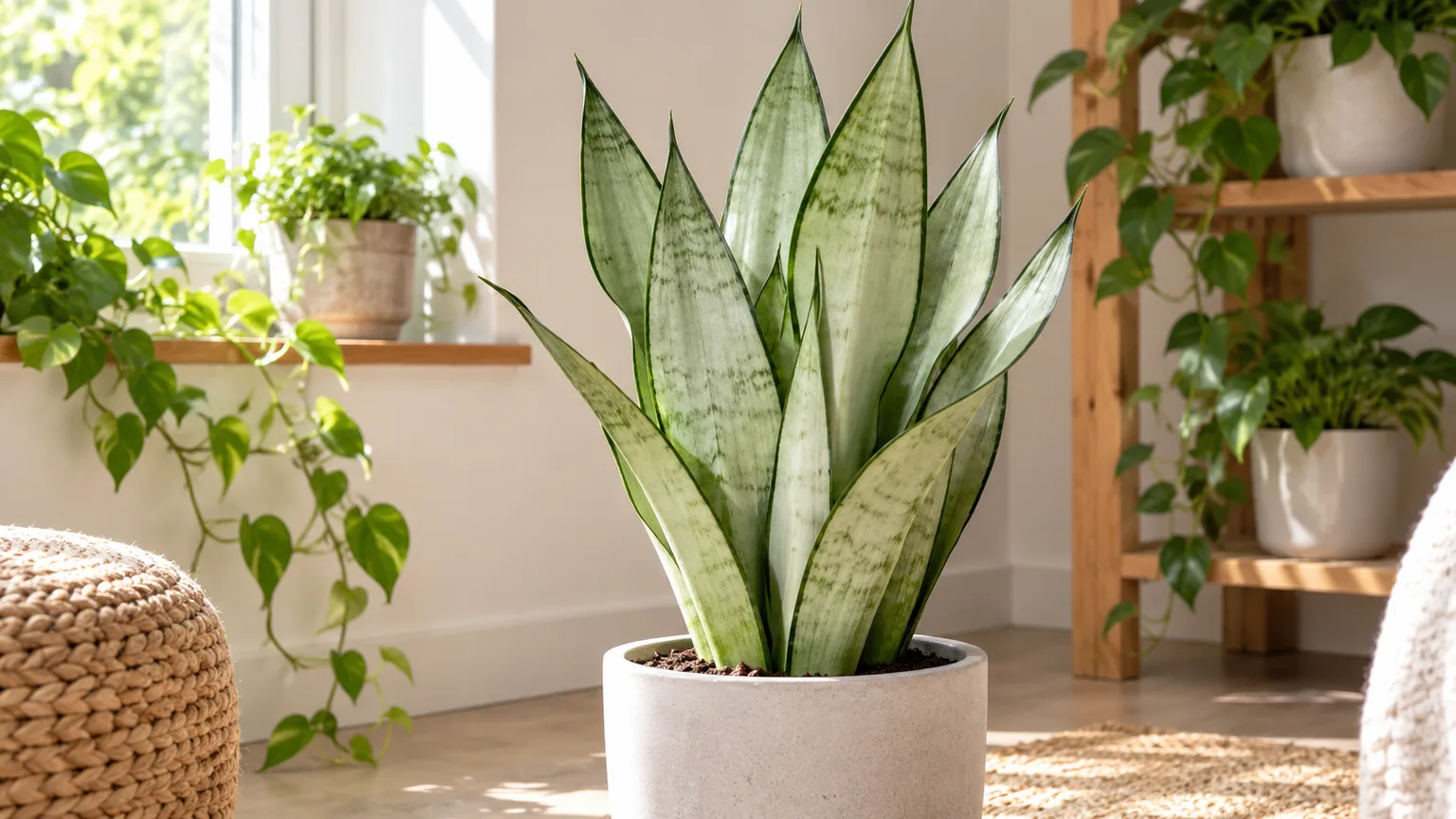
Moonshine is not a dark-band Laurentii or a bird’s-nest Hahnii rosette. NC State Extension lists ‘Moonshine’ among cultivars with silvery-gray foliage, light green blotches, and narrow dark green margins. The powdery silver cast on new leaves depends on bright indirect light — more than the “survives anywhere” label implies. After repotting, a Moonshine parked in a dim hallway dries slowly, stays metabolically quiet, and often pushes darker green leaves even when watering is conservative.
Treat post-repot placement as part of the procedure, not an afterthought. Hold the plant in the same bright zone that kept it silver — typically an east window or several feet back from south or west glass per your Sansevieria Moonshine light guide. If you must repot in winter, warmth and brightness matter more than for darker cultivars because wet mix plus cool dim conditions stall recovery. The RHS Moonshine profile also says protect from winter wet — a direct warning against repotting into fresh mix and watering heavily through a cold, low-light season.
Rhizomes, pups, and division to preserve the metallic cast
Below soil, Moonshine spreads through thick horizontal rhizomes that send up pups beside the main clump. Roots attach along those rhizomes rather than forming a dense fibrous ball. Repotting is often the best moment to divide offsets because each pup already has roots and crown tissue.
That matters genetically. The RHS sansevieria growing guide notes that variegated and patterned cultivars revert to solid green when propagated from leaf cuttings. Moonshine’s silver is a crown-level trait. Division preserves it; leaf segments usually do not. If you want more silver plants, separate pups during repot — the same window recommended for Sansevieria Moonshine propagation by suckers or division. Save leaf cuts for salvage when rhizome loss is severe, accepting green offspring.
When to Repot Sansevieria Moonshine
Calendar dates mislead slow growers. Watch the pot, the rhizome, and how fast mix dries in your actual light level.
Best season and the pot-bound rule
Spring through early summer is the safest routine window. As daylight lengthens and room temperatures sit in the 18–27°C (65–80°F) range Moonshine prefers, rhizomes resume growth and cut surfaces heal faster. Clemson HGIC guidance recommends repotting slow-growing houseplants every two to three years during active growth — not on a whim in winter.
The RHS Moonshine cultivation line is blunt: pot on only when pot bound. That means roots and foliage have filled the container, not that you bought a prettier ceramic. A healthy Moonshine that still drains well, dries on schedule, and pushes occasional silver leaves can wait another season even if you are bored with the pot.
Avoid routine winter repotting unless the plant is in distress — cracked pot, toppling clump, or active rot. Early fall works in warm, bright homes; late fall and winter repots extend shock because metabolism and evaporation both slow.
Clear signs the container is exhausted
Two or more of these together justify a spring repot:
- Roots emerging from drainage holes or rhizome pushing against pot walls
- Pot cracking or bulging under rhizome pressure — urgent, any season
- Water runs through in seconds without absorbing; plant wilts between sessions despite watering
- Growth stalled for a full season despite adequate light and conservative watering
- Plant toppling because broad silvery leaves outweigh a narrow base — stability issue even before roots escape
- White salt crust on soil surface with increasing brown tips — refresh mix
A single yellow lower leaf or one pup at the rim is not enough. Moonshine sheds old leaves normally. Do not repot a brand-new nursery plant on day one unless mix is sour or drainage is blocked — quarantine, learn dry-down speed, then repot when signs align.
Baseline interval: every 2–3 years for a typical indoor Moonshine in a 6–8 inch pot, matching plant-detail guidance and extension timing for slow growers.
Do Moonshines Tolerate Tight Pots?
Yes — mildly snug conditions help more than they hurt. A cosy pot limits excess wet soil around slow-colonizing rhizomes, which suits drought-adapted roots. The RHS sansevieria guide says newly bought plants are happy in original containers for years and prefer a cosy-fitting pot until roots and leaves completely fill it or the pot buckles.
Severe binding is different. When the rootball is mostly rhizome with little mix left, water channels straight through, salts concentrate, and rot risk rises even if you water carefully. Mildly snug: wait for spring. Moderately bound: repot in active season. Severely bound or sour-smelling: repot immediately. If you like the current pot size, root-prune outer rhizome, refresh all mix, and return to the same container — keeping at least two-thirds of healthy rhizome mass.
Choosing the Right Pot for Moonshine
Size upgrades that prevent rot
Move up only 1–2 inches in diameter — for example, 6 inches to 7 or 8, not 10 or 12. Moonshine rhizomes colonize new soil slowly. Clemson HGIC warns that oversized pots surround small root zones with wet mix for weeks — the classic overpotting rot path for succulents. One modest step up gives horizontal rhizome room without a swamp.
Drainage holes are non-negotiable. Penn State Extension recommends containers with holes because soggy soil kills snake plants more easily than drought. Decorative cachepots without holes need an inner nursery liner you water at the sink.
Rhizomes travel sideways. A shallow, wide pot often suits Moonshine’s broad upright leaves better than a tall narrow cylinder, especially for stability.
Terracotta, weight, and top-heavy clumps
Unglazed terracotta wicks moisture through porous walls — excellent if you tend to overwater Moonshine or live in humid rooms. Plant-detail guidance recommends terracotta for this cultivar precisely because silver-leaf owners often overcompensate with water in dim corners. Plastic retains moisture longer; weight the pot before watering. For clumps that tip, choose a wider, heavier base — gravel in the bottom is for stability, not drainage layers, which Clemson notes do not improve drainage.
Scrub reused pots with hot soapy water; bleach-rinse if the previous occupant had rot.
The Best Soil Mix for Repotting Moonshine
Moonshine needs mix that dries within a few days after a soak in a typical indoor pot. The RHS recommends free-draining peat-free cactus compost and flags overwatering as a common failure. Heavy peat-only indoor soil holds moisture around thick rhizomes long after leaves feel fine.
A reliable DIY blend: two parts commercial cactus/succulent mix, one part perlite or pumice, optionally one part coarse orchid bark. In humid homes, increase perlite. Finished mix should crumble in your hand, not clump sticky. If you only have all-purpose soil, blend 50/50 with perlite and coarse horticultural sand — never straight peat mix. UF/IFAS suggests soil-based potting mix with sharply reduced winter watering — drainage first, recipe second.
Match repot mix to your Sansevieria Moonshine soil guide so post-repot watering intervals stay predictable. pH 5.5–7.5 is comfortable when drainage is correct. Add horticultural charcoal after rot repots for aeration, not as a cure.
How to Repot Moonshine Step by Step
Gather fresh mix, a pot one size up, sterilized shears, gloves, tarp, and mesh for the drainage hole. Moonshine contains saponins toxic to cats and dogs per the ASPCA Dracaena listing — wear gloves if sap irritates skin and keep pups away from pets during division.
Day before: if soil is bone dry, light pre-moistening helps the rootball slide out. If mix is already moderately moist and roots are healthy, skip pre-watering.
Tip the pot sideways, support leaf bases, tap walls, and slide the rootball out — never yank leaves. Brush away loose old soil and inspect rhizomes. Healthy tissue is firm, white to tan, dry to touch. Rot is black, mushy, and sour-smelling.
Division, callusing, and planting depth
Division (recommended): identify pups with their own rhizome segment and roots; cut with a clean knife; let large cut faces callus 24–48 hours in dry shade before potting. Small separations with roots intact can go straight into mix. Each division needs several leaves and intact rhizome. This is the only reliable way to multiply silver Moonshines.
Add dry mix so the crown sits about an inch below the rim. Replant at the same depth as before — burying leaves invites basal rot. Backfill loosely; leave headspace for watering. If you trimmed heavily or divided with large cuts, wait 5–7 days before first water. If roots stayed mostly intact, one light watering until slight drainage is fine, then full dry-down before the next soak.
Place the plant in bright indirect light for the first two weeks — the light level that maintains silver on new growth, not a dim recovery corner.
Post-Repot Care for Moonshine
Watering, light placement, and recovery timeline
Expect one to two weeks of mild shock — slight leaf softening or paused growth — if silver color stays steady and bases stay firm. Persistent yellowing, spreading mush, or sour soil after three weeks points to overwatering on Sansevieria Moonshine, overpotting, or buried rot — not normal transplant pause.
Do not fertilize for 4–6 weeks. Fresh gritty mix holds enough nutrients for slow Moonshine growth; tender root tips burn easily. Resume Sansevieria Moonshine fertilizer at half strength only after new firm growth appears.
Post-repot watering follows the same dry-down rule as established plants, often longer intervals because new mix holds moisture differently. Missouri Botanical Garden guidance for Dracaena trifasciata is dry to medium moisture with significantly reduced watering fall through late winter — never water on a calendar. A Moonshine in low light after repot may need weeks between soaks; one in bright east light may dry faster. Recheck weight weekly.
New silver leaves or firm pups within four to six weeks confirm success. If new growth emerges dark green, increase light before assuming the repot failed.
Emergency Repots for Root Rot
Rot is the main reason to repot outside spring. Yellow bases, soft leaves, musty soil, and black rhizome when you unpot require immediate action: remove plant, wash away old mix, cut to firm tissue, optionally brief dilute hydrogen peroxide rinse, repot into completely dry fresh mix in a clean pot one size appropriate to remaining rhizome — not a huge upgrade. Do not water for at least a week, then soak only when mix is dry throughout.
If most rhizome is gone, take leaf cuttings as backup — knowing pups may revert green — while the main plant recovers. Winter emergency repots still beat leaving the plant in soggy soil; pair with warmth, bright light, and extended dry periods. See root rot on Sansevieria Moonshine for symptom-specific triage.
Common Moonshine Repotting Mistakes
Overpotting after admiring how small the rhizome looks — wet outer soil rots healthy tissue. Heavy peat mix without perlite — fine for a month, then basal yellowing. Repotting on day one from a wet nursery bench into soaked store mix. Dividing into tiny pieces that cannot photosynthesize. Leaf-cut propagation expecting silver offspring. Burying rhizomes deeper for stability. Watering on schedule instead of dry-down tests — worse than underwatering for a week. Fertilizing immediately. Repotting into dim corners and wondering why new leaves darken. Skipping division when pups crowd the rim — you lose the easiest silver multiplication window.
Do not repot for a new decorative pot alone — top-dress an inch of fresh gritty mix in spring if the plant is otherwise healthy.
Conclusion
Sansevieria Moonshine repotting rewards patience and punishes excess soil volume. Repot every 2–3 years in spring or early summer when the plant is genuinely pot bound — roots at holes, mix exhausted, or pot cracking — not because the calendar says so. Move up 1–2 inches, use fast-draining cactus-based mix, and divide pups if you want more silver plants without leaf-cut reversion. Replant at the same depth, water lightly only if roots stayed intact, hold fertilizer for a month, and recover the plant in bright indirect light so new leaves keep their metallic cast. Skip winter routine repots, oversized pots, and day-one disturbances on new purchases, and Moonshine stays upright, dry, and quietly silver for years.
When to use this page vs other Sansevieria Moonshine guides
- Sansevieria Moonshine overview — Start here for whole-plant context before deep-diving this topic.
- Sansevieria Moonshine soil — Use when drainage and mix composition are the main issue, not pot size or timing.
- Sansevieria Moonshine propagation — Jump here for leaf-cut details and division aftercare beyond the repot window.
- Root rot on Sansevieria Moonshine — Escalate when mushy bases persist after conservative post-repot care.
- Overwatering on Sansevieria Moonshine — Escalate when soil stays wet despite correct pot and mix.