Propagate Moonshine Snake Plant Without Losing Color
Propagate Moonshine Snake Plant Without Losing Color
Propagate Moonshine Snake Plant Without Losing Color
About this guide: Dracaena trifasciata ‘Moonshine’ is the silvery-gray snake plant with broad, nearly unmarked leaves that read almost metallic in good light. Moonshine needs more light than marketing suggests — without bright indirect exposure, new leaves emerge darker green and lose the powdery silver cast. Watering rules match other trifasciata forms: bone-dry soil throughout the pot before each soak.
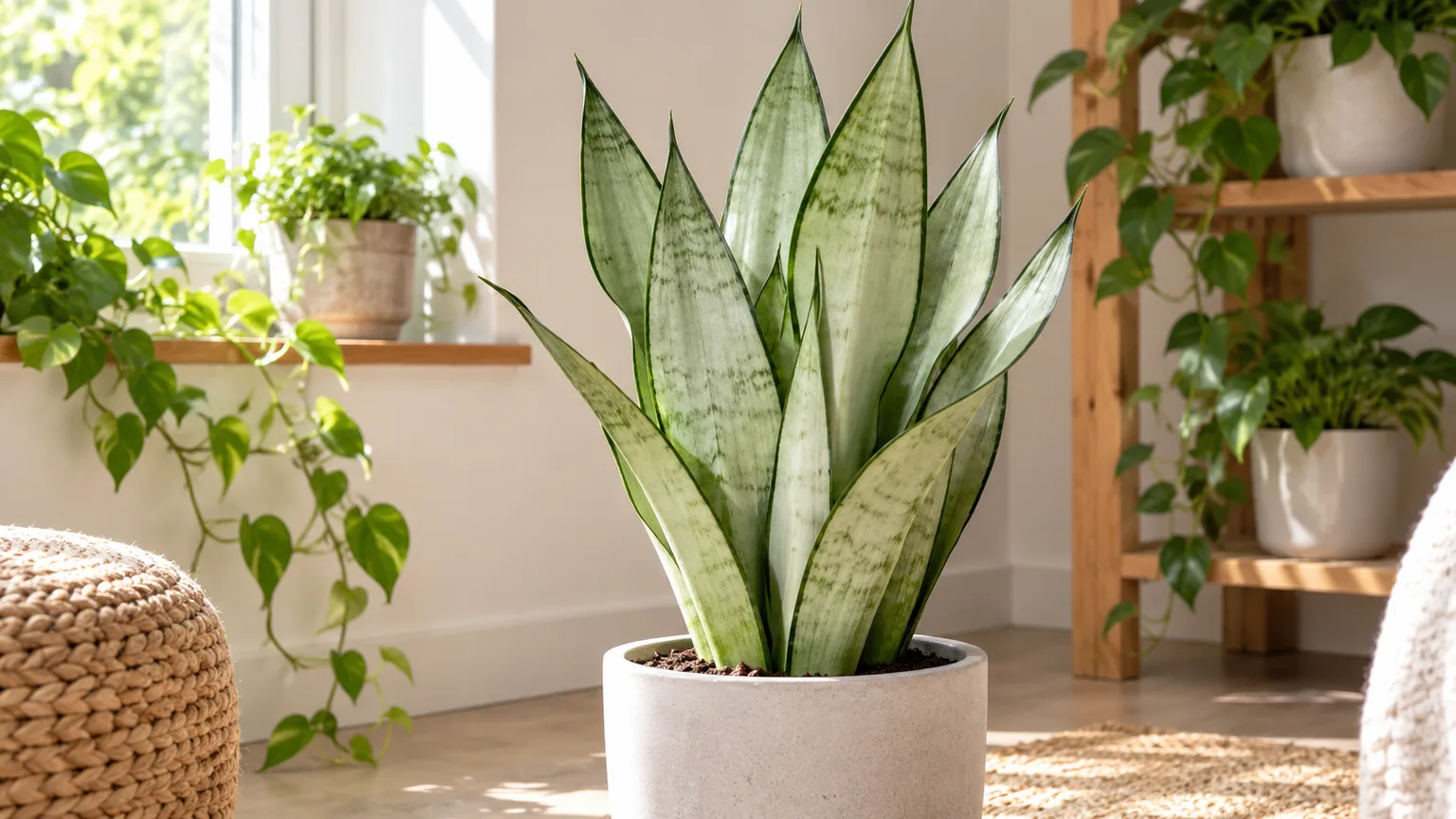
You bought Sansevieria Moonshine for the powdery silver leaves — the pale, upright blades with a fine dark green edge that RHS describes on this Award of Garden Merit cultivar. Propagation is where that purchase intent meets biology. Divide rhizome-connected pups and you get independent plants that can look like the parent within a season. Root leaf segments and you usually get healthy snake plants that read as ordinary green — not a failed technique, but the wrong tool if silver is the goal.
Botanically this is Dracaena trifasciata ‘Moonshine’ — still sold as Sansevieria in most nurseries. The species spreads through tough underground rhizomes and regenerates from severed leaf tissue, which is why snake plant propagation tutorials flood social feeds. Moonshine adds one non-negotiable rule: the silver wash lives in crown meristem tissue, not uniformly in every leaf cell. The RHS Sansevieria growing guide notes that cuttings from variegated cultivars tend to revert to green. On Moonshine that means losing the metallic cast entirely, not just a margin stripe. The RHS Moonshine profile lists propagation by suckers or division — the professional default for this plant.
Why Division Is the Default Method for Moonshine
Division separates a pup or clump section that already shares the parent’s crown genetics, rhizome, and often an established root system. You are not asking a leaf to reinvent a plant from scratch — you are giving an existing shoot its own pot. Success rates are high when cuts are clean, wounds callus briefly, and aftercare stays dry. New growth on divisions typically resumes within four to six weeks during active season, and the first leaves above soil can emerge with the same silvery-green tone as the mother plant.
Division also pairs naturally with repotting, which Moonshine needs every two to three years when rhizomes crowd the pot or roots push through drainage holes. Unpot once, separate obvious pups, refresh gritty mix for everyone, and you solve two tasks in one session. NC State Extension lists division among recommended propagation strategies for snake plants and describes ‘Moonshine’ as silvery-gray foliage with light green blotches and narrow dark green margins — the look you are trying to clone.
What Leaf Cuttings Actually Produce on This Cultivar
Leaf cuttings still work on trifasciata. Remove a mature leaf, slice it into callused segments, plant base-down in gritty mix or shallow water, and roots often form in four to eight weeks in soil. Pups appear later — commonly three to five months from the original cut. The catch is identity: new plants from leaf tissue usually revert to solid green because the silver color depends on chimeric tissue at the crown, not the leaf blade alone.
Treat leaf propagation as a backup for salvage — a bent leaf, an experiment, or spare green plants for a friend who does not care about cultivar color. If you want more Moonshine, divide. If you want more snake plants, cut leaves. That distinction saves months of disappointment.
How Moonshine Spreads Underground
Moonshine behaves like other upright snake plants: sword-shaped leaves emerge from a compressed crown, while rhizomes — thick, pale, horizontal stems — creep beneath the soil and push up offsets called pups. The Missouri Botanical Garden describes Dracaena trifasciata as a stemless evergreen with creeping rhizomes and stiff vertical leaves. That anatomy is why rhizome division is fast and why leaf segments need patience.
Leaves store water and photosynthesize through CAM metabolism, opening stomata at night to conserve moisture. That reserve keeps callused segments alive for weeks but also means wet soil on a rootless cutting rots the base quickly. Rhizomes feel firm and slightly woody — not like dark fibrous roots. When you divide, you cut rhizome tissue connecting pups to the mother. When you leaf-propagate, you wait for a new rhizome to form at the buried base before any pup appears.
Rhizomes, Pups, and the Crown That Holds the Silver
Pups are the fastest route to a plant that looks like Moonshine because they inherit the crown meristem that produces pale new leaves. Leaf-grown plants start as a single small green shoot and may take a full growing season to reach nursery size — still without silver if reversion occurred. After division, place offspring in bright indirect light from day one. Moonshine is listed among sansevierias that tolerate low light, yet new leaves darken toward green in dim corners. Propagation does not exempt new pups from that rule — a divided plant in a hallway often produces its first green leaf within weeks.
When to Propagate Sansevieria Moonshine
Timing influences speed more than survival. Moonshine forgives year-round attempts indoors, but active growth produces cleaner cuts, faster rooting, and less rot pressure. Avoid taking divisions or leaf sections while the parent is recovering from recent repot shock, pest infestation, mushy leaf bases, or post-shipping wilt. Stressed tissue propagates poorly even when technique is correct.
Stable warmth and supplemental light allow winter propagation — expect longer idle periods before visible progress. Match moisture to metabolism: a callused segment in a cool December room needs far less water than the same segment in a bright June window.
Best Season for Division and Cuttings
Spring through early summer is the optimal window in most temperate homes. The RHS advises propagating sansevierias in spring (March to May) as plants return to growth after winter rest. Rising temperatures in the 18–27°C (65–80°F) range accelerate wound healing, and lengthening daylight supports parent and offspring without the scorch risk of midsummer direct sun on freshly divided material.
Early fall works in warm climates or heated apartments. Avoid starting leaf cuttings in late winter unless you can provide warmth and bright light — cold, damp mix around idle segments invites fungal decay. Division tolerates a slightly wider seasonal range because existing roots keep limited function after separation.
Signs Your Parent Plant Is Ready
A propagation-ready Moonshine shows firm upright leaves with consistent color, no widespread yellowing or soft bases, and soil that dries within one to two weeks under your normal light. Check for mealybugs in leaf axils and fungus gnats suggesting chronically wet mix — pests transfer silently to divisions and cuttings.
Visible pups crowding the rim, rhizomes pressing against pot walls, or roots escaping drainage holes mean division is overdue anyway. For leaf cuttings, choose fully mature mid-canopy leaves — not the newest thin spear still unfolding, and not the oldest declining basal leaf. A leaf that bent and broke at the base can be excellent material once you trim damaged tissue cleanly.
Propagating Moonshine by Division
Division is the fastest dependable Moonshine propagation method because each section keeps rhizome tissue and often an existing root system. Rather than asking a leaf to invent roots, you separate a pup into an independent plant that already knows how to stand upright. Success approaches certainty when cuts are sterilized, rhizome faces callus briefly, and you resist heavy watering afterward.
You can divide during repotting or as a standalone task when pups are obvious beside the main rosette. Scale matches the parent — a young Moonshine in a 6-inch pot might yield one or two pups; a mature clump might give several.
Finding Pups and Rhizome Connections
Pups appear as smaller leaf clusters beside the main plant, sharing soil space but connected underground by a rhizome you cannot see until unpotting. Trace visually from the pup base toward the mother crown — the connection point is where your cut belongs. Some pups already have white roots when you expose the rhizome; others rely on shared vascular tissue until separated.
Prefer separating lateral pups rather than slicing the primary rosette in half unless the clump is truly massive and you accept asymmetric recovery on each section. If a pup has no visible roots but firm rhizome tissue, it can still survive — treat it like a small cutting with a brief callus on the rhizome face before potting.
Step-by-Step Division at Repotting
Gather sterilized pruning shears, fresh fast-draining mix, and pots one size appropriate for each division — usually 10–15 cm (4–6 inches) for pups. Water the parent two to three days before dividing so rhizomes are hydrated but not soggy.
Slide the plant from its pot and brush away loose soil to expose connections. Identify each pup with roots or firm rhizome attached, then cut through the connecting rhizome with one clean stroke — avoid sawing, which crushes tissue. Let cut rhizome faces dry in air for two to twelve hours if tissue is moist. Pot each division at the same depth it previously grew, using the gritty cactus mix philosophy from the mature plant guide. Water lightly around the perimeter, not into the crown, and place in bright indirect light.
Skip fertilizer for the first month while roots re-establish. Direct sun immediately after division can stress leaves that lost some root mass — filtered light for two weeks, then normal Moonshine light tolerance.
Leaf Cuttings on Moonshine (Optional Path)
Leaf cuttings turn one leaf into one or many plants by burying callused segments and waiting for rhizome and pup formation. The method is straightforward but slow, and it demands two habits beginners skip: drying the cut end and planting with correct orientation. Get those wrong and even a healthy Moonshine leaf rots or roots without producing a shoot.
You can propagate an entire leaf or cut it into multiple horizontal segments about 5–8 cm (2–3 inches) long. For first attempts, two or three segments from one leaf teach the rhythm without overwhelming your windowsill. Accept the timeline: rooting may take four to ten weeks, and visible pups often need two to four additional months.
Preparing Segments and the Orientation Rule
Select a healthy mature leaf from the middle of the plant. Remove it at the base with a clean horizontal cut, or salvage a bent leaf if tissue above the break is firm. Reject leaves with soft, translucent bases indicating rot.
Slice crosswise with sterilized shears if segmenting, keeping track of which end was closer to the roots. Callus cut ends in a dry, shaded spot with airflow for one to three days until surfaces look matte, not glossy. Snake plant leaves are less rot-prone than many succulents once callused, but planting immediately into wet soil still invites basal decay.
Leaves are polar — vascular bundles run base to tip, and roots emerge from the basal end attached to the mother. Upside-down segments rarely produce pups even if they root. Mark the bottom with tape or a permanent tick before callusing. Bury the marked end 2–3 cm (about 1 inch) deep and leave the rest above soil.
Rooting in Soil vs Water
Soil propagation is what most experienced growers prefer for snake plant leaves. Use a small pot with drainage and a mix of roughly 50% cactus or succulent potting mix, 30% perlite, and 20% coarse sand. Pre-moisten until the mix holds shape when squeezed but does not drip. Insert the callused basal end, wait three to five days, then water lightly near the base — not a flood.
Place pots in bright indirect light one to two meters from a south or west window, or directly in an east window. Expect four to eight weeks for roots under normal indoor warmth. Pups emerge separately, often two to four months after rooting begins.
Water propagation works once segments callus: submerge only the basal inch in a clear jar, change water every three to five days, and transplant to gritty mix when roots reach 3–5 cm (1–2 inches). Missouri Botanical Garden guidance on cuttings notes that cuttings often develop better root systems in soil-less mix than in water long term. Soil remains the default for Moonshine; water suits learning or visual monitoring. Either way, expect green offspring, not silver clones.
Timeline: What to Expect From Each Method
Realistic timelines prevent abandoning healthy cuttings at week five because nothing visible happened. Division produces independent plants immediately; new leaf growth confirms success in four to six weeks. Leaf cuttings in soil follow a two-phase schedule: roots in four to eight weeks, then pups two to four months after rooting starts — three to five months from cut to visible baby plant is normal.
| Method | Roots / establishment | Visible new growth | Silver color preserved |
|---|---|---|---|
| Division | Immediate (existing roots) | 4–6 weeks | Yes |
| Leaf in soil | 4–8 weeks | 3–5 months total | No (reverts to green) |
| Leaf in water | 6–10 weeks | 3–5 months total | No (reverts to green) |
Spring and summer propagation often hits the shorter end of each range; cool dim winter conditions hit the longer end. Document your start date and check monthly rather than daily.
Aftercare for New Moonshine Plants
Newly divided Moonshines and young pup-bearing cuttings need conservative care for the first six to eight weeks. Light stays bright indirect — this is non-optional for color on divisions. Watering follows the same dry-down logic as mature plants but with extra caution while root systems are small. Water when the top 3–5 cm (1–2 inches) of mix is dry — often every two to three weeks for small pup pots, less in cool months.
Do not fertilize until new growth is clearly self-sustained — typically one to two months after division or after a leaf-grown pup has several inches of height. Repot into the next size only when roots circle the pot; oversized containers stay wet too long around tiny root balls.
Quarantine new propagations two weeks if the parent ever had pests. When sharing divisions, mention that snake plants contain saponins toxic to cats and dogs — propagation does not change toxicity. Acclimate slowly to stronger light after establishment; newly separated divisions sunburn more easily than mature clumps.
Common Propagation Mistakes on Moonshine
Most failures trace to moisture at the wrong stage, orientation errors, or expecting silver from leaf cuts — not missing rooting hormone.
Choosing leaf cuttings to multiply Moonshine produces healthy green snake plants while the owner expected silver. Use division when cultivar appearance matters.
Basal rot on leaf segments means planting before callus, overwatering idle cuttings, or water creeping too high on the leaf in jars. Trim to firm green tissue, re-callus two to three days, restart in fresh lightly moist mix.
No pup after roots formed on upside-down segments is usually permanent — restart with correctly oriented material.
Dim aftercare dulling new pups is a Moonshine-specific trap. A divided plant in low light pushes dark green new leaves even though genetics are correct. Move offspring to brighter placement and judge the next one to two leaves.
Division rot follows soaking wet mix in cold rooms or burying rhizomes too deep. Unpot, trim soft rhizome tissue, air-dry cuts, repot shallow in fresh gritty mix, withhold water one week, then resume lightly per the watering guide.
Propagating from a sick parent spreads weakness and pests. Stabilize the donor — fix chronic wet soil, treat mealybugs, refresh sour mix — before taking material.
Conclusion
Sansevieria Moonshine propagation rewards method choice more than gadgetry. Division through rhizome-connected pups is the fastest path to true-to-type plants and the only reliable way to keep the powdery silver cast that defines this cultivar. Leaf cuttings — callused, oriented base-down, rooted in gritty soil or shallow water — multiply snake plants and salvage damaged leaves, provided you accept green offspring and a multi-month timeline.
If you remember three rules, make them these: divide Moonshine instead of leaf-cutting it when silver matters, mark and plant the basal end down on any leaf experiment, and place new plants in bright indirect light so the next leaf actually looks like Moonshine. Match those habits with spring warmth, sterile cuts, and dry-down watering, and Dracaena trifasciata ‘Moonshine’ becomes one of the easiest cultivars to share — not because propagation is magic, but because the plant already knows how to grow again once you stop drowning the wound.
When to use this page vs other Sansevieria Moonshine guides
- Sansevieria Moonshine overview — Start here for whole-plant identity, toxicity, and care summary before multiplying your plant.
- Sansevieria Moonshine repotting — Use when the pot is full but you are not ready to divide; division and repotting often happen together.
- Sansevieria Moonshine light — Read this if new pups or divisions are producing green leaves instead of silver — placement usually needs adjustment.