Best Soil for Sansevieria Moonshine: Drainage Mix Guide
Best Soil for Sansevieria Moonshine: Drainage Mix Guide
Best Soil for Sansevieria Moonshine: Drainage Mix Guide
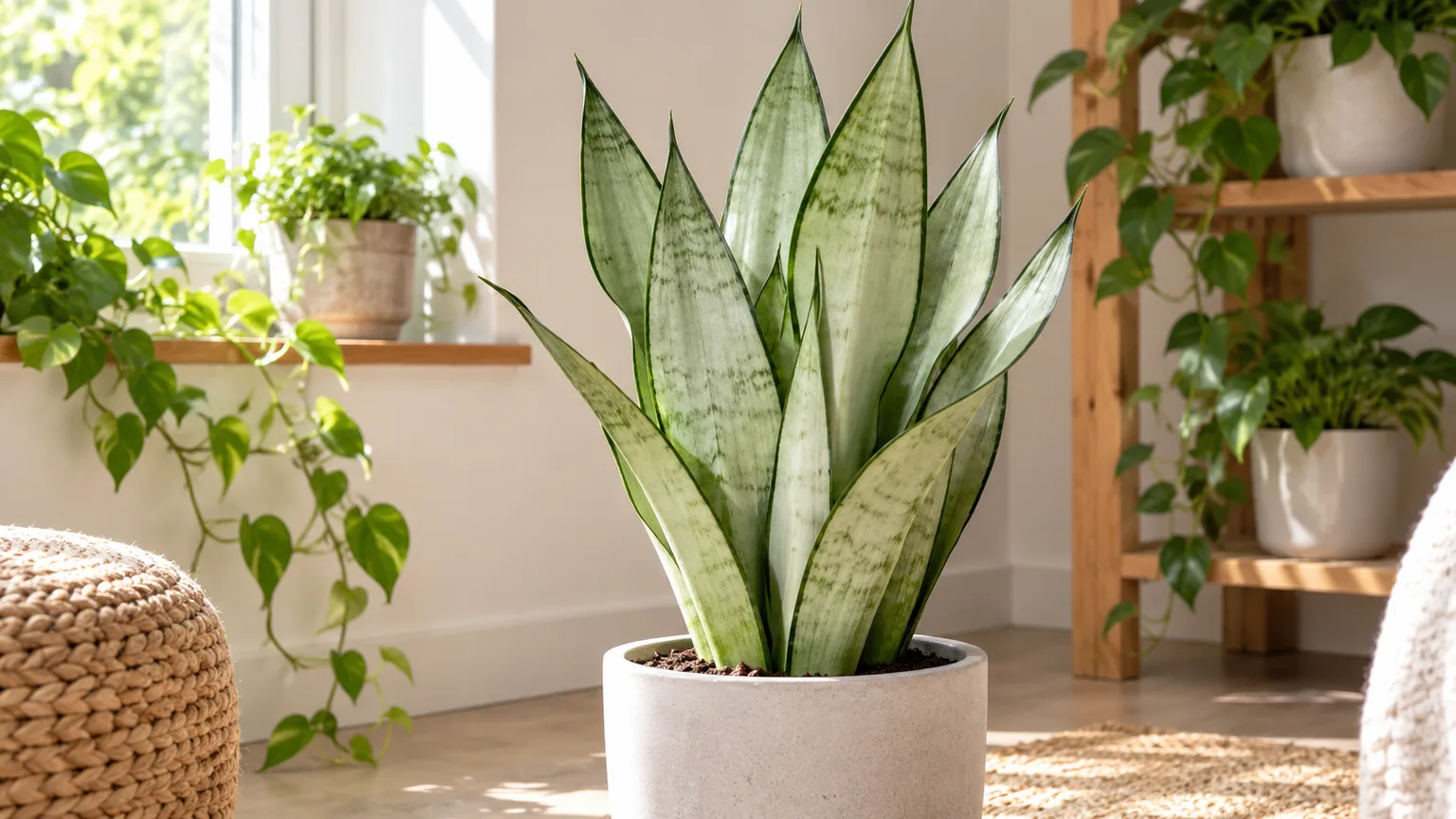
Dracaena trifasciata ‘Moonshine’ is the silvery-gray snake plant whose broad, powdery leaves look firm long after the rhizome underneath has started to fail. Moonshine shares the same drought-built biology as every other trifasciata, but owners often place it in dimmer corners because marketing calls snake plants “low-light plants.” Less light means slower transpiration, which means the same bagged mix stays wet longer — and that is when silver foliage becomes a trap. This guide is about choosing and amending soil so Moonshine’s root zone dries on a schedule your room can sustain, not about finding a magic cultivar-only formula that does not exist.
The honest baseline: Moonshine uses the same gritty cactus-style blend as a plain green snake plant. The cultivar difference is how aggressively you amend based on light, pot material, and room humidity — and how quickly you recognize that pale blades can mask a drowning rhizome.
Why Moonshine Rhizomes Need Fast Drainage, Not Tropical Peat
Snake plants evolved in the dry seasons of West Africa, where rain arrives in bursts and drains through sandy, open ground. Dracaena trifasciata stores water in thick leaves and spreading rhizomes — swollen underground stems that act as a backup tank. That architecture tolerates weeks of drought far more easily than days of saturated mix.
NC State Extension is direct: place snake plants in well-drained soil and do not overwater, as the roots will rot. The species profile lists loam and sand texture with good drainage and a neutral to alkaline pH range roughly 6.0 to above 8.0. Moonshine is a color-selected cultivar on that same root system — not a tropical foliage plant that wants moisture-holding peat around its rhizome.
Standard indoor potting soil is engineered for pothos, peace lilies, and ferns: sphagnum peat, composted forest products, and fine bark that stay damp for days. That texture is excellent for moisture-loving tropicals. For Moonshine it is a slow-motion failure mode. Penn State Extension notes you can neglect to water a snake plant for about a month with little harm, but killing it with too much water is easy and common — especially when dense mix cannot dry between soaks.
What Happens When Silver Leaves Hide Wet Soil
Moonshine’s broad, silvery blades are full of stored water. They can stay firm and upright for weeks while the rhizome at the soil line softens from oxygen starvation and opportunistic rot organisms. Lower leaves may yellow. New growth may stall or emerge darker green if light is also weak. The base may smell sour when you unpot — but many owners never check until a leaf pulls away with almost no resistance.
That delayed visibility is why soil texture matters more on Moonshine than the label suggests. You are not only preventing rot. You are shortening the window between a too-wet pot and the day stiff leaves finally lie about plant health. Prevention through gritty mix and a drainage hole beats rescue every time.
How Light Changes Your Moonshine Soil Strategy
All trifasciata forms need fast drainage. Moonshine adds a placement wrinkle: this light-hungry silver cultivar often sits farther from windows than a plain green snake plant, because buyers trust the “survives anywhere” story. In dim rooms the plant uses less water, so the same soil profile dries slower — sometimes dramatically slower than in bright indirect light.
If your Moonshine is darkening on new leaves and soil stays damp for three weeks, the fix is not only “water less.” Pair conservative watering with brighter placement and grittier mix. Light is the throttle on transpiration; soil is the reservoir. When the throttle is low, the reservoir must drain faster or you recreate the exact conditions for overwatering on Sansevieria Moonshine without adding extra waterings.
Dim Rooms Need Grittier Mix — Not Just Less Watering
A Moonshine on a bright east windowsill in a 6-inch terracotta pot may thrive in quality cactus mix with 20% extra perlite. The same plant in a glazed ceramic pot in a north-facing hallway may need equal parts cactus mix, perlite, and orchid bark to dry within two weeks after a soak. The biology is identical. The dry-down math is not.
Use this rule: if the top two inches feel cool and damp ten days after watering in normal indoor humidity, your mix is too peat-heavy for that placement — regardless of cultivar name on the nursery tag. Amend before the rhizome pays the price.
Ideal Soil Texture and pH for Sansevieria Moonshine
The best soil for Sansevieria Moonshine is a fast-draining, airy blend that lets water exit the drainage hole within seconds of a thorough pour, then dries noticeably at the surface within a few days in active growth. It should feel chunky and crumbly in your hand, resist compaction after repeated watering, and leave air space around rhizomes even right after a soak.
After a full watering in a typical living room, the top inch should feel dry within roughly 3 to 7 days during spring and summer. In winter, dry-down may stretch toward 10 to 14 days in a medium pot. If mix is still damp at finger depth after two weeks in normal indoor conditions, it is too water-retentive — amend or repot before adjusting your calendar.
Loam-to-Sand Range From RHS and Extension Profiles
The RHS profile for ‘Moonshine’ lists loam and sand with well-drained moisture — a mineral-leaning profile, not moisture-holding compost. The broader RHS sansevieria growing guide recommends free-draining, peat-free cactus compost and warns that overwatering is a common cause of poor health as roots rot in wet substrate.
For pH, NC State’s species data and Moonshine’s own care range converge around slightly acidic to neutral: roughly 5.5 to 7.5 in containers. Most bagged cactus mixes already sit near neutral thanks to perlite, sand, and limestone-adjusted peat. Home growers rarely need a meter if drainage is sharp and watering follows dry soil, not habit.
Core Mix Components That Work Indoors
A reliable Moonshine blend combines mineral drainage material (perlite, pumice, coarse sand, bark chips), a modest organic base (cactus mix or limited potting soil), and optional trace nutrients in small amounts. The ratio matters more than brand names.
Perlite, Pumice, and Coarse Sand
Perlite — expanded volcanic glass — creates air pockets and drains freely. It commonly makes up 30% to 50% of a DIY Moonshine blend by volume. Pumice is heavier, stays put when watered, and suits tall Moonshine in plastic pots that tip easily. Coarse horticultural sand adds grit; use visible ¼-inch particles, never play sand or beach sand, which clog pores and add salt.
Orchid bark or pine bark fines keep the mix open as peat breaks down. Chips, not dust.
Cactus Mix as the Practical Starting Point
Yes — cactus soil is good for Moonshine. Penn State Extension recommends cactus potting mix or soil amended with perlite. Clemson HGIC groups cactus and succulent blends among appropriate choices for drought-tolerant indoor plants.
Not every bag labeled “cactus” is gritty enough. Run the squeeze test on a moist sample: if it holds a tight ball, amend with 25% to 40% extra perlite or pumice before planting. In humid bathrooms, low-light offices, or plastic pots, treat even a good cactus mix as a base, not a finished product.
The RHS DIY alternative — two parts peat-free loam-based compost and one part horticultural grit — translates indoors as two parts quality cactus mix and one part perlite or coarse sand when loam-based John Innes-style bags are unavailable.
Three DIY Recipes for Real Home Conditions
You need a bucket, a measuring cup, and components that pass the squeeze test. These three recipes cover how Moonshine is actually grown — not laboratory perfection.
Balanced 2:1:1 for Bright Rooms
For Moonshine in bright indirect light with terracotta or unglazed clay:
- 2 parts quality cactus or succulent mix
- 1 part perlite or pumice
- 1 part coarse horticultural sand or pine bark fines
Blend until uniform. The finished mix should crumble when squeezed and drain in seconds. For a 6-inch terra cotta pot, measure roughly 2 cups cactus mix, 1 cup perlite, 1 cup coarse sand — about 1.5 quarts total. Plant at the same depth as before, rhizome at or just below the surface, and wait 5 to 7 days before the first watering after repotting.
High-Drainage Blend for Low Light or Plastic Pots
When Moonshine lives in a dim office, humid bathroom, or glazed plastic pot:
- 1 part cactus mix
- 1 part perlite or pumice
- 1 part orchid bark or pine bark fines
- ½ part coarse sand (optional, for weight)
This dries faster when transpiration is low or evaporation through pot walls is weak. You will water less often in winter, but each soak should still run through fully. Pair with the Sansevieria Moonshine watering guide — bone-dry throughout the pot before every pour.
Store-Bought Mixes Worth Buying
Pre-made mixes save time when the ingredient list shows real drainage components up front.
| Pre-made mix | Drainage rating | Best for Moonshine | Watch-outs |
|---|---|---|---|
| Hoffman Organic Cactus & Succulent | Very good | Bright-room Moonshine | Add perlite in humid rooms |
| Espoma Organic Cactus Mix | Very good | Organic-focused growers | Slightly peat-heavy; amend in bathrooms |
| Miracle-Gro Cactus, Palm & Citrus | Good | Budget convenience | Add ~30% perlite |
| Black Gold Cactus Mix | Very good | Larger specimens | Refresh every 2 years |
| Bonsai Jack Succulent & Cactus | Superior | Chronic overwaterers, dim + plastic setups | Dries fast; monitor summer |
Top pick for most homes: Hoffman or Espoma cactus mix plus 30% extra perlite or pumice. Top pick for dim, humid, or plastic-pot setups: a gritty inorganic mix used as-is.
Read labels: perlite, pumice, sand, bark, or calcined clay near the top. If sphagnum peat dominates and sand is an afterthought, plan to amend before your Moonshine goes in.
Pots, Drainage Holes, and the Gravel Myth
Soil is half the drainage system. The pot is the other half. No mix compensates for a container that traps water.
Use a drainage hole. Penn State Extension advises choosing only containers with drainage holes to prevent soggy soil. Decorative cachepots work only if the inner grow pot drains freely and you empty standing water after every watering.
Size to the rhizome, not leaf height. A pot 1 to 2 inches wider than the root mass is enough for most repots. Oversized pots hold wet mix in empty space around a small rhizome — a common Moonshine mistake after buying a tall silver specimen and planting it in a decorative oversized ceramic.
Why Terracotta Helps Moonshine in Humid Rooms
Unglazed terra cotta wicks moisture through its walls, helping gritty mix dry faster — a genuine advantage when Moonshine sits in a bathroom or basement office where evaporation is slow. Plastic and glazed ceramic retain moisture longer; pair them with the high-drainage recipe, not the balanced 2:1:1 alone.
Skip the gravel layer. Coarse stone beneath finer potting mix creates a perched water table — a saturated band just above the gravel. Washington State University Extension summarized the research: water does not move easily from fine mix into a coarse layer below. Fill the entire pot with uniform gritty blend. Cover large holes with mesh or a coffee filter, not a deep layer of pebbles.
When to Refresh Soil or Repot Moonshine
Even excellent mix breaks down. Peat and bark decompose into fines. Perlite crushes. Dust fills air gaps. Drainage that was sharp on day one turns sluggish eighteen months later.
Refresh or repot when:
- Water pools on the surface for more than a few seconds
- Mix takes noticeably longer to dry than it used to
- The pot feels unusually heavy days after a normal watering
- Roots circle the edge or push through drainage holes
- The plant has been in the same soil for 2 to 3 years
Spring through early summer is the best window. See the Sansevieria Moonshine repotting guide for step-by-step timing. When upgrading mix without upsizing the pot, shake off old peat sludge, trim mushy rhizome tissue, let cuts dry a day, and replant in fresh gritty blend. Divide pups during repot if you want more silver plants — leaf cuttings revert to green; division preserves the cultivar color in the propagation guide.
Warning Signs Your Mix Is Too Wet or Too Dense
Soil problems show up in patterns, not single blemishes:
- Sour or stagnant smell from the pot — low oxygen and possible root decline
- Yellow leaves at the base while mix stays damp for weeks
- Soft, mushy tissue where leaf meets soil
- New leaves darkening to plain green in dim rooms with chronically moist mix — light and drainage failing together
- White mold on the surface after watering — often paired with dense, slow-drying peat
If two or more signs appear together, stop watering, inspect the rhizome, and refresh into dry cactus mix with drainage. Escalate to root rot on Sansevieria Moonshine if tissue is black and slimy.
Common Soil Mistakes on Moonshine
Using unamended all-purpose potting soil. It holds water too long. Switch to cactus mix or amend heavily.
Trusting “cactus” labels without the squeeze test. Some bags are peat with marketing.
Keeping Moonshine in dim light with standard nursery mix. Slower dry-down plus dense peat is the common retail combo that kills silver cultivars quietly.
Adding a gravel drainage layer. It worsens saturation at the bottom. Uniform gritty mix only.
Oversizing the pot. Extra soil volume stays wet around a small rhizome.
Confusing stiff silver leaves with healthy roots. Check firmness at the soil line, not only blade texture.
Repotting into fresh mix but keeping a sealed cachepot full of water. The inner root zone still drowns.
Conclusion
The best soil for Sansevieria Moonshine is not a secret cultivar formula. It is a fast-draining, gritty cactus or succulent blend with enough perlite, pumice, coarse sand, or bark to keep rhizomes airy between soaks — amended harder when light is weak or pots are plastic. Moonshine shares snake plant biology but often lives in conditions that dry soil slowly: dim corners, humid rooms, glazed ceramics. Match mix texture to that reality.
Whether you buy bagged cactus soil amended with extra perlite or mix a 2:1:1 blend at home, the test is the same: water flows through in seconds, the surface dries within days, and the rhizome never sits in a perched water table at the pot bottom. Pair gritty mix with a drainage hole, favor terra cotta when evaporation is slow, refresh substrate every couple of years, and judge success by firm bases and silvery new leaves — not by how long old blades stay stiff. Get soil right and Moonshine becomes the striking, forgiving plant the AGM rating promises. For whole-plant context, start with the Sansevieria Moonshine overview.
When to use this page vs other Sansevieria Moonshine guides
- Sansevieria Moonshine overview — Whole-plant context, toxicity, and quick-care snapshot before this deep dive.
- Sansevieria Moonshine watering — When you know the mix is gritty but the pot still stays wet too long; watering and soil move together.
- Sansevieria Moonshine light — When new leaves darken and soil dries slowly; light level changes how aggressively you must amend mix.
- Sansevieria Moonshine problems hub — Symptom-specific fixes when soil changes alone do not resolve the issue.
- Wrong Soil Mix on Sansevieria Moonshine — Escalate when repotting into gritty blend does not improve dry-down.
- Poor Drainage on Sansevieria Moonshine — Escalate when water pools or the pot stays heavy for days.
- Root Rot on Sansevieria Moonshine — Escalate when bases are mushy and roots are black or slimy.
Related Sansevieria Moonshine guides
- Sansevieria Moonshine overview
- Sansevieria Moonshine watering
- Sansevieria Moonshine light
- Sansevieria Moonshine propagation
- Sansevieria Moonshine fertilizer
- Sansevieria Moonshine repotting
- Wrong Soil Mix on Sansevieria Moonshine
- Poor Drainage on Sansevieria Moonshine
- Root Rot on Sansevieria Moonshine
- Mold on Soil on Sansevieria Moonshine
- Sansevieria Moonshine problems