Sansevieria Moonshine Care: Light, Water & Soil Guide
Dracaena trifasciata 'Moonshine'
Sansevieria Moonshine care: silvery-gray foliage, bright indirect light, infrequent watering, fast-draining soil, division propagation, and pet toxicity.
Sansevieria Moonshine Care: Light, Water & Soil Guide
Start with wateringThe most common care mistake for Sansevieria MoonshineWatering guide →Sansevieria Moonshine care essentials
Light
Water
Water only when the soil is completely dry - roughly every 2–6 weeks depending on season.
Soil
Fast-draining, gritty mix that prevents waterlogging.
Humidity
30–50%
Temperature
18–27°C (65–80°F)
Fertilizer
About Sansevieria Moonshine
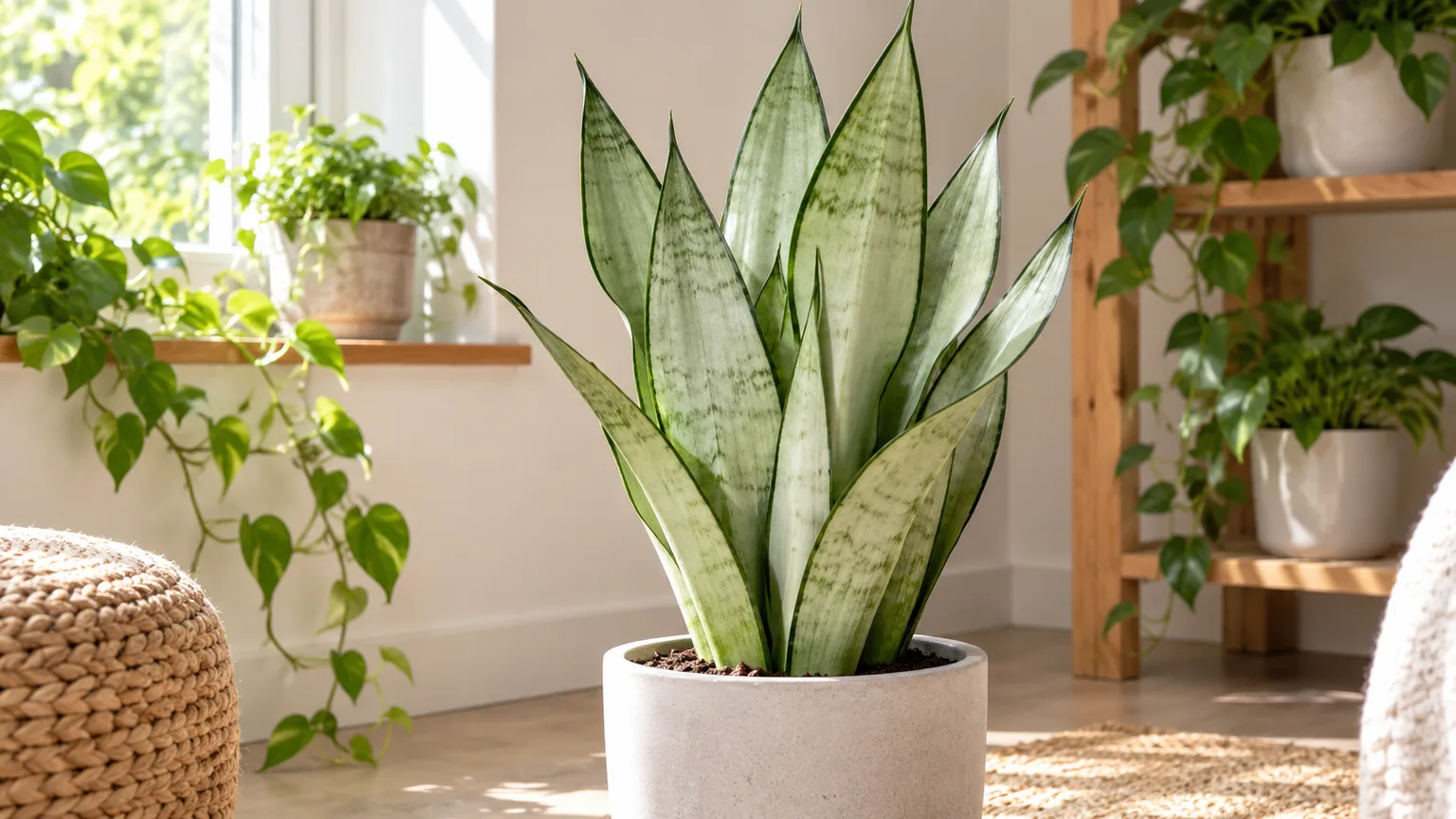
Sansevieria Moonshine is native to West Africa (cultivar of D. trifasciata), typically reaches 2–3 ft indoors; broad silvery-gray leaves with faint banding indoors, with slow to moderate growth. Sansevieria Moonshine has a upright growth habit and part of the Asparagaceae family. It is also known as Silver Moonshine Snake Plant and Moonshine Sansevieria.
| Detail | Information |
|---|---|
| Also known as | Silver Moonshine Snake Plant, Moonshine Sansevieria |
| Native region | West Africa (cultivar of D. trifasciata) |
| Mature size | 2–3 ft indoors; broad silvery-gray leaves with faint banding |
| Growth rate | Slow to moderate |
| Growth habit | Upright |
| Scientific name | Dracaena trifasciata 'Moonshine' |
| Family | Asparagaceae |
Sansevieria Moonshine Care: Light, Water & Soil Guide
Dracaena trifasciata ‘Moonshine’ is the silvery-gray snake plant with broad, nearly unmarked leaves that read almost metallic in good light. Moonshine needs more light than marketing suggests — without bright indirect exposure, new leaves emerge darker green and lose the powdery silver cast. Watering rules match other trifasciata forms: bone-dry soil throughout the pot before each soak.
For the full Sansevieria Moonshine cluster, see the Sansevieria Moonshine main care page.
What Sansevieria Moonshine Actually Is
Sansevieria Moonshine is a cultivated form of Dracaena trifasciata (Prain) Mabb., the species long sold as Sansevieria trifasciata before DNA work merged Sansevieria into Dracaena in 2017. Nursery tags, pest databases, and older articles still use the former name; both refer to the same plant and the same care logic. The Moonshine cultivar — also listed as ‘Silver Moon’ on some labels — was selected for foliage color rather than flower display.
NC State Extension describes ‘Moonshine’ as bearing silvery-gray foliage with light green blotches and narrow dark green margins, a noticeably different look from the bold horizontal banding on the standard green snake plant. The RHS plant profile calls the leaves pale silvery green with a fine dark green edge and faint horizontal green markings, stiff and very upright in a rosette. The cultivar holds an Award of Garden Merit, which signals reliable performance under typical conservatory and houseplant conditions when basic drainage and light are met.
Like all D. trifasciata, Moonshine is a stemless, rhizomatous perennial in the Asparagaceae family. It spreads slowly through underground rhizomes and produces offsets (“pups”) beside the parent clump. Missouri Botanical Garden notes the species is native to tropical western Africa, where it grows in rocky, fast-draining substrates and tolerates long dry intervals. That origin explains the thick, water-storing leaves, CAM photosynthesis (stomata open at night), and the single indoor failure mode that outpaces every other mistake: soil that stays wet too long.
Sansevieria Moonshine at a Glance
- Botanical name: Dracaena trifasciata ‘Moonshine’ (syn. Sansevieria trifasciata ‘Moonshine’, ‘Silver Moon’)
- Type: Rhizomatous perennial; stiff upright leaves from a basal rosette
- Mature size: Roughly 2–3 ft (60–90 cm) indoors; RHS lists 0.5–1 m over many years
- Foliage: Broad silvery-gray blades; narrow dark green margins; faint banding when well lit
- Light: Bright indirect to partial direct sun; color fades in dim rooms
- Water: Completely dry soil throughout the pot between drinks; roughly every 2–4 weeks in summer and 4–8 weeks in winter in typical homes
- Soil: Fast-draining cactus or succulent mix with added perlite or pumice
- Temperature: Comfortable at 60–85 °F (16–29 °C); damaged near 50 °F (10 °C)
- Humidity: Tolerates normal indoor 30–50%; no special requirements
- Toxicity: Toxic to dogs and cats (saponins)
- Difficulty: Beginner-friendly if you respect dry soil; main risk is overwatering on Sansevieria Moonshine
How Moonshine Differs from Other Snake Plants
Moonshine shares the drought biology of every D. trifasciata cultivar, but three practical differences matter in a real home.
Foliage color is the whole point. Standard green snake plants keep acceptable appearance in moderate light because chlorophyll banding is the design. Moonshine’s powdery silver layer is a cultivar trait that reverts toward darker green when light is weak. Owners who bought a glowing silver plant and moved it to a dim hallway often blame watering first; the first fix is usually brighter placement. See the dedicated Sansevieria Moonshine light guide for window specifics.
Light demand runs higher than the genus average. The RHS lists Moonshine for full sun on west- or south-facing sheltered aspects. NC State still recommends partial direct sun — two to six hours while noting the species tolerates very low light. Translation for indoors: Moonshine survives in a dark office like other snake plants, but it keeps its look only with strong bright indirect light or gentle morning sun.
Propagation behaves like other variegated trifasciata forms. Leaf cuttings root readily but usually produce plain green offspring because the silver tissue does not regenerate reliably from a severed segment. To duplicate Moonshine’s color, propagate by division of an offset that already shows the correct foliage. The Sansevieria Moonshine propagation guide walks through both methods.
Compared to ‘Laurentii’ (yellow-margined banded leaves), Moonshine trades stripe drama for a minimalist silver sheet. Laurentii also loses margin color in low light and reverts when propagated from leaves. Compared to dark cultivars like ‘Black Gold’, Moonshine grows a bit faster in good light and shows stress sooner as a color shift rather than a height stall.
Light: Bright Exposure Keeps the Silver Cast
Snake plant marketing leads with “low light tolerant,” and Moonshine inherits that survival skill. It does not inherit immunity from color loss. In insufficient light, Moonshine slows growth, produces fewer pups, and pushes new leaves with more chlorophyll — the metallic wash dulls to olive green within a few months. Soil also dries more slowly in dim rooms, which quietly raises rot risk even if you have not changed the watering can.
For active growth and stable silver foliage, place Moonshine in bright indirect light. An east window — soft morning sun plus bright ambient light all day — is the safest default. South or west windows work with the pot set back several feet or behind a sheer curtain that filters harsh afternoon rays. Direct midday sun through untreated glass can bleach leaves into permanent papery patches; acclimate store plants over two to three weeks before pushing them against hot glass.
A practical diagnostic: firm, broad, silvery new leaves mean light is adequate. Narrow, darker, leaning leaves mean the plant wants more brightness. Bleached white patches on the sun-facing side mean pull back from direct beams. A full-spectrum grow light on a 12–14 hour timer, 12–18 in (30–45 cm) above the foliage, supports Moonshine in windowless offices better than ceiling fluorescents alone.
Watering: Dry Soil All the Way Down
Watering separates a Moonshine that outlives its pot from one that dissolves into mush at the base. The plant stores water in thick leaves and rhizomes; roots need oxygen between drinks. Watering on a weekly calendar — or leaving the pot in a saucer of runoff — creates anaerobic conditions that trigger root rot on Sansevieria Moonshine, the leading cause of death indoors.
The rule: water only when soil is completely dry throughout the pot, not just on the surface. Push a finger or dry wooden skewer deep into the mix; if it pulls up damp soil, wait. Lift the pot and compare weight to how it felt right after the last thorough soak — dry soil is noticeably lighter. When you water, soak until a small amount runs from the drainage hole, let the pot drain 10–15 minutes, and empty the saucer.
In moderate light with a gritty mix, that rhythm is roughly every 2–4 weeks in spring and summer and 4–8 weeks in fall and winter. Moonshine in bright rooms and small terracotta pots dries faster; large plastic pots in dim corners can go months between drinks. Slightly wrinkled but firm leaves signal drought stress — water soon. Mushy, translucent bases mean stop watering and inspect the rhizome immediately.
Seasonal Watering Rhythm
| Season | Plant state | Approximate interval | Check before watering |
|---|---|---|---|
| Spring | Growth resuming | Every 2–3 weeks | Soil dry 2–3 in down; pot feels light |
| Summer | Active growth | Every 2–4 weeks | Same; small pots may need water sooner |
| Fall | Growth slowing | Every 3–5 weeks | Soil fully dry; stretch interval as light drops |
| Winter | Mostly resting | Every 4–8 weeks | Soil dry throughout; do not fertilize |
These are starting points. The most common timing mistake is continuing a summer schedule through winter. Full detail lives in the Sansevieria Moonshine watering guide.
Soil and Drainage for Moonshine Roots
Moonshine rhizomes evolved in coarse African substrates where water passes through in seconds. A peat-heavy indoor mix that stays damp for a week mimics the opposite environment. The goal is a mix that drains instantly and dries completely within a reasonable interval for your room.
A commercial cactus and succulent potting mix works well from the bag for most growers. DIY blend: roughly 50% standard potting soil, 40% perlite or pumice, and 10% coarse horticultural sand. Push drainage further — 60% inorganic grit to 40% organic — in humid climates or dim rooms where evaporation is slow. Avoid garden soil, moisture-control mixes, and pots without drainage holes unless you run a deliberate semi-hydro setup you understand.
Do not add a gravel layer at the bottom instead of a drainage hole. Container research shows “drainage layers” raise the perched water table where roots sit, worsening saturation. Refresh mix every one to two years during Sansevieria Moonshine repotting because even good components break down and compact.
Temperature, Humidity, and Airflow
Moonshine is comfortable in the 60–85 °F (16–29 °C) range most homes maintain. Growth slows below about 60 °F (16 °C). Cold damage appears near 50 °F (10 °C) as dark, water-soaked patches on leaves touching cold window glass or AC drafts. The species is not frost-hardy; outdoor culture suits only the warmest zones with dry winter protection.
Humidity is rarely limiting. Normal indoor 30–50% is fine. Very dry winter air can encourage spider mites; misting leaves lasts minutes and can invite fungal spotting. Grouping plants or running a room humidifier helps more than spritzing individual blades.
Good airflow around the pot helps the soil surface and leaf bases dry between waterings — especially in bathrooms and kitchens. Keep Moonshine out of the direct blast path of heating and cooling vents.
Fertilizer: Light Feeding in Warm Months
Moonshine is a lean feeder. In native habitats it grows slowly in mineral-poor soil, and indoors it inherits that frugality. Overfertilizing produces soft growth and salt buildup that shows as brown leaf tips — the same symptom as underwatering on Sansevieria Moonshine, which sends many owners back to the watering can and compounds the problem.
Feed lightly only during active growth in spring and summer. A balanced water-soluble houseplant fertilizer diluted to half label strength, once a month at most, is plenty. Some growers feed twice a season — early spring and midsummer — and skip everything else. Never fertilize a dry root ball, a recently repotted plant, or a specimen showing rot or pest stress. The Sansevieria Moonshine fertilizer guide covers timing and dose.
Choosing the Right Pot
Moonshine prefers to be slightly snug but will stall in a tiny nursery pot once roots circle heavily. When repotting, move up only one size — typically 1–2 in (2.5–5 cm) wider than the current root ball. An oversized pot holds excess wet soil the rhizome cannot dry quickly enough — a common post-repot rot trigger.
Unglazed terracotta wicks moisture through its walls and adds margin against overwatering; it is the most forgiving material for beginners. Glazed ceramic and plastic retain moisture longer, so check soil dryness more carefully. At least one drainage hole is non-negotiable for standard soil culture. A heavy, wide-based pot helps tall Moonshine clumps stay upright as they mature.
Repotting Without Inviting Root Rot
Most indoor Moonshines need repotting every two to three years, or when roots crack the pot, pups crowd the surface, water runs straight through without absorbing, or mix has broken down into a dense block. Best timing is early to mid-spring when growth resumes. Repotting in deep winter, when the plant is dormant and using almost no water, raises rot risk in freshly disturbed roots.
Water lightly a few days before if soil is bone dry — slightly hydrated roots flex rather than snap. Slide the plant out, loosen old mix gently, and inspect rhizomes. Healthy tissue is firm and pale; rot is dark, mushy, and may smell sour. Trim rot with a clean blade sterilized in rubbing alcohol; let cut surfaces air-dry a day if you removed significant tissue. Set the plant at the same depth in fresh, dry, fast-draining mix, and wait five to seven days before the first thorough watering so wounded roots can callus.
Propagation: Division and Leaf Cuttings
Moonshine propagates by division of offsets, rhizome sections, and leaf cuttings. Division is fastest — separate a pup with its own roots and rhizome, let cut surfaces dry 24 hours, pot in gritty mix, water sparingly after a week. You often have a viable plant within weeks because the offset already has roots.
Leaf cuttings work when no pups are available: cut a healthy leaf into 3–4 in (8–10 cm) sections, mark which end was bottom, callus two to three days, bury the bottom third in moist — not wet — mix. Rooting takes one to three months in bright indirect light. Use clean tools and a healthy parent; do not propagate material with rot or active mealybugs.
Why Leaf Cuttings Change Moonshine’s Look
Variegation and silver wash in trifasciata cultivars often do not survive leaf-cut propagation. A leaf segment from Moonshine typically produces plain green offspring because the silver tissue does not regenerate reliably from meristem cells in the cut piece. To preserve the cultivar appearance, propagate by division of an offset that already shows correct color. This surprises many first-time propagators and is one of the most useful facts a Moonshine care page can include.
Common Problems and How to Read the Symptoms
Most Moonshine problems are environmental, not mysterious. The plant reacts slowly, so early diagnosis matters — by the time leaves turn mushy, rot may already be in the rhizome.
- Overwatering and rhizome rot: Soft yellow leaves from the base up; soil stays damp for days. Stop watering, unpot, trim mushy rhizome tissue, repot into fresh dry mix, wait 7–10 days before watering again.
- Chronic underwatering: Slight wrinkling on firm upright leaves; crispy tips. A thorough soak usually rehydrates within 48 hours.
- Low light stress: Fading silver color, no new growth for months, thinner leaves. Move to brighter indirect light gradually.
- Sunburn: Bleached or papery white patches after a sudden move to intense direct sun. Filter light; damaged tissue does not revert.
- Cold damage: Dark water-soaked patches after a cold night near glass. Move to warmth; trim dead tissue once boundaries firm.
- Salt buildup: Crispy brown tips on otherwise firm leaves. Flush the pot quarterly; switch to filtered water if tips persist.
Yellow Leaves, Brown Tips, and Fading Silver
Because “my Moonshine is turning yellow” is a common worried search, it helps to separate what yellow actually means:
- Soft yellow from the base with mushy tissue: Overwatering and rot. Inspect the rhizome immediately.
- Single older leaf yellowing at the bottom while the rest stays firm: Normal senescence. Remove when fully dry.
- Crispy brown tips on firm leaves: Underwatering, salt buildup, or fluoride in tap water.
- Overall olive-green color in a dim room: Low light fading the silver cast — not a nutrient deficiency.
- Bleached yellow-white patches: Sunburn. Reduce direct sun.
Persistent slow growth after correcting light and water points to slow growth on Sansevieria Moonshine — often a root or seasonal issue rather than a single bad leaf.
Pet Safety: Saponins and Placement
Moonshine is popular because it tolerates neglect — and problematic for the same reason in homes with curious pets, since floor pots sit within reach. The ASPCA lists Dracaena species as toxic to dogs and cats, with toxic principles identified as saponins. NC State classifies D. trifasciata as low-severity poison for humans when ingested. Clinical signs in pets include vomiting, nausea, and diarrhea.
The plant is toxic when eaten, not from casual contact. Practical steps: elevate pots on sturdy stands, use hanging planters, or keep plants in closed-off rooms. If ingestion occurs, remove remaining plant material if safe, note how much was eaten, and call your veterinarian or the ASPCA Animal Poison Control Center at (888) 426-4435 (consultation fee may apply). Do not induce vomiting unless a professional directs you.
Where to Place Sansevieria Moonshine in a Real Home
The best everyday spot is 3–6 ft (1–2 m) from an east-facing window, or the same distance from a south- or west-facing window with a sheer curtain filtering afternoon sun. That delivers the bright indirect light Moonshine needs to hold its silver color without scorch risk.
Avoid three traps: directly against cold window glass in winter; directly under an AC vent delivering cold drafts; and inside a decorative cache pot with no drainage, where standing water accumulates after every watering.
On air purification: the 1989 NASA chamber study found snake plants removed measurable pollutants in sealed lab conditions. Real homes exchange air continuously through doors, windows, and HVAC — far faster than a single potted plant processes it. Keep Moonshine for its looks, drought tolerance, and quiet presence; use ventilation and source control if indoor air quality is the goal.
Conclusion
Sansevieria Moonshine rewards the grower who respects its West African biology and its cultivar-specific need for bright light to keep the silver cast. Pair that with gritty fast-draining soil and a watering rhythm built around completely dry soil rather than a calendar. Repot one size up in spring, feed lightly in summer, propagate by division if you want true Moonshine offspring, and inspect the rhizome at the first sign of mushy leaves.
The plant is genuinely beginner-friendly — but only if “beginner-friendly” means forgiving of missed waterings, not forgiving of soggy soil or dim corners that slowly steal its signature color. Get placement, pot, and dry-down right, and Dracaena trifasciata ‘Moonshine’ will sit on your shelf for years with minimal fuss.
When to use this page vs other Sansevieria Moonshine guides
- Sansevieria Moonshine overview — Canonical hub for this cultivar; care topics and problems branch from here.
- Sansevieria Moonshine problems — Symptom-first path when you already know something is wrong.
Related Sansevieria Moonshine guides
- Sansevieria Moonshine watering
- Sansevieria Moonshine light
- Sansevieria Moonshine soil
- Sansevieria Moonshine propagation
- Sansevieria Moonshine fertilizer
- Sansevieria Moonshine repotting
- Sansevieria Moonshine pruning
- Root rot on Sansevieria Moonshine
- Brown tips on Sansevieria Moonshine
- Yellow leaves on Sansevieria Moonshine
- Slow growth on Sansevieria Moonshine
- Overwatering on Sansevieria Moonshine
Where to go next
Use this page as the hub for Sansevieria Moonshine care. Follow the linked watering, light, and soil guides for day-to-day rhythm, and open problem pages when a specific symptom appears.
How to care for Sansevieria Moonshine?
When should you water Sansevieria Moonshine?
Water only when the soil is completely dry - roughly every 2–6 weeks depending on season.
- Push finger to the bottom of the pot - Water only when the soil is completely dry - roughly every 2–6 weeks depending on season.
- water only when soil is bone dry throughout - Water only when the soil is completely dry - roughly every 2–6 weeks depending on season.
- Drain excess water - Water only when the soil is completely dry - roughly every 2–6 weeks depending on season.
What soil works best for Sansevieria Moonshine?
Fast-draining, gritty mix that prevents waterlogging.
- cactus and succulent mix - Fast-draining, gritty mix that prevents waterlogging.
- perlite (30%) - Light white granules that keep soil airy and help prevent compaction.
- coarse horticultural sand - Adds weight and drainage; use coarse horticultural sand rather than fine beach sand.
Grower notes for Sansevieria Moonshine
What makes Moonshine different from other snake plants
Sansevieria Moonshine is the silvery-gray *Dracaena trifasciata* cultivar — not the yellow-margined Laurentii form and not the banded species type. NC State describes its leaves as silvery-gray with light green blotches and narrow dark green margins. The RHS gives *S. trifasciata* 'Moonshine' an Award of Garden Merit. It tolerates low light better than many houseplants, but new leaves lose the powdery silver cast in dim corners — bright indirect light keeps the metallic look. Watering and drainage rules match other trifasciata forms.
Best placement in a real home
Place Moonshine where bright indirect light is realistic for most of the day — near an east window or several feet back from south or west glass. The RHS lists this AGM cultivar among sansevierias suited to low light, yet shade stretches leaves and dulls the silver sheen. Water only when the soil is completely dry throughout the pot. Humidity target: 30–50%. Temperature comfort zone: 18–27°C (65–80°F).
Before you buy this plant
Choose plants with firm new growth, a powdery silver-gray leaf surface, clean leaf undersides, and soil that does not smell sour. Be cautious if leaves look dark green in a dim nursery corner, bases feel soft, or the pot stays wet in poor light. A pale-silver plant in deep shade may not recover its metallic color without a brighter spot.
First month after bringing it home
Do not repot Moonshine on day one unless the mix is failing or pests are obvious. Quarantine it, learn how fast the pot dries, and keep care boring while it adjusts. Watch especially for mushy leaf bases, brown tips, and darkening new growth. If problems appear, correct light and drainage before stacking fertilizer, repotting, and pruning.
Safety note for Sansevieria Moonshine
Moonshine snake plant is toxic to cats and dogs. The ASPCA lists saponins as the toxic principle, with vomiting and dilated pupils in cats. Keep leaves out of reach on floor pots and low shelves.
How to tell Moonshine is settling in
Also sold as Silver Moonshine Snake Plant, judge this plant by stable new growth with a silvery-gray cast rather than label names alone. To multiply it, divide pups at repotting — leaf cuttings usually revert to plain green. Repot only when roots push from drainage holes or the pot cracks under root pressure.
Is it pet safe?
Sansevieria Moonshine is toxic to cats and dogs.
Contains saponins. Ingestion causes nausea, vomiting, and diarrhoea in cats and dogs. ASPCA lists as toxic.
Watering Sansevieria Moonshine
For Sansevieria Moonshine, push finger to the bottom of the pot; water only when soil is bone dry throughout and water every 2–4 weeks in summer; every 4–6 weeks in winter. Dramatically reduce watering in autumn and winter; overwatering is the most common cause of death.
| Detail | Information |
|---|---|
| How often | Every 2–4 weeks in summer; every 4–6 weeks in winter |
| How to check | Push finger to the bottom of the pot; water only when soil is bone dry throughout |
| Seasonal changes | Dramatically reduce watering in autumn and winter; overwatering is the most common cause of death |
Signs of overwatering
- Soft, mushy leaf bases
- brown mushy roots
- foul smell from soil
Signs of underwatering
- Wrinkled or puckering leaves
- leaf tips turning brown and crispy
Soil & potting for Sansevieria Moonshine
Use a mix of cactus and succulent mix, perlite (30%), coarse horticultural sand for Sansevieria Moonshine. Excellent drainage essential; terracotta pots recommended. Target soil pH around 5.5–7.5. Repot every 2–3 years or when roots crack the pot, ideally in spring.
| Detail | Information |
|---|---|
| Recommended mix | cactus and succulent mix, perlite (30%), coarse horticultural sand |
| Drainage | Excellent drainage essential; terracotta pots recommended |
| Soil pH | 5.5–7.5 |
| Repotting frequency | Every 2–3 years or when roots crack the pot |
| Best season to repot | Spring |
Signs it needs repotting
- Roots pushing out of drainage holes
- pot cracking under root pressure
- plant toppling due to root mass
Humidity & temperature for Sansevieria Moonshine
Sansevieria Moonshine prefers 30–50%, though normal home humidity is usually fine. Keep temperatures around 18–27°C (65–80°F).
| Detail | Information |
|---|---|
| Humidity | 30–50% - normal home humidity is fine. |
| Ideal temperature | 18–27°C (65–80°F) |
Fertilizer & pruning for Sansevieria Moonshine
Common problems on Sansevieria Moonshine
Yellow Leaves
MediumLikely cause: Common on this plant type; confirm with recent watering, light, and root checks.
Quick fix: Inspect the plant and correct the most likely care stressor before stacking treatments.
Full fix guide →Brown Tips
MediumLikely cause: Common on this plant type; confirm with recent watering, light, and root checks.
Quick fix: Inspect the plant and correct the most likely care stressor before stacking treatments.
Full fix guide →Root Rot
MediumLikely cause: Common on this plant type; confirm with recent watering, light, and root checks.
Quick fix: Inspect the plant and correct the most likely care stressor before stacking treatments.
Full fix guide →Overwatering
MediumLikely cause: Common on this plant type; confirm with recent watering, light, and root checks.
Quick fix: Inspect the plant and correct the most likely care stressor before stacking treatments.
Full fix guide →Underwatering
MediumLikely cause: Common on this plant type; confirm with recent watering, light, and root checks.
Quick fix: Inspect the plant and correct the most likely care stressor before stacking treatments.
Full fix guide →Spider Mites
MediumLikely cause: Common on this plant type; confirm with recent watering, light, and root checks.
Quick fix: Inspect the plant and correct the most likely care stressor before stacking treatments.
Full fix guide →Mealybugs
MediumLikely cause: Common on this plant type; confirm with recent watering, light, and root checks.
Quick fix: Inspect the plant and correct the most likely care stressor before stacking treatments.
Full fix guide →Aphids
MediumLikely cause: Common on this plant type; confirm with recent watering, light, and root checks.
Quick fix: Inspect the plant and correct the most likely care stressor before stacking treatments.
Full fix guide →Leggy Growth
MediumLikely cause: Common on this plant type; confirm with recent watering, light, and root checks.
Quick fix: Inspect the plant and correct the most likely care stressor before stacking treatments.
Full fix guide →Slow Growth
MediumLikely cause: Common on this plant type; confirm with recent watering, light, and root checks.
Quick fix: Inspect the plant and correct the most likely care stressor before stacking treatments.
Full fix guide →Wilting
MediumLikely cause: Common on this plant type; confirm with recent watering, light, and root checks.
Quick fix: Inspect the plant and correct the most likely care stressor before stacking treatments.
Full fix guide →Drooping Leaves
MediumLikely cause: Common on this plant type; confirm with recent watering, light, and root checks.
Quick fix: Inspect the plant and correct the most likely care stressor before stacking treatments.
Full fix guide →Low Humidity
MediumLikely cause: Common on this plant type; confirm with recent watering, light, and root checks.
Quick fix: Inspect the plant and correct the most likely care stressor before stacking treatments.
Full fix guide →Not Enough Light
MediumLikely cause: Common on this plant type; confirm with recent watering, light, and root checks.
Quick fix: Inspect the plant and correct the most likely care stressor before stacking treatments.
Full fix guide →Fungus Gnats
MediumLikely cause: Common on this plant type; confirm with recent watering, light, and root checks.
Quick fix: Inspect the plant and correct the most likely care stressor before stacking treatments.
Full fix guide →Mold on Soil
MediumLikely cause: Common on this plant type; confirm with recent watering, light, and root checks.
Quick fix: Inspect the plant and correct the most likely care stressor before stacking treatments.
Full fix guide →