Sansevieria Moonshine Light Needs: Best Window & Signs
Sansevieria Moonshine Light Needs: Best Window & Signs
Sansevieria Moonshine Light Needs: Best Window & Signs
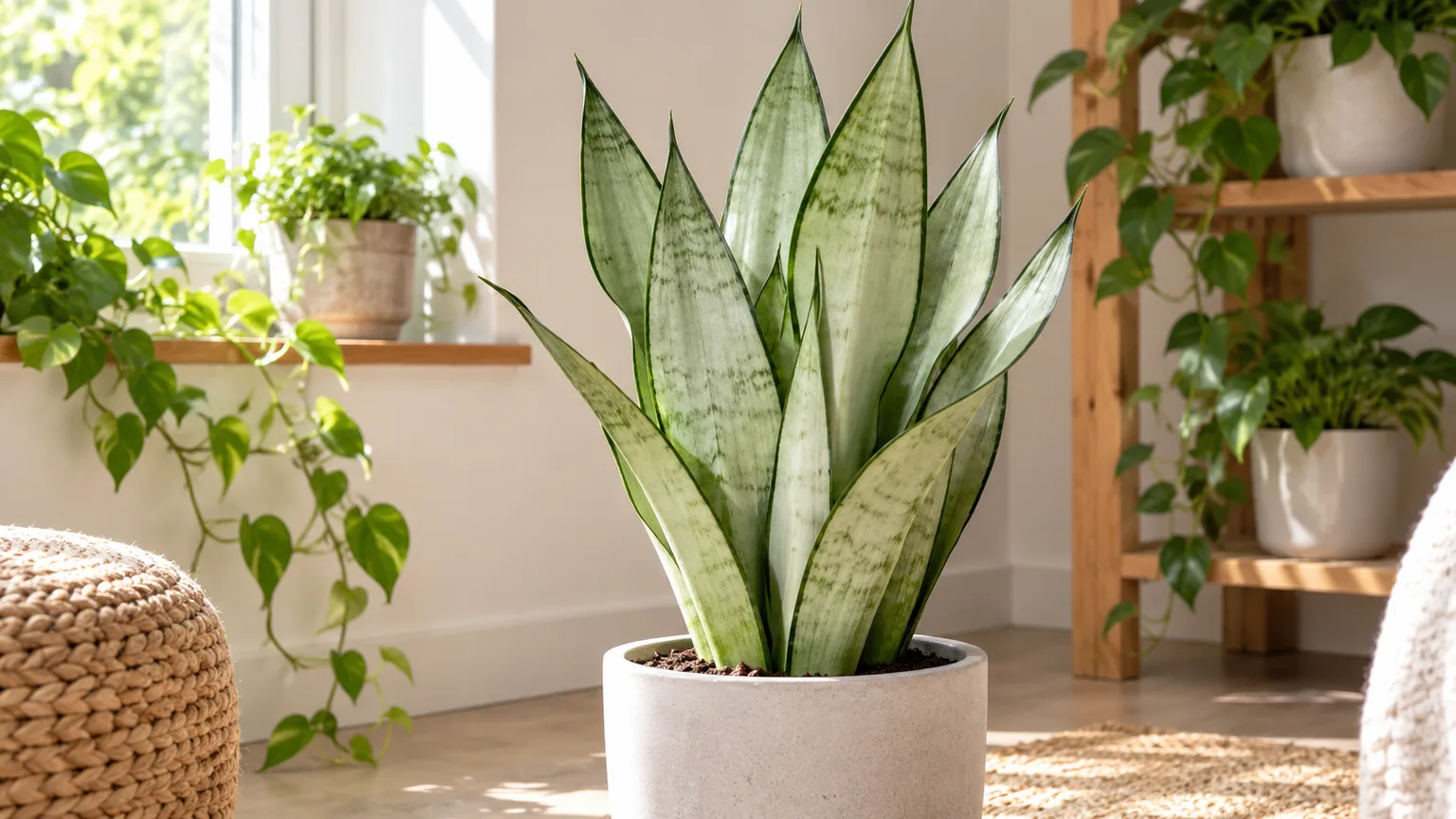
Dracaena trifasciata ‘Moonshine’ is the silvery-gray snake plant with broad, nearly unmarked leaves that read almost metallic in good light. Moonshine needs more light than marketing suggests — without bright indirect exposure, new leaves emerge darker green and lose the powdery silver cast. This guide is about keeping that color honest, not merely keeping the plant alive in a dim hallway.
You bought Moonshine for the pale silvery-green wash with a fine dark green edge and faint horizontal banding — the look RHS describes for this AGM cultivar. That color is not permanent paint. It is a light-response trait. In bright indirect exposure, leaves stay powdery silver. In weak light, the plant survives — snake plants are famously tolerant — but new growth darkens as chlorophyll density increases to capture scarce photons. The rosette slowly turns into an ordinary green snake plant while old silver leaves age out.
The practical goal is placement where each new leaf emerges silvery, firm, and upright — without bleaching, scorch, or the slow green drift that happens when a cultivar selected for color sits in a corner meant for a plain green trifasciata. NC State Extension lists the species as partial shade — direct sunlight only part of the day, 2 to 6 hours — while noting it tolerates very low light. For Moonshine, read that as: the species survives dim rooms; the cultivar needs the brighter end of that range to look like Moonshine.
How Much Light Sansevieria Moonshine Actually Needs
Indoors, aim for bright indirect light most of the day — roughly the brightness two to four feet from an unobstructed east window, or several feet back from a filtered south or west pane. That is stronger than “any corner that is not a closet.” Moonshine is not a deep-shade plant wearing a silver costume. It is a West African drought-adapted succulent that evolved under open, bright conditions and was selected for a pale leaf surface that only reads correctly when light is ample.
In measurable terms — useful as a reference, not a requirement — healthy Moonshine growth often falls around 200 to 400 foot-candles (2,000 to 4,000 lux) at the leaf surface: bright enough to cast a soft, readable hand shadow beside the foliage. Below roughly 100 foot-candles, the plant may maintain existing leaves but new blades emerge greener and narrower. Direct summer sun through south or west glass can exceed 2,000 foot-candles at the pane — enough to bleach pale leaves if you skip acclimation.
The honest summary: give Moonshine as much bright indirect light as your room allows, then pull back only when you see heat stress or scorch on fresh growth. Treat dim corners as temporary holding zones, not long-term homes for a cultivar you chose for color.
Why the Silver Color Depends on Brightness
Moonshine leaves look metallic because a thin wax layer and reduced chlorophyll display in the outer tissue create a silvery reflectance over faint green banding. NC State Extension describes the cultivar as silvery-gray foliage with light green blotches and narrow dark green margins — a look that depends on even lighting across the rosette, not a single sunbeam at noon.
When photons are scarce, the plant prioritizes function over aesthetics. It produces leaves with more green pigment and less powdery surface because chlorophyll captures light more efficiently than silver reflectance. The shift is gradual. You may not notice until you compare a new center leaf against an older silver blade from when the plant lived nearer a window. Judge Moonshine light by new leaf color, not by whether old leaves still look pale. Old foliage holds its appearance for months after a move to dim light; new growth tells the truth within one to two leaf cycles.
This is why Moonshine frustrates buyers who follow generic “snake plants love low light” advice. The genus tolerates low light. The cultivar does not reward it. If silver color is non-negotiable, brightness is non-negotiable.
Surviving vs Thriving in Indoor Light
In insufficient light, Moonshine enters metabolic stasis like any snake plant: thick leaves and rhizomes keep existing tissue alive on stored water and carbohydrates, but pups slow or stop and the silver palette fades on new blades. Neither state looks like sudden death, which is why light problems hide for months.
In bright indirect light, the same plant shifts to active growth: a few new leaves per year, occasional pups at the base, and the silver-green palette holding steady across successive leaves. A Moonshine in a dark hallway can look fine while it quietly stops growing and becomes more vulnerable to overwatering on Sansevieria Moonshine, because soil that dries in five days near a window may stay wet for three weeks in a dim corner. Light is the throttle on water use even though watering gets blamed first.
Moonshine vs Standard Snake Plant Light Requirements
Plain green Dracaena trifasciata and yellow-margined ‘Laurentii’ survive dim offices more gracefully than Moonshine because their normal color is already dark green. Losing contrast in low light is subtle. Moonshine has no such camouflage. Clemson Extension notes that D. trifasciata ‘Moonshine’ has silvery-green leaves among common varieties — and that ideal snake plant lighting is bright indirect, with slower growth and less water needed in lower light. For Moonshine, read “slower growth” as color drift toward green.
If you own both a standard snake plant and a Moonshine, do not give them identical placement unless both sit in bright indirect light. The green form can live farther from glass. Moonshine should sit one to two feet closer to the brightest appropriate window in the same room. Think of Moonshine as closer to ‘Laurentii’ in light appetite — variegated and pale types need brightness to hold their pattern — but with sunburn risk on pale tissue if you jump straight to harsh afternoon glass.
When a Darker Green New Leaf Means Too Little Light
The clearest Moonshine-specific diagnostic is simple: the newest emerging leaf is noticeably greener and less powdery than the one before it. You may also see longer, looser leaves as the rosette opens searching for brightness, no pups for a year or more, and soil that stays moist for weeks because transpiration dropped. These signs overlap with generic low-light stress but the color shift on fresh growth is the cultivar’s tell.
If only the oldest outer leaves are silver and every new blade is olive green, you are below the color-maintenance threshold — even if the plant is technically alive. Move it closer to the window or add a grow light before the entire rosette turns over to green foliage.
Best Window Placement for Sansevieria Moonshine
Window direction is a starting point, not the whole answer. Obstructions, tree shade outside, glass tint, and pot distance all change what reaches the leaf surface. Still, compass orientation gives a reliable first guess in the northern hemisphere.
Place Moonshine where it receives strong plant-facing light for most of the day, not where the room merely looks lit to your eyes. Human vision adapts to dim interiors; plants do not. A pot on a bookshelf across from a window is decorative. A pot within a few feet of the glass on an appropriate exposure is horticulture. Rotate the container a quarter turn every two to three weeks if growth leans toward the light.
East, South, West, and North Windows Compared
An east-facing window is the default sweet spot for Moonshine indoors. Morning sun is bright but relatively cool, followed by strong indirect light the rest of the day. Two to three feet from an unobstructed east pane often delivers enough brightness to hold the silver wash without frequent scorch scares. RHS advises sansevierias ideally in a bright, lightly shaded position — east exposure matches that indoors.
A south-facing window delivers the highest total daily light, especially in winter. The RHS Moonshine profile lists full sun and west- or south-facing aspect for this cultivar — but indoors that translates to filtered or setback placement, not baking against hot glass. Place the pot four to six feet back, or use a sheer curtain, and watch pale leaves for bleaching in summer.
A west-facing window works in spring and fall and needs caution in midsummer when late-afternoon sun carries heat through the pane. Treat west like south with extra distance, not like east with extra sun.
A north-facing window keeps Moonshine alive but is poor for color. Expect progressive greening of new leaves unless you supplement with a grow light. If north is your only option, accept slower growth, extend watering intervals per the Sansevieria Moonshine watering guide, and add artificial light rather than hoping silver returns on its own.
Distance From the Glass Matters
Direction labels fail when distance is wrong. A south window six feet away on an open floor may deliver less usable light at the leaf than an east window two feet away with a light wall reflecting brightness behind the plant.
Use distance as a dimmer switch. Closer increases intensity and heat on pale leaves; farther softens direct sun but may drop below the color threshold. Practical starting points: 2 to 3 feet from east or filtered west panes; 4 to 6 feet from unobstructed south panes; as close as possible to north panes only if you pair with a grow light. Seasonal adjustment beats permanent guessing — move closer in winter when sun angle drops and slightly back in midsummer if leaf surfaces heat up.
Can Moonshine Take Direct Sun?
Yes — with more caution than dark-leaved snake plants. Pale leaves have less pigment shielding and scorch faster than standard green blades. Moonshine handles gentle morning direct sun on an east windowsill or filtered direct light through sheer fabric. UF/IFAS notes the species prefers warm, sunny locations but to protect from hot afternoon sun — guidance that applies doubly to silver cultivars.
Problems start when intensity jumps faster than the plant adjusts. A Moonshine grown under store fluorescents and then placed on a south sill in July may develop permanent bleached or sunken patches within days. Direct sun through glass concentrates heat at the leaf surface. CAM photosynthesis helps with drought, not photobleaching.
Treat direct sun as a tool for color and compact growth, not a default. Use it when acclimated plants show tight silver rosettes. Remove it when sun-facing leaves develop crisp brown edges or yellow-white scorched zones.
Morning Sun vs Harsh Afternoon Rays
Morning direct sun differs from afternoon sun in both intensity and heat load. East exposure gives Moonshine a manageable direct period plus bright ambient day length. Afternoon sun through west or south glass can exceed what pale leaves tolerate, especially when outdoor temperatures are high and the pot sits on a heat-radiating sill.
If you want the compact growth and enhanced silver tone that moderate direct sun can provide, east morning sun is the safest entry. South and west direct sun can work for established plants with diffusion from curtains. Sunburn on Moonshine is permanent; damaged tissue does not re-silver.
Acclimating to Brighter Light Safely
Acclimation is non-negotiable when upgrading light. Move a low-light plant toward brighter exposure in stages over two to three weeks. Week one: place the pot in the target room but several feet back from the window. Week two: move halfway to the final distance. Week three: settle at the intended spot unless new leaves show bleaching.
Watch newest leaves first. Mild temporary curling on the sun-facing side during the brightest hours can occur during acclimation; bleaching, large brown patches, or softening tissue mean you moved too fast. Store-bought Moonshines often arrive from low-light retail displays — give them a week in moderate indirect light before pushing toward your brightest window. Combining immediate Sansevieria Moonshine repotting, fertilizing, and a major light jump stacks stress unnecessarily.
Low-Light Limits for Moonshine Cultivars
Snake plants survive surprisingly dim conditions longer than most tropical foliage plants. Moonshine adds a cosmetic deadline: the plant can live while ceasing to be Moonshine. RHS lists S. trifasciata ‘Moonshine’ among sansevierias that tolerate low light — true for survival — but also notes plants in shade often grow taller leaves while those in sun stay more compact. For this cultivar, shade also means greening, not just stretch.
How dark is too dark for a plant you bought for silver foliage? If no new leaf has emerged in twelve or more months and successive leaves are progressively greener, you are below the useful threshold. If the pot takes more than three weeks to dry in normal indoor temperatures, light is likely too low for safe watering rhythms. Short-term dim placement during a renovation is fine. Multi-year dark-corner storage is not — unless you accept a green snake plant with a silver memory.
Signs Your Moonshine Is Losing Its Silver Wash
Low-light stress on Moonshine has a recognizable profile: new leaves darker green and less powdery, older silver blades unchanged until they age out, absent pups, elongated or arching leaves, and soil that stays moist too long. Unlike sunburn, greening can reverse — move to brighter light and the next one to two leaves should show improved silver tone if roots are healthy.
Do not confuse natural aging with light failure. A single old outer leaf yellowing at the base while new center growth stays silver is senescence. Uniform greening on every new blade is a placement problem. Fix light before pruning or repotting; scissors and fresh soil cannot restore silver without photons.
Grow Lights When Natural Light Falls Short
When windows cannot deliver enough daily brightness — windowless offices, deep interior rooms, north-only winter exposures — full-spectrum LED grow lights are the most reliable way to keep Moonshine silver. Snake plants do not need extreme PAR levels, but pale cultivars need consistent moderate brightness more than dark forms do.
Choose a fixture labeled for houseplants or seedlings, not a standard room bulb. Full-spectrum white LEDs around 4000K to 6500K work well. Position the light 12 to 18 inches (30 to 45 cm) above the tallest leaf tip, run it 8 to 12 hours daily on a timer, and adjust distance if leaves bleach or stretch toward the lamp. A north window plus supplemental LED often outperforms either source alone for color maintenance.
When you add a lamp, re-check watering after two weeks — brighter total daily light speeds dry-down even if the window did not change. See the Sansevieria Moonshine watering guide for how light and moisture interact.
Warning Signs of Too Much or Too Little Light
Moonshine communicates light stress through color and growth pace, not dramatic wilting. Use a two-week observation window after any placement change. Old damage is historical; new leaves after the move tell you whether today’s light works.
Too little light: progressively greener new leaves, absent pups, loose rosette, soil staying wet for weeks, no new growth for a year or more. Too much light or heat: bleached white-yellow patches on pale tissue, crisp brown edges on the sun-facing side, sunken scorched areas that feel papery, sudden damage after an unacclimated move to strong south or west glass. When both seem possible near hot glass in a dim winter room, remove direct beam and heat first — scorch happens in days; greening takes months.
How Light Affects Watering and Pup Production
Light is the throttle on Moonshine metabolism. Brighter light increases photosynthesis and transpiration; dim light slows both. A watering rhythm that worked on a bright windowsill will overwater the same plant in a dim corner because the root zone stays saturated longer. After any light increase, monitor soil more often for the first month but still wait until the mix is fully dry throughout before soaking — Moonshine remains drought-adapted even in bright light.
Pups and Sansevieria Moonshine propagation by division also depend on light. Parent plants in bright indirect light produce offsets more reliably, and divisions establish faster than those from stressed parents in dim corners. If you propagate by leaf cuttings, know that silver tone may not reproduce reliably — divide pups to preserve the cultivar’s color. That propagation caveat is another reason bright light matters: you cannot divide what never formed.
Match soil and drainage to light as well. A plant pushed into brighter light without fast-draining mix faces more stress than one in gritty soil that dries evenly between soaks.
Conclusion
Sansevieria Moonshine light needs come down to one cultivar-specific truth: you are growing color, not just survival. Dracaena trifasciata tolerates low light longer than most houseplants, but Moonshine rewards bright indirect exposure with the powdery silver leaves that justify the purchase. Place the pot where each new leaf emerges silvery, not where the room looks nice.
Use an east window at moderate distance as the safest default; treat south and west with filtration and setback; treat north and interior desks as grow-light placements unless you accept green new growth. Acclimate gradually toward brighter spots; pale leaves burn faster than dark ones. Link watering to dry-down speed after any light change, and read the newest leaf as your light meter — when it greens, move the pot before the whole rosette forgets it is Moonshine.
When to use this page vs other Sansevieria Moonshine guides
- Sansevieria Moonshine overview — Start here for whole-plant context before deep-diving this topic.
- Sansevieria Moonshine problems hub — Jump to symptom-specific fix guides when this care topic does not resolve the issue.
- Not Enough Light on Sansevieria Moonshine — Escalate here when light adjustments are not enough.
- Leggy Growth on Sansevieria Moonshine — Escalate here when light adjustments are not enough.
- Sunburn / Scorched Leaves on Sansevieria Moonshine — Escalate here when light adjustments are not enough.
Related Sansevieria Moonshine guides
- Sansevieria Moonshine overview
- Sansevieria Moonshine watering
- Sansevieria Moonshine soil
- Sansevieria Moonshine propagation
- Sansevieria Moonshine fertilizer
- Sansevieria Moonshine repotting
- Not Enough Light on Sansevieria Moonshine
- Leggy Growth on Sansevieria Moonshine
- Sunburn / Scorched Leaves on Sansevieria Moonshine
- Sansevieria Moonshine problems