Shankhpushpi Fertilizer Guide: When & How to Feed
Shankhpushpi Fertilizer Guide: When & How to Feed
Shankhpushpi Fertilizer Guide: When & How to Feed
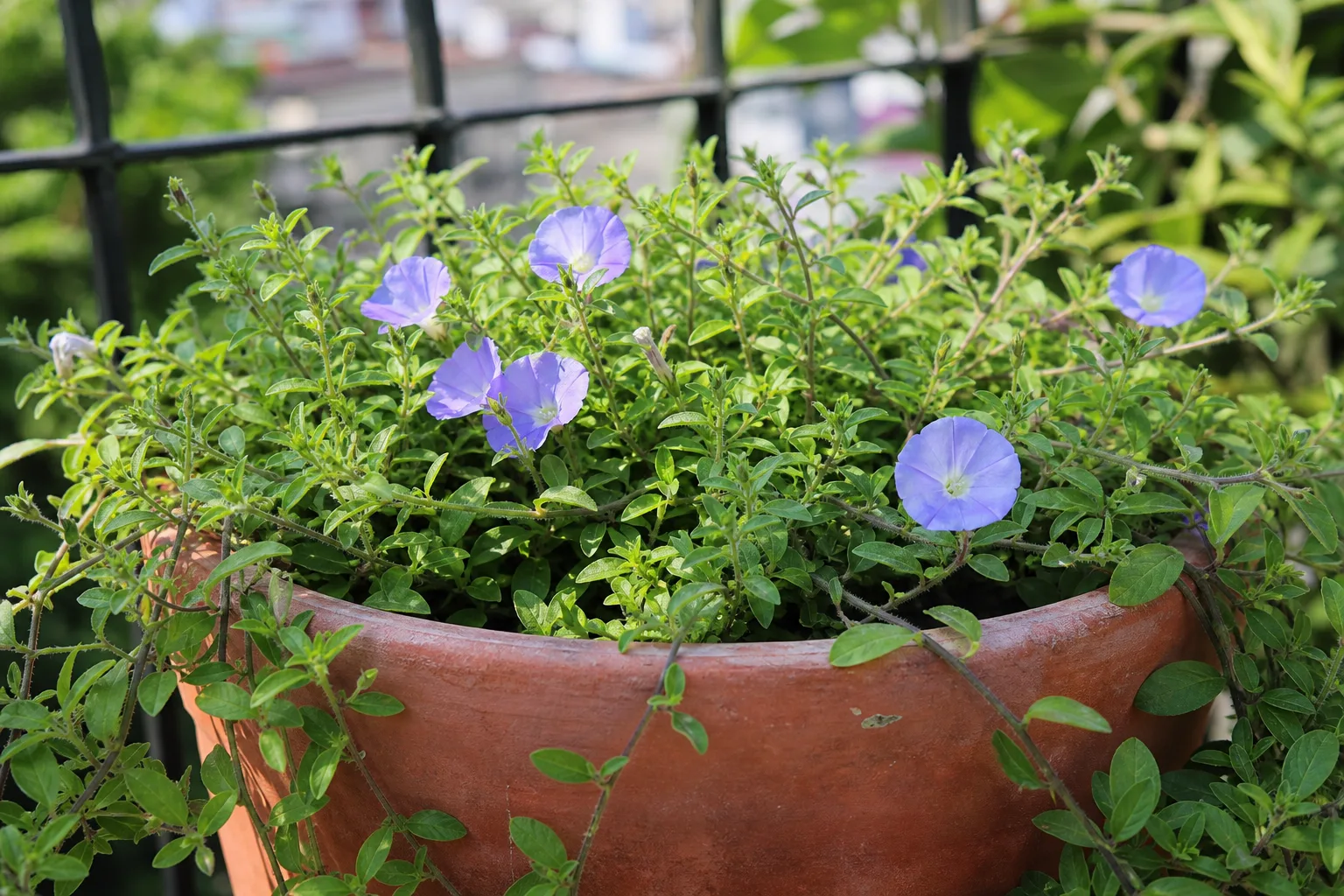
Shankhpushpi (Convolvulus pluricaulis, often treated as a synonym of Convolvulus prostratus) is a low, hairy, prostrate Ayurvedic herb from dry and semi-arid ground—not a soft tropical foliage plant that wants weekly full-strength feed. It sprawls as a mat in full sun to bright partial sun and prefers well-drained sandy loam with only modest compost. Fertilizer can support denser trailing shoots and more reliable flowering once light, drainage, and watering are right. It cannot rescue a shaded, waterlogged pot.
This guide is for home growers in India and similar warm climates: balcony pots, terrace troughs, and sunny medicinal herb patches. Genus-level garden feeding tips appear as context; treat farm manure rates as background, not a scoop recipe for a 20 cm container.
What Shankhpushpi Actually Needs From Fertilizer
Shankhpushpi builds thin hairy stems and small oblong leaves while the root zone stays oxygenated. Nutrients matter because container mixes leach with repeated watering in heat, and because active warm-season sprawling uses nitrogen, phosphorus, and potassium. The goal is firm, sun-hardened mats and occasional funnel flowers—not forced soft growth that collapses when the crown stays wet.
Lean Dry-Land Biology Comes First
This species is adapted to rocky, sandy, and fallow land under xerophytic conditions across north-western India and similar desert or dry shrubland habitats. That biology sets the feeding rule: keep the program light. Growers of garden Convolvulus generally place plants in full sun with average to moderately fertile, well-drained soil and warn against constantly wet media (Harvest to Table — Convolvulus). Genus care guides often recommend compost at planting and a midseason liquid feed rather than a heavy weekly schedule (GrowVeg — Convolvulus).
Nitrogen pushes leafy sprawl. Too much in a wet mix softens stems and raises crown-rot risk on a plant that already fails in soggy pots. Phosphorus supports roots and energy use as the mat colonizes fresh sandy mix. Potassium helps with heat and water stress on sunny balconies. For most home plants, a balanced dilute liquid (for example 10-10-10 or 20-20-20 at half strength) or a thin finished compost top-dress is enough. You do not need a high-nitrogen “leafy greens” calendar.
Stabilize light, pot mix, and watering before you fertilize. Clemson Extension’s nutrient stewardship guidance is clear: do not fertilize during drought—plants need water for uptake and to support growth the fertilizer triggers (Clemson HGIC — Fertilizers and the Environment). On Shankhpushpi, wilted midday leaves after a dry spell need a careful rewater and a watering check first. Sparse, pale growth in shade needs the light guide, not a stronger bottle.
Confirm the True Species Before You Feed
Several herbs are sold as “Shankhpushpi,” including Evolvulus alsinoides and Clitoria ternatea. [Flagged: no authoritative source found for this claim] True Convolvulus pluricaulis / C. prostratus is a low hairy creeper with white to pale blue or light purple funnel (“conch”) flowers (Plant Science Today — Convolvulus prostratus). Feeding the wrong plant with the right bottle still wastes effort. If your nursery label is ambiguous, compare habit and flowers against a reliable botanical description before you build a fertilizer routine.
Best Fertilizer Types for Shankhpushpi
The best fertilizer for Shankhpushpi in a home pot is one you can dilute precisely and apply to moist—not bone-dry, not swampy—mix during active sprawling. Prefer products that list all three macronutrients cleanly, or well-finished organics that do not force a “heavy feeder” calendar. Genus horticulture often favors an all-purpose, slow-release organic feed in spring for garden Convolvulus (Harvest to Table — Convolvulus). In small Indian balcony pots, that idea translates best to half-strength liquids or thin top-dresses, not a thick manure cake.
Thin Compost and Vermicompost
Organic matter maps well to this plant’s preference for lean, living sandy loam rather than constant salt hits. A thin compost or vermicompost top-dress once or twice in the warm season can replace or reduce liquid feeds. Work a modest amount of finished compost into the planting hole or surface only; never bury the crown under a heavy manure layer that stays wet and anaerobic. Fresh, hot manure is a poor choice in containers—it can burn roots and keep the mat too damp.
GrowVeg’s genus guidance—mulch with compost before planting, then use a liquid plant food midseason to stimulate growth—matches a light organic-first approach for trailing Convolvulus (GrowVeg — Convolvulus). Keep top-dressings thin so airflow still reaches the hairy stems.
Dilute Balanced Liquids
A complete water-soluble fertilizer at half the label strength every 4–6 weeks during active growth is the practical default for pots. Apply enough solution to wet the root zone, then empty the saucer so salts do not reconcentrate as water evaporates. UF/IFAS notes that excess fertilizer in containers builds salts in the media and can cause stunted growth, leaf browning, or plant death (UF/IFAS Gardening Solutions — The Basics of Fertilizer).
If your mix already contains slow-release granules, wait several weeks after planting or repotting before adding liquid feed. Double feeding is a common cause of tip burn on a dry-land creeper that already sits in a small volume of sandy mix. Mild organic liquids such as diluted seaweed blends can work at half strength or weaker on the same cadence; use them outdoors or with good ventilation if odor is an issue.
When to Fertilize Shankhpushpi in India
Feed only when Shankhpushpi is actively sprawling in warm weather and the pot dries on a predictable cycle. In much of India that window runs from late spring through the monsoon shoulder into early autumn—roughly March through October—when full sun and heat keep internodes moving. Match placement to the Shankhpushpi light guide so you are not fertilizing a thin, shaded plant.
Active Warm-Season Window
During peak heat, sandy pots may dry every few days. That leaching is why a dilute feed every 4–6 weeks (or a modest organic top-dress) helps even though Shankhpushpi is not a classic hungry houseplant. Watch new tip color and mat density more than the calendar. Pale growth with bright light and correct dry-downs is a fair cue to feed; pale growth in shade or chronic wet mix is not.
In cooler North India winters or air-conditioned indoor rooms, stretch the interval or stop when sprawling stalls. Fertilizer sitting unused in a cool, slow-drying pot still contributes to salt stress. During prolonged monsoon rains, postpone liquid feeds if the mix stays wet for days—Clemson advises delaying fertilization when heavy rain will leach or wash nutrients away before roots can use them (Clemson HGIC — Fertilizers and the Environment).
When to Pause Feeding
Stop fertilizing when any of these are true:
- The plant is drought-stressed, wilted, or showing crispy tips from dry mix
- You just repotted into fresh fertilized mix (wait 2–3 weeks for new tip growth)
- Stems feel soft at the crown or soil smells sour—fix drainage and watering first
- Growth has stalled in cool weather below the plant’s comfort range (roughly 18–35°C) [Flagged: no authoritative source found for this claim]
- You see white salt crust on the surface or brown margins after a recent feed
Clemson’s 4Rs framing still applies: right product, right rate, right time, right place in the root zone (Clemson HGIC — Fertilizers and the Environment). For Shankhpushpi, “right time” means warm-season growth with a root zone that is moist after watering and then allowed to dry—not a permanent wet sponge.
How Much Fertilizer to Use in Pots and Beds
Pots and balcony containers: half-strength balanced liquid every 4–6 weeks in the active season, or a thin compost/vermicompost top-dress every 6–8 weeks instead of liquid. Small pots leach faster; do not compensate by doubling concentration—shorten the interval slightly only if growth stays pale under strong sun and correct watering.
Terrace beds and raised rows: build modest organic matter into sandy loam at planting, then use the same light warm-season cadence. Garden Convolvulus care commonly calls for average fertility and excellent drainage rather than rich, moisture-holding peat (Harvest to Table — Convolvulus; GardenersHQ — Convolvulus). If the bed stays soggy after monsoon rain, improve drainage before adding more nutrients.
In-ground farm references: some medicinal-herb cultivation notes mention farmyard manure or compost worked into sandy soil. Treat those as field planning numbers. For a balcony pot, stick to dilute liquids and thin organics. Pair any feeding program with the lean mix described in the Shankhpushpi soil guide.
How to Apply Fertilizer Safely
Water with plain water first if the top 2–3 cm are dry—Shankhpushpi should dry between drinks, but applying salts to a severely wilted plant invites fertilizer burn. Mix the dilute solution thoroughly. Apply at the soil line, not as a routine foliar spray of strong synthetic concentrate on hairy leaves.
Let a little excess drain, then empty saucers. If crust appears, flush the pot thoroughly with plain water until runoff runs clearer, then pause feeding for about four weeks. UF/IFAS warns that container salt buildup from overfeeding leads to browning and stunting (UF/IFAS Gardening Solutions — The Basics of Fertilizer).
Fertilizer does not fix a peat-heavy pot that stays wet for days. If the mix never dries, open the soil and watering guides before you change products.
Signs of Underfeeding vs Overfeeding
Possible underfeeding (only after light and watering check out): overall pale green new tips, slow sprawling despite warmth and sun, sparse flowering on an otherwise healthy mat that has been in the same lean mix for a long season without any organic top-dress or liquid feed.
Likely overfeeding or salt stress: brown leaf tips or margins after a recent feed, white crust on the soil surface, soft dark growth that collapses when the pot stays wet, stalled growth despite “more food,” or leaf browning that worsens after full-strength applications. UF/IFAS links excess container fertilizer to salt buildup, browning, stunting, and plant death (UF/IFAS Gardening Solutions — The Basics of Fertilizer).
First action when unsure: stop feeding, confirm the pot dries between drinks, flush once if salts are visible, and wait for new tip growth before resuming at a weaker dilution. Soft crowns usually mean drainage failed before the fertilizer brand did.
When to Use This Page vs Other Shankhpushpi Guides
Use this fertilizer page when the mat is already in strong light, the sandy mix dries on a predictable cycle, and you need a warm-season feeding schedule or help reading burn vs deficiency. Switch to watering for yellowing, soft crowns, or wet-soil timing. Use light when stems are sparse and pale in shade. Use soil when the mix stays heavy or peaty. Use repotting when the mat fills the rim and roots circle. Use the overview for placement, size, and first-month setup, and propagation when you are multiplying cuttings or seed rather than feeding the parent plant.
Related Shankhpushpi Guides
- Shankhpushpi overview — identity, placement, and care baseline
- Shankhpushpi watering — dry-down checks before any feed
- Shankhpushpi light — sun needs that drive nutrient use
- Shankhpushpi soil — lean sandy mix that makes light feeding safe
- Shankhpushpi repotting — when to refresh mix and pause fertilizer
- Shankhpushpi propagation — aftercare for new plants before feeding
Conclusion
Shankhpushpi fertilizer success is deliberate restraint: half-strength balanced liquid every 4–6 weeks (or thin compost/vermicompost) only while the plant sprawls in warm sun, then stop for cool weather, wet pots, new transplants, and stress. Match the lean dry-land habit of Convolvulus pluricaulis, keep salts out of saucers, and fix light and drainage before you reach for a stronger dose.