Shankhpushpi Watering: How Often & Soil Checks
Shankhpushpi Watering: How Often & Soil Checks
Shankhpushpi Watering: How Often & Soil Checks
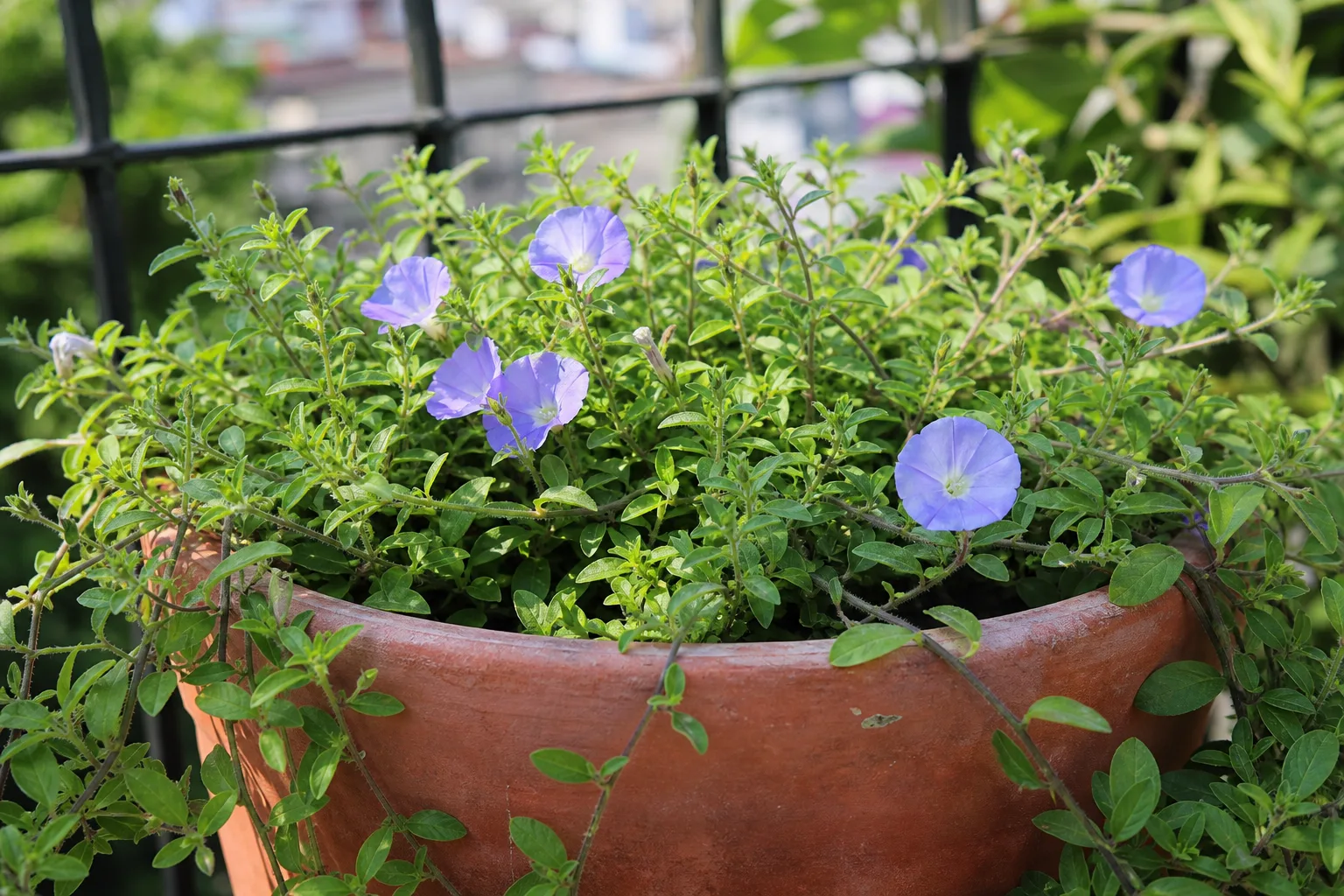
Shankhpushpi watering is a dry-down habit, not a daily sip. Convolvulus pluricaulis — still the trade name most Indian nurseries use, though Kew accepts it as a synonym of Convolvulus prostratus — is a low, hairy, prostrate creeper from desert or dry shrubland habitats from Cape Verde to north-western India. That biome is the whole watering story: the plant wants a thorough drink, then air back in the root zone. Constantly wet peat is the fastest way to soft crowns and stalled mats.
Water when the top 2–3 cm of soil are dry. Keep the mix lightly moist in warm weather, but never waterlogged. As a practical map — not a rigid clock — many sunny pots need water every 3–5 days in hot dry weather and every 7–10 days in cooler months. Skip the can if the pot still feels heavy. Pair this page with the Shankhpushpi care hub and the Shankhpushpi soil guide — drainage decides how forgiving your rhythm feels.
Why Shankhpushpi Prefers Dry-Down Between Drinks
Shankhpushpi evolved for rocky, fallow, and seasonally dry ground, not for swampy houseplant mix. Kew’s Plants of the World Online places the accepted species (C. prostratus) as a subshrub of desert or dry shrubland, with a native range spanning arid North Africa and West Asia into north-western India. (Kew POWO — Convolvulus prostratus) In containers, that biology means oxygen at the crown matters as much as moisture.
When roots sit in waterlogged soil, they cannot absorb the oxygen needed to function. Dying roots decay and stop supplying water and nutrients even though the pot feels wet — so growers often misread the wilt as thirst and water again. (Missouri Botanical Garden — Overwatering) For a prostrate Convolvulus with a woody rootstock and trailing stems hugging the surface, chronic wetness shows up first as soft tissue at the crown and yellowing leaves, not as a dramatic upright collapse.
So the goal is a soak-and-dry cycle: wet the full root ball once, drain completely, then wait until the upper mix dries. Daily light sprinkles keep the surface damp, starve deeper roots of air, and recreate the one condition this dry-land creeper cannot tolerate. If you must choose between slightly too dry and slightly too wet for an established plant, slightly too dry wins.
How Often to Water Shankhpushpi in Containers
There is no honest universal calendar. Pot size, mix texture, sun hours, wind, and season all change how fast water leaves the container. Use intervals only as a starting map, then let dryness decide.
In hot, dry summer weather with full sun, many balcony Shankhpushpi pots need a thorough watering about every 3–5 days once the top 2–3 cm are dry. In milder weather or cooler months, the same plant may stretch to 7–10 days. A small terracotta pot on a blazing terrace dries faster than a large plastic pot in a humid courtyard. Track two full dry-down cycles and you will know your home’s rhythm better than any fixed reminder.
Never water because habit says “today” while the pot is still heavy and cool at depth. A Shankhpushpi that waits two extra dry days usually recovers. A plant whose crown sits wet for two extra days may not — especially if light is weak. Confirm placement with the Shankhpushpi light guide before blaming the watering can; shaded sandy pots still stay wet longer than sunny ones.
Finger, Weight, and Season Checks
Surface color alone lies. Mix can look pale on top while staying damp near the drainage holes. Before every watering, use at least one of these checks:
Finger test: Push a finger 2–3 cm into the mix. If it feels cool or soil clings, wait. Bone-dry at that depth is your cue to soak.
Pot weight: Lift the container after a full watering and again each day until it feels clearly lighter. Weight reflects the whole column, not just the top crust.
Chopstick or skewer: Push dry wood toward the bottom, then pull it out. Dark, sticky wood means moisture remains; clean dry wood means the root zone has dried enough for Shankhpushpi.
Missouri Botanical Garden also warns that a dry surface is not always a sign of need — probe deeper before you irrigate, and treat sour or rotten-smelling mix as a waterlogging red flag. (Missouri Botanical Garden — Overwatering) In monsoon humidity or North India winter chill, the same finger test that said “water” in May may say “wait” in December.
The Soak-and-Dry Method That Protects Crowns
When dryness checks pass, water slowly and thoroughly until runoff exits the drainage holes. That confirms the entire root ball is wet, not just the rim. Empty the saucer within 15–30 minutes. Leaving Shankhpushpi standing in runoff recreates waterlogged soil around a low woody crown.
Avoid frequent shallow cups of water. Partial watering trains roots toward the surface and leaves dry pockets deeper in the pot where feeder roots should explore. One deep soak followed by a real dry-down matches how rain behaves on sandy, free-draining ground.
If water sheets off hydrophobic mix without soaking in, set the pot in a tray of water for 10–20 minutes so the root ball can rehydrate from below, then drain fully and return to the dry-down cycle. Do not leave it soaking overnight. Water the soil, not the foliage mat — wet hairy stems packed against damp mix raise fungal pressure when airflow is poor.
Overwatering Signs and Crown or Root Rot
Overwatering is the main container risk for Shankhpushpi. Watch for yellowing or translucent leaves, soft stems at the crown, wilting despite wet soil, a sour or rotten smell from the mix, and stalled sprawling growth despite warmth. Soil that stays dark and heavy for many days is another cue.
Missouri Botanical Garden notes that plants in soil that is too wet suffer from lack of oxygen, leading to root death, yellowing, stunted growth, and crowns that may rot; damaged roots also become abnormally susceptible to fungal pathogens such as Phytophthora in periodically waterlogged soils. (Missouri Botanical Garden — Overwatering) University of Minnesota Extension similarly links houseplant root rot to overwatering and poorly drained media, and advises checking roots and improving drainage when decay is suspected. (University of Minnesota Extension — Root rot of houseplants)
If several of these signs appear together, stop watering immediately. Do not give “a little drink to perk it up.” That is the mistake that finishes the plant.
How Wet Mix Kills Trailing Stems
Shankhpushpi’s growth habit makes wet feet especially costly. Stems sprawl across the pot surface; when the upper mix never dries, those stems sit against anaerobic media while the woody rootstock stays cold and wet. Softness at the crown is an early alarm — healthier plants feel firm where stems meet the soil. Foul odor confirms anaerobic conditions.
Recovery is possible while firm tissue remains. Unpot gently, trim mushy brown roots, discard sour media, and repot Shankhpushpi into a lean, sandy, free-draining mix in a pot with open drainage holes. Wait until the new mix begins to dry before the first careful soak. If the crown is already collapsed and mushy through the rootstock, the plant may not recover — take cuttings from any firm trailing tips after conditions stabilize (see propagation).
Underwatering Signs and How to Rehydrate Safely
Underwatering is real but usually less lethal than chronic wetness on this species. Watch for midday wilting in full sun that recovers after a soak, crispy leaf edges, sparse new shoot tips, and soil pulling away from the pot wall. The container feels very light.
A single dry episode rarely kills established Shankhpushpi. Rehydrate with one full soak, let excess drain, then return to the dry-down cycle. Do not compensate with daily sips; that swings the problem to overwatering within a week. If leaves are limp and the mix is wet, you are not underwatered — you are overwatered, and the fix is opposite.
Seasonal Watering in Indian Climates
Shankhpushpi performs best around warm temperatures roughly 18–35°C (64–95°F) with low to moderate humidity. Seasonal rainfall and heat change how often the same pot needs water even when the plant stays outdoors year-round in much of India.
Summer Heat vs Monsoon Pause
In peak summer heat and dry wind, expect shorter intervals — often the 3–5 day range once the top 2–3 cm dry. Water early morning so foliage can dry and roots can take up moisture before the hottest hours.
During monsoon, pause irrigation whenever rain or humidity already keeps the mix moist. Empty saucers after storms, keep drainage holes clear, and water only when the top 2–3 cm are dry again. Standing water around a prostrate mat is more dangerous than a short dry spell. Move pots under a roof edge if storms flood the mix for days.
Cool-Season Reduction
In cooler North India winters or rainy cool spells, reduce sharply toward 7–10 days or longer. Growth slows; sandy mix still holds moisture longer in low light. Protect from frost and cold, wet winters — this is a warm-climate dryland plant, not a winter-wet groundcover. Resume more frequent soaks only when warmth and active sprawling return.
Pot, Mix, and Light Effects on Drying Speed
Watering advice fails when the container fights the plant. Use well-drained sandy loam with modest compost — lean, airy mix suits this herb better than rich, moisture-holding peat. A practical starting blend is about 50% sandy loam or potting mix, 30% coarse sand or perlite, and 20% compost or vermicompost, with pH roughly 6.0–7.5. Details live in the soil guide.
Choose pots with real drainage holes. Terracotta breathes and dries faster; glazed ceramic and plastic hold moisture longer. Avoid oversized pots that stay wet for weeks after a single soak. Full sun to bright partial sun speeds dry-down and keeps growth dense; weak light plus wet mix is the classic crown-rot pairing, so fix light before increasing water.
Fertilizer cannot fix a waterlogged root zone. Feed only when the plant is actively growing and the dry-down rhythm is already stable — see fertilizer.
When to Use This Page vs Other Shankhpushpi Guides
Use this watering page when you need dryness checks, seasonal intervals, overwatering vs underwatering diagnosis, or a first action when leaves yellow after a drink. Switch to soil when the mix stays wet for days or smells sour even after you cut irrigation. Use light when the pot never dries and stems look sparse in shade. Use repotting when roots circle or the mat has filled the surface and the old media will not drain. Use overview for identity, placement, and whole-plant context, including confirming true Convolvulus versus other herbs sold as “Shankhpushpi.”
First Action When You Are Unsure
If you do not know whether to water today, do this in order. Feel the top 2–3 cm and lift the pot. If either check says moisture remains, wait 24–48 hours and reassess. If the plant looks wilted over wet soil, stop watering, improve light and airflow, and inspect the crown and roots if the smell is sour. If the pot is bone-dry and light, give one deep soak and drain. Only after the plant stabilizes should you consider repotting into freer-draining mix or adjusting fertilizer.
When you are torn between slightly too dry and slightly too wet for established container Shankhpushpi, choose slightly too dry. That is the bias this dry-shrubland creeper evolved for.
Related Shankhpushpi Guides
Continue with the Shankhpushpi care hub for grower notes and toxicity context, then deepen placement with light, the root environment with soil and repotting, feeding with fertilizer, and multiplication with propagation. Watering works best as part of that cluster, not as a standalone calendar.
Conclusion
Shankhpushpi watering succeeds when you treat Convolvulus pluricaulis (C. prostratus) as a dry-land creeper in a limited pot, not as a thirsty tropical herb. Water deeply after the top 2–3 cm dry, drain completely, and stretch intervals in cool or humid weather. Protect new plants with attentive early checks, then keep the soak-and-dry bias as mats establish. Prevent wet crowns first — that single habit saves more Shankhpushpi plants than any fertilizer or spray.