Shankhpushpi Light Needs: Full Sun & Placement
Shankhpushpi Light Needs: Full Sun & Placement
Shankhpushpi Light Needs: Full Sun & Placement
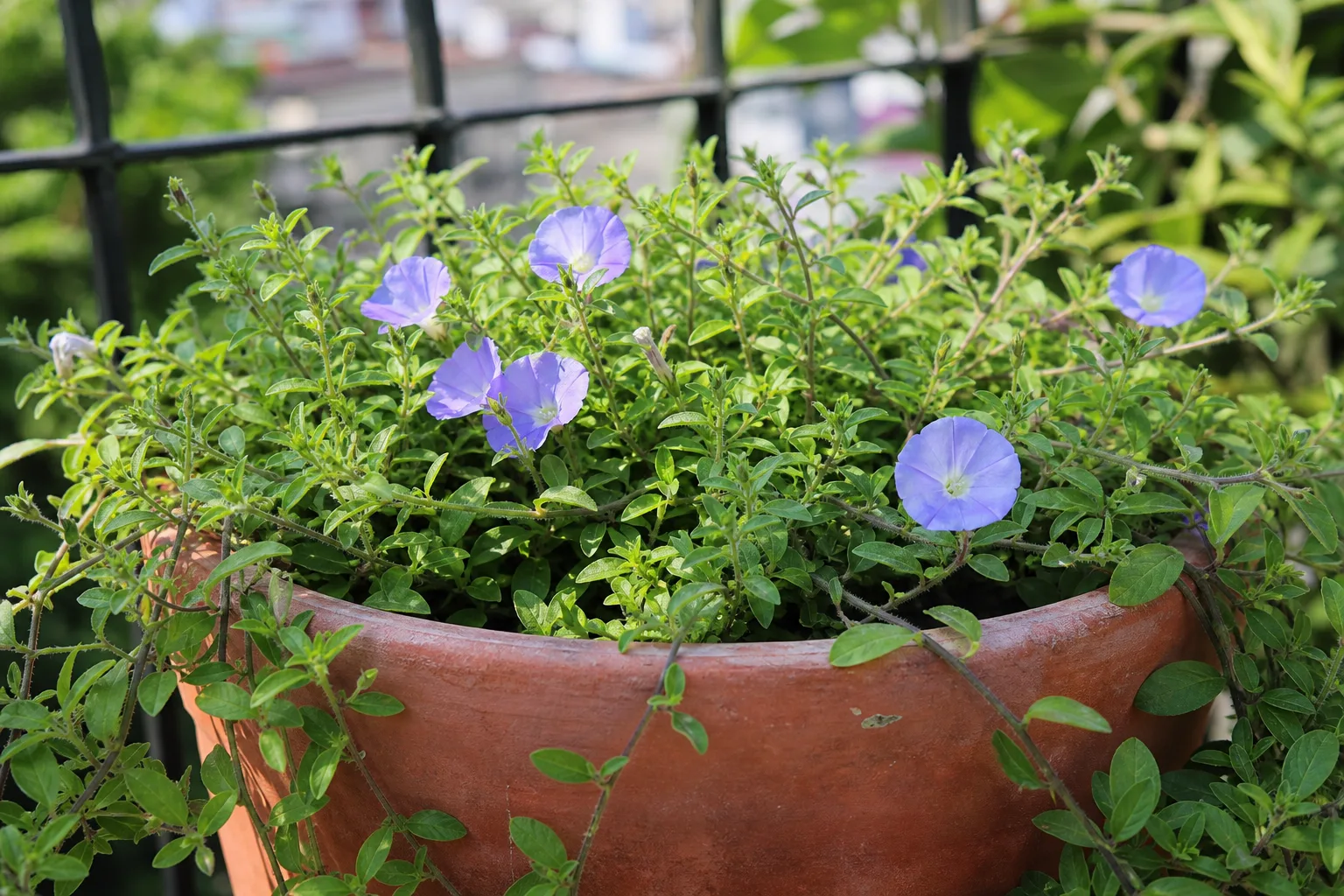
Shankhpushpi (Convolvulus pluricaulis, accepted by Kew as Convolvulus prostratus) is a low, hairy, prostrate Ayurvedic creeper — not a dim-corner houseplant that “likes shade.” Kew Plants of the World Online places the species as a subshrub of desert or dry shrubland with a native range from Cape Verde to north-western India. Give it weak light and you usually get thin, stretched stems, a sparse mat, and little flowering. Give it strong daytime sun with lean, fast-draining soil and the same plant knits into a tighter carpet of shoots.
This guide covers how much sun Shankhpushpi needs, which Indian balcony exposures work, how far you can push indoor windows, grow-light backups, flowering light, and the warning signs that tell you to move the pot before you redesign watering. Confirm the label matches true Convolvulus pluricaulis / C. prostratus — white to pale blue or light purple funnel (“conch”) flowers on a low hairy creeper — because Evolvulus alsinoides, Clitoria ternatea, and other herbs are often sold under the same common name.
How Much Light Shankhpushpi Actually Needs
Aim for full sun to bright partial sun for most of the day — roughly 6 or more hours of direct sun when you want the densest mats and steadiest flowering, or at least several hours of real sunbeams plus strong open sky the rest of the day. That is the home-grower translation of a plant that evolved in open, bright drylands, not under a closed canopy. Related ornamental Convolvulus species such as dwarf morning glory (Convolvulus tricolor) are likewise rated for full sun and cannot grow in the shade, which matches how this genus behaves when light is cut.
Translate that for home pots: place Shankhpushpi where the crown sees open sky, not where a covered verandah merely looks cheerful to your eyes. Partial sun (morning-only or lightly filtered terrace light) is a valid long-term option when drainage stays excellent. Deep shade or a north alcove with no plant-facing brightness is a growth trap.
Full sun versus bright partial sun in plain hours
Use hours as a starting dial, then judge by new growth:
- Full sun target: about 6+ hours of direct sun on clear days — ideal for dense mats and regular funnel flowers when the sandy mix drains fast.
- Bright partial sun band: about 3–6 hours of direct sun, with bright open light the rest of the day — workable on east balconies or lightly filtered south/west spots.
- Too dim: less than about 2–3 hours of real sun and no strong ambient brightness — internodes lengthen, leaves stay small, flowering stalls, and soil stays wet dangerously long.
Hold your hand above the foliage at midday. A sharp shadow means strong direct exposure; a soft but readable shadow is still useful bright light; a faint or absent shadow is survival light, not growth light for this dry-land creeper.
Surviving versus thriving for a prostrate mat
A plant that “survives” in a bright indoor lobby or a half-shaded courtyard often looks acceptable for weeks because hairy stems do not collapse overnight. Thriving looks different: steady new trailing tips, shorter internodes, occasional funnel flowers in the warm season, and a pot that dries on a predictable schedule after a deep drink.
Survival mode shows as long gaps between flushes, pale soft shoots racing toward the brightest wall, delayed flowering, and soil that stays heavy long after you water. At that point people usually blame the Shankhpushpi watering guide first. Fix light before you redesign the watering calendar — weak light slows uptake and makes wet feet more dangerous on a plant that already fails in soggy pots. RHS guidance is blunt: without enough light, plants cannot make the sugars they need, so you see weak, pale, spindly growth and fewer flowers.
Why This Is a Dry-Land Sun Creeper, Not a Shade Herb
Marketing sometimes sells Shankhpushpi as an easy “medicinal houseplant” you can grow anywhere warm. Habitat biology is stricter. Kew describes Convolvulus prostratus (with C. pluricaulis as a synonym) as a plant of desert or dry shrubland biomes across a belt from Cape Verde through North Africa and West Asia into north-western India. Those are open, high-brightness environments — rocky and fallow ground with strong sky light — not deep woodland floors.
That habitat maps cleanly to home care. Shankhpushpi belongs where full sun to bright partial sun is realistic for most of the day, paired with lean sandy loam. Parking it under a dense overhang or behind a curtain reverses that biology and usually produces lanky, flower-poor mats.
Desert and dry shrubland origins
In dry regions of India (notably Gujarat, Rajasthan, and other arid belts) and similar climates across Pakistan and West Asia, this creeper behaves like an open-ground plant: it sees strong daytime brightness, heat that drives soil dry-down, and soils that drain rather than stay swampy. Light and drainage travel together. A sunny terrace that stays warm drives both photosynthesis and dry-down. A cool, dim room slows both, which is why poorly lit containers often fail from wet crowns rather than a mysterious disease. Pair strong sun with the fast-draining mix in the Shankhpushpi soil guide.
Best Placement for Indian Balconies and Terraces
For most Indian apartments and houses, the winning placement is outdoors: a sunny balcony, terrace tray, or roof edge where the mat sees open sky most of the day. Use the Shankhpushpi plant hub and the Shankhpushpi care overview for whole-plant context; this page is the placement deep-dive.
Choose a spot where the pot receives direct sun for a large share of daylight hours, not where the room merely feels bright. If neighboring buildings or a deep overhang cut the sky to a narrow strip of morning light, treat that balcony as part shade and expect thinner mats unless you can raise the pot onto a more open edge.
East, south, west, and north exposures
In the northern hemisphere, south-facing exposures usually deliver the longest daily sun for containers and suit dense Shankhpushpi mats when drainage keeps up. East-facing balconies give reliable morning sun and are often the gentlest default — bright enough for steady sprawling growth without the worst late-day heat load. West-facing balconies can work well but run hotter in late afternoon; watch leaf and pot temperature on black plastic against concrete walls during May–June heat. North-facing balconies are usually too dim for vigorous Shankhpushpi unless the site is unusually open to reflected sky light — and even then, growth is typically maintenance-level only with weak flowering.
Rotate the container a quarter turn every two to three weeks if one side leans hard toward the open edge. Leaning is directional growth toward light, not a fertilizer problem. Shelter pots from strong gusts while still keeping the crown in open sun so soft new tips do not snap before they harden.
Direct Sun, Heat, and Glass Intensity
Acclimated Shankhpushpi handles full outdoor sun — that is the normal condition across the dry regions where it grows wild. Problems appear when intensity jumps overnight: a plant from a dim nursery, indoor shelf, or shaded verandah moved straight onto reflective concrete in peak summer.
Heat and light interact. Black plastic pots on a west terrace can cook shallow roots even when leaves look only mildly stressed. Use a light-colored pot, elevate for airflow, and make sure the mix drains fast so wet heat does not combine with full sun to smother the crown. Morning sun is the safest first exposure when you are stepping a plant up from shade. Afternoon sun on open terraces is normal for established mats once foliage has thickened through a few weeks outdoors. The riskiest scenario for containers is often direct sun through glass on a plant that lived indoors: panes raise leaf temperature quickly, and unacclimated tissue can bleach or crisp on the sun-facing side.
Acclimate over one to two weeks. Week one: morning sun or filtered terrace light for a few hours. Week two: longer direct exposure, still softening the hottest late-afternoon blast if tips look thin. Do not combine a major light jump with same-day repotting and heavy feeding — change light first, then confirm a flush before other interventions.
Indoor Windows and Honest Low-Light Limits
Shankhpushpi does not have a meaningful long-term low-light lifestyle. A dim corner may keep hairy stems green for a while, but you should expect stalled flushes, stretched internodes, weak flowering, and a pot that stays wet dangerously long. Indoor culture is a winter or short-term option when frost threatens outdoors, not the ideal permanent home for a desert–dry-shrubland creeper.
If you must grow indoors, place the pot against the brightest south- or west-facing glass you have (east glass is the next best), keep stems within a few feet of the pane, and cut watering to match slower dry-down. A north room or an interior office without a strong grow light is the wrong long-term spot. Also remember placement around pets: Shankhpushpi itself is not listed separately by ASPCA, but it sits in Convolvulaceae, and ASPCA lists related morning glories (Ipomoea spp.) as toxic to dogs, cats, and horses. Keep bright indoor pots out of reach of pets that chew foliage.
Grow Lights When Outdoor Sun Is Not Enough
Grow lights are a backup for winter apartments, shaded courtyards, and short-term indoor housing — not a free pass to keep Shankhpushpi in a closet. Use a full-spectrum LED panel or bar positioned so the mat receives strong plant-facing light for roughly 12–14 hours daily during indoor stretches. Keep the fixture close enough that leaves cast a clear shadow, but not so close that soft new tips feel hot to the touch.
Raise the light or increase duration if new shoots stay pale and elongated after two weeks. Lower intensity slightly if sun-facing leaves bleach after a sudden move from darkness. Pair any indoor lighting plan with reduced watering and good airflow; artificial brightness without dry-down control still risks crown soft spots. When outdoor nights are warm again, transition back to real sun rather than leaving a dry-land creeper on lamps permanently.
Flowering Light and Lookalike Confusion
Funnel flowers are a light check as much as a calendar event. Plants that are growing and flowering need plenty of sunshine to fuel that energy demand. On Shankhpushpi, chronic shade usually means few or no conch-shaped blooms even when you water on schedule. If the mat is dense in sun but still flowerless, check season and plant age before chasing fertilizer alone — light first, then the fertilizer guide.
Identity matters here. Peer-reviewed reviews note that several herbs are traded as “shankhpushpi,” and Kew treats Convolvulus pluricaulis as a taxonomic synonym of C. prostratus. Do not copy shade advice meant for a different genus sold under the same common name. Judge by low hairy sprawling stems and authentic funnel flowers, not the label alone.
Warning Signs of Too Little or Too Much Light
Too little light usually shows as pale or thin new leaves, long soft shoots with wide internodes, leaning toward the window, stalled flowering, and soil that remains heavy for many days after watering. Weak light also makes overwatering more likely because the plant uses moisture slowly while still sitting in a mix that never sees heat. Move the pot into stronger plant-facing sun, then wait for new tip growth before changing fertilizer.
Too much sudden intensity shows as bleached or crispy patches on the sun-facing side of the mat, especially within days of a move from nursery shade or an indoor shelf onto hot concrete. That is a placement and acclimation problem, not a reason to permanently hide a sun creeper in shade. Pull back a step, rebuild exposure over one to two weeks, and keep drainage excellent so scorched tips are not followed by wet-crown decline.
Judge by new growth after two weeks, not by old scars from a previous location. Old crispy tips tell you what happened last month. Fresh trailing shoots tell you whether today’s light works.
When to Use This Page vs Other Shankhpushpi Guides
Use this page when the question is where to place the pot and how much sun the mat needs. Switch to the watering guide when the issue is dry-down timing, soft crowns, or yellowing in a wet mix. Use the soil guide when the mix stays heavy or peaty. Use fertilizer, repotting, and propagation after light and drainage are stable. Start with the overview if you need the whole care picture first.
Related Shankhpushpi Guides
- Shankhpushpi overview — species identity, size, and full care summary
- Shankhpushpi watering — when to water once light is set
- Shankhpushpi soil — sandy, fast-draining mixes for dry-land roots
- Shankhpushpi fertilizer — light feeding after sun and drainage work
- Shankhpushpi repotting — when the mat fills the pot surface
- Shankhpushpi propagation — seed and soft cuttings in lean mix
- Shankhpushpi plant hub — profile, toxicity notes, and cluster entry
Conclusion
Shankhpushpi light care is straightforward once you stop treating it like a shade herb. Give Convolvulus pluricaulis (C. prostratus) full sun to bright partial sun for most of the day, prefer open south or east balconies in India, and treat dim indoor rooms as temporary only. Match that brightness with lean, fast-draining soil so stronger light does not turn into wet-crown failure. Watch new trailing tips and flowering — not old scars — and move the pot toward open sky before you stack fertilizer, repotting, and pruning on a plant that mainly needed more light.