Snake Gourd Fertilizer Guide for Trellis Beds and Terrace
Snake Gourd Fertilizer Guide for Trellis Beds and Terrace Pots
Snake Gourd Fertilizer Guide for Trellis Beds and Terrace Pots
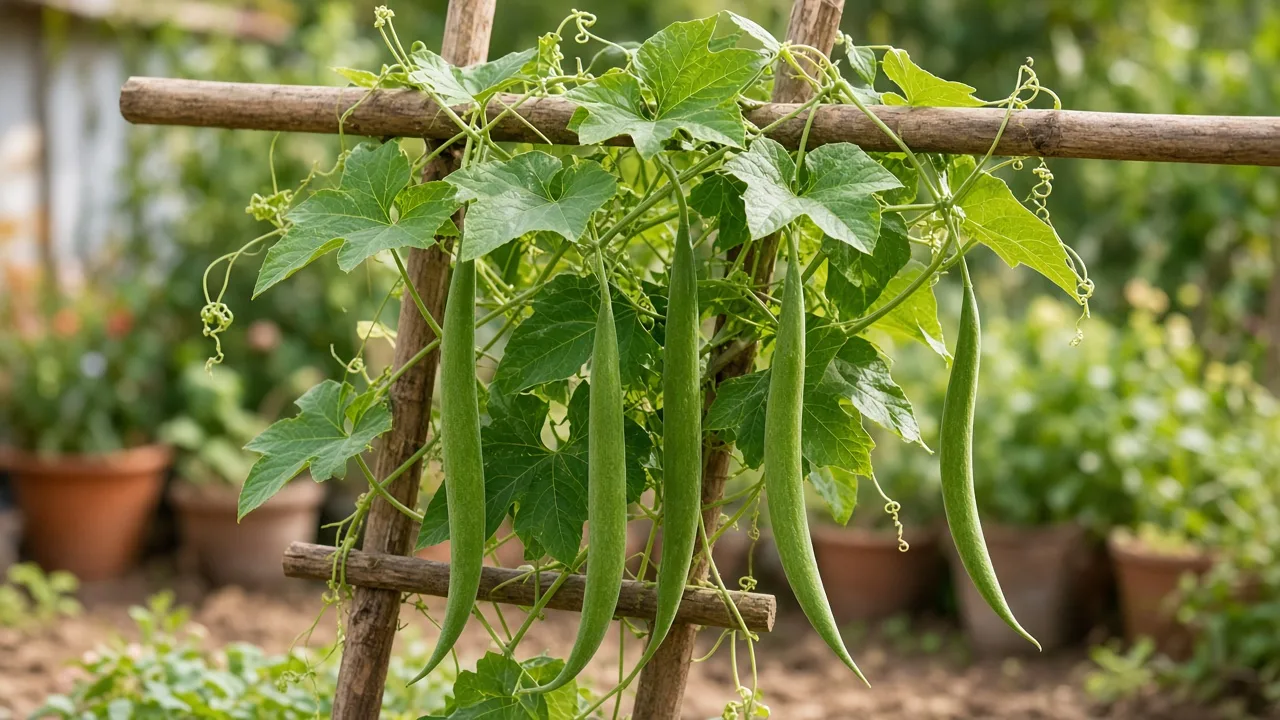
Snake gourd (Trichosanthes cucumerina) is grown for repeated picks of young green fruit on a vine that can cover several metres of trellis in one warm season. That growth pattern makes nutrition a core skill, not an optional extra. The practical rule for most beds and terrace pots is simple: build fertility with compost or well-rotted manure at planting, then add measured fertilizer only while the vine is actively running, flowering, and hanging tender fruit—and back off when nights cool, roots sit waterlogged, or you are harvesting the last flush before the crop finishes.
The quick answer: compost first, then feed through fruit set
Incorporate mature compost or farmyard manure into the planting hole or potting mix so the root zone starts rich and moisture-retentive. Plants For A Future describes snake gourd as needing a rich, well-drained soil with plentiful moisture during growth—fertility and water move together for this species. After seedlings establish and the main vine begins to climb, use a balanced vegetable fertilizer or a formula slightly higher in potassium through flowering and early fruit set, always following label rates for the area or pot volume.
On many kitchen-garden plots that already receive annual manure, extra bottled feed may be light. On balcony containers, where nutrients wash out with every drainage event, feeding is usually necessary—but only if you confirm the mix was not already loaded with slow-release granules at repotting time. Pause all feeding during heat stress, persistent wet soil, or when growth has clearly slowed at the end of the warm season.
Why snake gourd eats like a fruiting cucurbit, not a houseplant
Snake gourd belongs to Cucurbitaceae, the same family as cucumber, pumpkin, and bitter gourd. Like those crops, it produces large leaves, long stems, male and female flowers, and heavy hanging fruit—all of which require nitrogen, phosphorus, potassium, and steady moisture at the same time. Gardening Know How notes that snake gourd care parallels other gourds: strong support, warm nights, and harvest while fruit is still young and green, typically around 40–50 days from planting in favorable weather.
Vine length, flowers, and hanging fruit all draw nutrients
A vine racing toward 3–5 m on a trellis is not decorative growth; it is the scaffold for flowers and fruit. Once female blooms appear and young gourds begin to lengthen, nutrient demand shifts from mostly leafy expansion toward fruit development. Feeding should track that shift. Copying a low-dose houseplant schedule—or pouring high-nitrogen feed late in the season—often produces deep green vines with disappointing fruit set or overly soft tissue that invites pest pressure.
Warmth matters as much as fertilizer. PFAF links best performance to temperatures above about 25°C and short daylengths in its native range. Fertilizer supports growth only when the plant is metabolically active; cool nights or shaded balconies limit what roots can absorb, no matter how much product you add. Cross-check sun exposure in the Snake Gourd light guide before you blame hunger alone.
Macronutrients snake gourd uses through the warm season
Nitrogen for vine and leaf growth
Nitrogen drives chlorophyll and stem extension—useful when the vine is establishing tendrils and covering a trellis. UF/IFAS Gardening Solutions cautions that for fruiting crops like cucumbers, too much nitrogen can push excessive leafy growth and negatively impact flower and fruit production, while phosphorus and potassium can support flowering and fruiting (UF/IFAS cucumbers). Snake gourd follows the same broad cucurbit pattern: enough nitrogen to keep leaves healthy, not so much that flowers stall on an overly lush vine.
Phosphorus and potassium when flowers and young gourds appear
Phosphorus supports root establishment after transplant; potassium supports overall vigor and crop development. The Royal Horticultural Society explains that higher-potassium products are often chosen to promote cropping and flowering, while higher-nitrogen feeds favor green growth. For snake gourd, that means shifting emphasis toward potassium-forward vegetable feeds (or well-composted organic matter that releases nutrients evenly) as female flowers open and young fruit begin to hang—without abandoning balanced nutrition entirely.
Field research on snake gourd itself supports combining organic and inorganic sources: a Tamil Nadu trial reported that vermicompost with seaweed extract foliar sprays improved yield and quality parameters compared with unfed controls (Crop Research on snake gourd nutrition). Another study on Trichosanthes cucumerina found that combined NPK and poultry manure improved soil fertility and fruit performance more than either input alone (NPK and poultry manure on snake tomato). Your terrace plot does not need research-scale rates, but the takeaway is clear: organic matter plus measured mineral feed often outperforms heavy single-nutrient dumps.
Build fertility before you chase bottle labels
Long before selecting an NPK ratio, fix the root zone described in the Snake Gourd soil guide. Target pH roughly 6.0–7.5 and a mix that holds moisture yet drains freely—about 50% loam or quality potting mix, 30% compost or well-rotted manure, and 20% perlite or coarse sand matches common terrace practice for this crop.
Compost, farmyard manure, and soil pH
Gardening Know How recommends transplanting snake gourd into ground prepared with well-mixed organic matter and topsoil, much like bean planting. Well-rotted farmyard manure or compost supplies slow nitrogen and improves water-holding capacity for roots that dry quickly on paving. Fresh, hot manure against stems can burn; age it or compost it first.
If leaves stay pale despite rich compost, test pH before escalating fertilizer rate. Nutrients can be present yet unavailable in overly acidic or alkaline media—a soil issue, not a bottle issue.
Choosing a fertilizer product for chichinda
There is no single magic analysis for every balcony. Choose a product labelled for vegetables or fruiting crops, measure for your actual bed area or pot litres, and prefer even, moderate release over repeated strong soluble doses unless you are correcting a visible shortfall during active warm-season growth.
Reading NPK numbers without guessing
The three numbers on a label show the percentage by weight of nitrogen, phosphate, and potash in the product. Gardening Know How explains NPK fertilizer numbers as a description of what is inside the bag, not proof your soil lacks those nutrients. Use the label to calculate dose; use plant appearance and growth stage to decide whether to feed at all.
Balanced analyses (for example 10-10-10 or similar vegetable blends) can carry a vine from establishment through mid-season if compost was incorporated at planting. As flowering peaks, some growers switch to a slightly potassium-forward vegetable or tomato formula—still at label rates—while others rely on second side-dressings of compost and a light mineral top-up.
Organic manures vs soluble feeds on terraces
Vermicompost, composted cow dung, or pelleted poultry manure release nutrients gradually and improve soil biology—valuable in raised beds and large pots. Soluble powders or liquids act faster but demand careful dilution and consistent watering so salts do not concentrate at the root ball. On a hot terrace, organic side-dressings plus occasional diluted liquid feed often behave more gently than weekly full-strength synthetic doses.
Whichever path you choose, keep product off dry foliage and away from direct stem contact in concentrated form. Water after granular applications so nutrients move into the zone you checked in the Snake Gourd watering guide.
When to fertilize through the crop cycle
Think in four phases: pre-plant incorporation, early vine run, flowering and young fruit, and shutdown as harvest finishes or heat declines.
At planting and early vine run
At sowing or transplant, blend compost or a measured dose of granular vegetable fertilizer into the upper 8–10 cm of soil rather than placing concentrate against the stem. If you start seedlings in small cells, hold off on strong feed until roots reach the final bed or large container—seedlings need even moisture more than heavy nitrogen. The Snake Gourd propagation guide covers soaked seed and transplant timing; the repotting guide is the right place for final container volume and trellis anchoring.
Once the vine has several true leaves and is actively climbing, a light balanced feed—or a thin compost side-dress a few centimetres from the base—can support tendril growth. Skip this if the planting mix was already heavily manured.
Flowering and young fruit hang
This is the window where snake gourd most rewards attentive feeding paired with even moisture. Female flowers and elongating fruit compete with new stem tips for potassium and overall vigor. UF/IFAS recommends balanced slow-release fertilizer as needed for cucumbers, guided by soil tests when available (UF/IFAS cucumbers). Translate that to home scale: one measured application at the start of flowering, then only repeat if vines look pale, fruit set is weak, and weather is still warm—not if plants are already dark green and stiff.
Hand-pollinate if needed, train laterals for airflow per the Snake Gourd pruning guide, and avoid foliar feeds during midday heat on stressed leaves.
Late harvest and crop shutdown
When you are picking the last tender gourds before fruits turn orange and inedible, taper fertilizer. There is little gain in pushing new growth on an annual vine that is finishing its cycle. Many growers stop soluble feed one to two weeks before the final harvest push on container crops to avoid salt buildup and overly soft fruit texture—especially if the mix already carried slow-release nutrients.
If monsoon rain saturates beds for days, pause feeding until drainage returns. Fertilizing waterlogged roots compounds stress and can worsen foliar disease on wet foliage.
Feeding snake gourd in India’s warm windows
On many Indian plains, sow after the fiercest pre-monsoon heat eases or during your local warm window when nights stay mild—timing covered in the Snake Gourd overview. In humid coastal and tropical zones where the vine grows nearly year-round, feeding can continue longer, but still follow plant activity, not the calendar alone.
February–March and June–July sowings are common in different regions; align first side-dress with vine establishment, not the day seedlings emerge. During peak summer on terraces, feed in the cooler morning and irrigate afterward so salts do not sit on dry root zones. In heavy monsoon months, rely more on pre-plant compost and less on repeated soluble feeds that leach before roots absorb them.
Terrace pots and large containers
Containers magnify both deficiency and excess. Use a large, stable pot paired with a trellis installed at planting so a fruit-loaded vine does not topple. Read the potting mix label: many blends include starter or controlled-release fertilizer; doubling up is a frequent cause of seedling burn on balconies.
A workable rhythm for active warm-season growth: compost-rich mix at potting, optional slow-release vegetable granules at label rate, then diluted liquid vegetable feed every two to three weeks only while vines are flowering and fruiting—skipped whenever mix surface shows white salt crust or leaf margins brown after feeding. Penn State Extension’s container vegetable guidance—slow-release at planting plus periodic soluble feed during the season—is a useful template for any cucurbit in pots (container vegetable keys), scaled down to your pot litres and label math.
Read the vine before the next dose
Stalled snake gourd is not automatically hungry. Root-bound pots, aphids on undersides, cool nights after hot days, or shade from neighbouring walls can all slow growth without a fertilizer gap.
Deficiency signs vs drought or too little sun
Overall pale green leaves starting on older foliage during warm active growth can point to nitrogen shortage—especially in leached container mix. Purple-tinged leaves or poor flowering on otherwise moist plants may involve phosphorus limitation or cold stress. Weak fruit set with healthy leaves often traces to pollination, night temperature, or irregular watering during bloom, not missing potassium alone.
Leggy, pale stems with long internodes usually mean insufficient light before fertilizer. Cross-check the Snake Gourd light guide and watering rhythm before stacking products.
Overfeeding, leaf scorch, and soft growth
Excess soluble fertilizer produces brown leaf margins, white crust on the mix surface, or wilting despite wet soil when salts damage roots. Overly lush, soft vines may attract sap feeders and hold moisture on dense foliage—another reason to favor moderate, compost-backed feeding over weekly strong doses.
If you suspect overdose, stop feeding, confirm drainage holes are open, and use plain water until new growth looks normal. Do not apply a “balancing” micronutrient cocktail to fix burn.
When to use this page vs other Snake Gourd guides
Use this page to decide whether, when, and how much to fertilize Trichosanthes cucumerina. Open the Snake Gourd watering guide when wilting, saucer water, or monsoon saturation dominate—moisture moves nutrients. Use Snake Gourd soil for mix recipes, manure rates, and drainage. Use Snake Gourd light when vines stretch or fruit fails to set in marginal sun.
For sowing, trellis setup, and harvest stage, start at the Snake Gourd overview and propagation pages. Pruning covers training and airflow; fertilizer cannot replace a crowded vine on a shaded railing.
Related Snake Gourd guides
- Snake Gourd overview — identity, warm-season limits, and harvest timing for chichinda.
- Snake Gourd watering — even root moisture through flowering and fruit hang.
- Snake Gourd soil — compost-rich mixes and pH for heavy-feeding vines.
- Snake Gourd light — full sun needs on terraces and trellises.
- Snake Gourd pruning — training, pinching, and airflow for straighter hanging fruit.
Conclusion
Good snake gourd nutrition is compost-backed, measured, and timed to warm active growth. Build fertility at planting, feed moderately through flowering and young fruit set, and favor balanced to slightly potassium-forward vegetable products at label rates—not repeated high-nitrogen shots on an already lush vine.
Read the vine, the mix label, and the weather together. When tender gourds keep sizing on a green, healthy vine, you have likely found the balance; when margins scorch, flowers drop on wet roots, or nights turn cool, the next step is often less fertilizer and better drainage—not more bottle strength.