Snake Gourd Watering Guide for India & Warm Climates
Snake Gourd Watering Guide for India & Warm Climates
Snake Gourd Watering Guide for India & Warm Climates
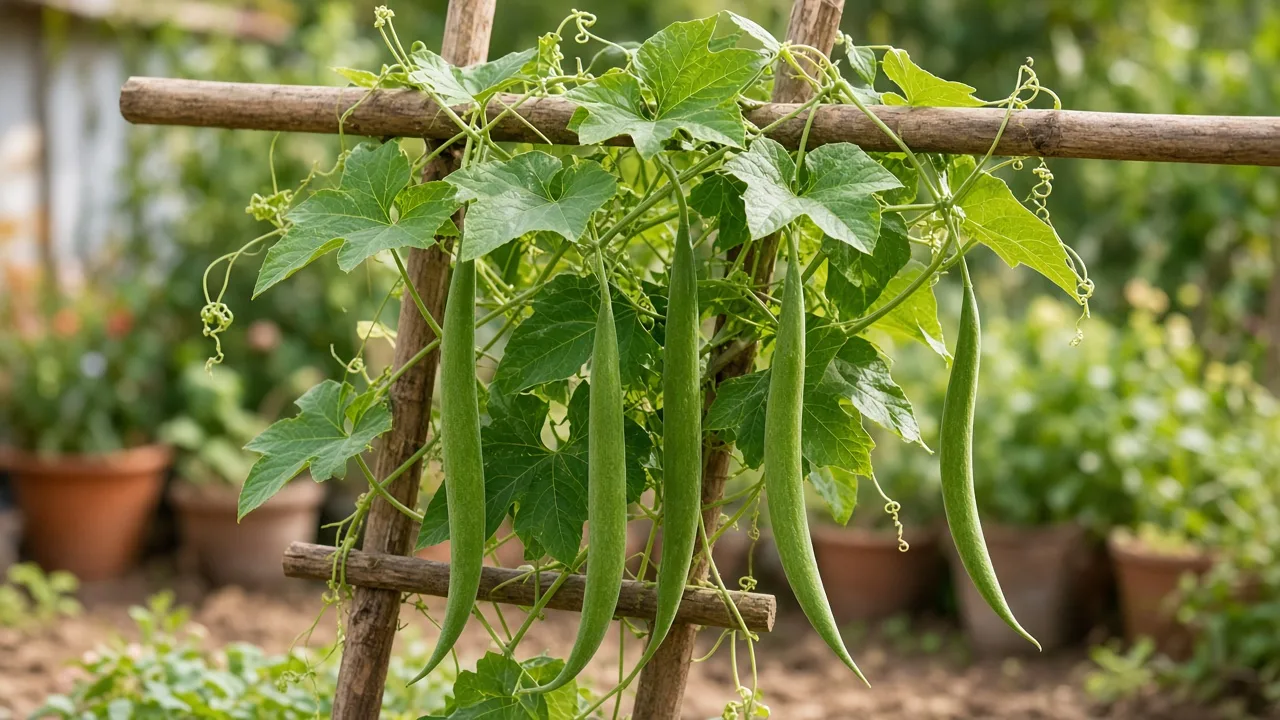
Snake gourd (Trichosanthes cucumerina) is a fast annual cucurbit, not a forgiving succulent you can neglect for weeks. The vine can cover several metres of trellis in one warm season, set hanging fruits used as chichinda, padwal, or pudalangai, and lose quality quickly when the root zone swings between dust and mud. If you are growing on a terrace in Hyderabad, a kitchen garden outside Chennai, or any frost-free spot with full sun, watering must follow soil moisture, not a habit copied from houseplants.
This guide focuses only on how and when to water snake gourd. For trellis setup, light, or harvest size, use the snake gourd overview and sibling pages linked at the end.
The quick answer: even moisture through flowering and fruit set
Push a finger 2–3 cm into the soil or potting mix away from the main stem. If that layer feels dry and the soil below is only lightly moist, water deeply at the soil line until moisture reaches the full root zone (for containers, until excess drains freely). If the mix below the surface stays cool, dark, and wet—or water pools on the surface for hours—wait.
Snake gourd prefers moist soil through the active growing season, not long drought cycles. Plants For A Future lists Trichosanthes cucumerina as needing a rich, well-drained soil with plenty of moisture in the growing season and notes the species prefers moist soil. That is the opposite of “let it dry completely between drinks.” Think cucumber or summer squash, not snake plant.
When to check soil before you water
During hot, dry, or windy weather on a terrace, check daily. In humid monsoon weeks when rain supplements irrigation, check every two to three days and adjust for rainfall. Cool snaps at the end of the season slow growth; extend the interval only when the upper 2–3 cm stays moist longer and new vine growth slows.
How much water to apply each time
There is no honest universal litre count—pot volume, mix, and sun exposure change the answer. Aim to rewet the entire root ball once dryness checks pass, then let the upper layer begin to dry before the next soak. Shallow sprinkles that only dampen the top inch train shallow roots and leave the centre dry during fruit swell.
Why snake gourd is thirsty, not drought-proof
Cucurbits move large amounts of water through leaves during hot days. A mature snake gourd vine with broad foliage and developing fruit transpires heavily when nights stay warm—exactly the conditions PFAF associates with best growth (stable temperatures above about 25°C). Afternoon wilting on a blazing terrace can be normal heat stress if leaves recover by morning and soil at 2–3 cm is dry. The same wilt with constantly wet soil points to overwatering or poor drainage, not thirst.
Gardening Know How groups snake gourd care with other warm-season gourds and notes the crop needs warm nights to fruit—moisture stress during flowering makes that harder. My Green Yard advises consistent watering to keep soil evenly moist but not waterlogged, with mulch to hold moisture—sound practice for Indian kitchen gardens where midday sun bakes exposed pots.
How often to water snake gourd in beds and pots
Forget a fixed “every Tuesday” rule. Your schedule is whatever keeps the 2–3 cm check in the right zone: dry enough to warrant a deep soak, never bone-dry through the whole profile while fruit is sizing.
In-ground kitchen gardens on the plains
In a compost-rich bed with mulch, many growers irrigate every two to four days between rains during active growth, more often in pre-monsoon heat. Backyard Gardener classifies snake gourd’s water range as moist to moist and repeats standard vegetable guidance: water deeply and less often rather than frequent shallow sprinkles, preferably early in the day so foliage can dry before night.
Terrace containers, grow bags, and raised beds
Containers dry faster than open soil—sometimes daily in April–May sun on a west-facing railing. Use the largest stable pot or grow bag you can pair with a trellis anchored at planting (repotting and bed setup). Light mix drains quickly; pure garden clay in a pot without drainage holes invites rot. If the pot feels light and the top 2–3 cm is dry, soak until water runs out; empty saucers so roots do not sit in stale water.
The finger-depth check that matches this vine
The snake gourd plant profile recommends pressing a finger 2–3 cm into the mix and watering deeply when that layer dries. Combine that with pot weight: lift the container after a full soak, then daily until it feels noticeably lighter. Surface colour alone misleads on cocopeat-heavy mixes common in Indian nurseries—they can look pale on top while staying wet inside.
For in-ground beds, dig briefly near the drip zone (not against the stem). Dry at 2–3 cm with crumbly soil below means irrigate; damp, cool soil at depth means hold off even if leaves look slightly limp at 3 p.m.
Deep watering at the soil line—not the leaves
Direct water to the root zone with a rose can, drip line, or soaker hose. Gardenish recommends watering regularly and deeply to keep soil evenly moist, especially during flowering and fruit set, and to avoid overhead watering to reduce foliar disease—advice that matters on crowded terrace vines where powdery mildew spreads on wet leaves.
Morning timing and foliar disease risk
Morning irrigation gives leaves time to dry in full sun (light needs demand strong sun). Evening soaks are acceptable if water stays on soil, not foliage, but avoid working wet leaves when pruning or training. Steady moisture at the roots supports pollination and fruit hold; stress from repeated dry–wet swings shows up as blossom drop and rough, thin fruit.
Watering through India’s seasons
Pre-monsoon heat and dry terrace winds
When days cross the high 30s °C and dry wind pulls moisture from exposed pots, expect daily checks and sometimes daily deep soaks for containers. In-ground beds benefit from 3–5 cm of mulch (UF/IFAS Gardening Solutions — Summer squash notes mulch conserves soil moisture for cucurbits) such as straw, dried leaves, or compost to slow evaporation. Pair watering with the right soil mix—rich and moisture-retentive yet free-draining—so you are not compensating for pure sand or compacted clay with endless shallow sprinkles.
Monsoon weeks when drainage matters more
Heavy rain is not permission to ignore the plant. Saturated beds need drainage paths; lift pots slightly, clear blocked holes, and skip irrigation when the 2–3 cm layer stays wet for days. Yellow lower leaves and musty soil signal too much water, not generosity. Reduce hand watering and focus on airflow (pruning for thinning) and keeping fruit off sodden ground.
Critical growth stages from seedling to harvest
Germination and seedlings: Keep seed-starting mix evenly moist, not flooded, until true leaves expand. Transplant carefully—cucurbit roots dislike disturbance (propagation).
Vegetative climb: Steady moisture fuels tendril growth up the trellis. Dry spells here slow the vine more than a single missed day on a mature cactus.
Flowering and fruit set: This is the highest-demand window. Short droughts can drop female flowers or produce misshapen young fruit. Maintain even moisture while feeding appropriately (fertilizer guide).
Harvest period: Continue consistent watering while you pick young green fruit every few days; letting the vine crash dry while fruits swell yields bitter, fibrous texture.
Signs snake gourd needs more water
- Morning wilt that does not recover, with dry soil at 2–3 cm
- Blossom drop or poor fruit set during otherwise warm, sunny weather
- New leaves smaller or dull; growing tips slow on an established vine
- Potting mix pulling away from the container edge
- Fruit growth stalls on otherwise healthy vines
Increase depth of soak, not frequency of sprinkles, and confirm the trellis root zone receives water—not only the pot rim.
Signs you are overwatering snake gourd
- Yellowing lower leaves with soil that stays wet for days
- Wilting at midday while soil below the surface is soggy
- White powdery patches on leaves (often linked to humidity and wet foliage)
- Musty smell or algae on soil surface
- Soft stems at the base in containers without drainage
Stop irrigating, improve drainage, and let the upper profile dry before the next cautious soak. Chronic wet soil invites root problems familiar on other cucurbits.
First steps when you are unsure
- Check 2–3 cm deep in the morning before you react to afternoon limp leaves.
- If dry, one deep soak at the soil line; if wet, no water today.
- Verify drainage holes and empty saucers on terraces.
- Review sun and airflow on the light guide—shade stress and water stress look similar.
- If problems persist after two weeks of corrected watering, inspect roots when repotting and compare symptoms with the overview’s grower notes on the snake gourd hub.
When to use this page vs other Snake Gourd guides
Use this watering page when you need schedules, soil checks, seasonal adjustments, and over/underwatering diagnosis. Open the soil guide for mix recipes and drainage. Use fertilizer when leaves are pale but moisture is correct. Use light when the vine is leggy or sun-scorched. Use propagation and repotting for transplant timing—not weekly irrigation rhythm.
Related Snake Gourd guides
- Snake gourd overview — identity, climate test, harvest stage
- Snake gourd light — full sun and terrace placement
- Snake gourd soil — mixes that hold moisture without waterlogging
- Snake gourd fertilizer — feeding through fruit set
- Snake gourd pruning — airflow after monsoon wet spells
Conclusion
Snake gourd rewards growers who treat irrigation as a root-zone question. Check 2–3 cm deep, keep moisture even through flowering and fruit set, water deeply at the soil line in the morning when possible, and tighten or loosen the interval as pre-monsoon heat, monsoon rain, and cool-season slowdown change how fast your bed or pot dries. The vine is a warm-season cucurbit with high water turnover—not a drought-tolerant houseplant. Match that biology on your terrace or kitchen garden and tender chichinda harvests follow; fight it with calendar watering or wet leaves and you fight blossom drop, mildew, and rot instead.