Snake Gourd Care Guide: Trichosanthes cucumerina
Trichosanthes cucumerina
Grow snake gourd on a sturdy trellis in full sun with rich moist soil, warm nights, soaked seed, and harvest of young tender fruits.
Snake Gourd Care Guide: Trichosanthes cucumerina
Start with wateringThe most common care mistake for Snake GourdWatering guide → →Snake Gourd care essentials
Light
Water
Keep the root zone evenly moist through flowering and fruit set. Water deeply when the upper 2–3 cm of soil begins to dry, directing water at the soil rather than over the foliage.
Soil
Rich, fertile, moisture-retentive but well-drained loam or container mix with plenty of organic matter. Tolerates sandy to clay soils when drainage is good. pH roughly 6.0–7.5.
Humidity
Temperature
Fertilizer
About Snake Gourd
Snake Gourd is native to South and Southeast Asia, typically reaches 3–5 m vine length on a trellis; spread 60–180 cm along support indoors, with fast - tender fruit often ready about 40–50 days after planting in warm weather growth. Snake Gourd has a climbing growth habit and part of the Cucurbitaceae family. It is also known as Chichinda, Serpent Gourd, Club Gourd, Snake Squash, and Viper's Gourd.
| Detail | Information |
|---|---|
| Also known as | Chichinda, Serpent Gourd, Club Gourd, Snake Squash, Viper's Gourd |
| Native region | South and Southeast Asia |
| Mature size | 3–5 m vine length on a trellis; spread 60–180 cm along support |
| Growth rate | Fast - tender fruit often ready about 40–50 days after planting in warm weather |
| Growth habit | Climbing |
| Scientific name | Trichosanthes cucumerina |
| Family | Cucurbitaceae |
Snake Gourd Care Guide: Trichosanthes cucumerina
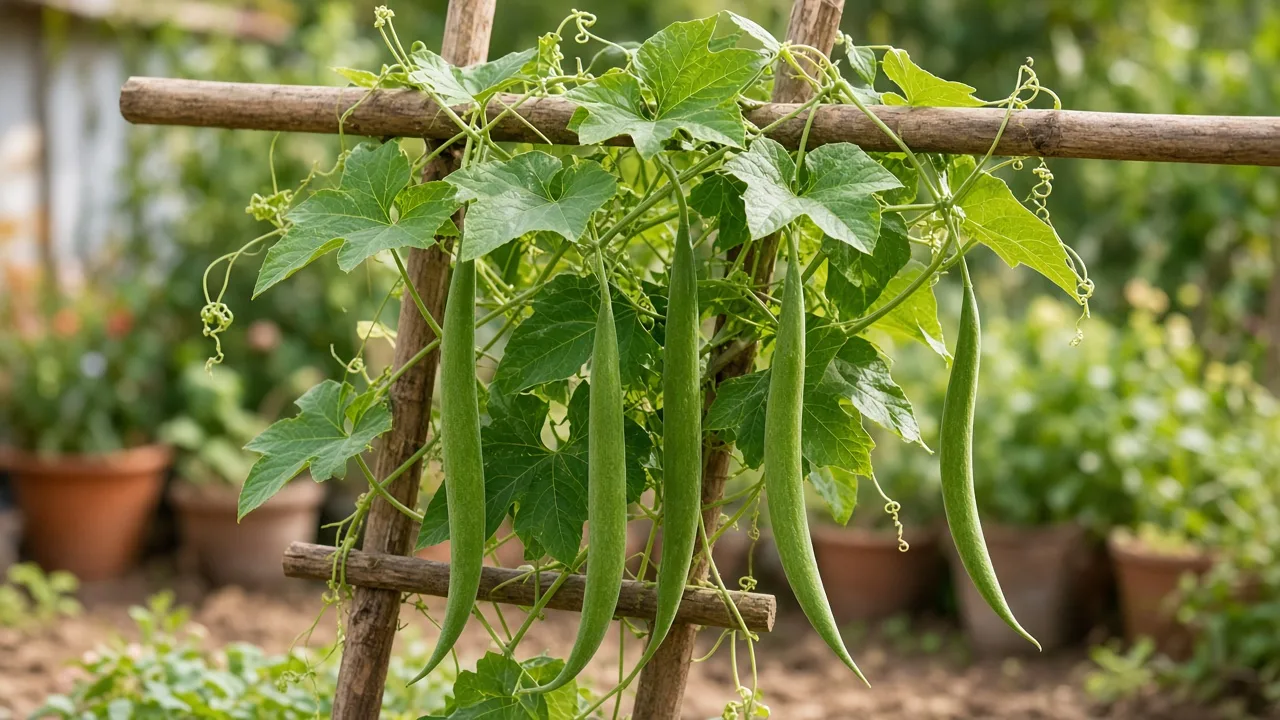
Snake gourd (Trichosanthes cucumerina) is a fast-growing annual climbing cucurbit grown for long, tender green fruits used like zucchini or cucumber in curries, stir-fries, and regional dishes. Across India and much of South and Southeast Asia you will hear chichinda, padwal, pudalanga, and other local names for the same kitchen crop—not a decorative houseplant or a hard-shelled ornamental gourd. If you are new to the species, treat this page as the hub: it explains what the vine is, whether your climate and balcony can support it, and which specialized guides to open next for light, watering, and soil.
What Is Snake Gourd?
Botanical identity and South Asian names
Trichosanthes cucumerina belongs to Cucurbitaceae, the same family as cucumber, pumpkin, and bitter gourd. Plants For A Future describes it as an annual climber that can reach about 5 m (16 ft) in a single season, with monoecious flowers (separate male and female blooms on one plant) pollinated mainly by insects. Synonyms and trade names include serpent gourd, club gourd, and viper’s gourd—useful when comparing seed catalogs or market labels.
In Indian kitchens the crop is everyday produce, not an exotic novelty. Long-fruited types hang straight when trained vertically; shorter cultivars suit smaller trellises. Do not confuse snake gourd with ridge gourd (Luffa acutangula) or bottle gourd (Lagenaria siceraria): all are warm-season vines, but leaf texture, fruit shape, and harvest cues differ. Matching the right species to your recipe matters once fruits mature.
Growth habit, size, and life cycle
Snake gourd climbs by tendrils and a slightly twining stem (PFAF). Left unsupported, the vine sprawls, fruits curl on soil, and rot and pest pressure rise. On a sturdy trellis, expect roughly 3–5 m of vine length and a spread dictated by your support width—plan vertical space before you sow.
The plant is frost tender and completes its life cycle in one warm season. Flowers typically appear in mid to late summer in temperate calendars (PFAF); in tropical and subtropical India, flowering follows establishment once nights stay warm and days are bright. Fruit for the kitchen is the immature green stage; fully ripe fruit shifts color, softens, and is no longer used as a tender vegetable (Gardening Know How).
How snake gourd differs from ridge gourd and bottle gourd
All three are heavy-feeding summer vines, but snake gourd fruits are usually smooth, elongated, and snake-like, without the angular ridges of ridge gourd or the bottle shape of Lagenaria. Snake gourd also demands stable warmth more insistently than some other gourds: PFAF notes best performance with short daylengths and temperatures above about 25°C—a detail that explains why the plant frustrates growers who treat it like a cool-climate cucumber.
Is Snake Gourd Right for Your Space?
Frost, warm nights, and the lima-bean climate test
Snake gourd is a tropical annual, not a year-round indoor vine. It is hardy only in the warmest zones (PFAF lists USDA 10–12); frost kills young growth and ends the crop. Gardening Know How offers a practical rule: if lima beans are marginal in your area, snake gourd usually is too—because both need reliably warm nights to set fruit.
For India and similar climates, sow after the harshest pre-monsoon heat eases or align planting with your local warm window when nights remain mild (My Green Yard suggests roughly 24–30°C as a comfortable growth band). On a north Indian terrace, success means full sun, a wind-sheltered support, and daily moisture checks during dry spells—not a shaded living-room corner.
Trellis height and terrace planning
Budget at least 2–2.5 m of clear climbing height plus lateral tie points. Chain-link fencing, pipe trellises, and terrace railings work if they bear the weight of several hanging fruits. Install support at planting time; retrofitting a 3 m vine onto a new trellis leads to broken stems and misshapen fruit. Containers are possible but pair a large, stable pot with an anchored trellis—the mature vine is top-heavy when fruit loads up. See repotting and bed setup when moving seedlings into final homes.
Best Growing Conditions for Snake Gourd
Light needs
Snake gourd wants full sun. PFAF states plainly that it cannot grow in shade; weak light produces leggy vines, sparse female flowers, and poor fruit set. Aim for at least 6–8 hours of direct sun on a terrace or kitchen garden bed. In scorching dry regions, prioritize airflow and consistent soil moisture rather than shading the vine into low productivity. Detail on sunburn vs insufficient light lives in the snake gourd light guide.
Water and humidity rhythm
This species prefers moist, well-drained soil through flowering and fruit development (PFAF). The root zone should stay evenly damp, not swinging between dust and mud. Check the upper 2–3 cm of mix or soil; when dry, water deeply at the soil line rather than overhead. Midday wilting that recovers overnight often signals brief heat stress, while wilting with constantly wet soil points to overwatering and possible root issues. The watering guide walks through seasonal changes for Indian summers and container growers.
Soil, fertility, and pH overview
Grow snake gourd in rich loam or compost-amended mix with good drainage. PFAF recommends a rich, well-drained soil with plentiful moisture during growth; the species tolerates sandy to clay textures when drainage is sound. Target pH roughly 6.0–7.5 (My Green Yard). Fruiting cucurbits are hungry plants—plan compost at planting and steady feeding through the harvest window, outlined in the fertilizer guide and soil guide.
Planting Through Harvest: A Practical Calendar
Soaked seed, sowing windows, and transplant caution
Soak seed overnight before sowing to soften the coat and improve germination (Gardening Know How). In warm soil, sprouts often appear in about 7–10 days, though germination can be uneven—sow extra seed and discard pale or white seeds, which are less viable. Gardening Know How notes germination near 60% for many home batches, so plant more hills than you intend to keep.
Direct sowing into prepared beds is simplest. If you start indoors, move young seedlings carefully because cucurbit roots dislike disturbance. Transplant on a mild evening and water in well. Step-by-step timing and seed-saving notes are in the propagation guide.
Training vines on support
Guide the leading shoot onto the trellis while tendrils are still pliable. Once the main vine is established, pinching the growing tip and thinning crowded laterals can improve branching, airflow, and straighter hanging fruit—techniques covered in the pruning guide. Some growers tie a small weight to the flower end for cosmetic straightness; it is optional and does not change flavor.
Watch pollination: male flowers arrive in clusters, females singly. If bees are scarce on a high-rise terrace, hand pollination in early morning can rescue fruit set (My Green Yard).
Picking tender green fruit vs overripe orange gourds
Harvest for the kitchen while fruits are still green and firm, typically around 40–50 days from planting in many gardens (Gardening Know How). Long types are often picked near 40–45 cm, while short cultivars may be ready near 15–20 cm. If you miss the window, fruit turns orange and mushy—fine for seed saving or traditional uses of the jelly-like pulp around seeds, but not the tender curry stage.
Check vines every two to three days at peak season; one hot week can overshoot ideal size. Use a sharp knife or pruners and leave a short stem stub to reduce moisture loss in the kitchen.
Common Snake Gourd Mistakes
Skipping the trellis is the most common beginner error: fruits on soil rot, curve unpredictably, and pick up soil-borne disease. Planting too early in cool soil stalls growth and invites damping-off; wait until nights are reliably warm. Shade or crowded buildings produce vine with few fruits—move the crop or choose a sunnier wall.
Irregular watering during flowering causes blossom drop and hollow or bitter-tasting immature fruit. Harvesting late yields fibrous, overgrown gourds. Heavy transplanting of root-bound seedlings sets the vine back a week—direct sow if your season is short. Ignoring male-female flower balance on isolated balconies leads to “healthy vine, no fruit” until pollination is helped manually.
Pets, Seeds, and Kitchen Safety
Young snake gourd fruit is grown as human food, but that does not make the whole plant pet-safe. Mature seeds are toxic to humans if eaten (Gardening Know How); keep dogs and cats from chewing vines, unripe fruit, or fallen seed, and contact a veterinarian if ingestion is followed by vomiting or lethargy. PFAF lists no other widely cited hazards for the species, but absence of data is not a green light for pets to graze the crop.
When to use this page vs other Snake Gourd guides
Use this overview when you are deciding whether to grow snake gourd, planning trellis space, or need a single summary of sun, water, soil, sowing, and harvest timing. Open the light guide when leaves pale, vines stretch, or fruits fail to set in marginal sun. Use watering for moisture checks, wilting diagnosis, and monsoon-season adjustments. Soil and fertilizer pages go deeper on mixes, compost, and feeding schedules. Propagation covers seed treatment and saves; repotting focuses on beds, containers, and transplant timing; pruning explains training, pinching, and airflow for straighter fruit.
Related Snake Gourd guides
- Light — full sun requirements, terrace orientation, and low-light warning signs.
- Watering — how to check the top 2–3 cm, deep watering habits, and over- vs underwatering cues.
- Soil — loam, compost, drainage, and container mixes for heavy-feeding vines.
- Fertilizer — when to feed through flowering and fruit set without burning roots.
- Propagation — soaked seed, germination expectations, and saving viable seed.
- Pruning — trellis training, lateral thinning, and harvest-friendly vine structure.
- Repotting — preparing beds and large pots before the vine outruns your setup.
Conclusion
Snake gourd rewards growers who respect its identity as a warm-season, full-sun trellis crop—not a shaded ornamental. Give Trichosanthes cucumerina rich moist soil, warm nights, a sturdy support installed at sowing time, and frequent harvests of young green fruit. Get those pillars right, then lean on the cluster guides for fine-tuning water, feed, and training as your vine fills the terrace.
How to care for Snake Gourd?
When should you water Snake Gourd?
Keep the root zone evenly moist through flowering and fruit set. Water deeply when the upper 2–3 cm of soil begins to dry, directing water at the soil rather than over the foliage.
- Press a finger 2–3 cm into the mix; water deeply if it feels dry - Water deeply when the upper 2–3 cm of soil begins to dry, directing water at the soil rather than over the foliage.
- Drain excess water - Water deeply when the upper 2–3 cm of soil begins to dry, directing water at the soil rather than over the foliage.
What soil works best for Snake Gourd?
Rich, fertile, moisture-retentive but well-drained loam or container mix with plenty of organic matter. Tolerates sandy to clay soils when drainage is good. pH roughly 6.0–7.5.
- 50% quality garden loam or potting mix - Rich, fertile, moisture-retentive but well-drained loam or container mix with plenty of organic matter.
- 30% mature compost or well-rotted manure - Rich, fertile, moisture-retentive but well-drained loam or container mix with plenty of organic matter.
- 20% perlite, coarse sand, or similar for aeration - Rich, fertile, moisture-retentive but well-drained loam or container mix with plenty of organic matter.
Grower notes for Snake Gourd
Install support before the vine runs
Snake gourd is an annual climbing cucurbit that can cover 3–5 m of trellis in one warm season. Put a sturdy fence, arbor, or trellis in place at planting so you are not wrestling a heavy vine later. Tendrils and a slightly twining stem need something to climb; without support, fruits sprawl, tangle, and are harder to harvest at the right stage.
Treat it as a warm-season crop
This tropical vine is frost tender and needs reliably warm nights to fruit well. PFAF notes best performance with stable temperatures above about 25°C. If lima beans are marginal in your area, snake gourd usually is too. In India and similar climates, sow after the hottest pre-monsoon stress eases or time plantings for your local warm window.
Harvest young, tender fruit
Grow snake gourd for the immature green fruits used like zucchini or cucumber in curries and stir-fries. Gardening Know How recommends picking around 40–50 days from planting, often when long types are roughly 40–45 cm and shorter cultivars are about 15–20 cm. Fully ripe fruit turns orange and mushy and is not the kitchen harvest stage.
Soak seeds and sow generously
Soak seed overnight before sowing to improve germination. Under warm conditions, seed often sprouts in about 7–10 days. Germination can be uneven, so plant more seed than you expect to keep and discard pale or white seed. Handle seedlings carefully if transplanting, because cucurbit roots resent disturbance.
Train and thin for airflow
Once the main vine is established, pinching the tip and removing some excess laterals can encourage branching, female flowers, and straighter hanging fruit. Keep foliage thinned enough for air movement, water at the soil line, and avoid working wet leaves to reduce foliar disease pressure.
Edible crop, not a pet salad
Young snake gourd fruit is a human food crop, but mature seeds are described as toxic to people and the ASPCA database does not list this species. Keep pets from chewing vines, unripe fruit, or fallen seed, and ask a veterinarian if ingestion causes vomiting, diarrhea, or lethargy.
Edible crop, but limit pet access
Young snake gourd fruit is grown as food, but that does not make the vine or mature seeds safe for pets to graze. Prevent chewing and consult a veterinarian after suspected ingestion.
PFAF lists no known hazards for Trichosanthes cucumerina, but Gardening Know How notes that mature snake gourd seeds are toxic to humans. Pet-specific toxicity data are not established in the ASPCA plant database; keep animals away from vines, fruit, and seed.
Watering Snake Gourd
For Snake Gourd, press a finger 2–3 cm into the mix; water deeply if it feels dry and water check daily in hot weather; water when the upper 2–3 cm is dry. Increase frequency during hot, dry, or windy weather; reduce when growth slows in cool conditions.
| Detail | Information |
|---|---|
| How often | Check daily in hot weather; water when the upper 2–3 cm is dry |
| How to check | Press a finger 2–3 cm into the mix; water deeply if it feels dry |
| Seasonal changes | Increase frequency during hot, dry, or windy weather; reduce when growth slows in cool conditions |
Signs of overwatering
- persistently wet soil
- yellowing lower leaves
- powdery mildew on foliage
Signs of underwatering
- midday wilting that does not recover overnight
- blossom drop or poor fruit set
- dry soil pulling from the container edge
Soil & potting for Snake Gourd
Use a mix of 50% quality garden loam or potting mix, 30% mature compost or well-rotted manure, 20% perlite, coarse sand, or similar for aeration for Snake Gourd. Good drainage with steady moisture; avoid both drought and standing water. Target soil pH around 6.0–7.5. Repot usually direct-sown or transplanted once into the final bed or large container; plants are replaced after the warm-season crop, ideally in warm season, after frost risk has passed and nights stay mild.
| Detail | Information |
|---|---|
| Recommended mix | 50% quality garden loam or potting mix, 30% mature compost or well-rotted manure, 20% perlite, coarse sand, or similar for aeration |
| Drainage | Good drainage with steady moisture; avoid both drought and standing water |
| Soil pH | 6.0–7.5 |
| Repotting frequency | Usually direct-sown or transplanted once into the final bed or large container; plants are replaced after the warm-season crop |
| Best season to repot | Warm season, after frost risk has passed and nights stay mild |
Signs it needs repotting
- seedlings outgrow nursery cells before the trellis is ready
- roots circle a small pot and growth stalls
- the container is too small to anchor a tall support