Best Snake Gourd Soil for Beds & Pots
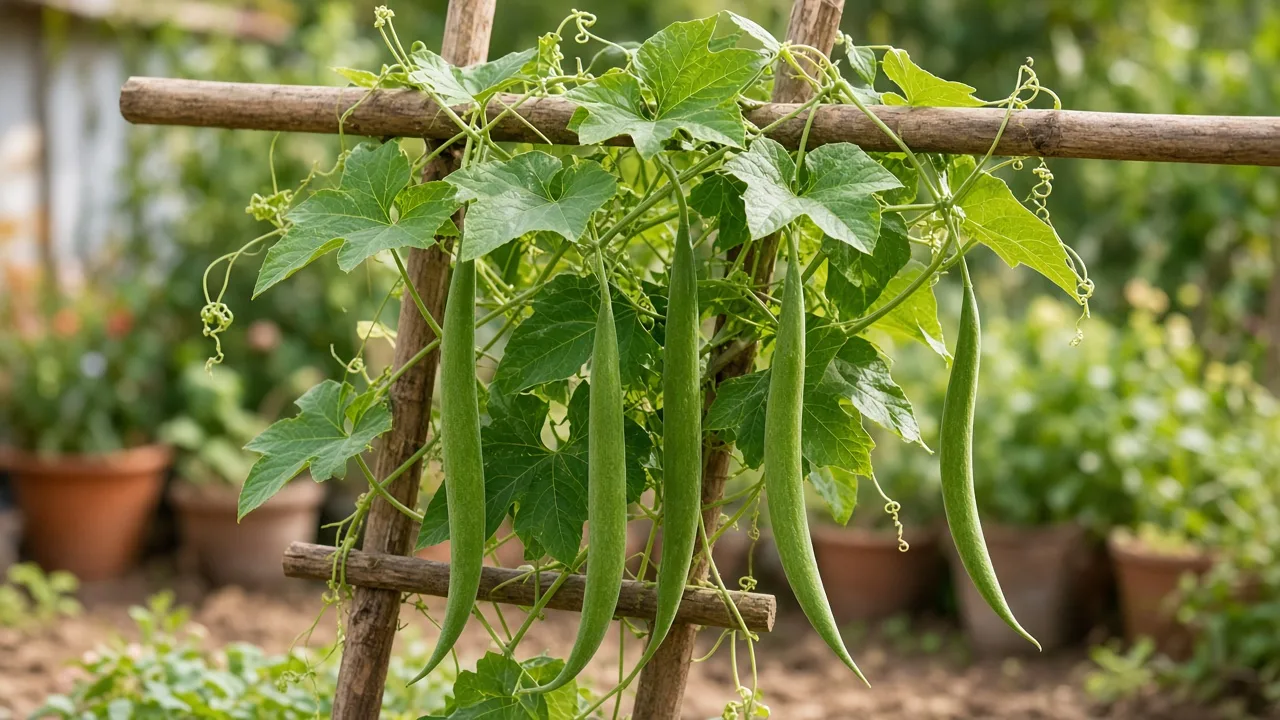
Best Snake Gourd Soil for Beds & Pots
Best Snake Gourd Soil for Beds & Pots
Snake gourd (Trichosanthes cucumerina) is a warm-season climbing cucurbit grown for long, tender green fruits—not a slow houseplant that survives on cactus mix. The vine can cover several metres of trellis in one season, sets heavy hanging fruit, and pulls water and nutrients from a wide root zone. Soil for chichinda, padwal, or serpent gourd must therefore be rich, moisture-retentive, and well drained at the same time: fertile enough to feed rapid growth, open enough that monsoon downpours or daily terrace watering do not leave roots gasping for oxygen.
If you are deciding whether this crop fits your space, start with the Snake Gourd overview. This page covers the root zone only—texture, pH, bed prep, and container blends. Once the mix behaves correctly, use the Snake Gourd watering guide for how often to irrigate and the Snake Gourd fertilizer guide for feeding through flowering and fruit set.
Why snake gourd punishes the wrong root zone
Snake gourd shares the same basic soil logic as cucumbers and other fruiting cucurbits: large leaves transpire quickly, roots expect even moisture, and flooded soil triggers decline faster than a single missed watering. Plants For A Future describes Trichosanthes cucumerina as suited to light, medium, and heavy soils when drainage is good, preferring moist conditions and no shade. That combination rules out both desert-style mixes and dense, airless peat that never dries on a humid balcony.
A fast cucurbit vine, not a windowsill succulent
In one warm season the vine builds metres of stem, foliage, and fruit weight on a trellis. Gardening Know How notes that snake gourd care parallels other gourds and recommends transplanting into well-mixed organic matter and topsoil—language that fits a vegetable bed, not ornamental indoor potting soil. Treating chichinda like a succulent guarantees midday wilting during fruit fill, even if you water daily.
Drainage failure vs drought in the same pot
Cucumber relatives are sensitive to flooding while still needing frequent water, as UF/IFAS Gardening Solutions explains for cucumbers: thin leaves dry the plant quickly, yet waterlogged soil damages roots. Snake gourd shows the same split personality on terraces—cracked, hydrophobic mix one week and sour, saturated mix the next after heavy rain. The fix is structure (compost plus coarse aeration), not simply watering less or more on a calendar.
Ideal soil texture for Trichosanthes cucumerina
Target vegetable-garden loam: enough fine material to hold water near roots, enough coarse fraction to let excess drain within minutes of a deep irrigation. Plants For A Future also states the species requires a rich, well-drained soil and plenty of moisture during the growing season—fertility and drainage are one package, not opposites.
Fertile loam with steady moisture
Think of the root zone as a damp sponge with holes, not a wet blanket. After watering, water should exit drainage holes promptly, yet the centre of the root ball should still feel lightly moist two days later in mild weather—not sopping, not dust. Snake gourd tolerates sandy to clay parent soils when organic matter and grading improve both water holding and percolation, matching PFAF’s sandy–loamy–clay range when drainage is managed.
pH 6.0–7.5 and organic matter depth
PFAF lists suitable pH from mildly acid through mildly alkaline soils. For home growers, a practical band is about 6.0–7.5, which suits most compost-based mixes without chasing laboratory perfection. Depth matters as much as chemistry: shallow, exhausted topsoil cannot anchor a tall trellis or support repeated fruit flushes. Dig organic matter into the full planting zone before sowing or transplanting, not just a token handful in the seed hole.
Preparing garden beds in India and warm climates
On many Indian plains, snake gourd is sown after the fiercest pre-monsoon heat eases or during your local warm window when nights stay mild—timing covered in the overview. Soil prep should be finished before those seeds go in, because the vine will not wait for you to fix a hard pan once tendrils are climbing.
Compost and manure before sowing
Fork in well-rotted manure or mature compost across the bed, then rake to a fine, level surface. Gardening Know How emphasises organic matter at transplant for snake gourd, and the same principle applies to direct-sown rows. Aim for visibly darker, crumbly soil to at least spade depth where your site allows; shallow scratching invites drought stress when April–May winds pull moisture from bare ground.
Sandy soils, clay soils, and raised beds
Sandy sites drain fast and leach nutrients; extra compost and occasional side-dressing prevent fruiting vines from running out of steam mid-season. Heavy clay needs gypsum or coarse organic matter plus raised rows or beds so monsoon rain does not pool around stems—echoing UF/IFAS advice that cucumbers benefit from raised beds and well-drained soils in low, flood-prone spots. If water stands for hours after rain, fix grading and organic content before planting; no cultivar tolerates chronic bog.
Container mixes for terraces and kitchen gardens
Terrace snake gourd is viable when the pot is large enough to anchor a sturdy trellis and you can supply full sun. Small decorative pots fail once the vine reaches several metres and fruit hangs like weights on a clothesline.
Starting blend: loam, compost, and grit
A reliable starting point—aligned with LeafyPixels plant data—is roughly 50% quality garden loam or peat-free potting mix, 30% mature compost or well-rotted manure, and 20% perlite, coarse sand, or similar for aeration. Blend until the texture is loose and crumbly. Run the squeeze test: a moist handful should fall apart when you open your hand; a tight ball means too much fine peat or field clay for a cucurbit.
Pot depth, drainage holes, and trellis anchors
Choose the largest stable container you can manage—often 40–60 cm deep or more for a full-season vine—and confirm open drainage holes with no saucer damming water during monsoon weeks. Install the trellis or railing anchor at planting time, as the Snake Gourd repotting guide stresses for young plants: wrestling a mature vine to add support later often damages stems and roots together.
Soil at sowing, transplant, and establishment
Snake gourd is usually direct-sown after frost risk passes, though some growers start indoors and transplant once nights are warm. Soil temperature and texture at this stage set germination and early vigour more than mid-season fertiliser ever will.
Direct sowing into warm, workable beds
Sow soaked seed into soil that is warm, crumbly, and moist but not mud. Seeds rot in cold, saturated mix; they also fail in crusted clay that dries into concrete after one hot day. Lightly firm the row, water deeply once, then let the surface dry slightly before the next irrigation—details of the check live in the watering guide.
Transplanting without shocking cucurbit roots
If you use nursery cells, transplant young seedlings before roots circle the pot and growth stalls—a repotting signal noted in the hub profile. Set plants at the same depth they grew in the cell, firm moist mix around the root ball, and water in gently. Gardening Know How recommends generous seeding because germination can be uneven; soil prep should be equally generous so the survivors are not competing in starved mix.
Mulch, side-dressing, and mid-season soil care
Once vines run, soil management shifts from one-time bed prep to protecting structure through heat, wind, and repeated harvest.
Mulch through hot and windy spells
A 5–8 cm layer of straw, dried leaves, or compost mulch cools the root zone, cuts evaporation on sunny terraces, and reduces splash that spreads foliar disease. Pull mulch slightly back from the stem base if the collar stays constantly wet after overhead rain. Mulch is not a substitute for drainage—it only slows drying on a well-built mix.
Refreshing fertility without waterlogging
Fruit-bearing cucurbits are heavy feeders, but dumping nitrogen on waterlogged soil produces leafy vines and poor fruit set—an imbalance UF/IFAS notes for cucumbers when too much nitrogen pushes leaves over flowers. Side-dress compost or balanced organic fertiliser on moist, well-drained soil during active growth, then return to the fertilizer guide for timing around flowering. If water pools on the surface after side-dressing, your structure failed first; aerate and amend rather than feeding again.
Wrong-soil warning signs on snake gourd
Soil problems and watering mistakes overlap; always check texture when leaves look stressed despite “correct” irrigation habits.
Yellow leaves, stalled growth, and blossom drop
Persistently wet mix often shows yellowing lower leaves, a stalled vine, and blossom drop—symptoms that also appear when irrigation is excessive on the watering page. Chronic drought in a too-fast terrace mix brings midday wilting that does not recover overnight and dry soil pulling from pot edges. In both cases, fix the mix before chasing fertiliser.
Crusty, compacted, or moldy surface mix
A white or green fuzz on constantly wet surface peat usually means slow drainage and poor airflow at the crown—not a reason to spray fungicide on the soil alone. Break crust, loosen the top few centimetres without damaging shallow roots, and add compost plus grit when you refresh. On ground beds, stop walking on wet rows; compaction is cumulative through a long warm season.
Store-bought potting soil vs a DIY vegetable blend
Bagged peat-heavy indoor mixes hold moisture for foliage houseplants; snake gourd needs a amended vegetable blend instead. Bagged cactus soil alone drains too fast for steady fruit production unless you add compost.
When peat-heavy bags stay too wet
If water sits on the surface and the pot still feels heavy days later, repot into a grittier vegetable mix before root rot sets in. See Snake Gourd propagation for starting extra seedlings if you must replace damaged plants mid-season.
When terrace mixes dry out overnight
On windy high floors, increase the compost fraction slightly or use a larger pot so roots find moisture without becoming soggy after every deep watering. Pair soil changes with the Snake Gourd light guide—full sun on a small dry root ball is a common terrace failure mode.
When to use this page vs other Snake Gourd guides
Use this soil guide when you are choosing or repairing the root zone—before sowing, at transplant, or when growth stalls despite careful watering. Open the Snake Gourd watering guide for how deep and how often to irrigate once texture is right. Use the Snake Gourd fertilizer guide when drainage is sound but vines stay pale or fruit set is weak. The Snake Gourd light guide matters when plants are leggy in shade regardless of soil quality. For trellis training and airflow, see Snake Gourd pruning.
Related Snake Gourd guides
- Snake Gourd overview — identity, climate limits, and harvest stage
- Snake Gourd watering — moisture checks matched to this mix
- Snake Gourd fertilizer — feeding after structure is sound
- Snake Gourd repotting — moving seedlings into final pots or beds
- Snake Gourd propagation — seed prep and sowing depth
- Snake Gourd light — full sun requirements for fruiting vines
Conclusion
Snake gourd soil should behave like fertile vegetable loam: rich in organic matter, slightly acidic to mildly alkaline (about pH 6.0–7.5), moist in the root zone, and never stagnant. Dig compost into beds before warm-season sowing, use a 50/30/20 loam–compost–grit starting blend in large terrace pots, and fix drainage before adding fertiliser. No mix rescues cold nights or shade—pair good soil with full sun, a sturdy trellis, and steady moisture through flowering—and harvest while fruits are still tender green.