How to Propagate Snake Gourd from Seed
How to Propagate Snake Gourd from Seed
How to Propagate Snake Gourd from Seed
Snake gourd (Trichosanthes cucumerina) is a fast annual cucurbit you multiply only from seed. There is no dependable home method using stem cuttings the way you might root a pothos, and the vine does not divide like a perennial herb. Every chichinda, padwal, or pudalangai plant on your trellis begins as a soaked seed sown into warm, moist soil—then protected through germination, establishment, and the first climbs up a support you install at planting time.
If you already know you want kitchen harvests rather than seed saving, propagation still matters: weak starts waste the narrow warm-season window this species needs. This page focuses on getting viable plants from seed; for daily moisture, feed, and harvest timing, use the Snake Gourd overview and sibling guides linked at the end.
Why seed is the realistic propagation method
Trichosanthes cucumerina completes its life in one warm season. It germinates from seed, climbs by tendrils, sets separate male and female flowers on the same plant, and dies after fruit and seed mature. Plants For A Future lists propagation by seed sown in warm conditions, with no vegetative alternative for home growers.
Stem cuttings of cucurbits rarely root into durable, fruiting vines without specialized greenhouse conditions, so treat any “regrow in water” clip as a curiosity—not a propagation plan. Your practical choices are direct sowing where the vine will mature or starting in trays only when you can transplant young plants without tearing roots. Both paths still begin with sorted, soaked seed and a trellis plan.
Snake gourd propagation at a glance
Most growers soak seed overnight, sow more seed than you need, and keep only vigorous seedlings. Gardening Know How notes germination around 60 percent for many batches, so pale or white seed should be discarded and extras planted. In warm soil, sprouts often appear within 7–10 days (My Green Yard).
Install a sturdy trellis, fence, or arbor at sowing time—not after the vine runs. Snake gourd needs full sun; PFAF states it cannot grow in shade and performs best with stable warmth above about 25°C. A useful rule from experienced growers: if lima beans are marginal in your area, snake gourd usually is too (Gardening Know How).
Direct sowing vs tray starts
Direct sowing on a terrace or plot
Direct sowing wins when nights are already mild, your soil mix is rich and well drained, and a trellis is anchored in place. Sow at the final spacing—often one strong plant per station with 60–90 cm between hills on large terraces, or slightly closer for compact cultivars—so you never move a taprooted cucurbit later. Cover seed with about 2–3 cm of fine compost or potting mix, firm gently, and water with a fine rose to avoid washing seed bare.
Tray starts when you need a head start
Tray starts help when you must outrun a short warm window or protect seed from heavy rain on open beds. Use deep cells or small pots, sow two to three seeds per module, and thin to the strongest seedling at the first true-leaf stage. PFAF describes sowing March in pots in a warm greenhouse, growing seedlings on quickly, and planting out after the last frost with temporary protection such as a frame or cloche until growth takes off.
On an Indian flat, “greenhouse” often means the brightest warm sill or a clear mini-house on the terrace—still aim for stable warmth and strong light immediately after emergence, not a dim kitchen corner.
When to sow in India and similar climates
Snake gourd is frost tender and fruits most reliably when nights stay warm. My Green Yard places the comfortable growth band around 24–30°C for tropical cultivation. On many Indian plains, sow after the fiercest pre-monsoon heat eases or during your local warm window when days are bright and nights no longer chill the soil—aligning with the cluster overview timing notes.
Packets from temperate breeders may say “sow March indoors.” Translate that logic: sow when your weather matches a warm-season cucurbit, not when the calendar matches London. If you must start while nights are still cool, use trays indoors and transplant only after lows stay consistently mild; cold soil delays germination and invites rot.
Prepare snake gourd seed: soak, sort, and count extras
Buy from a reputable seed seller or save seed only from fully ripe fruit you grew yourself (see below). Before sowing, soak seeds overnight in room-temperature water to soften the coat and shorten germination time (Gardening Know How). Drain and sow the same day.
Sort seed visually: discard light-colored or white seed and keep plump, mature-looking seed (Gardening Know How; My Green Yard). Named types such as Extra Long Dancer, White Glory, and Baby differ in length and trellis demand—match cultivar to your vertical space before you count how many stations to sow.
Step-by-step outdoor sowing
Work compost or well-rotted manure into the top 15–20 cm of bed or fill large containers with the mix described in the soil guide. Set trellis posts or container anchors so they will not topple when vines reach several metres.
Sow two to three soaked seeds per hole at the base of each trellis line. Cover with fine soil, label the cultivar, and water gently. Once seedlings show true leaves, clip extras at soil level, leaving one plant per station. Begin tying the lead shoot loosely to the trellis as tendrils form; detailed training sits in the pruning guide.
Raise seedlings in pots or modules
Fill modules with fresh, free-draining seed compost—never cold garden soil straight from a wet bed. Sow soaked seed 2–3 cm deep, one variety per tray to avoid mix-ups. Place trays in full sun or under bright grow lights; heat mats help if nights are cool but do not bake the mix dry.
At the first true-leaf stage, thin to one seedling per cell. If roots fill the module before weather is settled outdoors, pot up one size into a larger container rather than holding plants root-bound for weeks. Keep the root ball intact; cucurbit roots resent bare-rooting.
Install trellis support at sowing time
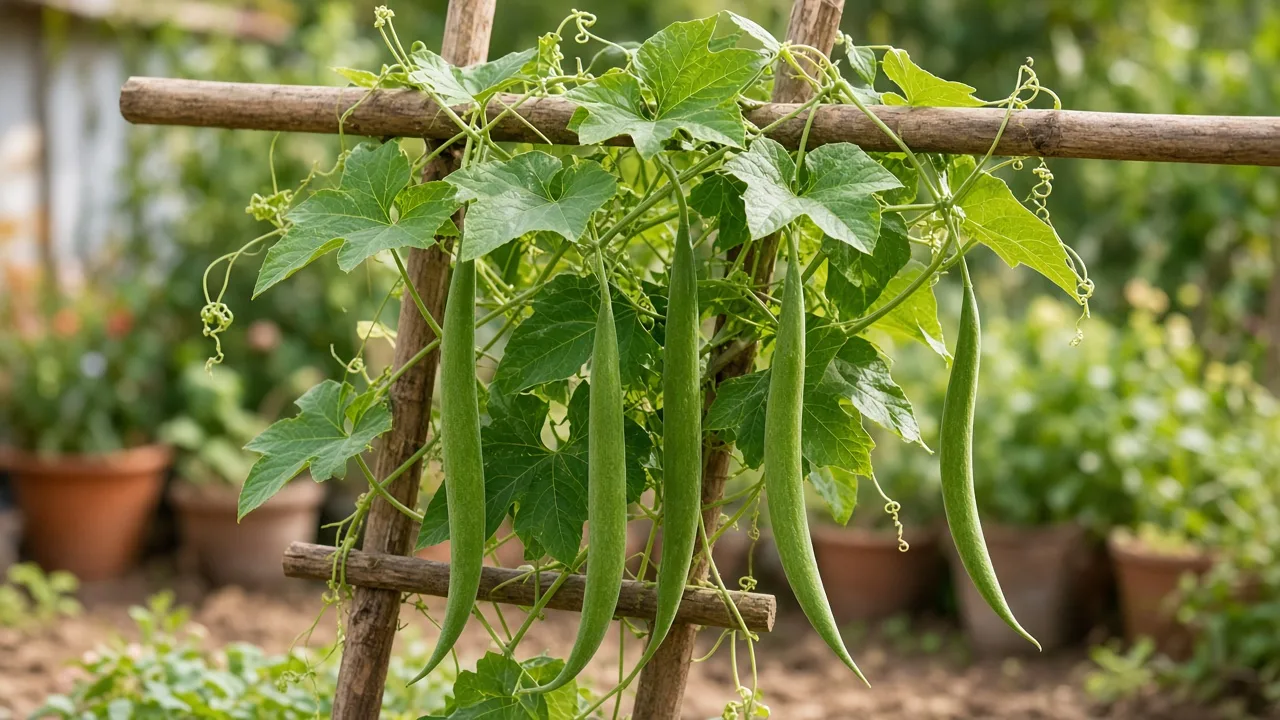
Propagation and trellis planning are one job. Snake gourd climbs by tendrils and a slightly twining stem (PFAF); without vertical support, fruits sprawl, tangle, and rot. Choose a fence, arbor, or netting rated for the weight of long hanging fruit. Position pots so the mature vine cannot pull a railing over—anchor large containers when you sow, as described in repotting and bed prep.
Water, light, and airflow for young vines
Keep the root zone evenly moist from germination through the first weeks of climbing—not saturated. Check the top 2–3 cm of mix and water at the soil line in the morning, matching the rhythm in the watering guide. Full sun from emergence prevents weak, stretched stems; weak light at the seedling stage produces vines that never recover on a terrace.
Thin crowded leaves once the vine branches so air moves through the foliage. Good airflow pairs with careful watering to reduce foliar disease pressure during humid monsoon spells.
Avoid damping-off and leggy seedlings
If seedlings collapse at the soil line in trays, suspect damping-off—a fungal issue linked to wet, stagnant compost and overcrowding. NC State Extension notes that infected stems pinch at the base and topple. Discard affected seedlings, sterilize trays, restart with fresh mix, and improve drainage and air movement rather than watering more.
Leggy pale seedlings usually mean insufficient light or excess heat without sun. Move trays to brighter conditions or add supplemental light; do not compensate with nitrogen before roots establish.
Transplant without disturbing cucurbit roots
Transplant tray-grown snake gourd only when night temperatures stay mild and plants have two to three true leaves with an intact root ball. Harden off for several days by exposing trays to outdoor sun and wind for longer periods. Plant at the same depth as in the module, water in, and shade lightly for the first afternoon if sun is intense.
If a seedling wilts after transplant despite moisture, root damage is the likely cause. Next season, direct sow or use biodegradable pots planted whole to avoid disturbing roots.
Pollination basics when propagation leads to fruit
Propagation success is not only germination—you need a vine that can set fruit if you plan to save seed. Snake gourd is monoecious; male and female flowers appear on the same plant and insects carry pollen (PFAF). On isolated balconies with few bees, hand-pollinate female flowers in early morning by transferring pollen from a freshly opened male bloom.
Reliable fruit set also depends on warm nights and steady moisture through flowering—topics covered in light and watering guides. Without fruit, you cannot produce your own seed for next year.
Saving seed for next season
To save seed, allow one or two fruits to ripen fully on the vine until the rind turns orange and soft—the stage that is inedible as a vegetable (Gardening Know How). Scoop pulp, ferment briefly in water if needed to separate gel, rinse, and dry seed on a screen in shade until brittle.
Store dry seed in a labeled, airtight jar in a cool place. Before sowing next year, repeat the soak-and-sort routine and discard non-viable pale seed. Mature snake gourd seeds are toxic to humans—handle only for planting, keep away from children and pets, and never eat saved seed (Gardening Know How).
Common propagation failures
Cold or wet soil delays germination and rots seed. Wait for warm nights or use controlled tray warmth.Skipping trellis prep leads to tangled vines you cannot train without breakage.Planting too few seeds ignores the ~60 percent germination reality.Transplant shock stalls growth for weeks—direct sow when possible.Saving seed from grocery fruit may be an unknown hybrid or picked immature—prefer labeled seed or fruit you grew and ripened yourself.
When to use this page vs other Snake Gourd guides
Use this propagation page when you are buying seed, soaking and sowing, raising seedlings, or saving seed for next season. Open light for sun exposure and grow-light limits, watering for daily moisture checks through fruit set, soil for mix recipes, fertilizer for feeding after establishment, pruning for trellis training and lateral thinning, and repotting when moving seedlings into final large containers or prepared beds.
Related Snake Gourd guides
- Overview — species identity, mature size, and harvest stage for chichinda.
- Light — full-sun needs and low-light failure modes.
- Watering — moisture rhythm from germination through fruiting.
- Soil — compost-rich mixes for heavy-feeding vines.
- Fertilizer — feeding after seedlings establish.
- Pruning — training the vine your propagation effort produced.
Conclusion
Propagating snake gourd means treating seed as the only reliable starting point: soak and sort seed, sow extras to beat modest germination rates, and match sowing to warm nights on your terrace or plot. Pair every sowing with a trellis installed early, protect cucurbit roots if you transplant, and guard seedlings against damping-off in stagnant trays. When you need fruit for the kitchen, shift to the cluster’s watering and pruning guides; when you need seed for next year, ripen fruit fully, dry seed carefully, and remember that mature seed is for planting—not eating.