Snake Gourd Light Needs: Full Sun & Terrace Tips
Snake Gourd Light Needs: Full Sun & Terrace Tips
Snake Gourd Light Needs: Full Sun & Terrace Tips
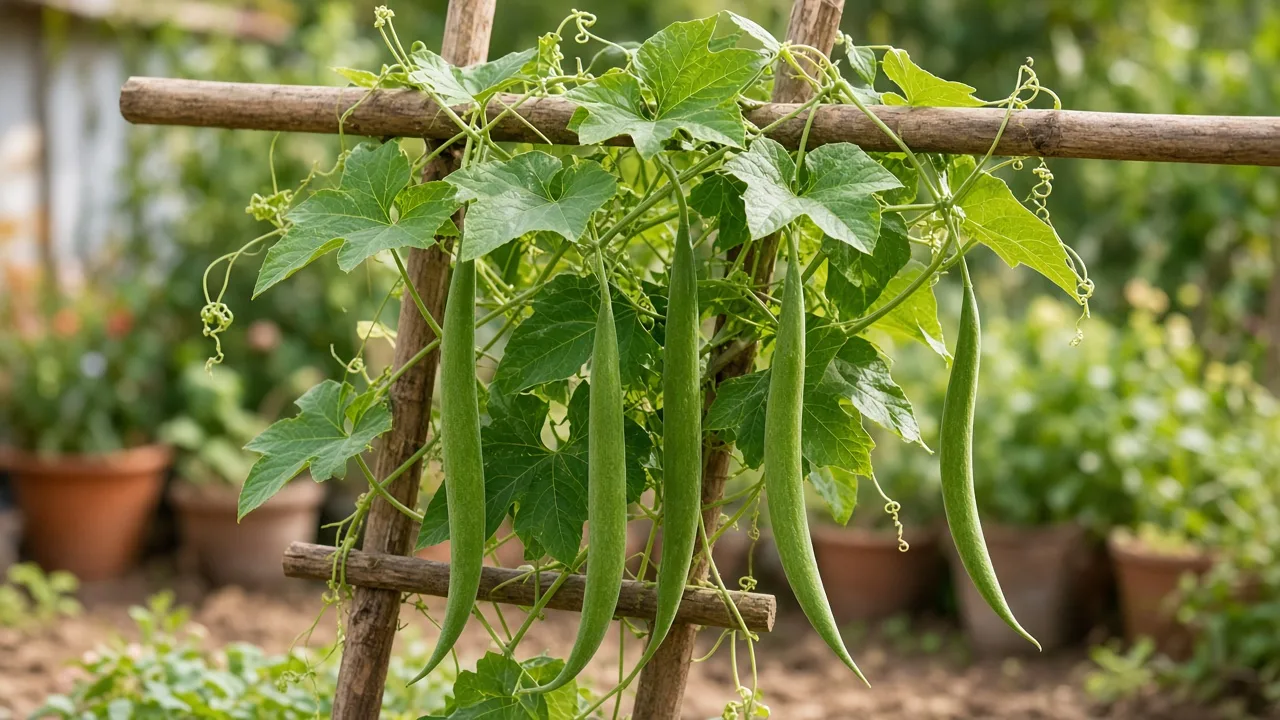
Snake gourd (Trichosanthes cucumerina) is not a dim-corner houseplant. It is a fast annual cucurbit that climbs several metres in one warm season and sets the long green fruits used as chichinda, padwal, and pudalangai across South and Southeast Asia. Light drives every stage that matters for the kitchen: leaf size, vine thickness, male and female flower counts, and whether pollinated ovaries swell into harvestable gourds. If your terrace gets only a few hours of direct sun or stays cool at night, fixing placement is usually more important than tweaking fertilizer.
This guide explains how much sun snake gourd needs, where to mount a trellis on Indian terraces and similar climates, when brief shade helps heat—not photons—and the first warning signs that light, warmth, or both are limiting your crop.
Snake Gourd Light Needs: The Quick Answer
Grow snake gourd in full sun: aim for at least six to eight hours of direct sunlight on the leaf canopy each day during the active growing season. Plants For A Future lists the species as needing full sun and states plainly that it cannot grow in the shade. That is stricter than “tolerates some shade” advice you might read for leafy greens or root crops.
Bright light must pair with warm nights. The same reference notes best performance with short daylengths and stable temperatures above about 25°C—a combination that explains why snake gourd thrives on open Indian terraces after the coolest months pass, yet frustrates growers who treat it like a cool-climate cucumber. Gardening Know How offers a practical climate test: if lima beans are marginal in your area, snake gourd usually is too, because both need reliably warm nights to fruit.
How Much Light Trichosanthes cucumerina Actually Needs
Snake gourd evolved in tropical and subtropical Asia as a climbing field crop, not a windowsill curiosity. Its large lobed leaves are built to capture strong daylight on a vertical trellis. Weak light produces thin vines, wide internodes, and a canopy that never generates enough energy to support heavy fruit loads.
Full Sun and the Six- to Eight-Hour Baseline
Vegetable references commonly define full sun as more than six hours of continuous direct sun per day (Backyard Gardener). Snake gourd sits comfortably in that band and often performs better toward the upper end on terraces where reflected heat from walls and paving adds usable brightness.
My Green Yard recommends full sun exposure for Indian kitchen gardens, with comfortable growth roughly in a 24–30°C day band when moisture stays even. That matches what many plains growers see after monsoon breaks or during the winter sun window: long bright days without frost.
Place the root zone and the first metre of vine where sun arrives early. Snake gourd climbs toward light; if the base sits in shadow behind a parapet while only the tips reach sun, lower leaves yellow and the plant wastes energy reaching for brightness. Install the trellis on the sunniest face of your terrace or fence before sowing, as outlined in the overview and repotting guides.
Why Shade Steals Flowers and Fruit
Shade does not always kill snake gourd immediately—it often keeps the vine alive while quietly removing the reason you planted it. Insufficient light produces leggy growth: long spaces between leaves, thin stems, and fewer female flowers. Male blooms may still appear in clusters, but fruit set collapses when the plant cannot photosynthesize enough to support ovaries.
PFAF is explicit: the species cannot grow in the shade. In practice that means north-facing courtyards with two to three hours of direct sun, living-room windows with filtered glass, and ground floors overshadowed by taller buildings rarely justify the trellis space. If you must try a marginal site, choose the shortest cultivar you can find, prune for openness, and expect smaller harvests—but honest full sun is the default recommendation.
Warm Nights and Bright Days Work Together
Light alone does not guarantee fruit. Snake gourd is frost tender and behaves like other tropical cucurbits: cool nights slow metabolism even when afternoons are bright. PFAF ties strong growth to temperatures above about 25°C alongside short daylengths—a detail that matters on Indian hills or early-season sowings when soil is warm but nights still dip.
If your vine looks healthy in midday sun yet drops female flowers or stalls after cool nights, the problem is often temperature, not insufficient photons. Wait for warmer nights before direct sowing, or hold transplants under protection until evening lows stay mild. The propagation guide covers soaked seed and transplant timing; light planning should follow that calendar, not fight it.
Seasonal Light Strategy for Indian Kitchen Gardens
India’s sun angle and day length shift through the year. Snake gourd is typically a warm-season annual on the plains—sown when frost risk is gone and nights stay warm, often after the fiercest pre-monsoon heat eases or during your local window when both light and temperature cooperate.
Post-Monsoon and Winter Sun Windows
After monsoon clouds thin, many regions get clear skies and strong winter sun—excellent for snake gourd if nights remain above the plant’s comfort zone. Use open terrace centres or south- and west-facing parapets that are not blocked by water tanks or neighbour walls. Pair bright days with the steady moisture described in the watering guide; sun without water produces wilt and blossom drop.
Winter light is valuable for even ripening of young fruit and for keeping foliage dry when paired with morning irrigation. Avoid crowding the vine against a dark wall that holds cold air at night unless you are in a truly frost-free tropical zone.
Pre-Monsoon Heat on Open Terraces
On exposed concrete terraces during pre-monsoon heat, the limiting factor is often leaf temperature and transpiration, not lack of photons. Snake gourd can take intense sun when roots are cool and moist, but midday wilting on scorching days is common even in adequate light. Prioritize air movement, mulch to moderate soil temperature, and deep morning watering rather than shading the entire vine into dimness.
Light shade cloth (30–40%) over the canopy for a few hours at solar noon is a heat tool, not a permanent low-light strategy. Remove it once the heat wave passes so female flowers still receive bright light. If fruits sun-scald on the southwest face, rotate tie points on the trellis or add a short lateral screen—do not move the whole crop to a half-day shade bed.
Best Terrace, Fence, and Container Placement
Think in three dimensions: sun path, trellis height, and competition from structures.
Reading Exposures and the Shadow Test
Walk your terrace at 9 a.m., noon, and 4 p.m. on a clear day. Snake gourd wants the planting spot in direct sun at all three checks during the growing season. A site sunny at noon but shaded by a neighbour at 4 p.m. often fails fruit set because afternoon light still matters for carbohydrate production.
East-facing fences give gentle morning sun and strong midday light—excellent for many Indian balconies if the west side is not blocked. West-facing walls receive hot afternoon sun; workable with mulch and water discipline. North-facing railings rarely deliver enough hours unless you are on an upper floor with open sky to the south.
For containers, place pots before the vine attaches to a permanent trellis. A large pot moved mid-season snaps stems and sets the plant back a week—long enough to miss flower peaks. Use the soil mix that holds moisture in sun without waterlogging, because bright light and soggy roots together invite root issues.
Direct Sun Tolerance and Heat Stress
Mature snake gourd leaves generally tolerate full tropical sun when roots are healthy and moisture is steady. Problems appear when heat, drought, and intense radiation stack: leaf edges crisp, young leaves bleach, and flowers abort. That pattern mimics “too much sun” but often resolves with water timing and mulch rather than permanent shade.
Acclimate seedlings started indoors: harden them for three to five days in partial outdoor exposure before planting in the brightest bed. Sudden moves from a dim nursery to an all-day terrace cause sun scorch on tender leaves. After acclimation, full sun is the goal—not a shaded permanent home.
Starting Seedlings: Windows, Nursery Beds, and Grow Lights
Grow lights are a bridge, not a destination. Snake gourd seedlings can be started under full-spectrum LEDs for 14–16 hours daily when monsoon weather or late sowings delay outdoor planting. Keep lamps close enough to prevent stretching—leggy seedlings with pale stems struggle after transplant even if the terrace is sunny.
A south window rarely delivers enough intensity for stocky cucurbit starts unless you are within a few inches of unobstructed glass. Once true leaves harden, move seedlings to the brightest sheltered spot outdoors, then to the final trellis within a week or two. Long-term indoor windowsill culture does not produce meaningful harvests for this species.
Warning Signs of Too Little Light
Watch new growth after any placement change—not last month’s leaves.
Leggy vines with internodes longer than a handspan usually mean the plant is reaching for photons. Small pale leaves and slow tendril attachment follow. Few or no female flowers while male clusters appear is a classic low-light or cool-night pattern on isolated balconies. Fruit that starts then stalls at finger size can reflect insufficient energy, though pollination and watering deserve checks too.
First action: move the trellis base or container to the sunniest available support before the vine passes two metres. Thin crowded laterals per the pruning guide so inner leaves receive light. If buildings block most sky, snake gourd is the wrong crop for that spot—choose a sunnier wall or a different vegetable.
Warning Signs of Too Much Sun or Heat
Bleached or silver patches on sun-facing leaves, especially right after transplant, signal scorch—often from sudden exposure, not from full sun itself. Midday wilting that recovers overnight usually points to heat and moisture stress; wilting that does not recover with wet soil suggests root damage—see watering.
Blossom drop during heat waves can occur even in bright light. Shade cloth for a few midday hours, deeper morning watering, and mulching beat moving the vine to a shade bed that reduces long-term yield. Sun-scalded fruit patches on the southwest face are cosmetic for kitchen use; improve leaf cover by training laterals or use brief screening.
How Snake Gourd Light Compares to Ridge Gourd and Cucumber
All three are warm-season cucurbits, but snake gourd is less forgiving of shade and cool nights than many slicing cucumbers grown in temperate summers. Ridge gourd (Luffa acutangula) and bottle gourd also want full sun, yet snake gourd’s combination of shade intolerance and high temperature preference (PFAF) makes it closer to bitter gourd and lima bean climates than to a cool greenhouse cucumber.
If cucumber succeeds in partial shade on your balcony but snake gourd does not fruit, the comparison is informative—not a sign you failed. Match species to full-sun terrace walls, not the same corner that works for lettuce in winter.
How Light Links to Watering, Pollination, and Fruit Set
Bright sun increases transpiration. A vine in eight hours of direct light on a concrete terrace may need daily moisture checks; the same genetics in dim light dry slowly and tempt growers to overwater. Align irrigation with the watering rhythm: even moisture through flowering and fruit swell.
Light also influences pollinator activity. Bees prefer open, warm, sunlit flowers. On high-rise balconies with good sun but few insects, hand pollinate female blooms in early morning as noted in the overview. Abundant male flowers in full sun with no fruit often means pollination, not photons, is the bottleneck—still verify the plant receives six or more hours of direct sun before assuming bees alone are the issue.
Feed through the bright season per the fertilizer guide; heavy fruiting in strong light depletes soil faster than a shaded vine that barely sets.
When to use this page vs other Snake Gourd guides
Use this light guide when you are choosing terrace orientation, diagnosing leggy vines, or explaining healthy foliage but no fruit after cool or shaded nights. Start at the overview for species identity, trellis planning, and harvest timing. Open watering when wilting, blossom drop, or moisture rhythm is unclear. Soil and fertilizer cover mixes and feeding in bright conditions. Propagation handles soaked seed and sowing windows; repotting for beds and large containers; pruning for training and airflow on sunny walls.
Related Snake Gourd guides
- Overview — chichinda identity, warm-season calendar, and trellis basics.
- Watering — deep watering habits when sun dries containers quickly.
- Soil — rich mixes that support fruiting in full sun without waterlogging.
- Fertilizer — feeding through flowering when bright light drives growth.
- Propagation — seed soaking, germination, and moving seedlings into full sun.
- Pruning — thinning foliage for light penetration and straighter fruit.
- Repotting — final bed or container placement before the vine runs.
Conclusion
Snake gourd rewards open, warm-season sun on a sturdy vertical support—not a shaded ornamental corner. Aim for six to eight or more hours of direct light on the canopy, pair brightness with warm nights above about 25°C, and use brief heat shade only when leaves scorch or wilt despite good soil moisture. Watch new tendrils and female flowers after every move; they tell you whether today’s terrace placement can feed a hanging harvest of tender green fruit.