Brown Tips on Swedish Ivy: Causes, Checks & Fixes
Quick answer
Brown tips on Swedish Ivy are usually environmental-tap-water minerals, salt buildup from fertilizer, or uneven watering-not a disease. First step: switch to filtered or rested tap water and water only when the top inch of soil feels dry.
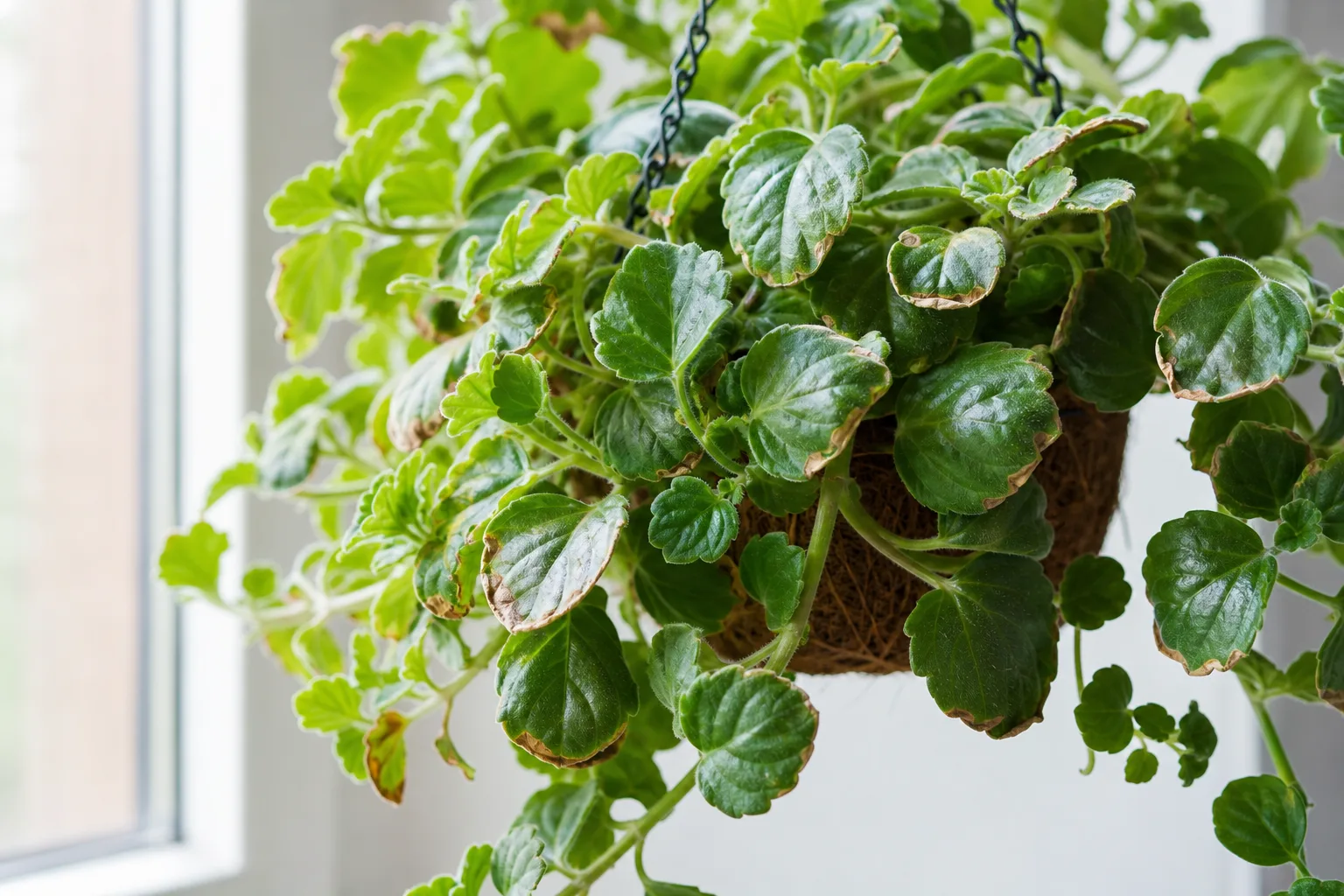
Brown Tips on Swedish Ivy: Causes, Checks & Fixes
This guide covers brown tips on Swedish Ivy. See also the general Brown Tips guide, watering, and light pages for this plant.
Brown Tips on Swedish Ivy: Causes, Checks & Fixes
Quick answer
Brown leaf tips on Swedish Ivy are almost always a stress signal, not an infection. The scalloped, slightly succulent leaves on this trailing Plectranthus dry at the margins first when moisture delivery or water chemistry goes off-not because the plant suddenly needs rainforest humidity.
First step: switch to filtered or rested tap water and water only when the top inch of soil feels dry at the pot edge. Swedish Ivy stores water in its stems and leaves and tolerates drought better than soggy roots, but mineral salts and fluoride from municipal tap water can accumulate in leaf tips over time. Brown leaf tips on houseplants are commonly caused by overfertilization, salt buildup, dry or wet soil, low humidity, or fluoride in water.
Fix water quality and your dry-down rhythm before buying a humidifier or Swedish Ivy repotting guide on day one.
What brown tips look like on Swedish Ivy
On Swedish Ivy, tip burn usually starts at the outermost point of the rounded, glossy leaf-the tissue farthest from the roots. Healthy foliage is bright green with crenate (scalloped) edges; damaged tips turn tan to dark brown and feel dry or papery when you pinch them.
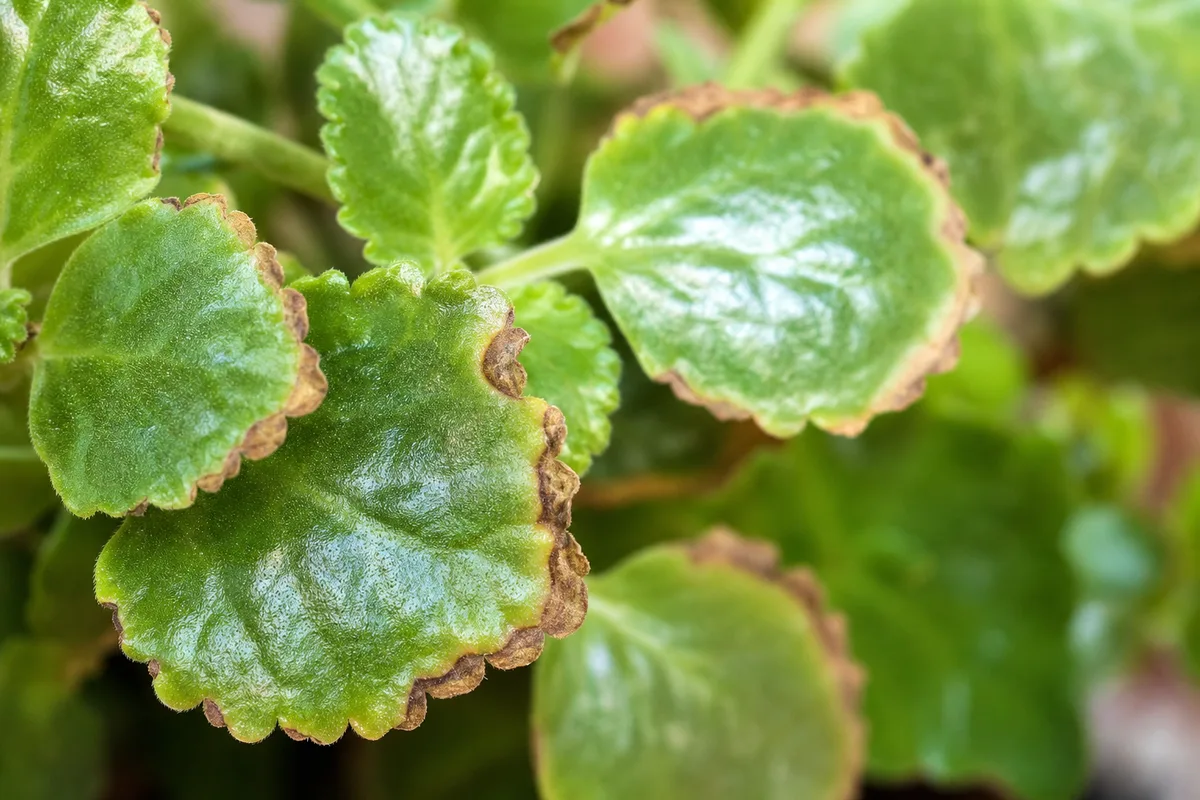
Brown Tips symptoms on Swedish Ivy - compare with healthy tissue on the same plant.
Typical cosmetic tip burn:
- Dry, crispy brown only at the leaf point or a thin margin along the edge
- Rest of the leaf stays green and firm
- Damage on older outer leaves while new tips at stem ends look clean
- No webbing, sticky residue, or soft wet spots
Tip browning tied to root or salt stress:
- Brown creeping farther down leaf margins on multiple leaves at once
- White crusty deposits on the soil surface
- Wilting or limp stems despite soil that feels wet
- New leaves opening with tip damage already present
Swedish Ivy is non-toxic to cats and dogs, so trimming dead tips over a sink is safe around pets-unlike many fluoride-sensitive houseplants where handling is more cautious.
Why Swedish Ivy gets brown tips
Swedish Ivy is not a fern or a calathea. It grows well in average temperatures and moderate light year-round and handles typical indoor humidity without a humidifier emergency. Brown tips here usually trace to water balance and chemistry, not a humidity crisis.
Tap-water minerals and fluoride
Municipal tap water carries chlorine, fluoride, and dissolved minerals. Specific nutrient toxicities-including fluoride-can scorch leaf tips on houseplants. Swedish Ivy is not as famously sensitive as spider plant or dracaena, but months of straight tap water on a fast-growing trailer still concentrates salts at the leaf margins, especially in small pots with limited soil volume.
Salt buildup from fertilizer
Swedish Ivy benefits from light feeding during active growth, but heavy or year-round fertilizer leaves soluble salts in the mix. Overfertilization and salt buildup are leading causes of brown leaf tips and margins. White crust on the soil surface, wilting despite moist mix, and stunted new growth often accompany fertilizer burn.
Uneven watering
This plant wants medium moisture in well-drained soil-soak when ready, then let the mix dry down. Long droughts followed by a heavy soak stress feeder roots; roots damaged by chronic wet soil cannot hydrate leaf tips evenly even when the pot feels damp. Overwatering and underwatering both lead to poor root health and similar above-ground symptoms.
The thick leaves store water, so underwatering often shows as crispy edges and slightly thin, rubbery foliage before whole stems collapse. Overwatering more often yellows leaves and softens stem bases-but tip burn can appear when damaged roots fail to supply the leaf margin.
Dry winter air (secondary)
Very dry heated rooms can crisp leaf edges on trailing stems hanging in front of vents. Swedish Ivy adapts to average household air better than tropical moisture lovers, so treat low humidity as a contributing factor only after water quality and watering are stable.
Direct sun scorch
Outdoors, Swedish Ivy must stay in shade-direct sun burns the leaves. Indoors, hot afternoon sun through a south window can bleach or scorch foliage. Sunburn usually shows as bleached patches or browned sections on leaves facing the glass, not isolated dry tips on shaded inner growth.
How to confirm the cause
Work through these checks in order before stacking treatments:
- Soil moisture at depth - Stick a finger into the top inch at the pot edge. Bone-dry, lightweight pot suggests underwatering crisped the tips. Heavy, cool pot with damp mix points to root stress from excess moisture.
- Fertilizer history - Recall whether you fed during winter or used full-strength product. White crust on soil and tip burn on new and old leaves together suggest salt injury.
- Water source - Note whether you use straight tap water, softened water, or filtered water. Clemson Extension cautions against watering with softened water because sodium and chloride can damage plants.
- Light exposure - Check whether trailing stems sit in direct afternoon sun. Scorched leaves usually face the window; shaded inner leaves stay green.
- New growth pattern - Tips only on older lower leaves while fresh stem tips stay clean often means past stress, not an active crisis. Browning on every new leaf means the current routine still needs correction.
- Pest scan - Fine webbing and stippling on undersides indicate spider mites, not classic tip necrosis. Mites thrive in hot dry window air and are a separate problem from salt burn.
If soil moisture, fertilizer, and water source all look reasonable and only a few old tips are crisp in a dry winter room, minor humidity stress may be the remainder-not the primary diagnosis.
First fix for Swedish Ivy
Switch to filtered or rested tap water and water only when the top inch of soil feels dry.
Pour room-temperature water through the pot until it drains freely from the bottom, then empty the saucer. UF/IFAS recommends watering Swedish Ivy well when the top inch dries, but never letting the pot sit in water. Use rested tap water-left open 24 hours to off-gas chlorine-or filtered water if your supply is hard or you have softened water.
Do not fertilize during this correction month. Do not repot unless roots are clearly rotting. Do not mist leaves as a substitute for fixing water chemistry.
Step-by-step recovery
After the initial water-quality and dry-down correction:
- Run a salt flush if you overfed - During active growth, water with plain filtered or rested water at roughly two to three times the pot volume, letting excess drain fully. Repeat once if white crust was visible. Resume light feeding only after new growth looks clean for several weeks.
- Correct underwatering swings - If the pot was chronically light and dry, establish a habit of checking the top inch every few days rather than waiting until leaves droop. Soak thoroughly each time; avoid small sips that wet only the surface.
- Correct overwatering patterns - If the pot stayed heavy, move the plant to brighter indirect light and better airflow, skip the next watering until the top inch dries, and confirm drainage holes are open. Soft stem bases may require unpotting and root trimming-see root-rot guidance if stems mush at the soil line.
- Trim dead tips cosmetically - Cut brown tissue following the natural curve of the leaf, leaving a sliver of brown margin so you do not slice into living green tissue.
- Adjust winter placement - Move hanging baskets away from heating registers if dry hot air hits trailing stems directly. A pebble tray or grouping with other plants can help marginally; fix watering first.
- Relocate if sun-scorched - Pull the basket back from hot south or west glass into Swedish Ivy light guide. Scorched leaves will not recover; watch new growth for clean color.
Judge success by new leaves at stem tips-not by old damaged foliage turning green again.
Recovery timeline
Water-quality changes show up on the next flush of growth, usually within two to four weeks during spring or summer active growth. In winter slowdown, new clean leaves may take longer because the plant pushes less fresh tissue.
Salt-flush recovery can take one full growing cycle if buildup was heavy. Old browned tips remain brown permanently; recovery means new foliage emerges without fresh necrosis.
If tips keep appearing on every new leaf after four to six weeks of corrected water and no feeding, inspect roots for rot or reconsider whether softened or very hard tap water still needs a better filter.
Lookalike symptoms to rule out
Whole-leaf yellowing with a heavy wet pot - Points to overwatering and possible root rot, not cosmetic tip burn. Stem bases soften and soil smells sour.
Black or brown spots in leaf centers - Often sun scorch or fungal leaf spot from wet foliage, not dry tip necrosis. Spots are localized patches, not margin-first crisping.
Sticky leaves with ants or sooty mold - Honeydew from aphids or mealybugs. Swedish Ivy is often the first plant in an area to show mealybugs-treat the pest, not humidity.
Stippling and fine webbing on undersides - Spider mites in hot dry window air. Damage is speckled across the leaf surface, not limited to tips.
Leggy pale growth without tip burn - Insufficient light, not water chemistry. Move to brighter indirect exposure and pinch tips to branch.
Mistakes to avoid
Do not increase fertilizer to “green up” browned tips-that adds salts when the plant is already stressed.
Do not water on a fixed weekly calendar regardless of soil moisture. Water when necessary based on how the mix feels, not the day of the week.
Do not assume every brown tip means low humidity. Swedish Ivy is forgiving of average indoor air; a humidifier before fixing water quality often delays the real solution.
Do not trim deep into healthy green tissue when cosmetically cutting tips-you create larger wounds that dry out further.
Do not use softened water for houseplants if you can avoid it-the sodium and chloride load worsens salt stress.
Do not repot on day one for tip burn alone. Repot only when roots are rotting, the mix has failed, or the plant is severely rootbound and drying out within a day of watering.
Swedish Ivy care cross-check
Brown tips improve fastest when the baseline routine is right:
- Light: Bright indirect light indoors; avoid direct sun that burns glossy leaves.
- Water: Top inch dry before soaking; never leave standing water in the saucer.
- Soil: Well-drained potting media-dense peaty mix in oversized hanging baskets holds moisture too long.
- Feed: Light balanced fertilizer during spring and summer only; skip winter unless the plant is actively growing under lights.
- Temperature: Average room temperatures; protect from cold drafts below roughly 50°F for extended periods.
Trailing stems shade their own crown in dense baskets-lift foliage when watering so the soil surface dries evenly.
How to prevent brown tips next time
Use filtered, rested, or rainwater if your tap is hard or softened. Flush salts periodically during active growth if you feed regularly-plain water until drainage runs clear.
Check the top inch of soil before every watering rather than following a calendar. Water thoroughly so the bottom two-thirds of the pot, where most roots live, receives moisture, then let the mix dry down again.
Feed at half strength monthly during active growth at most. Stop fertilizer when growth slows in fall and winter.
Keep baskets in bright indirect light away from heating vents and hot window glass. Rotate or shorten stems if one side scorches while the other stays green.
Scout for mealybugs and spider mites during dry winter window season-pests weaken plants and compound moisture stress even when tips look like simple burn.
When to worry
Treat as urgent when brown margins spread rapidly on new growth, stems soften at the soil line, soil stays wet and smells sour, or the whole plant wilts without recovering after a corrected soak. Those signs point to root failure, not cosmetic tips.
Replace severely rotted parent plants with tip cuttings if firm stems remain higher on the plant-stem tip cuttings root within a month in clean media and Swedish Ivy is easily propagated when the base is lost.
A few dry tips on older outer leaves after a dry winter, with firm stems and clean new growth at the ends, is not urgent. Trim, correct water, and watch the next leaves.
Conclusion
Brown tips on Swedish Ivy look alarming on glossy trailing foliage, but they rarely mean your plant is dying of disease. Start with water quality and a reliable dry-down check at the top inch of soil-the same foundation that keeps this easy beginner plant thriving year-round. Old browned tissue will not revert; clean new scalloped leaves tell you the fix worked.
When to use this page vs other Swedish Ivy guides
- Swedish Ivy watering guide - Use for routine moisture checks before assuming brown tips is the main issue.
- Swedish Ivy problems hub - Browse all 18 common issues on this species.
- Yellow Leaves on Swedish Ivy - Different entry point when symptoms overlap with brown tips.