Fungus Gnats on Swedish Ivy: Causes, Checks & Fixes
Quick answer
Fungus gnats on Swedish Ivy almost always mean the top of the potting mix stays wet too long-often from watering before the top inch dries. First step: stop watering until the top 1–2 inches of mix are completely dry, then resume on a dry-down schedule matched to your basket.
Fungus Gnats on Swedish Ivy: Causes, Checks & Fixes
This guide covers fungus gnats on Swedish Ivy. See also the general Fungus Gnats guide, watering, and light pages for this plant.
Fungus Gnats on Swedish Ivy: Causes, Checks & Fixes
Quick answer
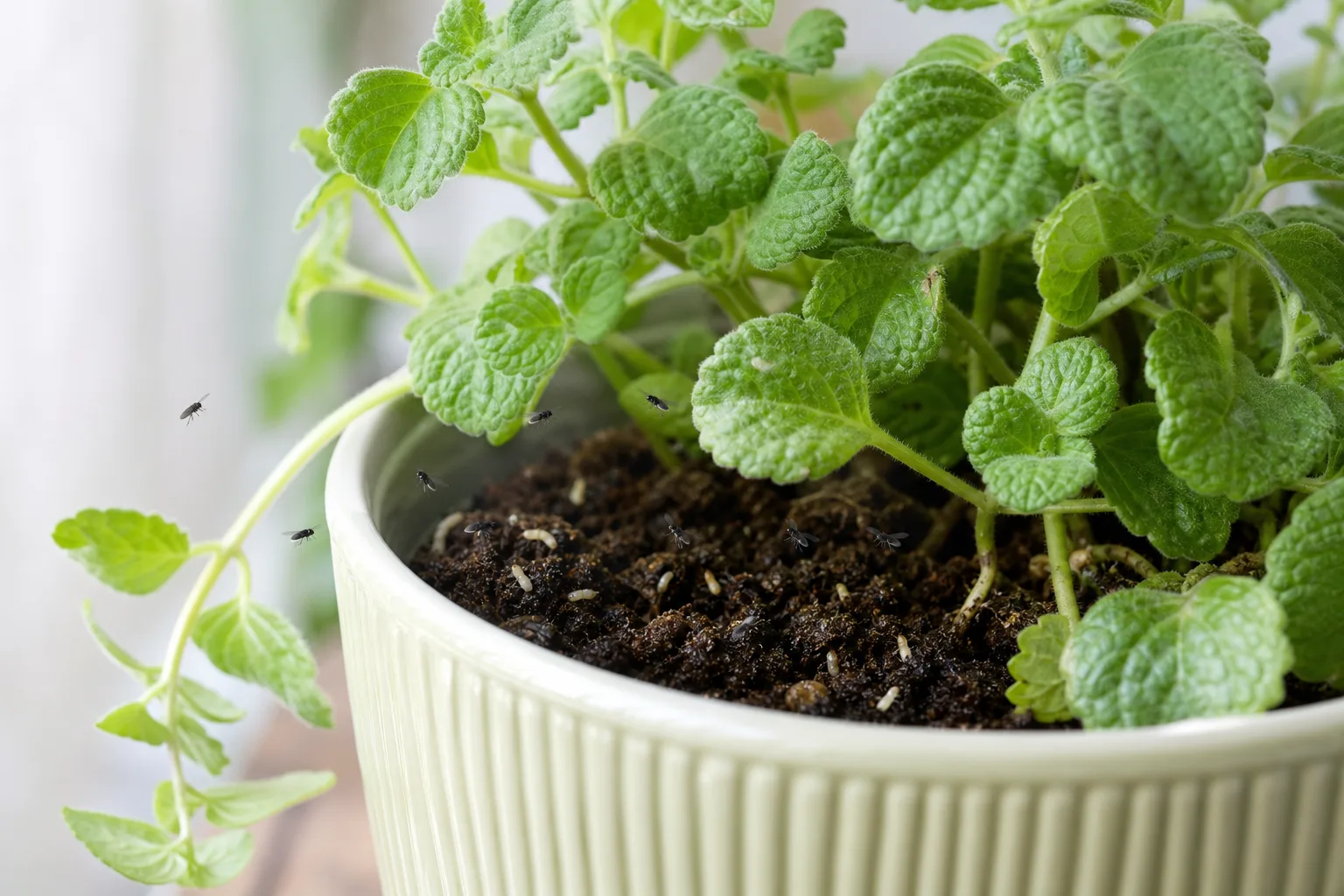
Fungus gnats on Swedish Ivy are a moisture signal, not a mystery disease. The tiny dark flies you see around a hanging basket or windowsill are adults that laid eggs in damp, organic potting mix. Their worm-like larvae live in the top layer of soil, feeding on fungi and decaying organic matter-and sometimes tender feeder roots when numbers are high.
On Swedish Ivy (Plectranthus australis), gnats show up when care drifts toward “keep it moist” instead of “let the top dry.” This fast-growing trailer looks lush when slightly thirsty, but many growers overcompensate in hanging baskets where the bottom of the pot stays wet while stems still look perky.
First step: stop watering until the top 1–2 inches of mix feel completely dry to the touch. That single change breaks the larval habitat Swedish Ivy gnats need. Resume watering only when that dry-down test passes-not on a fixed calendar.
What fungus gnats look like on Swedish Ivy
Adult fungus gnats are small-roughly 1/16 to 1/8 inch long-with dark bodies and delicate wings. They flutter up when you water, move the basket, or brush trailing stems. You will notice them near the soil surface, on the pot rim, and on nearby windows more than on the glossy scalloped leaves themselves.
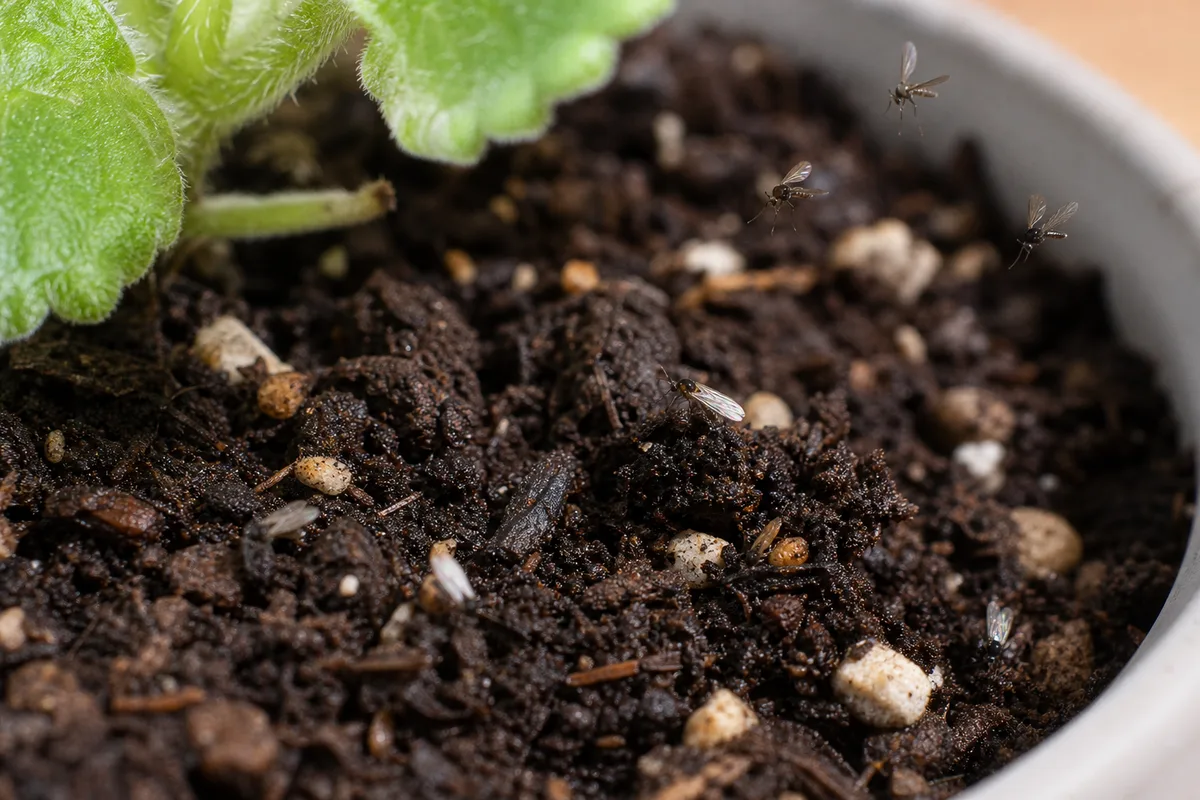
Fungus Gnats symptoms on Swedish Ivy - compare with healthy tissue on the same plant.
Larvae stay hidden. They are legless, pale worms with dark heads in the upper inch of mix. You may spot them if you scrape back surface peat or set a potato slice on the soil overnight and check the underside in the morning-a common extension diagnostic trick.
On Swedish Ivy specifically, watch for these paired clues:
- Flies concentrated around the pot, not on leaf undersides (that pattern suggests aphids or whiteflies instead)
- Surface mix that stays dark and cool for many days after watering
- A hanging basket that feels heavy at the bottom while the top looks merely “evenly moist”
- No webbing on leaves (rules out spider mites) and no whitefly cloud when stems are shaken
The plant may look otherwise healthy at first. Gnats can persist for weeks on a bushy trailer before yellow leaves or soft stem bases appear- but the wet soil supporting them is already working against shallow Plectranthus roots.
Why Swedish Ivy gets fungus gnats
Swedish Ivy is marketed as easy, and it is-when drainage and drying rhythm stay honest. UF/IFAS recommends well-drained potting media and watering when the top inch feels dry, never letting the pot sit in standing water. Gnats appear when that balance slips.
Several habits push Swedish Ivy into gnat territory:
Watering on a schedule instead of by feel. Fast spring and summer growth tempts weekly watering regardless of how fast your home dries the pot. In cooler rooms or dimmer winter light, the same schedule keeps the surface wet for days.
Peat-heavy mix in deep hanging baskets. Trailing Swedish Ivy is often potted in standard peat-based indoor mix with little perlite. That holds moisture in the root zone-exactly where fungus gnat larvae prefer damp, organic soil.
Saucers and liners that never drain. A full saucer under a basket re-wets the bottom layer even when you thought you watered lightly. Shallow-rooted Plectranthus does not tolerate stale water around its base.
Overpotting. A basket much larger than the root ball holds excess wet mix with no roots to pull moisture up. The top dries slowly while the center stays saturated-ideal gnat nursery conditions.
Fresh cuttings rooted in water then potted. Newly potted stems in moist propagation mix are vulnerable until roots establish and you transition to a drier routine.
The gnats did not “attack” a weak plant. They colonized a wet habitat. Fixing moisture is the cure; killing flies alone is not.
How to confirm the cause
Work through these checks before adding products:
- Fly behavior - Disturb the soil surface. Fungus gnats rise from the pot. Fruit flies ignore soil and hover near kitchen fruit or compost bins.
- Moisture depth - Insert a finger to the first knuckle. If the top inch is still damp several days after watering, you have confirmed the breeding condition gnats need.
- Pot weight - Lift the basket. A chronically heavy pot with slow dry-down supports larvae even if leaves look fine.
- Stem base feel - Pinch stems where they meet the soil. Firm and green is reassuring. Soft, mushy, or collapsing bases mean wet soil may already be damaging roots-not just hosting flies.
- Sticky trap test - Place a yellow card just above the soil line for 48 hours. Gnat-sized adults stuck to the card confirm the ID and give you a baseline count.
- Larval check (optional) - Slide a raw potato slice onto the surface overnight. Tiny larvae on the underside confirm active breeding in the top layer.
If traps catch nothing, soil dries within two to three days, and flies were a one-time sighting near a window, you may be dealing with fruit flies or strays-not an established gnat cycle in the ivy pot.
First fix for Swedish Ivy
Let the top 1–2 inches of potting mix dry completely before the next watering.
This is the one action that matters most. Extension guidance consistently ties fungus gnat control to drying the upper soil layer-larvae in the surface mix cannot survive prolonged dryness, and adult females lose an attractive egg-laying site.
For Swedish Ivy, “dry” means the top inch feels light and crumbly, not merely “not sopping.” Trailing stems may feel slightly less turgid before you water; that is normal and preferable to soggy roots. Do not mist or top-water while you are breaking the cycle.
Do not repot on day one. Do not drench with hydrogen peroxide before correcting watering. Do not increase humidity to “help” the plant while soil stays wet.
Step-by-step recovery
After the soil surface has dried:
- Resume watering only when the dry-down test passes. Water thoroughly until a little runs from drainage holes, then empty the saucer or liner immediately.
- Add yellow sticky traps near each affected basket to catch adult flies and monitor whether numbers fall over two to three weeks. Traps alone will not finish the job-they reduce egg-layers while you fix moisture.
- Apply BTI if larvae persist after two weeks of proper drying. Products containing Bacillus thuringiensis subsp. israelensis (Mosquito Bits, Gnatrol, or similar) target larvae in soil when watered in. Wisconsin Extension recommends several applications spaced five to seven days apart because BTI does not affect eggs or pupae.
- Consider bottom watering temporarily if the surface keeps rewetting too fast. Set the pot in a tray of water for 15–30 minutes so roots drink from below while the top inch stays drier-useful for baskets where overhead watering soaked the surface daily.
- Top-dress with coarse sand or fine gravel (about half an inch) if adults still lay eggs on exposed peat. This slows egg-laying while you retrain watering habits.
- Repot only when mix is degraded or root rot is confirmed. Move to fresh, well-draining indoor mix with added perlite if the old peat has collapsed, smells sour, or stays wet for more than a week despite corrected watering. Trim any mushy roots before replanting.
Isolate heavily infested baskets from other houseplants for a few weeks if flies are swarming-gnats spread easily between pots in shared trays or plant shelves.
Recovery timeline
Expect visible improvement in stages, not overnight:
- Within one week of proper dry-down: Fewer flies when you water; sticky traps catch fewer adults.
- Two to three weeks: Larval generations decline as repeated dry cycles and optional BTI applications overlap hatching.
- Four to six weeks: Full suppression on most established Swedish Ivy when moisture stays corrected and treatments continue through overlapping life stages.
Judge success by fly counts on traps and by firm stem bases-not by whether a few stragglers appear when you water. New growth should stay green and glossy. If yellow leaves keep spreading while soil dries properly, inspect roots for rot that started during the wet period.
Lookalike symptoms to rule out
Fruit flies prefer fermenting food, wine, or compost-not potting mix. If traps near the kitchen catch flies but the ivy pot does not, the plant is not the source.
Shore flies resemble fungus gnats but breed in algae on constantly wet surfaces. They appear more in greenhouse trays than typical home baskets.
Springtails also like damp peat but jump when disturbed and rarely damage indoor plants. They indicate wet mix, so the watering fix is the same-even though they are not gnats.
Aphids or whiteflies cause sticky leaves and insects on foliage, not swarms from soil. Swedish Ivy can host aphids, but that is a separate problem with leaf-focused inspection.
Root rot without gnats still produces yellow leaves and soft stems from overwatering. You may have rot even if flies never appeared-or gnats may arrive after rot fungi colonize wet mix.
Mistakes to avoid
Do not spray adult gnats with houseplant leaf sprays. Adults are not the breeding problem, and unnecessary pesticides stress a plant that needs simpler care changes.
Do not keep watering “because the leaves drooped” without checking soil first. Swedish Ivy stems wilt slightly when dry, but they also wilt when roots are drowning. Feel the mix before every response.
Do not leave the pot in a full decorative cachepot with no drainage exit. Double pots trap water at the bottom of trailing baskets.
Do not assume a pet-safe plant means every treatment is unrestricted. Swedish Ivy is listed as non-toxic to cats and dogs by the ASPCA, but still store BTI products and any pesticides away from pets per label directions.
Do not stop treatment after flies dip for three days. Eggs and pupae in soil continue the cycle unless dry-down or BTI covers the full three-to-four-week window.
Do not reuse soggy, gnat-infested mix when Swedish Ivy repotting guide without replacing it. Wash the container and trim damaged roots before fresh mix.
Swedish Ivy care cross-check
While breaking the gnat cycle, align basics so the plant dries predictably:
- Light: Swedish Ivy light guide helps Swedish Ivy use water faster. A trailer in dim corners stays wet longer and grows leggy at the same time.
- Mix: Standard indoor potting soil amended with perlite drains better than straight peat-heavy bags left open outdoors.
- Pot size: Repot into the next size up only when roots circle the bottom-not into a huge basket “for growth.”
- Season: Reduce watering frequency in fall and winter when growth slows, even if the plant still looks green.
- Debris: Pull fallen leaves from the soil surface so they do not hold moisture and feed larvae.
These are not separate chores-they are the same moisture management that prevents gnats from returning.
How to prevent fungus gnats next time
Make the dry-down test a habit: top inch dry before every watering, year-round. Empty saucers within minutes of watering hanging baskets.
Use pots with drainage holes and avoid letting liners hold standing water. If you bottom-water, still let the surface dry between sessions.
Quarantine new Swedish Ivy or mixed baskets for two to three weeks before grouping them with established plants. Gnats often arrive in moist nursery soil.
Keep one yellow sticky trap in each active basket through spring propagation season. A sudden spike on the card catches problems before flies fill the room.
When taking stem cuttings, transition rooted cuttings to the same dry-top routine as mature plants-do not keep propagation mix soggy “to be safe.”
When to worry
Escalate beyond basic drying and BTI when:
- Flies increase weekly despite dry surface soil and traps
- Stem bases turn soft, black, or mushy at the soil line
- Yellow leaves spread up trailing stems while mix smells sour
- New cuttings collapse while the surface stays damp
- Multiple pots in a shared tray all swarm-check every pot, not just the ivy
At that point, unpot and inspect roots. Trim brown mushy tissue, repot into fresh mix, and accept that severely rotted stems may not recover. Swedish Ivy roots readily from healthy cuttings if the mother plant is too far gone- but that is recovery, not day-one treatment.
A few gnats on an otherwise firm, green, blooming trailer with fast dry-down is annoying, not an emergency. Confirm moisture first; panic repotting often makes wet-soil problems worse.
Conclusion
Fungus gnats on Swedish Ivy tell you the potting mix stayed wet too long-not that the plant is doomed. Let the top inch dry completely before you water again, empty standing water from baskets, and use sticky traps plus BTI only if flies persist after moisture is fixed. Trailing Plectranthus recovers quickly once roots breathe again-usually within a few weeks when dry-down discipline replaces calendar watering.
When to use this page vs other Swedish Ivy guides
- Swedish Ivy watering guide - Use for routine moisture checks before assuming fungus gnats is the main issue.
- Swedish Ivy problems hub - Browse all 18 common issues on this species.