Low Humidity on Swedish Ivy: Causes, Checks & Fixes
Quick answer
Low humidity rarely hurts Swedish Ivy-it grows well at average household humidity. If leaf edges crisp in dry winter heat, check watering rhythm and tap-water salts before trying to raise humidity.
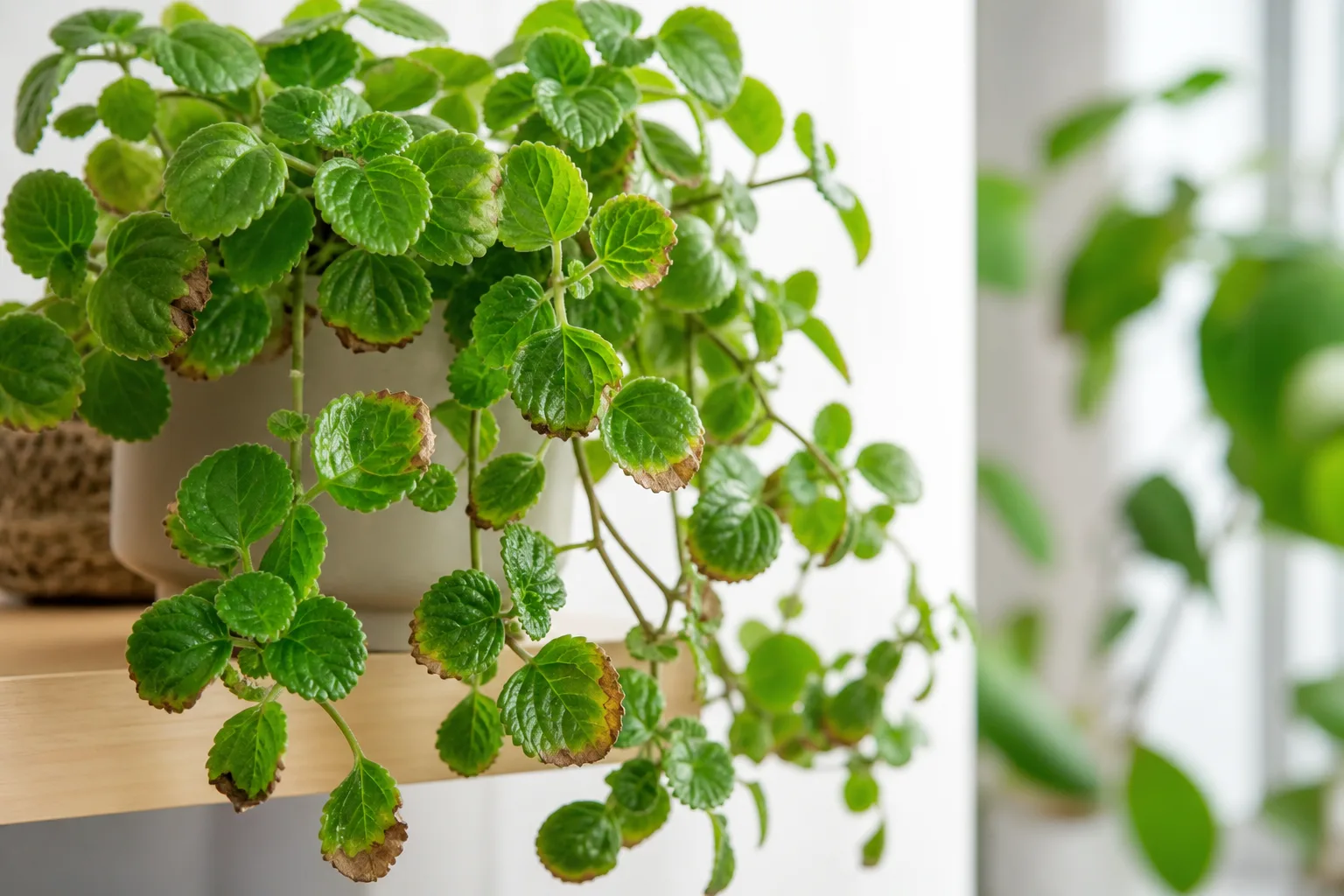
Low Humidity on Swedish Ivy: Causes, Checks & Fixes
This guide covers low humidity on Swedish Ivy. See also the general Low Humidity guide, watering, and light pages for this plant.
Low Humidity on Swedish Ivy: Causes, Checks & Fixes
Quick answer
Swedish Ivy (Plectranthus australis) is a forgiving trailing houseplant that thrives in average temperatures and moderate light year-round. It is not a humidity-demanding fern or calathea. Normal household air-often 30–50% in heated winter rooms-is usually fine. If leaf edges turn crisp or brown, the cause is more often uneven watering, accumulated fertilizer salts, hot air from a radiator, or spider mites on a sunny windowsill than dry air by itself.
First step: check your Swedish Ivy watering guide before changing humidity. When the top inch of soil feels dry, water thoroughly and empty the saucer. If the top inch is still damp while tips crisp, you likely have a water or drainage issue, not a humidity emergency. Only consider a humidifier after watering, light, and pests are stable and a hygrometer reads below 25% for weeks.
What low humidity looks like on Swedish Ivy
True humidity stress on Swedish Ivy is uncommon indoors. What owners often label “low humidity” usually shows up as:
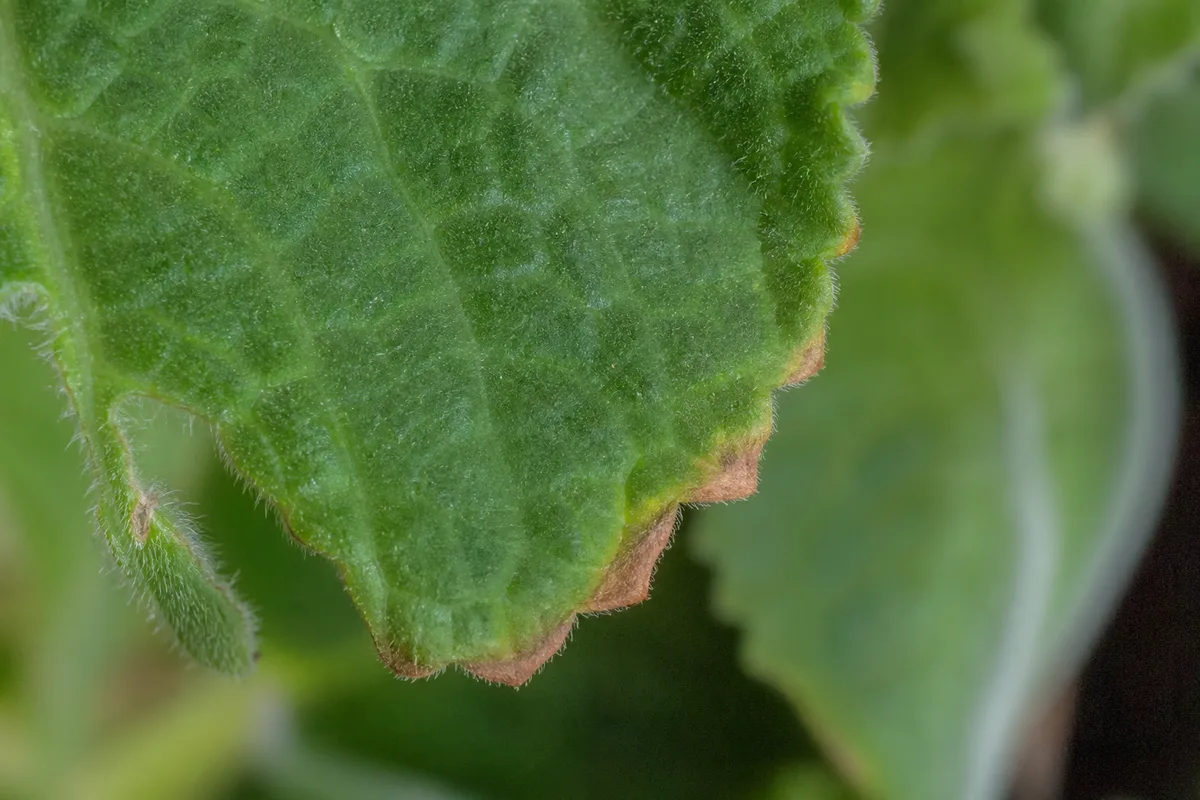
Low Humidity symptoms on Swedish Ivy - compare with healthy tissue on the same plant.
- Crisp brown edges on scalloped, glossy leaves, sometimes only on the side facing a hot window or heating vent
- Slight leaf shrink or dull color when underwatering overlaps with dry winter heating
- Random leaf drop on Swedish Ivy after a sudden move near an AC blast or drafty door
- Fine stippling, pale dots, or webby material on leaf undersides-spider mites, not dry air
Healthy Swedish Ivy leaves feel firm and glossy, with a trailing habit that stays full when you pinch stem tips regularly. Lower leaves naturally age and drop over time; that is not humidity damage. If new growth at stem tips stays plump and green while only older leaves crisp at the edges, look at salt buildup, uneven watering, or sun/heat stress before blaming dry air.
Because Swedish Ivy stores moisture in its semi-succulent stems, brief dry spells matter less than they do for thin-leaved tropicals. A plant that wilts dramatically with dry mix is showing water stress, not humidity stress.
Why Swedish Ivy rarely suffers from low humidity
Swedish Ivy evolved in warm, partly shaded conditions in southern Africa and is built for forgiving indoor care. Missouri Botanical Garden lists it as drought-tolerant with medium water needs-not the constant moisture profile of a maidenhair fern. Its thick stems and glossy leaves hold water, so brief dry air spells are less damaging than soggy soil left too long.
The plant detail target of 40–60% relative humidity matches what most heated or air-conditioned rooms already provide. Swedish Ivy does not need daily misting, pebble trays, or grouped-plant humidity boosts the way true humidity lovers do. University of Minnesota Extension notes that low winter humidity mainly troubles humidity-loving plants such as ferns-and recommends choosing plants that tolerate drier air when humidity is hard to raise. Swedish Ivy fits that tolerant group.
High humidity combined with poor airflow is the real environmental risk for Swedish Ivy overview. Wet soil plus stagnant moist air encourages root rot, fungus gnats, and cottony mealybug colonies on stems and leaf undersides. Dry air with good drainage is the safer side of the equation for Swedish Ivy.
Hot, dry indoor air near a south or west window creates a different problem: twospotted spider mites thrive in dry conditions and often attack houseplants before owners notice stippling or webbing. That pattern mimics humidity stress but needs pest treatment, not a humidifier alone.
How to confirm the real cause
Work through these checks in order before buying a humidifier:
- Pot weight and soil moisture. Lift the hanging basket or pot. A heavy pot with crisp tips suggests overwatering or salt stress, not dry air. A light pot with limp, dull leaves points to underwatering.
- Watering history. Water only when the top inch of mix is dry-often weekly in active growth and less in winter when growth slows. Watering on a calendar without checking soil is a common trigger for edge browning on trailing plants.
- Heat and draft placement. Note radiators, forced-air vents, and cold window glass touching foliage. Localized heat dries leaf edges faster than ambient room humidity alone.
- Fertilizer salts. White crust on the pot rim or mix surface means accumulated salts. Repeated use of softened or heavily fertilized water can injure roots and brown leaf tips.
- Pest inspection. Hold trailing stems up to light and check undersides for webbing, moving dots, or cottony clusters. UF/IFAS lists spider mites and mealybugs as common Swedish Ivy pests.
- Room humidity (optional). A hygrometer reading below 25% for weeks in winter may contribute to minor tip crisping on small or recently propagated plants-but only after the above causes are ruled out.
If soil dries normally between waterings, new stem tips stay glossy, and no pests appear, your Swedish Ivy is almost certainly fine in your current humidity.
First fix for Swedish Ivy
Stabilize watering before touching humidity. Water when the top inch of mix is dry, soak until water runs from the drainage hole, then empty the saucer so the plant never sits in standing water. Do not compensate for dry winter air by watering more often-that keeps roots wet while leaves look crisp, a pattern that leads to rot faster than dry air ever will.
If you fertilize during spring and summer, flush the pot with plain water once in early spring to rinse salt buildup. Move the basket back from hot glass if leaves scorch on one side. If you find spider mites, rinse leaf undersides in the sink with a firm stream of water and treat the infestation-periodic washing dislodges mites and is a primary control on houseplants.
Trim fully brown leaf tips only after the underlying cause is fixed. Partial edge damage is cosmetic; the leaf will not regreen, but new leaves should emerge glossy once care is steady.
Lookalike symptoms to rule out
| What you see | More likely cause than low humidity |
|---|---|
| Soft, mushy stems with wet soil | Overwatering or root rot |
| Limp, dull leaves, light pot, dry mix | Underwatering |
| Crisp patches on sun-facing leaves only | Heat or sun scorch near hot glass |
| Yellow lower leaves dropping slowly | Normal aging, or overwatering if soil stays damp |
| Stippling + fine webbing on undersides | Spider mites in hot dry window air |
| White crust on soil surface | Fertilizer or softened-water salt buildup |
| Cottony white fluff on stems | Mealybugs-Swedish Ivy is often among the first plants they colonize |
Underwatering and overwatering both cause wilting on Plectranthus. The pot weight and whether the top inch is dry or soggy tell you which direction to fix.
Mistakes to avoid
Do not mist Swedish Ivy leaves daily hoping to fix crisp tips-surface moisture offers only fleeting relief, can encourage foliar disease, and does nothing for a plant whose real problem is uneven watering. Do not run a humidifier next to a Swedish Ivy in standard potting mix if soil already stays damp for days; the extra ambient moisture slows dry-down and increases rot risk.
Do not repot or fertilize a stressed plant to “help it recover” from dry air. Fix watering and light first. Do not place pebble trays so water touches the pot base-roots need oxygen, and wicking wetness from below mimics overwatering. Do not ignore crisp edges when soil stays soggy for days-that pattern is rot risk, not humidity stress.
How to prevent humidity-related stress
Hang or place Swedish Ivy where it gets Swedish Ivy light guide with airflow around the pot-not jammed against a radiator or AC vent. Use well-drained potting media and a container with drainage holes so the root zone dries predictably. Water based on soil dry-down, not a weekly habit, and cut back when winter growth slows.
Keep the basket away from cold window glass in winter; leaf contact with cold glass damages tissue that looks like dryness. If your home runs extremely dry (below 25% for extended periods) and a young cutting shows persistent tip crisping despite perfect watering, a small room humidifier-not misting-helps more reliably than a pebble tray. Mature established plants rarely need even that.
Pinch stem tips after flowers fade to keep the plant bushy-leggy, stressed growth in weak light is more vulnerable to mites than compact, well-lit foliage.
When to worry
Dry air alone rarely kills Swedish Ivy. Worry when:
- Stems soften at the soil line while mix stays wet-root rot, not humidity
- Most leaves drop within days after a care change, with sour-smelling soil
- Stippling and webbing spread up trailing stems-untreated spider mites can defoliate a basket
- New growth stays limp for weeks despite corrected watering-inspect roots for rot or a pot that never dries
Mild brown tips on a few older leaves with firm new stem tips and dry soil on schedule is cosmetic. Steady trailing growth and glossy new leaves mean the plant is healthy in your current air.
Conclusion
Low humidity is one of the least common problems on Swedish Ivy. This trailing plant tolerates drought and average indoor conditions without special humidity gear. When edges crisp, diagnose watering, salts, heat placement, and pests first. Keep drainage sharp, skip the daily misting bottle, and judge recovery by glossy new stem tips-not by whether a humidifier is running.
When to use this page vs other Swedish Ivy guides
- Swedish Ivy watering guide - Use for routine moisture checks before assuming low humidity is the main issue.
- Swedish Ivy problems hub - Browse all 18 common issues on this species.
- Leaf Drop on Swedish Ivy - Different entry point when symptoms overlap with low humidity.