Mealybugs on Syngonium Milk Confetti: Signs and Treatment
Quick answer
Isolate the Syngonium Milk Confetti, then inspect leaf joints, petioles, stem nodes, and leaf undersides for white wax with insects or eggs underneath. Remove visible colonies carefully, test any treatment on a small area first, and recheck nearby plants because mealybugs hide in protected spots.
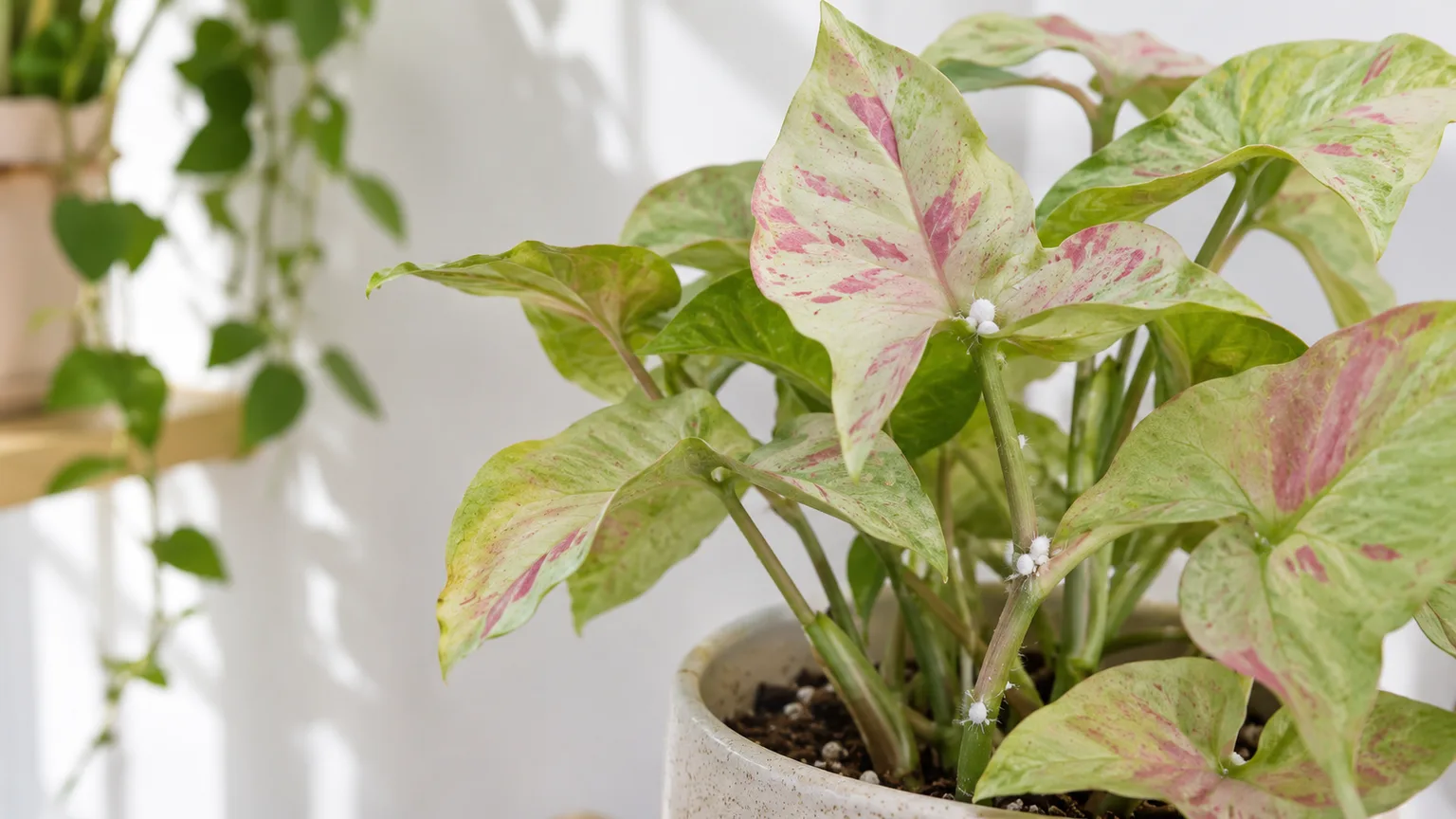
Mealybugs on Syngonium Milk Confetti: Identify and Treat Them
This guide covers mealybugs on Syngonium Milk Confetti. See also the general Mealybugs guide, watering, and light pages for this plant.
Mealybugs on Syngonium Milk Confetti: Identify and Treat Them
- Search intent: identify and manage mealybugs on Syngonium Milk Confetti.
- Specific angle: show where to inspect around the arrow-shaped leaves and long petioles without claiming this cultivar is uniquely susceptible.
- Reader outcome: confirm the pest, isolate the plant, remove visible colonies carefully, and monitor before escalating treatment.
- Mealybugs on Syngonium Milk Confetti: Signs and Treatment
- Syngonium Milk Confetti Mealybugs: Where to Look and What to Do
- How to Find and Treat Mealybugs on Syngonium Milk Confetti
Mealybugs on Syngonium Milk Confetti: Signs and Treatment
- Find cottony mealybugs on Syngonium Milk Confetti, isolate the plant, remove small colonies carefully, and monitor for recurrence.
- Learn where mealybugs hide on Syngonium Milk Confetti and how to confirm, remove, and monitor them safely.
- White cottony clusters on your syngonium? Check leaf joints, confirm the pest, and follow a careful removal plan.
Find cottony mealybugs on Syngonium Milk Confetti, isolate the plant, remove small colonies carefully, and monitor for recurrence.
- H1: Mealybugs on Syngonium Milk Confetti: Identify and Treat Them
- H2: What mealybugs look like
- H2: Where to inspect this syngonium
- H2: How to remove a small infestation
- H2: Signs and lookalikes
- H2: Prevent mealybugs from returning
- H2: When to inspect roots
- H2: Related Syngonium Milk Confetti guides
Mealybugs on Syngonium Milk Confetti: Identify and Treat Them
Quick answer
Separate the plant from nearby houseplants, then inspect the bases of its leaf stalks, stem nodes, leaf undersides, and the crown. Mealybugs look like white cottony wax; part the covering to check for a soft insect or eggs. Remove small visible colonies, test any treatment on one small area first, and keep checking the plant and its neighbors.
Syngonium Milk Confetti has overlapping leaves and petioles that can hide insects from a quick glance. That makes a careful inspection useful, but it does not mean this cultivar is more susceptible than other houseplants. Mealybugs commonly feed in protected plant crevices and can infest indoor plants. (UC IPM describes their sheltered feeding sites; the RHS describes mealybugs on houseplants)
What mealybugs look like
Look for small, soft-bodied insects covered in white wax, often grouped around a cottony egg sac. The insects or eggs may sit beneath the fluffy material, so inspect the spot closely instead of treating every white fleck as a pest. Mealybugs can be confused with other wax-producing insects, including some scales and woolly aphids. (RHS mealybug identification; UC IPM on identification and lookalikes; Gardening Know How on mealybug appearance)
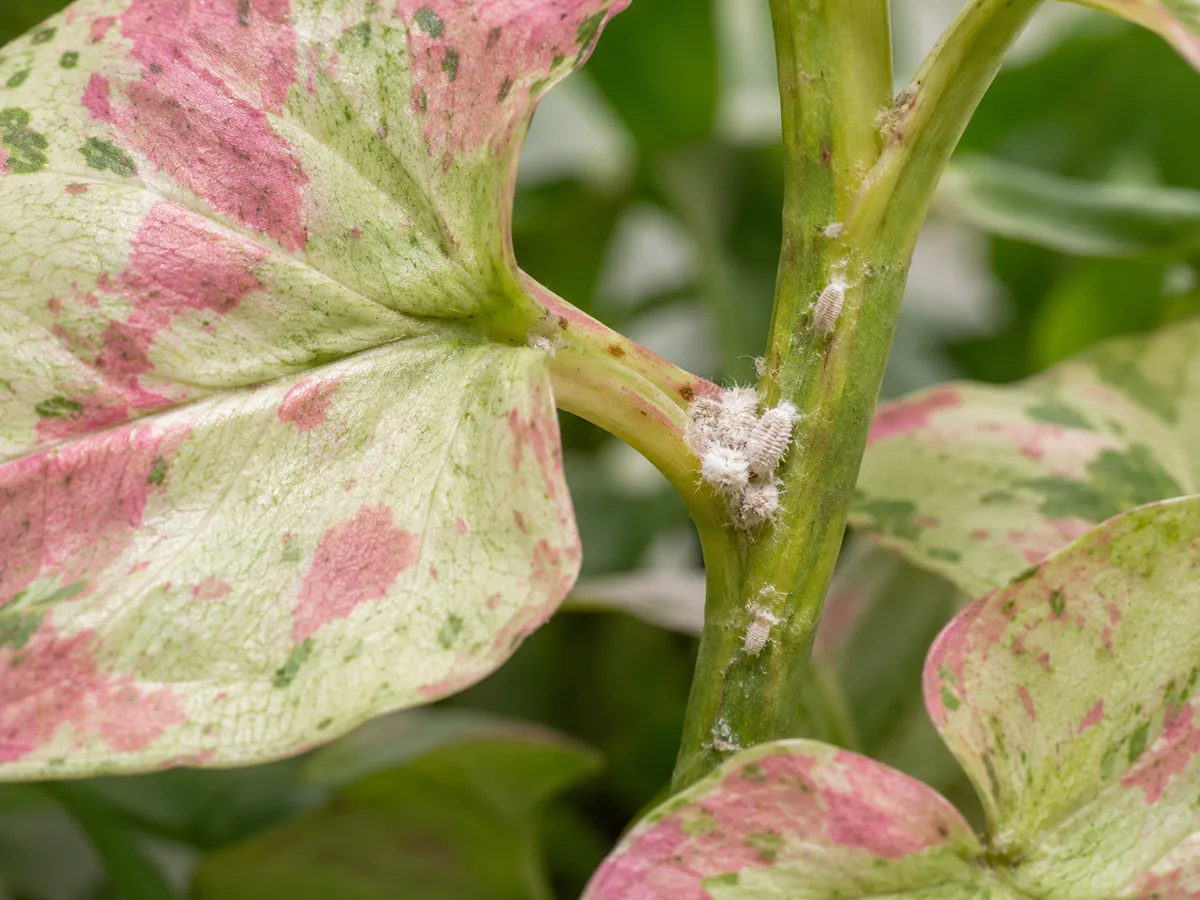
A colony can sit where a leaf stalk meets the stem, under the white wax it produces.
Sticky leaves, pot rims, or nearby surfaces can be coated with honeydew, a sugary waste from sap-feeding insects. Larger colonies can weaken a plant, slow growth, or leave sooty mold growing on the sticky residue. Honeydew supports a pest diagnosis, but look for the insect itself as well. (UC IPM on honeydew and damage; Epic Gardening on mealybug damage)
Where to inspect this syngonium
Use a bright light and check each petiole base, stem node, leaf underside, and the crown. Move leaves gently to view where they overlap; avoid pulling on the petioles. Also inspect the soil line and the pot rim. Mealybugs can occur on roots, but unpotting is most useful when an infestation repeatedly returns or the plant weakens despite removing visible insects. (RHS on protected sites and root mealybugs; UC IPM on hidden feeding sites)
Move the pot away from other plants while you inspect it. Check nearby leaves, shelves, and the outer surface of neighboring pots. The RHS recommends inspecting new plants and keeping them separate for a period where possible; UC IPM also recommends checking plants before bringing them indoors. (RHS houseplant pest prevention; UC IPM monitoring and prevention)
How to remove a small infestation
For a few visible insects, lift them off with a damp cotton swab or soft tissue and discard the material in a sealed bag. You can also rinse an exposed area with a gentle stream of water if the plant is stable and the pot drains freely; support the stems so the pressure does not break them. Reinspect the same joints afterward. (UC IPM on hand removal and monitoring; Gardening Know How on water-pressure control)
For a persistent spot, UC IPM describes careful use of isopropyl alcohol at 70% or less on serious houseplant infestations, with a small-area test first to check for leaf burn. On this syngonium, dab the pest rather than soaking the foliage, then wait and inspect the test area before continuing. Do not combine several treatments at once. (UC IPM alcohol-treatment guidance)
Contact products such as insecticidal soap and horticultural oil may suppress young mealybugs, but wax and hiding places make control harder. Follow the product label, test a small area for plant injury, and remember that one treatment may not eliminate every insect. (UC IPM on soap, oil, and phytotoxicity tests; UC IPM on the protection offered by mealybug wax)
Signs and lookalikes
- Mealybugs: white cottony wax, often with insects or eggs underneath; sticky honeydew may accompany a larger colony.
- Scale insects: may have a waxy cover, but the visible insects are typically attached as small bumps rather than cottony clusters. Check beneath the covering before choosing a treatment.
- Spider mites: often cause fine pale stippling or mottling; webbing may appear in heavier infestations. That pattern differs from a cottony mealybug colony. (RHS indoor pest symptom guide; UC IPM on mealybug lookalikes)
- Dried water or residue: usually has no insect or egg mass under it and does not spread along petiole joints.
If you see fine stippling rather than cottony wax, compare with spider mites on Syngonium Milk Confetti. For other symptoms, open the Syngonium Milk Confetti problem guide or use the Pest Identifier Tool.
Prevent mealybugs from returning
Inspect new plants before adding them to your collection and keep them apart when practical so hidden insects can be noticed. Remove dead leaves and pruning debris, and check nearby plants during follow-up visits. These steps reduce hiding places and help catch a small population before it spreads. (RHS quarantine and hygiene advice; UC IPM inspection and monitoring guidance)
Keep the syngonium’s normal care steady while you treat the pest. Mealybugs are sap-feeding insects, not a signal to water more or fertilize the plant. Follow the Syngonium Milk Confetti care overview and watering guide for routine care.
When to inspect roots
Do not repot a firm, otherwise stable plant just because you found a few mealybugs on the leaves. If colonies keep returning, or the plant declines while visible pests are being controlled, inspect the soil line and root ball for waxy insects. Some mealybug species feed on roots, but yellowing or wilting can also have other causes; compare with the root rot guide before disturbing the root system. (RHS on root-feeding mealybugs; UC IPM on mealybug damage)
If most stems are heavily infested and careful removal is not reducing the population, prune the worst-affected portions or consider replacing the plant. The RHS notes that disposing of a severely affected plant can sometimes be simpler than trying to eliminate a large infestation. (RHS management advice)
Related Syngonium Milk Confetti guides
Use the Syngonium Milk Confetti problems hub to compare symptoms. For general mealybug information, see the mealybug guide.
FAQs
How can I confirm mealybugs on Syngonium Milk Confetti?
Look for cottony white wax with a soft insect or egg mass beneath it, especially at leaf joints and stems. Sticky honeydew may also be present.
Where should I look for mealybugs on this syngonium?
Check petiole bases, stem nodes, leaf undersides, the crown, and places where leaves overlap. Gently move the foliage so you can see sheltered surfaces.
Can I use rubbing alcohol on Syngonium Milk Confetti?
UC IPM describes cautious spot treatment with 70% or less isopropyl alcohol for serious houseplant infestations. Test one small area first and watch for leaf damage before treating further.
Should I repot after finding mealybugs?
Not automatically. Remove visible insects and monitor first. Check roots if pests return repeatedly or the plant declines despite controlling visible colonies.
How do I stop mealybugs spreading to nearby plants?
Separate the affected pot, inspect nearby plants, and check new plants before grouping them with your collection. Recheck the syngonium regularly because insects can remain hidden.