Overwatering Syngonium Milk Confetti: What to Check
Quick answer
If Syngonium Milk Confetti is drooping or yellowing while its mix is still wet, first lift the nursery pot out of any cachepot and empty standing runoff. Check moisture again before watering; if the mix remains wet and several leaves are declining, inspect the roots for dark, soft tissue rather than assuming every yellow leaf means root rot.
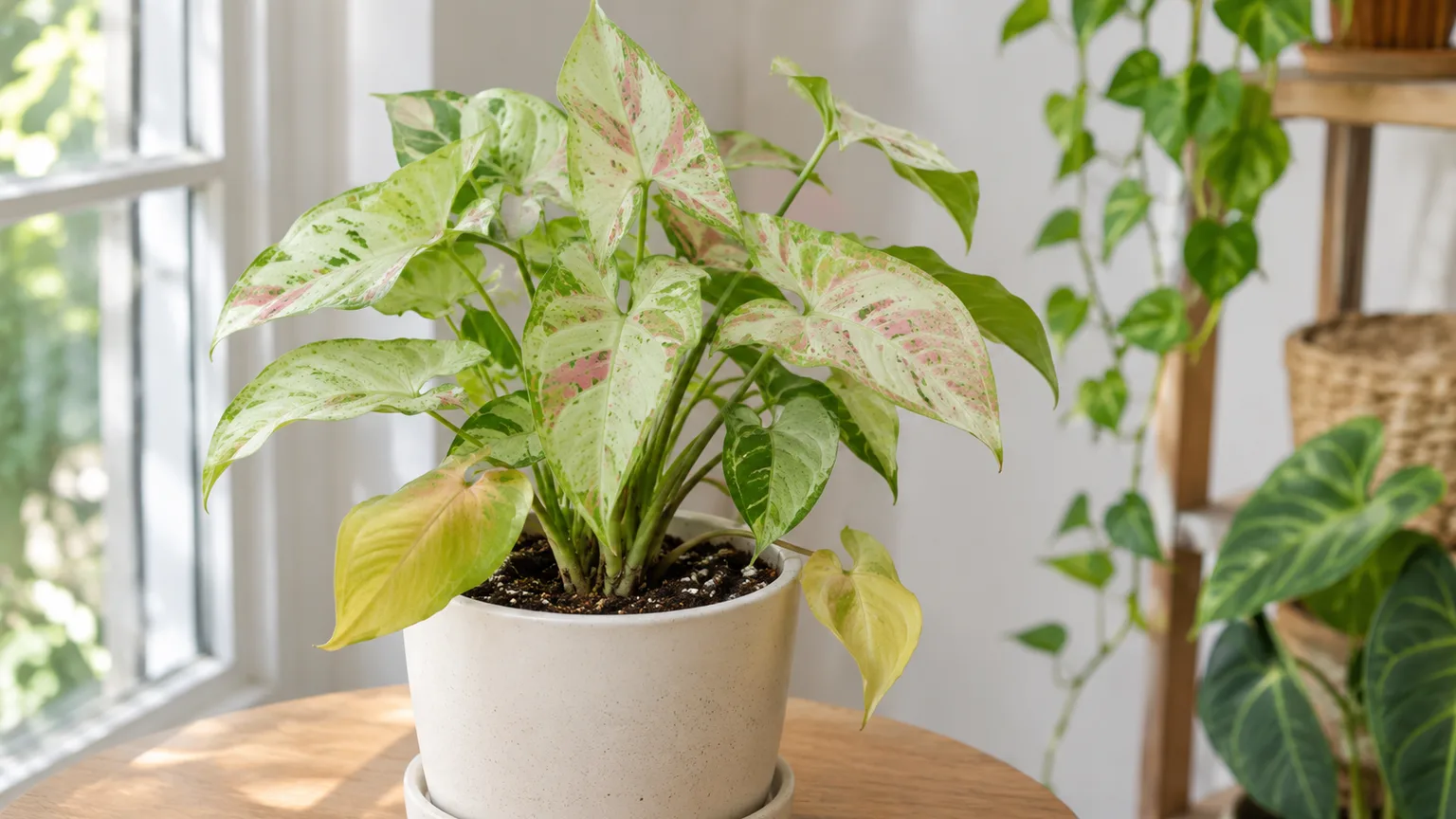
Overwatering on Syngonium Milk Confetti: Causes, Checks & Fixes
This guide covers overwatering on Syngonium Milk Confetti. See also the general Overwatering guide, watering, and light pages for this plant.
Overwatering on Syngonium Milk Confetti: Causes, Checks & Fixes
Search intent
Readers want to know whether yellowing or drooping on Syngonium Milk Confetti comes from excess water, how to check the root zone, and whether the plant needs drying or repotting.
Title options
- Overwatering Syngonium Milk Confetti: What to Check First
- Overwatering on Syngonium Milk Confetti: Causes, Checks & Fixes
- Save a Wet, Drooping Milk Confetti: Drainage and Root Checks Best: Overwatering Syngonium Milk Confetti: What to Check First — it pairs the plant and problem with the reader’s first practical decision.
Description options
- Check damp mix, drainage, and roots to tell overwatering from drought on Syngonium Milk Confetti, then choose a measured first fix.
- Yellow leaves on a wet Milk Confetti? Check the pot and roots before watering again or repotting this variegated arrowhead plant.
- Learn when wet soil is harming Syngonium Milk Confetti, what roots can confirm, and how to prevent another overwatering cycle. Best: Check damp mix, drainage, and roots to tell overwatering from drought on Syngonium Milk Confetti, then choose a measured first fix.
Keywords
- Primary: overwatering Syngonium Milk Confetti
- Supporting: Milk Confetti yellow leaves, Syngonium drooping in wet soil, Syngonium root rot signs, arrowhead plant soggy soil, Syngonium watering checks, Milk Confetti drainage, overwatered variegated Syngonium, Syngonium brown mushy roots
Relevant entities
Syngonium podophyllum, Milk Confetti cultivar, arrowhead vine, variegated leaves, cachepot, drainage hole, root ball, water-saturated mix, root rot, indirect light.
Questions readers ask
- Does overwatering make Syngonium leaves droop?
- How wet should Milk Confetti soil be?
- What do overwatered Syngonium roots look like?
- Should I repot after one watering mistake?
- Why does the plant wilt when the soil is wet?
- How does winter change its watering needs?
E-E-A-T signals
Use the moisture level and pot weight to confirm the pattern before changing care; rely on extension and botanical references for root symptoms and seasonal watering context; avoid promising that yellowed leaves will recover.
Snippet opportunities
- Paragraph: wet soil with ongoing droop
- List: what to inspect before watering again
- Definition: root rot signs versus temporary wet mix
Helpful content checklist
This guide gives Milk Confetti owners a root-zone check suited to a climbing, variegated arrowhead plant, separates wet-root stress from lookalikes, and avoids unnecessary early repotting.
- Overwatering Syngonium Milk Confetti: What to Check First
- Overwatering on Syngonium Milk Confetti: Causes and Fixes
- Wet Soil and Yellow Leaves on Milk Confetti: What to Do
Overwatering Syngonium Milk Confetti: What to Check First
- Check damp mix, drainage, and roots to tell overwatering from drought on Syngonium Milk Confetti, then choose a measured first fix.
- Yellow leaves on a wet Milk Confetti? Check the pot and roots before watering again or repotting this variegated arrowhead plant.
- Learn when wet soil is harming Syngonium Milk Confetti, what roots can confirm, and how to prevent another overwatering cycle.
Check damp mix, drainage, and roots to tell overwatering from drought on Syngonium Milk Confetti, then choose a measured first fix.
- H1: Overwatering on Syngonium Milk Confetti: Causes, Checks & Fixes
- H2: Quick answer
- H2: What overwatering looks like on Milk Confetti
- H2: Why this climbing aroid’s pot may stay wet
- H2: How to confirm overwatering before changing care
- H2: The first fix: remove standing runoff
- H2: When to inspect roots and repot
- H2: Recovery and damaged leaf limits
- H2: Lookalikes to rule out
- H2: Prevent another wet-root cycle
- H2: When to use this page vs other Syngonium Milk Confetti guides
- H2: Related Syngonium Milk Confetti guides
- H2: Related tool
Overwatering on Syngonium Milk Confetti: Causes, Checks & Fixes
Quick answer
If your Syngonium Milk Confetti is drooping or yellowing while the mix is still wet, first take the nursery pot out of its cachepot and empty any standing runoff. Let the pot drain fully. Then check the mix again before watering; if it stays wet and several leaves continue to decline, inspect the roots instead of assuming a yellow leaf alone proves root rot.
Milk Confetti is a variegated cultivar of Syngonium podophyllum, an arrowhead vine that grows as a warm-climate shrub or climbing vine. Species-level references are the best available care basis for the cultivar.
What overwatering looks like on Milk Confetti
Overwatering is a pattern, not a single leaf color. Watch for the pot staying heavy and the mix remaining wet, paired with drooping, yellowing, or a general loss of vigor. Connecticut’s agricultural experiment station notes that water-saturated mix and overwatering can accompany slow decline or collapse; affected roots may be brown to black and mushy. (Connecticut Agricultural Experiment Station on houseplant overwatering)
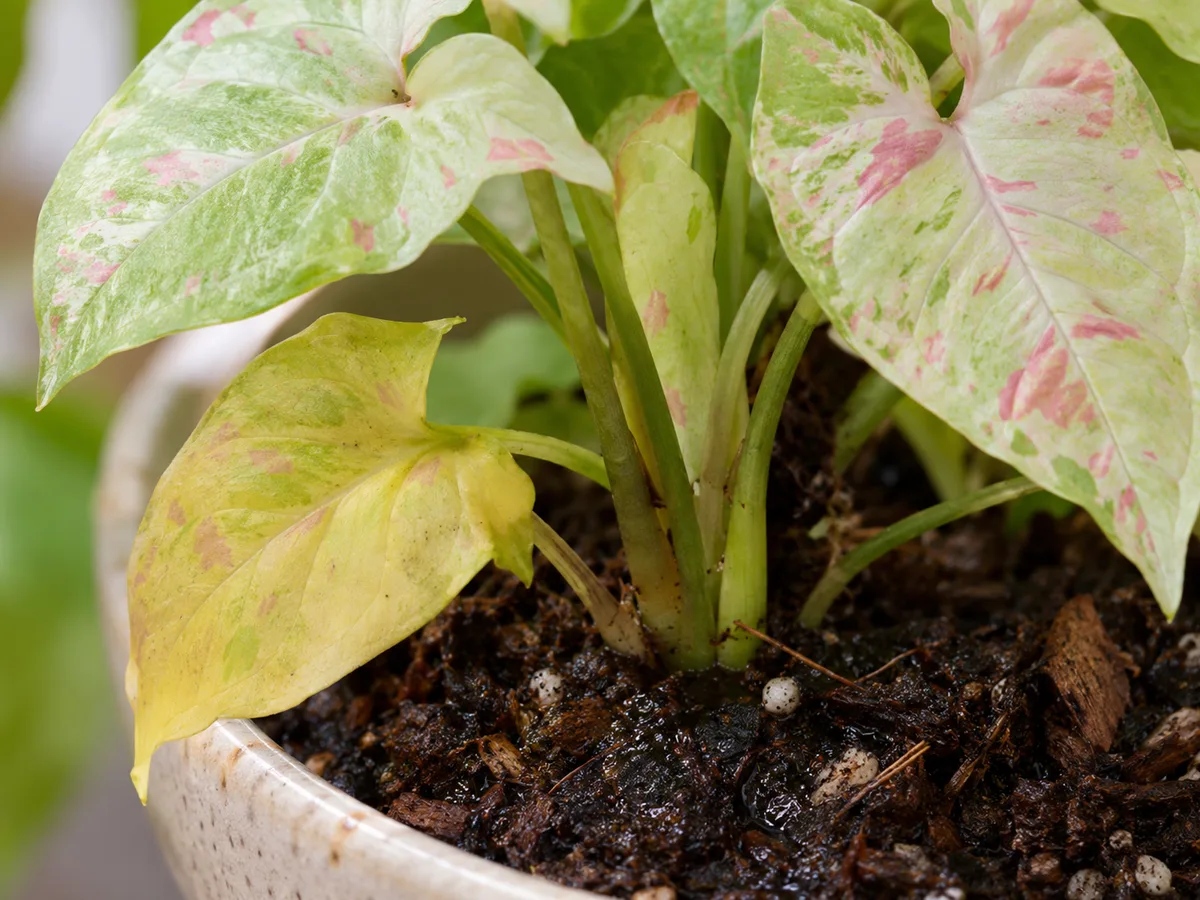
Yellowing lower leaves plus persistently damp mix warrant a moisture and drainage check; confirm root condition before calling it root rot.
Milk Confetti has arrow-shaped juvenile leaves and can develop a climbing or trailing habit as it matures. That means a few older leaves near the base may be less informative than the condition of the newest leaves and the stem bases. Pot & Leaf notes that normal aging can yellow older lower leaves, so compare the symptom with the soil and recent watering rather than treating every yellow leaf. (NC State Extension on Syngonium growth habit; Pot & Leaf’s Syngonium symptom guide)
Why this climbing aroid’s pot may stay wet
The plant’s water use changes with the room. Missouri Botanical Garden recommends regular watering during active growth and less from fall through late winter; a Milk Confetti in a cooler, dimmer room may therefore use water more slowly than one in warm, bright indirect light. Do not carry a summer rhythm into a quieter season without checking the mix. (Missouri Botanical Garden’s seasonal watering guidance)
Also check the container setup. A nursery pot left in runoff, a blocked drainage hole, a dense or collapsed mix, or a pot much larger than the root ball can keep the lower mix wet after the surface looks dry. Missouri Botanical Garden recommends a soil-based potting mix for the species, while Planet Houseplant’s Syngonium guide discusses drainage and mix texture as practical factors in avoiding waterlogged roots. (Missouri Botanical Garden’s potting guidance; Planet Houseplant on overwatered Syngonium)
How to confirm overwatering before changing care
Check the moisture at more than one depth. Feel the top inch, then use a wooden skewer or finger near the side of the pot to see whether the lower root zone is still damp. Lift the pot and compare its weight after a normal watering and as it dries; this gives you a plant-specific reference instead of a fixed calendar. Planet Houseplant recommends checking soil and roots because wet soil and dry roots point to different problems. (Planet Houseplant’s Syngonium diagnosis steps)
Next, inspect the container: make sure a drainage hole is open and that the inner pot is not sitting in water inside a decorative cover. If the plant is only showing one yellow lower leaf and the mix dries normally, monitor new growth before disturbing the roots. If the mix stays saturated for days and decline spreads, or the lower stems soften, root inspection is justified.
The first fix: remove standing runoff
Take the inner pot out of any cachepot and pour away collected water. Let it drain freely before returning it to the cover pot, and keep the drainage hole clear. This is the first correction because a plant should not sit in runoff; the Connecticut Agricultural Experiment Station specifically advises avoiding standing water for houseplants. (Connecticut Agricultural Experiment Station on standing water)
After that, wait for the surface to begin drying before checking again. Do not add water just because the leaves droop: a plant with damaged roots can wilt while its mix is wet. For general watering mechanics, see the overwatering guide; for Milk Confetti’s own timing and moisture checks, use the Syngonium Milk Confetti watering guide.
When to inspect roots and repot
Do not unpot the plant for one yellow leaf or one recent heavy watering. Slide it out carefully if the pot remains wet for an unusually long time and symptoms worsen, or if the stem bases soften. Healthy roots should feel firm; roots that are brown or black and mushy support a rot diagnosis, though discoloration alone should be interpreted with the plant’s overall condition.
If you find only a small amount of soft, damaged root tissue, trim those sections with clean scissors and repot into a clean pot with an open drainage hole and fresh, airy mix. Keep intact roots and firm stem nodes; avoid cutting healthy climbing stems just to make the plant look tidy. If most roots and the base have collapsed, recovery is uncertain, and taking a healthy stem cutting may be a backup only if firm, pest-free nodes remain. Follow the cultivar’s soil guidance when choosing a mix, and use the root-rot guide in the lookalike section for a more focused diagnosis.
Recovery and damaged leaf limits
Yellow or translucent leaves that have already lost structure may not return to their former color. Remove only leaves that are fully yellow, collapsed, or decaying; keep partly green leaves while the root system stabilizes. Judge recovery by firm stems, a mix that dries at a reasonable pace, and new leaves that open without progressive yellowing.
Give the plant bright indirect light and stable warmth while it recovers. NC State describes Syngonium as a warm-setting tropical plant and warns against full sun, which can burn or bleach foliage; do not move a stressed Milk Confetti abruptly into direct sun to force faster drying. Compare with the Milk Confetti light guide before changing its position. (NC State Extension’s growing conditions)
Lookalikes to rule out
- Underwatering: the mix is dry and the pot is light; compare with underwatering on Syngonium Milk Confetti.
- Normal lower-leaf aging: one older leaf yellows while the rest of the plant remains firm and the mix dries normally.
- Low light or seasonal slowdown: growth slows in a dimmer or cooler room, which also reduces how quickly the pot dries; the Milk Confetti light guide helps assess the location.
- Root rot: wet mix plus progressive decline and soft, dark roots calls for the separate root rot guide.
Prevent another wet-root cycle
Use a pot only modestly larger than the root ball, keep its drainage opening clear, and empty runoff after watering. Recheck moisture before each watering; a compact juvenile Milk Confetti may dry at a different pace from a mature vine, and room temperature, light, and pot size also matter. For the plant’s full routine, start with the Syngonium Milk Confetti overview.
During the active growing season, water thoroughly once the mix has begun to dry, then let excess drain. In fall and winter, check more cautiously because the botanical garden recommends reducing watering through the cooler, less active part of the year. Do not compensate for weak growth with fertilizer while the root zone is still wet.
When to use this page vs other Syngonium Milk Confetti guides
Use this page when the mix stays wet and decline appears with it. If the soil is dry, start with the underwatering guide; if roots are already soft and dark, use the root-rot guide linked below. The problems hub helps compare other symptoms before you change more than one part of the care routine.
Related Syngonium Milk Confetti guides
The watering guide covers routine moisture checks, and the soil guide explains drainage and mix structure. For general root damage, see root rot on Milk Confetti; for a broader plant overview, use the care overview.
Related tool
If the roots are soft or dark and you are unsure whether the problem has progressed beyond temporary wet soil, use the Root Rot Risk Checker. It helps organize the symptoms; it does not replace checking the roots.
FAQ 1 Question: How do I know if my Syngonium Milk Confetti is overwatered? Answer: Look for mix that stays wet together with drooping or yellowing that continues. A single aging lower leaf is not enough; root condition and the pot’s dry-down pattern give stronger evidence.
FAQ 2 Question: Should I water less often in winter? Answer: Usually, yes: Missouri Botanical Garden advises reducing watering for Syngonium from fall through late winter. Still check this Milk Confetti’s mix, because a warm bright room dries differently from a cool, dim one.
FAQ 3 Question: Can damaged Milk Confetti recover after overwatering? Answer: It can if enough roots and stem bases remain firm and the mix drains. Yellow leaves may stay damaged, so look for stable stems and healthy new leaves instead of waiting for old foliage to turn green.
FAQ 4 Question: Should I repot after accidentally watering too much? Answer: Not automatically. First remove runoff and check whether the mix dries; unpot only when it stays saturated and the plant continues declining, or when stems soften.
FAQ 5 Question: What pot helps prevent overwatering Syngonium Milk Confetti? Answer: Use a pot with an open drainage hole that is close to the root ball’s size. Pair it with a soil-based, well-draining mix and empty the cachepot after watering.