Yellow Leaves on Syngonium Milk Confetti: Causes and Fixes
Quick answer
Yellow leaves are a symptom, not a diagnosis. If one oldest lower leaf yellows while the rest of your Syngonium Milk Confetti looks healthy, monitor it. If several leaves change color, check the soil, drainage, light exposure, recent moves, and leaf undersides before changing care.
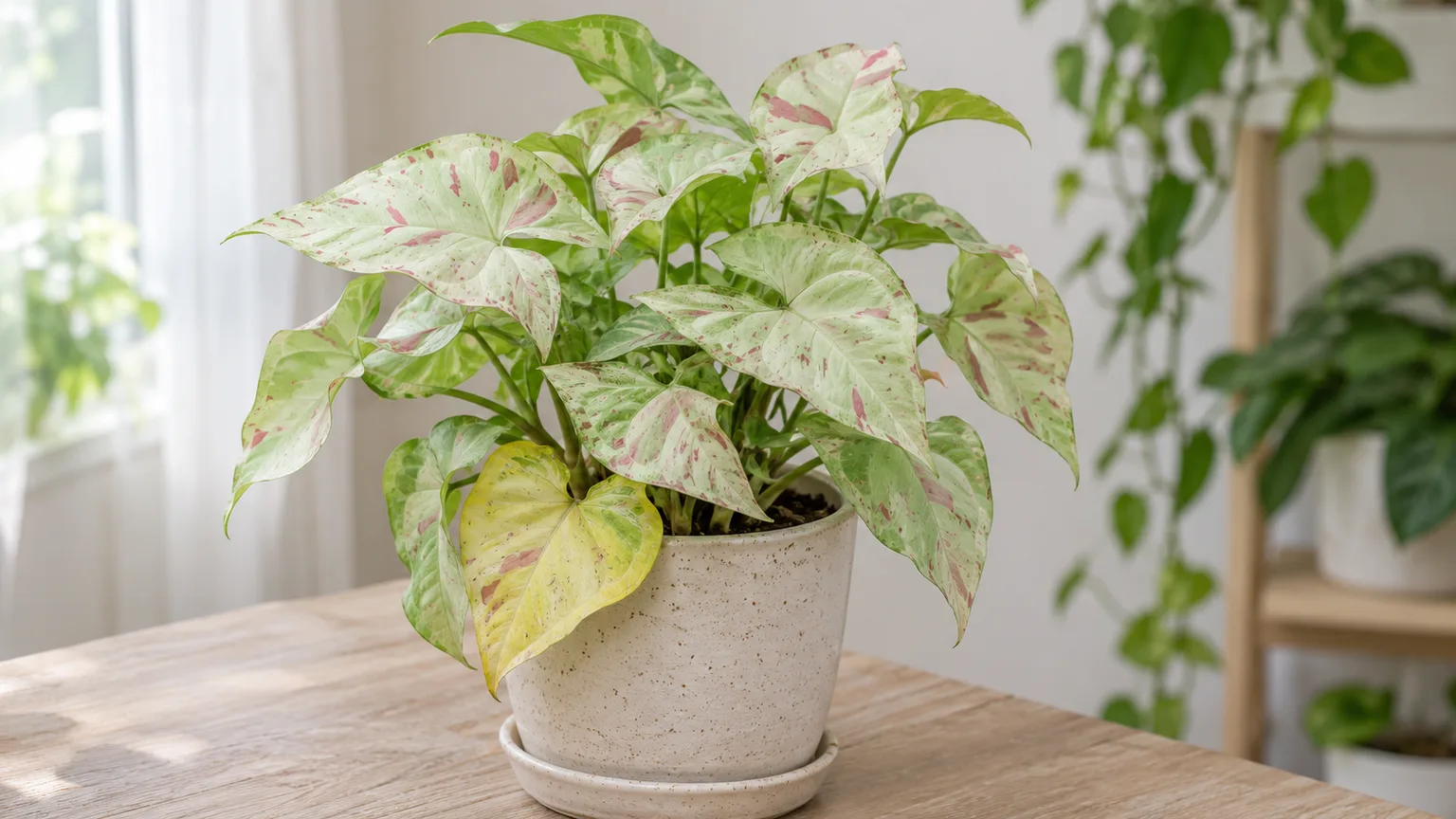
Yellow Leaves on Syngonium Milk Confetti: Causes, Checks & Fixes
This guide covers yellow leaves on Syngonium Milk Confetti. See also the general Yellow Leaves guide, watering, and light pages for this plant.
Yellow Leaves on Syngonium Milk Confetti: Causes, Checks & Fixes
- Search intent: identify why Syngonium Milk Confetti leaves are yellowing and choose a safe first check.
- Specific angle: separate the cultivar’s natural pink-white-mint pattern from new yellowing, then use soil moisture and leaf pattern to narrow the cause.
- Reader outcome: diagnose from evidence, make one proportionate adjustment, and monitor new growth.
- Yellow Leaves on Syngonium Milk Confetti: Causes and Fixes
- Why Is My Syngonium Milk Confetti Turning Yellow?
- Syngonium Milk Confetti Yellow Leaves: What to Check
Yellow Leaves on Syngonium Milk Confetti: Causes and Fixes
- Check whether yellow leaves on Syngonium Milk Confetti point to wet roots, dry soil, strong sun, pests, or normal aging.
- Learn how to distinguish Milk Confetti’s pink variegation from yellowing and check the most likely care causes.
- Yellowing leaves? Use the soil, leaf pattern, light, and pest clues to choose a safe first fix for Syngonium Milk Confetti.
Check whether yellow leaves on Syngonium Milk Confetti point to wet roots, dry soil, strong sun, pests, or normal aging.
- H1: Yellow Leaves on Syngonium Milk Confetti: Causes, Checks & Fixes
- H2: Read the leaf pattern before changing care
- H2: Check the potting mix and roots
- H2: Review light and recent changes
- H2: Inspect for pests
- H2: Choose a first fix and track recovery
- H2: Related Syngonium Milk Confetti guides and tools
- H2: Frequently asked questions
Yellow Leaves on Syngonium Milk Confetti: Causes, Checks & Fixes
Quick answer
Yellowing is a symptom, not a diagnosis. On Syngonium Milk Confetti, first separate the cultivar’s normal pink, white, and mint coloring from a new yellow cast. If one oldest lower leaf yellows while the rest of the plant stays firm and keeps growing, monitor it. If several leaves change, check soil moisture and drainage, recent light changes, and the leaf undersides before adding water or fertilizer. The same symptom can follow different care problems, so compare the evidence before acting. (Pot & Leaf’s Syngonium symptom guide; Bob Vila’s guide to yellow houseplant leaves)
Read the leaf pattern before changing care
Start by asking how many leaves are affected, where they sit, and what the rest of the plant is doing.
- One oldest lower leaf, otherwise healthy plant: A single older leaf can yellow as it ages. If nearby leaves remain firm, the growing tip looks healthy, and no new yellowing appears, watch rather than changing the whole care routine. (Pot & Leaf’s notes on an oldest Syngonium leaf)
- Several yellow leaves with damp mix: Check for overwatering, especially if the leaves feel soft, the stems are losing firmness, or the pot remains heavy. Yellow or mushy leaves, wilting, and soil that stays wet are signs that can occur when a plant is overwatered. (The Family Handyman’s overwatering signs)
- Yellowing with a dry pot and crisp edges: Drought stress becomes more likely when the mix is dry below the surface and leaves feel limp, papery, or crispy. A dry plant may also droop, so do not treat drooping alone as proof that the soil needs water. (Pot & Leaf’s dry-soil comparison)
- Bleached or scorched patches on the window side: Check whether direct sun reaches the leaves for long periods. NC State describes Milk Confetti’s natural pink, white, and mint coloring and lists dappled light or partial shade for Syngonium; it also warns that full sun can burn or bleach the foliage. (NC State’s Syngonium profile and cultivar description)
- Fine stippling, webbing, sticky residue, or cottony clusters: Look for pests rather than treating yellowing as a watering problem. Houseplant pests can contribute to yellow leaves, and checking leaf undersides can reveal activity that is easy to miss from above. (Bob Vila’s advice on pest checks for yellow leaves)
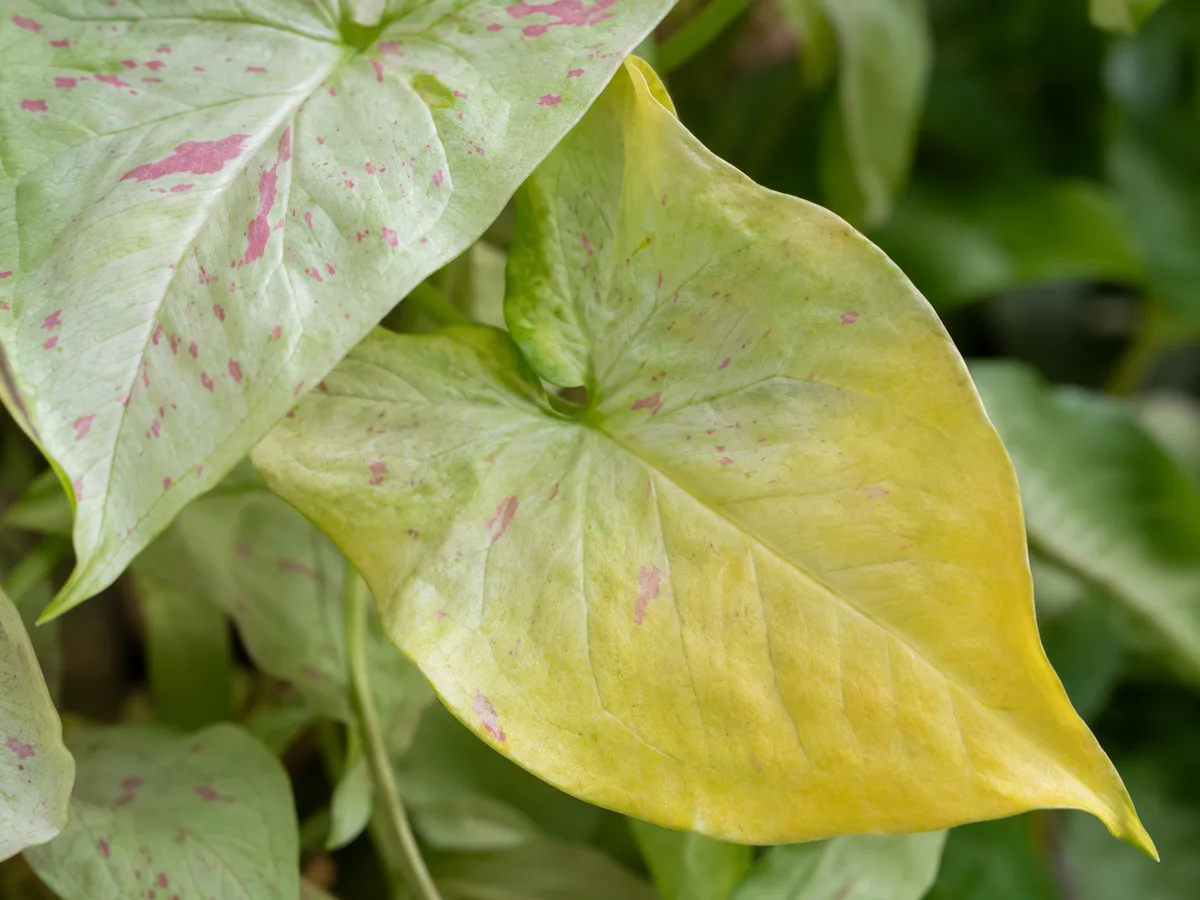
The cultivar’s pink and white markings are normal; compare the rest of the leaf with its usual color before diagnosing new yellowing.
Check the potting mix and roots
Feel the mix below the surface instead of watering by a weekly schedule. Lift the pot and notice whether it is unusually heavy or light. Check that water can leave through the drainage holes and that the pot is not sitting in runoff. A mix that stays saturated can deprive roots of air; prolonged wet conditions can damage roots, while yellow or mushy leaves and wilting may accompany overwatering. (Rural Sprout’s explanation of waterlogged roots and yellow leaves)
If the mix is wet, pause watering and empty the saucer. Do not unpot the plant because of one yellow leaf. Inspect roots if several leaves are changing, the mix remains wet for a long time, or the plant wilts even though the soil is damp. Brown, mushy roots or an unpleasant smell support a root problem; compare with the Syngonium Milk Confetti root-rot guide.
If the mix is dry well below the surface, water thoroughly and allow excess to drain. Avoid giving small splashes every day, which can leave parts of the root ball dry while the surface looks wet. Use the Syngonium Milk Confetti watering guide and the separate underwatering guide to adjust based on how quickly the pot dries. Container drainage matters: a pot without usable drainage or one left in standing runoff can keep roots wet after watering. (The Family Handyman’s container drainage guidance)
Review light and recent changes
Syngonium podophyllum grows best in dappled light or partial shade; direct full sun can burn or bleach its leaves. Place Milk Confetti in bright, indirect light and protect it from intense afternoon sun. If it was recently moved, compare the affected leaves with the side facing the window and return it to a steadier location rather than shifting it repeatedly. Its pink, white, and mint patches are cultivar coloring, so the key clue is a change from the plant’s usual pattern, not the presence of those colors alone.
Inspect for pests
Check both sides of the leaves, where the petioles meet the stems, and the newest growth. NC State lists aphids, spider mites, and mealybugs among pests found on Syngonium; Bob Vila also recommends checking the undersides of houseplant leaves for signs of pest activity when foliage yellows. If you find insects, webbing, sticky honeydew, or cottony wax, isolate the plant and use the matching aphids, spider mites, or mealybugs guide rather than applying a pesticide without identifying the pest. (NC State’s list of common Syngonium pests)
Choose a first fix and track recovery
Use the clue that best fits, and make one change at a time:
- If the soil is still wet, let it dry appropriately, clear standing water, and confirm the pot drains.
- If the mix is dry through the root zone, water thoroughly and let the pot drain.
- If direct sun is scorching a leaf, move the plant to a bright, indirect position.
- If you find pests, isolate the pot and treat the identified pest.
A fully yellow leaf usually will not regain its original color. After correcting the likely cause, judge progress by whether the yellowing stops spreading and new leaves remain firm and normally patterned. Remove a fully yellow leaf with clean scissors if you wish, but do not strip healthy foliage while the plant is recovering. (Pot & Leaf’s guidance on fully yellow leaves)
For a broader comparison, visit the Syngonium Milk Confetti problems hub or use the Plant Problem Diagnosis Tool. Review the care overview if the yellowing followed a recent change to watering or placement.
Frequently asked questions
Is one yellow lower leaf normal on Syngonium Milk Confetti?
It can be normal when only one of the oldest lower leaves yellows and the rest of the plant stays healthy. If several leaves change color or the plant droops, inspect the soil and roots instead.
Should I water my Syngonium Milk Confetti when its leaves turn yellow?
Not until you check the mix. If it remains wet, wait and check drainage. If it is dry well below the surface, water thoroughly and let the pot drain.
Are the pink and white areas on Milk Confetti yellow leaves?
No. Pink, white, and mint are part of the cultivar’s normal coloring. Look for a new yellow cast or a change from the leaf’s usual pattern.
Can a yellow Syngonium Milk Confetti leaf turn green again?
A fully yellow leaf generally will not return to its original color. Look for the yellowing to stop and for newer leaves to keep their normal color and firmness.
When should I inspect the roots?
Inspect roots if the mix stays wet, several leaves yellow, or the plant wilts while the soil is damp. Brown, mushy roots or an unpleasant smell suggest a root problem; compare with the root-rot guide.
FAQs
Is one yellow lower leaf normal on Syngonium Milk Confetti?
It can be normal when only one of the oldest lower leaves yellows and the rest of the plant stays healthy. If several leaves change color or the plant droops, inspect the soil and roots instead.
Should I water my Syngonium Milk Confetti when its leaves turn yellow?
Not until you check the mix. If it remains wet, wait and check drainage. If it is dry well below the surface, water thoroughly and let the pot drain.
Are the pink and white areas on Milk Confetti yellow leaves?
No. Pink, white, and mint are part of the cultivar’s normal coloring. Look for a new yellow cast or a change from the leaf’s usual pattern.
Can a yellow Syngonium Milk Confetti leaf turn green again?
A fully yellow leaf generally will not return to its original color. Look for the yellowing to stop and for newer leaves to keep their normal color and firmness.
When should I inspect the roots?
Inspect roots if the mix stays wet, several leaves yellow, or the plant wilts while the soil is damp. Brown, mushy roots or an unpleasant smell suggest a root problem; compare with the root-rot guide.