Slow Growth on Syngonium Milk Confetti: Causes and Fixes
Quick answer
Syngonium Milk Confetti is a cultivar of Syngonium podophyllum, a plant whose young growth can stay compact before its stems take on a trailing or climbing habit. Compare new leaves over several weeks, then check bright filtered light, watering, drainage, and roots before adding fertilizer or repotting.
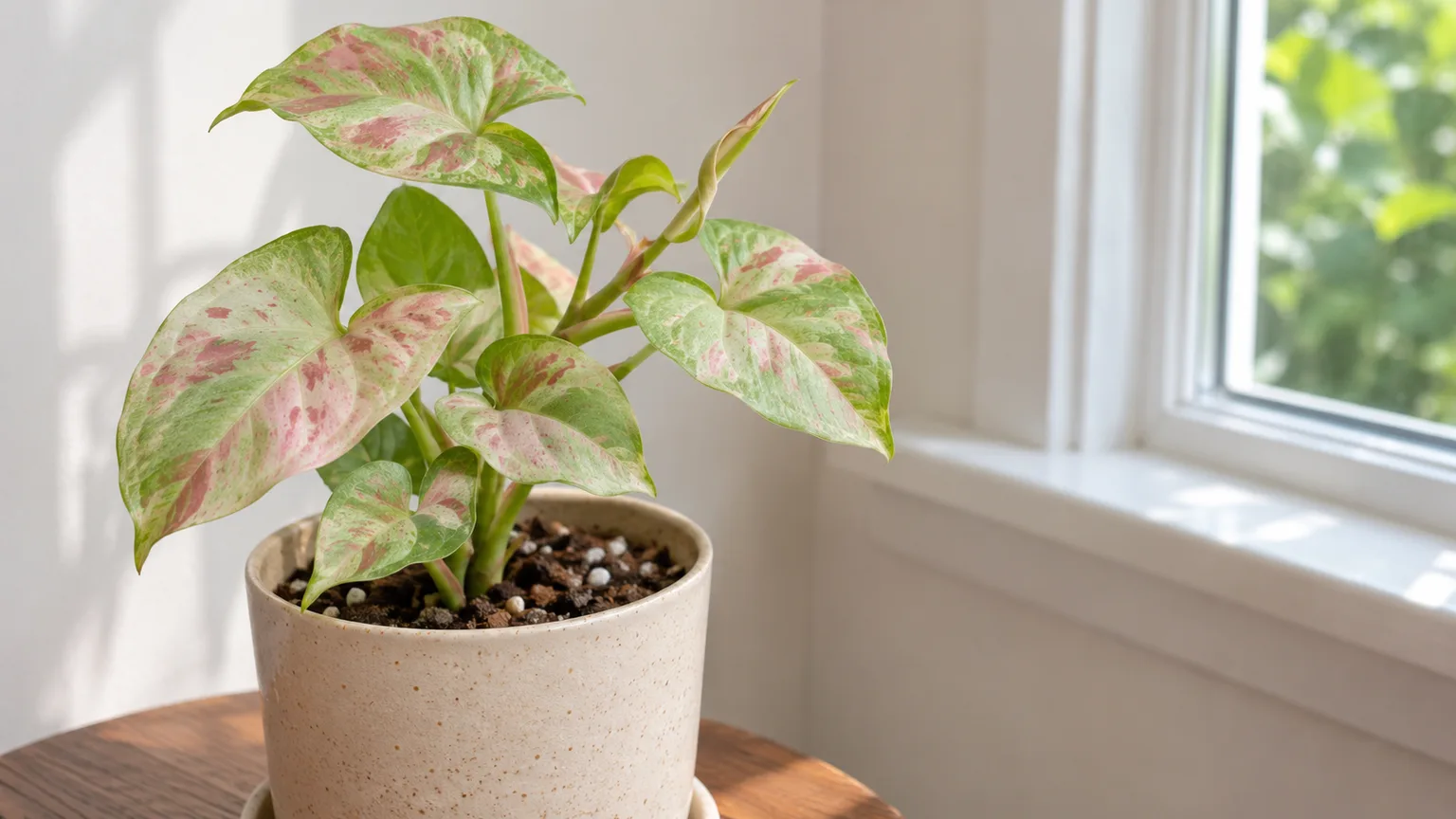
Slow Growth on Syngonium Milk Confetti: What to Check
This guide covers slow growth on Syngonium Milk Confetti. See also the general Slow Growth guide, watering, and light pages for this plant.
Slow Growth on Syngonium Milk Confetti: What to Check
- Search intent: determine whether slow growth on Syngonium Milk Confetti is expected or points to a care problem.
- Specific angle: distinguish its compact juvenile habit and variegated cultivar identity from light, water, and root-zone stress.
- Reader outcome: compare new growth, identify the most likely limiting condition, and make one measured adjustment.
- Slow Growth on Syngonium Milk Confetti: Causes and Fixes
- Why Is My Syngonium Milk Confetti Growing Slowly?
- Syngonium Milk Confetti Slow Growth: What to Check
Slow Growth on Syngonium Milk Confetti: Causes and Fixes
- Check light, season, watering, drainage, and roots to understand slow growth on Syngonium Milk Confetti before changing its care.
- Is your Syngonium Milk Confetti growing slowly? Compare new leaves and check light, water, and roots before fertilizing.
- Learn when a compact Syngonium Milk Confetti is normal and how to spot a light or root-zone problem.
Check light, season, watering, drainage, and roots to understand slow growth on Syngonium Milk Confetti before changing its care.
- H1: Slow Growth on Syngonium Milk Confetti: What to Check
- H2: Is slow growth normal for this cultivar?
- H2: Compare new growth before diagnosing a stall
- H2: Check light and temperature first
- H2: Inspect watering, drainage, and roots
- H2: When fertilizer or repotting may help
- H2: What not to do
- H2: Related Syngonium Milk Confetti guides
- H2: FAQs
Slow Growth on Syngonium Milk Confetti: What to Check
Quick answer
Syngonium Milk Confetti is a variegated cultivar of Syngonium podophyllum. A compact plant or a pause between new leaves does not by itself prove something is wrong. North Carolina State Extension describes the species as having a bushier juvenile habit that becomes more vine-like as it ages, and lists Milk Confetti among its cultivars. (NC State Extension’s Syngonium profile)
First compare fresh growth over several weeks. Then check whether the plant receives bright, filtered light, whether the potting mix dries appropriately, and whether water drains through the pot. Correct one likely stressor at a time; fertilizer or repotting will not compensate for poor light or persistently wet roots.
Is slow growth normal for this cultivar?
Look at the plant’s recent pattern, not only its overall size. A new leaf that is still unfurling, an established plant between growth spurts, or a recent move to a different room can make growth appear stalled. University of Illinois Extension notes that plants take time to grow and that growth rates differ among plants. This is a general reminder, not a guarantee that every pause is harmless. (Illinois Extension on plant growth and time)
Syngonium also changes shape as it matures. NC State describes the young plant as shrub-like and the older stems as vine-like; leaves can change form with maturity. A change in leaf shape or stem habit can therefore reflect development rather than a new problem. (NC State Extension on Syngonium’s growth habit)
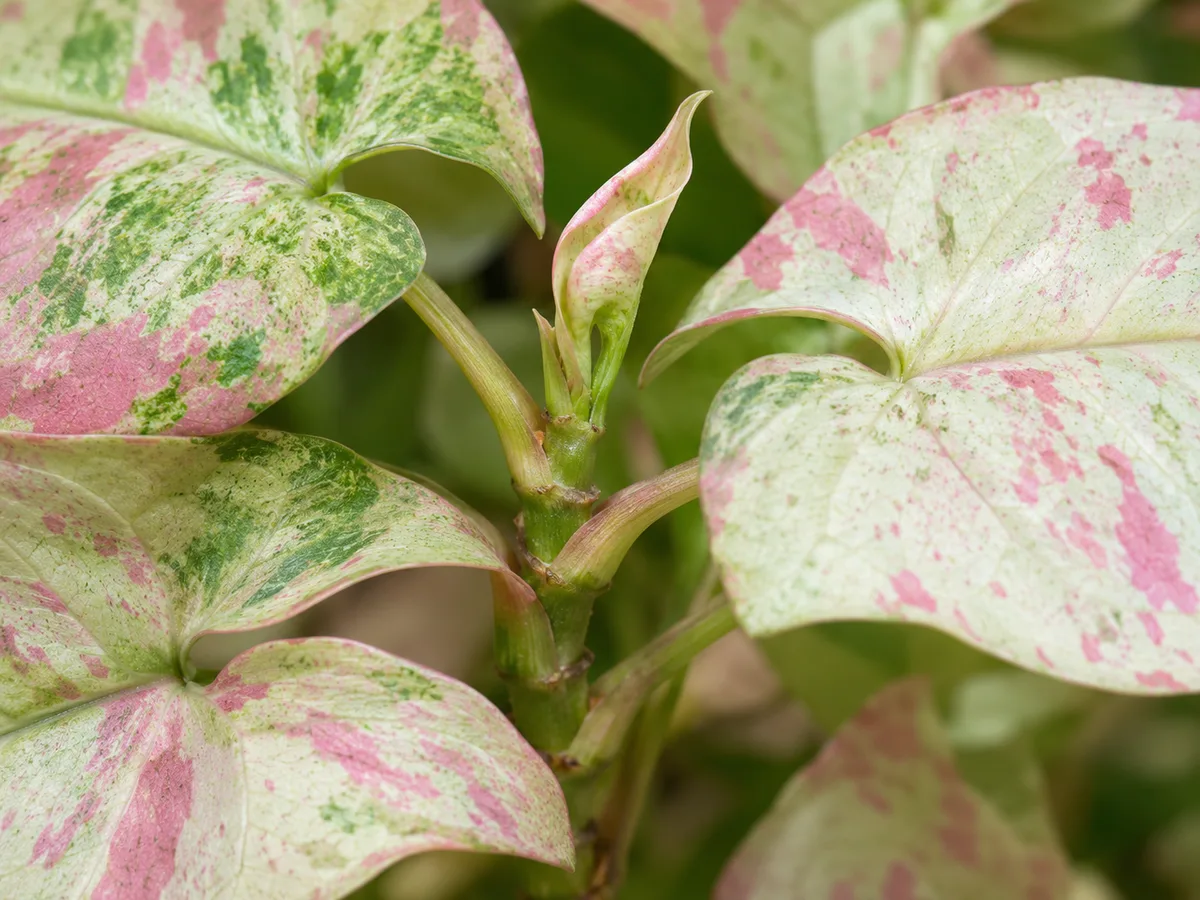
Check the newest leaf and stem tip. If they remain firm and the plant is not losing leaves or developing soft stems, record the date and compare again in a few weeks under the same conditions. If new growth has stopped while leaves yellow, stems soften, or soil remains wet, investigate the root zone rather than simply waiting.
Compare new growth before diagnosing a stall
Use a simple baseline:
- Photograph the newest leaf and the end of one stem.
- Note whether the plant has recently moved, been pruned, or been repotted.
- Check the light at the plant’s actual position and the moisture several centimeters below the soil surface.
- Recheck the same stem after a few weeks, keeping care steady unless you find a clear problem.
This avoids confusing a naturally compact juvenile plant with a decline. The target is healthy new growth, not a particular vine length or a fixed number of leaves each month.
Check light and temperature first
Bright, filtered light is a useful first check for a variegated arrowhead vine. NC State recommends a warm setting and warns that full sun can burn or bleach foliage. (NC State Extension on Syngonium growing conditions) Houseplant Alley also advises bright, indirect light and notes that low light can slow arrowhead vine growth. (Houseplant Alley on arrowhead vine light)
Look for a location several feet from a bright window or one blocked by heavy curtains, nearby buildings, or dense foliage. University of Illinois Extension explains that indoor light falls as a plant is moved farther from a window and that thin stems or leaning toward the light can signal insufficient light. (Illinois Extension on indoor light)
Move the plant gradually toward brighter filtered light. Avoid sudden placement in hot, direct sun, especially if it has been growing indoors away from a window. Keep it away from cold drafts and abrupt temperature swings; NC State describes Syngonium as a warm-setting tropical plant. Do not use more fertilizer as a substitute for correcting a dim location.
Inspect watering, drainage, and roots
Slow growth can accompany root stress. Check the pot’s drainage holes and feel the mix before watering. Houseplant Alley recommends watering an arrowhead vine after the top layer of mix dries and using a well-draining medium; it warns that overwatering can contribute to root rot. (Houseplant Alley on watering and drainage)
If the mix stays wet for many days, smells sour, or the lower stems soften, pause before adding more water. Check that runoff can escape and that the pot is not standing in a saucer of water. Nature & Garden likewise advises loose, airy compost and drainage because Syngonium does not do well sitting in soggy mix. (Nature & Garden on Syngonium compost and drainage)
If the soil is very dry and has pulled away from the pot, water thoroughly and let excess drain. Do not alternate between prolonged drought and waterlogging. Unpot only when there is a reason to inspect the roots, such as persistent wetness with decline or roots densely circling the container. Firm roots and a freely draining mix are more useful signs than the plant’s size alone.
When fertilizer or repotting may help
If light, watering, and temperature are suitable and the plant is actively growing, a balanced houseplant fertilizer used according to its label can support ongoing growth. Houseplant Alley recommends feeding during the growing season and reducing or stopping feeding when growth slows in winter. (Houseplant Alley on seasonal feeding) Avoid doubling the dose or feeding dry, stressed roots; excess fertilizer can injure foliage and will not fix an environmental limit.
Repot only when roots are crowded, emerge from the drainage holes, or the old mix has broken down and drains poorly. NC State notes that Syngonium may need repotting every few years to remain manageable, while Houseplant Alley advises moving it when it outgrows its pot. (NC State Extension on Syngonium repotting; Houseplant Alley on repotting cues)
Choose a pot with drainage holes only modestly larger than the root ball, and use a loose mix. Nature & Garden recommends repotting during spring or early summer as warmth and longer days favor active growth. (Nature & Garden on repotting timing)
What not to do
- Do not water more often just because a new leaf has not appeared yet.
- Do not move the plant into harsh direct sun in one step.
- Do not fertilize heavily to force rapid growth.
- Do not repot into a much larger pot unless roots or drainage show a reason.
- Do not change light, watering, soil, and fertilizer all at once; make one measured adjustment and watch the newest growth.
Related Syngonium Milk Confetti guides
For routine conditions, see the Syngonium Milk Confetti care overview and watering guide. If stems stretch toward the window, compare not enough light on Syngonium Milk Confetti. If yellowing appears with wet soil or soft stems, see root rot and overwatering. You can also use the Plant Problem Diagnosis Tool or browse the Syngonium Milk Confetti problem hub.
FAQs
Is Syngonium Milk Confetti supposed to grow quickly?
Not necessarily. It is a cultivar of Syngonium podophyllum, whose young growth can remain bushy before its stems become more vine-like. Compare fresh leaves and stem extension over time instead of judging only by the plant’s current size.
Can low light slow Syngonium Milk Confetti growth?
Yes. Arrowhead vine can tolerate some shade, but low indoor light can slow growth and make stems lean toward a brighter area. Move it gradually to bright, filtered light.
Should I water more when it stops growing?
No. Check the mix and drainage first. Water when the upper layer has begun to dry, then allow excess water to leave the pot.
Should I fertilize a slow-growing Syngonium Milk Confetti?
Only after checking light, temperature, and roots. If it is actively growing, use a balanced fertilizer according to its label rather than increasing the strength to force faster growth.
When should I repot it?
Repot when roots are crowded or emerge from drainage holes, or when the mix drains poorly. Slow growth by itself is not a reason to use a much larger pot.