Brown Tips on Syngonium White Butterfly: Causes, Checks &
Quick answer
Brown tips on Syngonium White Butterfly usually trace to low humidity, inconsistent watering, or mineral salts-not infection. First step: check humidity near the leaves and whether the top inch of soil is dry before you trim, repot, or switch water.
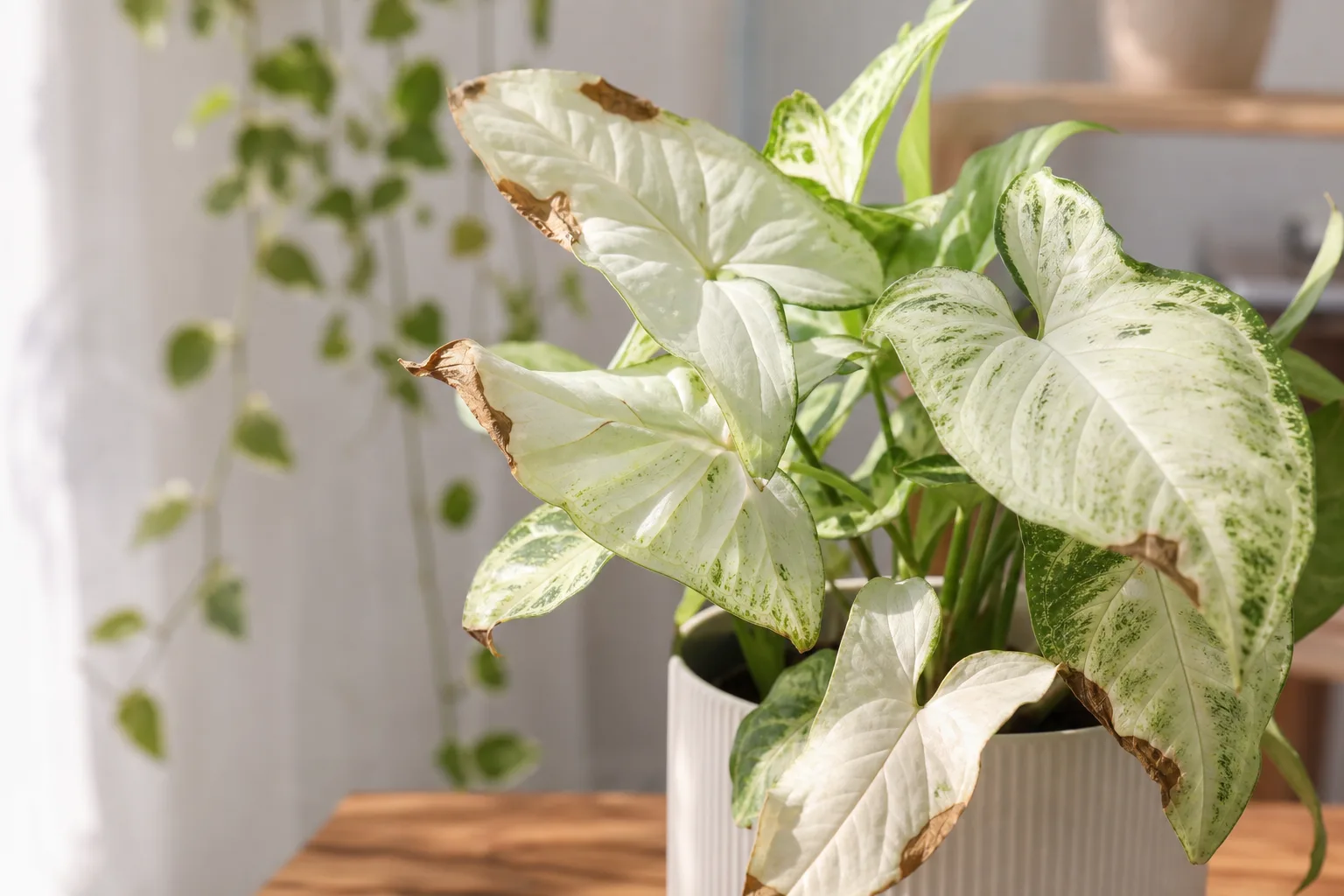
Brown Tips on Syngonium White Butterfly: Causes, Checks & Fixes
This guide covers brown tips on Syngonium White Butterfly. See also the general Brown Tips guide, watering, and light pages for this plant.
Brown Tips on Syngonium White Butterfly: Causes, Checks & Fixes
Quick answer
Brown tips on Syngonium White Butterfly (Syngonium podophyllum ‘White Butterfly’) almost always mean the leaf margin lost its water balance-not that your arrowhead vine caught a disease. Tip tissue sits farthest from the roots, so it desiccates first when humidity drops, watering swings between bone-dry and soggy, or salts accumulate in the mix.
First step: check humidity near the leaves and test whether the top inch of soil is dry before you trim, repot, or switch water type. Dry winter air with damp soil calls for a humidifier or pebble tray-not more water. Dry soil with crispy tips calls for a thorough soak on the usual schedule. Wet soil with spreading brown margins means stop watering and inspect roots. Everything else branches from those three readings.
What brown tips look like on Syngonium White Butterfly
Healthy White Butterfly leaves are arrowhead-shaped with green zones and creamy-white variegation along the veins and margins. Brown tips show as dry, tan-to-dark-brown patches confined to the leaf point-or sometimes the outer edge-while the rest of the blade may stay green for a while.
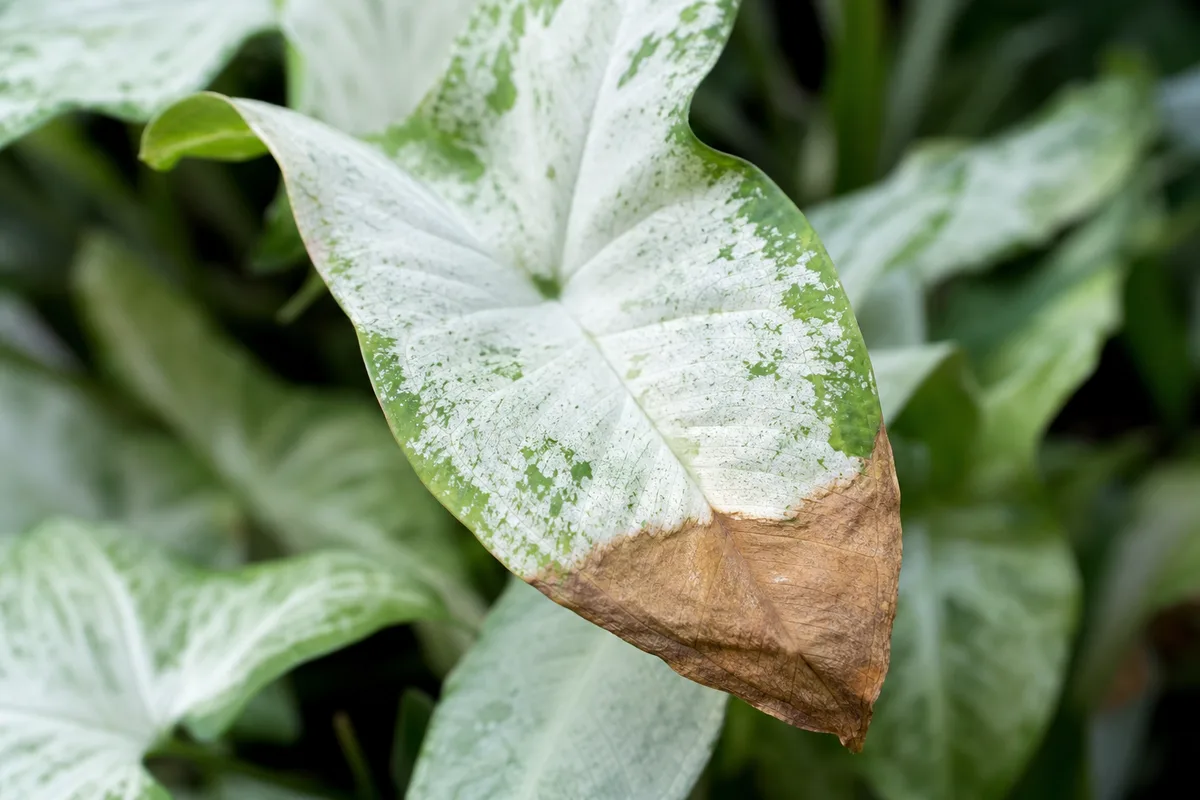
Brown Tips symptoms on Syngonium White Butterfly - compare with healthy tissue on the same plant.
Typical patterns:
- Low humidity / dry air - Tips and pale variegated sections crisp first; damage often appears on leaves closest to heating vents, sunny windows, or the outer cascade of a hanging basket; soil moisture may be normal.
- Underwatering or boom-bust watering - Tips brown; leaves may curl slightly or feel thin; mix is dry well below the surface; pot feels light.
- Salt or mineral burn - Tips brown on otherwise firm plants; white crust may appear on soil surface or pot rim; often follows heavy feeding or repeated hard tap water without flushing.
- Root stress from overwatering - Tips brown while lower leaves yellow; soil stays wet days after watering; stems may feel limp; pot feels heavy-mimicking thirst while roots cannot deliver water.
- Direct sun scorch - Bleached or brown patches on leaves facing the window, not just isolated tip points; often follows a sudden move into stronger light.
A few brown tips on older lower leaves after a dry week is often cosmetic. Worry when new arrowhead leaves at the growing tips emerge with brown points repeatedly, or when browning creeps down margins toward the petiole.
Why Syngonium White Butterfly gets brown tips
White Butterfly is a tropical aroid bred for pale variegation on juvenile arrowhead foliage. Less chlorophyll in the white zones means those areas transpire and dry faster than solid green tissue when humidity falls. That is why tip burn often starts on the lightest parts of the leaf-not random bad luck.
Low indoor humidity is the most common trigger. Syngonium podophyllum evolved in humid Central and South American understory. Indoors, central heating can drop relative humidity below 30% for months. Extension guidance notes that heated homes often run below 30% humidity and that many houseplants suffer brown leaf tips as a result. White Butterfly’s target range is moderate to high-around 50–60%-which is well above what most living rooms provide in winter.
Inconsistent watering stresses this fast-growing vine differently in each direction. Letting the root ball go completely dry for long stretches, then flooding it, damages fine feeder roots. Damaged roots cannot hydrate leaf margins reliably, so tips brown even after a heavy drink. Syngonium prefers evenly moist-but never soggy-soil during active growth, with the top inch allowed to dry between waterings.
Salt and mineral buildup hits container syngoniums hard. Tap water minerals and fertilizer salts accumulate when pots drain poorly or never get flushed. Salts pull moisture away from root hairs and burn leaf edges. Illinois Extension lists accumulation of fertilizer salts on containers as a cause of brown-edged leaves on houseplants.
Fluoride and chlorine in tap water can scorch sensitive foliage over time. While peace lily and spider plant are classic examples, any long-term mineral exposure can tip-burn tropical foliage. Switching to filtered or rested water for a trial month helps confirm this cause.
Overwatering and poor drainage produce a deceptive brown-tip pattern. Soggy mix deprives roots of oxygen; damaged roots fail to move water upward, so tips desiccate while soil feels wet. Syngonium is more vulnerable to root rot than many owners expect, especially in cool winter months when growth slows and the same Syngonium White Butterfly watering guide keeps roots wet too long.
Heat and light stress compound humidity problems. Direct sun bleaches or burns variegated tissue. Drafts from air conditioning or heat vents desiccate leaves nearest the airflow path. A hanging White Butterfly beside a radiator often shows tip burn only on the windward side.
How to confirm the cause
Work through these checks in order before changing anything major:
- Humidity reading - Use a hygrometer near the plant at leaf height. Below 40% with crisp tips on pale variegation strongly points to dry air. Above 50% with wet soil suggests root stress instead.
- Soil moisture at one inch - Push your finger in or use a moisture meter. Dry at depth with a light pot points to underwatering. Wet or cool damp mix days after watering points to overwatering or poor drainage.
- Pot weight and drainage - Lift the container. Heavy and soggy is trouble. Light and airy suggests thirst. Confirm drainage holes are open and the saucer is not holding standing water.
- Salt check - Look for white crust on soil or pot edges. If present, plan a flush before assuming pure humidity stress.
- Location scan - Is the pot directly above a heat vent, beside a radiator, or in direct afternoon sun? Are only the exposed outer leaves browning? That pattern fits environmental desiccation, not disease.
- Leaf pattern - Crispy tips only with green mid-leaf tissue fits humidity or salts. Soft brown patches spreading from petioles with sour smell fit rot.
- New growth check - Inspect the newest unfurling arrowhead. Tip burn on fresh leaves confirms an ongoing environmental problem, not old cosmetic damage.
If humidity is low, soil moisture is appropriate, and stems are firm, treat as dry air first. If soil is wet, smell is sour, and lower leaves yellow, unpot and inspect roots before the next watering-brown tips from rot will not stop until roots breathe again.
First fix for Syngonium White Butterfly
Raise local humidity toward 50–60% if the air near the plant reads below 40%, using a humidifier or pebble tray while you confirm your watering rhythm.
That single environmental correction addresses the most common White Butterfly tip-burn trigger without stacking Syngonium White Butterfly repotting guide, fertilizer, and pruning on day one. Place a humidifier within a few feet of the plant, or set the pot on a tray of wet pebbles with the container base above the water line. Grouping with other plants adds a few points of humidity but rarely replaces a humidifier in a heated room.
Do not reach for fertilizer, insecticide, or repotting until humidity and soil moisture make sense. Do not trim heavily before conditions stabilize-cosmetic cuts do not fix the underlying stress.
If humidity is already adequate and the top inch of soil is dry, skip straight to a thorough watering until a little runs from drainage holes, then discard saucer water. If soil is wet and heavy, withhold water entirely and move the plant to Syngonium White Butterfly light guide with good airflow while you plan a root inspection.
Step-by-step recovery
After the initial humidity or watering correction:
- Stabilize the watering rhythm - Water when the top inch of soil dries, then soak thoroughly. Reduce frequency in cool months when growth slows. Never let the pot sit in standing water.
- Switch water type for one month if hard tap water or white crust is present. Use filtered, distilled, or collected rainwater and observe whether new leaves emerge cleaner.
- Flush accumulated salts if crust is visible or feeding has been heavy. Run clean water through the pot at two to three times the pot volume, letting it drain fully each time. Wait two weeks before resuming light feeding.
- Move off heat paths - Shift the pot away from radiator blasts, AC vents, and direct sun. Bright indirect light is the target; variegation fades in deep shade but scorches in hot direct rays.
- Trim dead tips cosmetically only after browning stops spreading. Cut along the natural leaf curve, leaving a thin brown margin if needed to avoid wounding green tissue. Wear gloves when handling cut tissue; syngonium sap contains calcium oxalate crystals that irritate skin.
- Inspect roots if overwatering signs persist - Soft brown roots need trimming and repotting into fresh, well-draining mix. Firm white roots mean the plant can recover with corrected watering alone.
Isolate the plant from drafts during recovery, but normal room airflow helps prevent fungal issues on wet foliage.
Recovery timeline
Humidity correction shows results on leaves that unfurl after one to two weeks-not on tissue already browned. Allow three to four weeks of stable care before judging whether new arrowhead leaves emerge with clean tips.
Salt-flush improvement appears on growth that opens after flushing; older browned tips stay brown permanently. Expect cleaner new foliage within four to six weeks if salts were the main driver.
Root rot recovery is slower. If enough firm roots remain after repotting, cautious new growth may appear in three to six weeks. If stems soften at the soil line despite correction, take healthy stem cuttings as backup before rot advances.
Lookalike symptoms
Bacterial leaf spot shows water-soaked tan spots with yellow halos, often after overhead watering or crowding. Tip burn alone without spots or halos rarely means bacterial disease on syngonium.
Spider mite damage causes fine stippling, webbing on leaf undersides, and general dullness before tip crisping. Mites thrive in hot dry air-confirm with a magnifier and white-paper tap test before assuming pure humidity stress.
Normal aging on lower juvenile leaves may show slight edge tan as the plant transitions toward mature lobed foliage. If new tips at the vine end stay green and firm, older leaf cosmetic browning may need only light grooming.
Whole-leaf browning from cold hits suddenly after exposure below roughly 10°C (50°F). Uniform damage after a cold window night differs from gradual tip necrosis from dry air.
Mistakes to avoid
- Misting as the only humidity fix - Brief surface wetting does not sustain 50–60% humidity and can encourage fungal spotting if foliage stays wet overnight.
- Adding water because tips look dry while soil is wet - This accelerates root rot. Always confirm moisture at depth first.
- Heavy feeding to “green up” tips - Salt burn worsens margin damage on stressed plants.
- Repotting into a larger container while roots are rotting - Extra wet soil volume suffocates recovery.
- Cutting deep into healthy green tissue while trimming - Follow the leaf shape; wounding live tissue invites more browning.
- Placing White Butterfly in direct sun to “help” variegation - Strong direct rays scorch pale zones faster than they brighten them.
How to prevent brown tips on Syngonium White Butterfly
Match care to how this cultivar actually grows:
- Humidity 50–60% - Use a humidifier in heated rooms, a pebble tray, or grouped plant microclimates. Monitor with a hygrometer rather than guessing.
- Top-inch-dry watering - Soak thoroughly when the surface inch dries; cut back in winter when growth slows.
- Bright indirect light - Enough light for stable growth without hot direct sun on variegated leaves.
- Filtered or rested water if your tap is hard or tips recur despite good humidity and watering.
- Light feeding during active growth only - Flush salts every few months if you feed regularly or use tap water with high mineral content.
- Good drainage - Well-draining potting mix in a pot with open holes; empty saucers after every drink.
- Weekly leaf checks - Spider mites and mealybugs appear on syngonium; catch sap-feeding stress before it compounds environmental tip burn.
White Butterfly is forgiving once humidity, watering, and light align. Old browned tips are cosmetic-judge success by clean new arrowhead leaves, firm stems, and a pot that dries predictably between thorough soaks.
When to use this page vs other Syngonium White Butterfly guides
- Syngonium White Butterfly watering guide - Use for routine moisture checks before assuming brown tips is the main issue.
- Syngonium White Butterfly problems hub - Browse all 2 common issues on this species.
- Yellow Leaves on Syngonium White Butterfly - Different entry point when symptoms overlap with brown tips.