Fungus Gnats on Syngonium White Butterfly: Causes, Checks &
Quick answer
Fungus gnats on Syngonium White Butterfly mean the soil surface stays wet too long-usually from watering before the top inch dries, especially in dim light. First step: stop watering until the top 1–2 inches are dry and set yellow sticky traps at the pot rim.
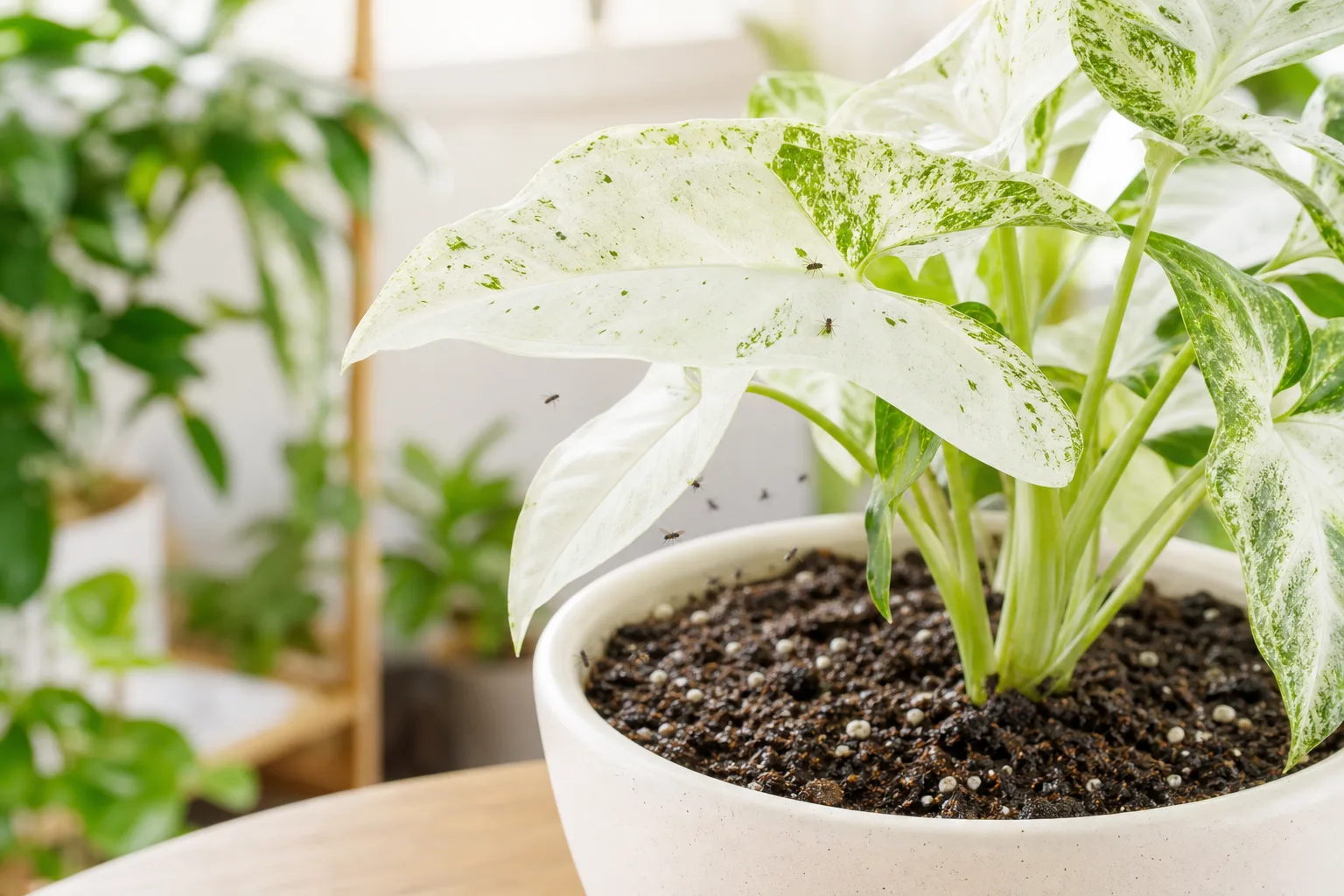
Fungus Gnats on Syngonium White Butterfly: Causes, Checks & Fixes
This guide covers fungus gnats on Syngonium White Butterfly. See also the general Fungus Gnats guide, watering, and light pages for this plant.
Fungus Gnats on Syngonium White Butterfly: Causes, Checks & Fixes
Quick answer
Fungus gnats on Syngonium White Butterfly are almost always a moisture signal, not a mysterious pest attack. The small dark flies breed in the top layer of damp, organic potting mix-exactly where many growers keep this fast-growing arrowhead too wet because its pale, soft-looking leaves seem to want constant moisture.
First step: stop watering until the top 1–2 inches of soil feel dry, then set yellow sticky traps at the pot rim. That single dry-down cycle breaks larval survival in the surface layer while traps catch egg-laying adults. Do not reach for sprays on day one if you have not confirmed wet topsoil is the habitat sustaining the population.
Gnats themselves are mostly a nuisance to people-they do not bite-but the wet conditions that attract them are dangerous for this aroid. White Butterfly roots need oxygen between drinks; saturated peat-heavy mix in a dim shelf corner is how you get both gnats and the yellow lower leaves that follow chronic overwatering on syngoniums.
Why White Butterfly gets fungus gnats
Syngonium podophyllum ‘White Butterfly’ is a fast-growing cultivar with pale green leaves and crisp white veining. It is often kept as a compact tabletop plant or allowed to trail and climb with support. That flexibility matters for diagnosis: a small pot on a shelf dries on a different timeline than a long vine in a hanging basket, yet many owners water both on the same weekly rhythm.
Fungus gnat larvae live in the top 2–3 inches of growing medium and feed on fungi, algae, and decaying organic matter. Moist peat-rich mix that never dries on the surface is ideal habitat. Adult females lay eggs in cracks at the soil line; at room temperature the full life cycle can complete in three to four weeks with continuous reproduction indoors.
White Butterfly is especially prone when three conditions overlap:
- Watering before the top inch dries. The standard care checkpoint for Syngonium White Butterfly overview is watering when the top inch of soil dries-not when the soft arrowhead leaves look slightly limp or when a calendar reminder fires. Limper foliage can mean overwatering as easily as drought on syngoniums.
- Low light slowing dry-down. In low indirect light, variegation fades to mostly green and the plant uses water slowly while the mix stays damp longer. Gnats often spike in fall and winter when day length drops, temperatures cool, and watering habits do not adjust even though the plant is drinking less.
- Dense or aged potting mix. Standard peat-based media compacts over time, holds more moisture, and grows more surface fungi-the food larvae prefer. A fast-growing White Butterfly in an oversized decorative pot with little root mass is particularly slow to dry.
The gnats are telling you the root zone environment is staying wet too long. On an aroid that commercial growers keep moist but not wet, that is a meaningful warning before roots turn mushy.
What fungus gnats look like on White Butterfly
Adults:
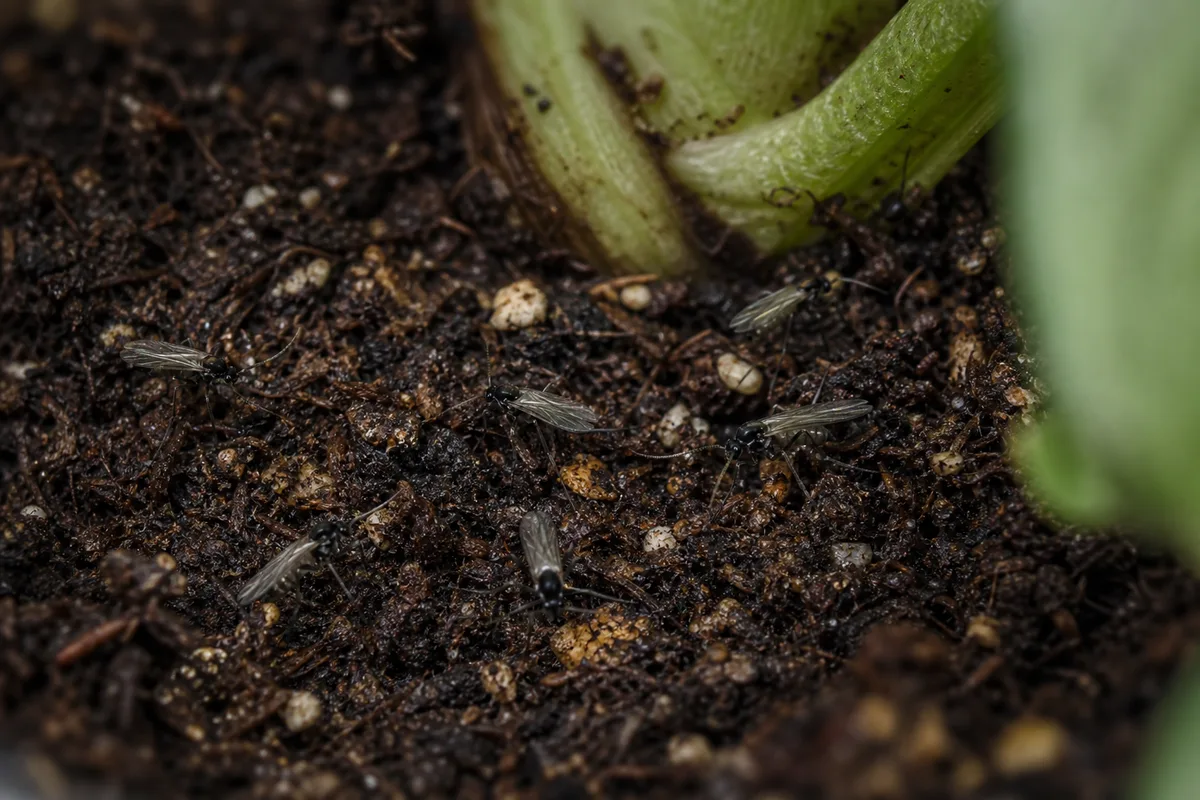
Fungus Gnats symptoms on Syngonium White Butterfly - compare with healthy tissue on the same plant.
- Tiny dark flies, about 1/8 inch long, with long legs
- Rise in a small cloud when you water or brush the soil surface
- Crawl on the pot rim, soil, or nearby window glass
- Weak fliers-often noticed near the plant before they spread across the room
Larvae:
- Translucent, worm-like maggots with dark head capsules in the top layer of mix
- Sometimes visible along the soil line or on a potato test slice placed on the surface
- Not on leaf undersides-that pattern points to other pests
Plant symptoms that may accompany heavy infestations:
- No leaf stippling, webbing, or honeydew-unlike spider mites, aphids, or mealybugs
- Slowed new growth with duller, greener leaves if roots are being stressed by wet soil or larval feeding
- Lower leaf yellowing when chronic moisture has already compromised roots-the same pattern as overwatering on White Butterfly
- White mold or algae on the soil surface-often present in the same wet conditions gnats favor
On a healthy White Butterfly, a few gnats after bringing plants indoors for winter are common. The problem is worth treating when fly numbers rise weekly, traps fill fast, or wet-soil root stress signs appear alongside the insects.
How to confirm the cause
Work through these checks in order before you change pots or buy insecticides:
- Surface moisture test - Stick a finger or dry skewer into the top 1–2 inches. If it comes out cool and clinging, the mix is still wet-the primary condition fungus gnats need.
- Pot weight - Lift the container. Heavy, waterlogged feel days after watering confirms slow dry-down.
- Fly behavior - Disturb the soil lightly. Immediate adult flight from the surface strongly supports fungus gnats over shore flies or fruit flies from kitchen waste.
- Larval check - Press a quarter-inch potato slice onto the soil for two to three days, then inspect the underside for translucent larvae.
- Sticky trap baseline - Place a yellow card at soil level. New adults caught daily confirm an active breeding population.
- Light and season context - Note whether the plant sits in a dim corner where variegation has faded, recently came indoors from summer outside, or is being watered on the same schedule as in July despite shorter days.
- Root-risk signs - Sniff the drainage hole area for sour odor, check whether lower leaves yellow while soil stays damp, and confirm stems are firm-not mushy at the base.
If the top inch dries within a few days, traps catch almost nothing, and no larvae appear on a potato slice, you may be seeing incidental adults from another pot or outdoor entry-not a sustained infestation in the White Butterfly mix.
First fix for Syngonium White Butterfly
Let the top 1–2 inches of soil dry completely, then place yellow sticky traps at the pot rim-do not water again until that dry-down is confirmed.
This is the safest first action because it attacks the habitat larvae require without stressing a mature aroid the way a repot or chemical drench might on day one. Hold the next watering until your finger or skewer shows the upper layer is genuinely dry, not merely lighter in color. Peat can look dry on top while staying cool and damp an inch down, so check depth.
Set one yellow sticky trap per infested pot, positioned at the soil line where adults crawl before flying. Traps alone will not eliminate an infestation because larvae remain in the mix, but they reduce egg-laying adults and give you a visible count of progress.
While the surface dries, move the plant to brighter indirect light if it has been sitting in a dim spot. Better light speeds transpiration, helps preserve the white veining, and helps the mix cycle faster without changing how much water the roots actually need. Do not compensate for gnats by misting leaves or topping the soil-extra surface moisture worsens the problem.
Step-by-step recovery
After the initial dry-down and traps:
- Adjust the Syngonium White Butterfly watering guide permanently - Resume watering only when the top inch and a deeper skewer check show the root zone is approaching dry. Empty the saucer within 30 minutes of every soak.
- Reduce winter watering - From fall through late winter, extend the interval between checks. White Butterfly grows slower in cool, low-light months and uses far less water than in summer.
- Apply BTI if larvae persist after two weeks of corrected drying - Bacillus thuringiensis var. israelensis (BTI), sold in products such as mosquito bits or labeled gnat treatments, kills larvae when used as a soil drench. Follow label rates and repeat as directed.
- Consider bottom watering temporarily - Setting the pot in a water tray for 15–20 minutes lets roots drink from below while keeping the surface drier. Useful if you need to hydrate without rewetting the gnat nursery layer.
- Refresh degraded mix if soil stays wet more than 10–14 days between waterings in moderate light - Repot into chunky aroid mix with perlite and orchid bark. Choose a pot only one size larger with a drainage hole.
- Treat neighboring pots - Gnats spread to any container with damp organic topsoil. Dry-down and traps should cover the whole shelf, not just the White Butterfly.
- Remove surface debris - Pick off fallen arrowhead leaves and any decaying organic matter on the soil; larvae feed on it.
Skip hydrogen peroxide drenches as your primary strategy-they can stress roots and do not replace habitat correction. Reserve Syngonium White Butterfly repotting guide for when mix structure is clearly failing, not as the first reflex when flies appear.
Recovery timeline
Adult fly numbers often drop within one week once the top layer stays dry and traps are catching breeders. Larval generations take longer-expect two to four weeks of consistent dry-down before the infestation feels gone, because eggs already in the mix hatch in overlapping waves.
Plant recovery depends on root health. If only gnats were present and stems stayed firm, new white-veined leaves should resume within a few weeks after watering normalizes. If lower leaves yellowed or stems softened while soil stayed sour, root recovery may take a full growing season; some damaged roots will not regenerate and the plant may stay smaller until new root tips establish.
Judge success by sticky trap counts trending down, no larvae on fresh potato slices, firm stems after watering, and clean new growth-not by whether a few stray adults appear near a window after you open a bag of potting soil.
Lookalike symptoms to rule out
Shore flies also breed in wet organic matter but are stouter flies often seen in greenhouses with algae on saucers. They rarely come from a single houseplant pot in a living room.
Fruit flies hover around kitchen compost, ripening fruit, or open trash-not primarily houseplant soil unless the mix contains rotting food debris.
Spider mites cause stippling, fine webbing, and dusty leaf undersides-not flying insects from soil. Mites favor hot, dry air; fungus gnats favor wet mix.
Whiteflies fly up in a white cloud from leaf undersides when disturbed, not from soil. Sticky honeydew on leaves points to whiteflies, not gnats.
Mold on soil surface often shares wet conditions with gnats but is a separate issue. Fixing moisture usually improves both.
Mistakes to avoid
Do not spray adult gnats with general houseplant insecticide while ignoring wet soil-the breeding site remains.
Do not water on a fixed weekly schedule through winter without checking dryness first.
Do not assume gnats mean your White Butterfly is dying. They mean the soil surface is too wet too often; the plant can recover quickly if roots are still firm.
Do not mist heavily or top-dress with moist compost while fighting larvae-you are rebuilding their food source.
Do not leave saucers full or nest the pot in a sealed decorative cachepot without drainage.
Do not repot into an oversized container to escape gnats-more soil volume holds moisture longer around a small root ball.
White Butterfly care cross-check
Use this quick audit once moisture is back under control:
- Light - Medium to Syngonium White Butterfly light guide. Too dim slows dry-down and fades the white veining to plain green.
- Water - Soak when top inch dries; never let the pot sit in runoff.
- Soil - Chunky, well-draining mix-not straight heavy peat.
- Humidity - Moderate 50–60% is fine; do not chase high humidity with constant leaf wetness if soil is already slow to dry.
- Pot - Drainage hole required; size appropriate to root mass whether tabletop or trailing.
Because White Butterfly is toxic to cats and dogs, keep BTI products, sticky traps, and any treated pots out of reach of pets that chew plants or dig in soil.
How to prevent fungus gnats next time
Water on dryness, not calendar days. A phone reminder to check soil is useful; automatic weekly watering is how most White Butterfly gnat problems start.
Refresh potting mix every 12–18 months or when water sits on the surface and the pot stays heavy unusually long. Broken-down peat is a gnat magnet.
Quarantine new plants for two to three weeks with their own sticky trap before placing them beside your arrowhead collection.
Scout with yellow traps in fall when outdoor plants come inside and when you first notice heating-season air slowing plant growth.
Keep the soil surface clean of fallen leaves and do not let organic fertilizers or fish emulsion sit on wet mix-they encourage fungal growth larvae eat.
Match pot size to roots. A compact White Butterfly in a huge decorative pot is a recipe for permanently damp outer soil.
When to worry
Treat as urgent when mushy stems, sour-smelling mix, or widespread lower leaf yellowing accompany the gnats-those signs suggest root rot may be advancing, not just surface larvae.
Escalate if adult numbers rise weekly despite two weeks of proper dry-down and trapping, especially on newly propagated cuttings with limited root systems.
A few flies near one pot in winter after a single overwater is not an emergency. A cloud of insects across multiple containers, larvae visible on every potato slice, and wet soil that never dries in moderate light is.
Conclusion
Fungus gnats on Syngonium White Butterfly are your plant telling you the soil surface has stayed wet too long-usually from watering before the top inch dries, especially in dim light or dense aged mix. Dry that layer, trap adults at the soil line, then fix the watering rhythm for the season you are actually in. That path clears most infestations within a few weeks and protects the pale variegated growth that makes this cultivar worth keeping healthy on the shelf or trailing from a basket.
When to use this page vs other Syngonium White Butterfly guides
- Syngonium White Butterfly watering guide - Use for routine moisture checks before assuming fungus gnats is the main issue.
- Syngonium White Butterfly problems hub - Browse all 2 common issues on this species.