Pruning Thyme: What to Cut First (and What to Leave)
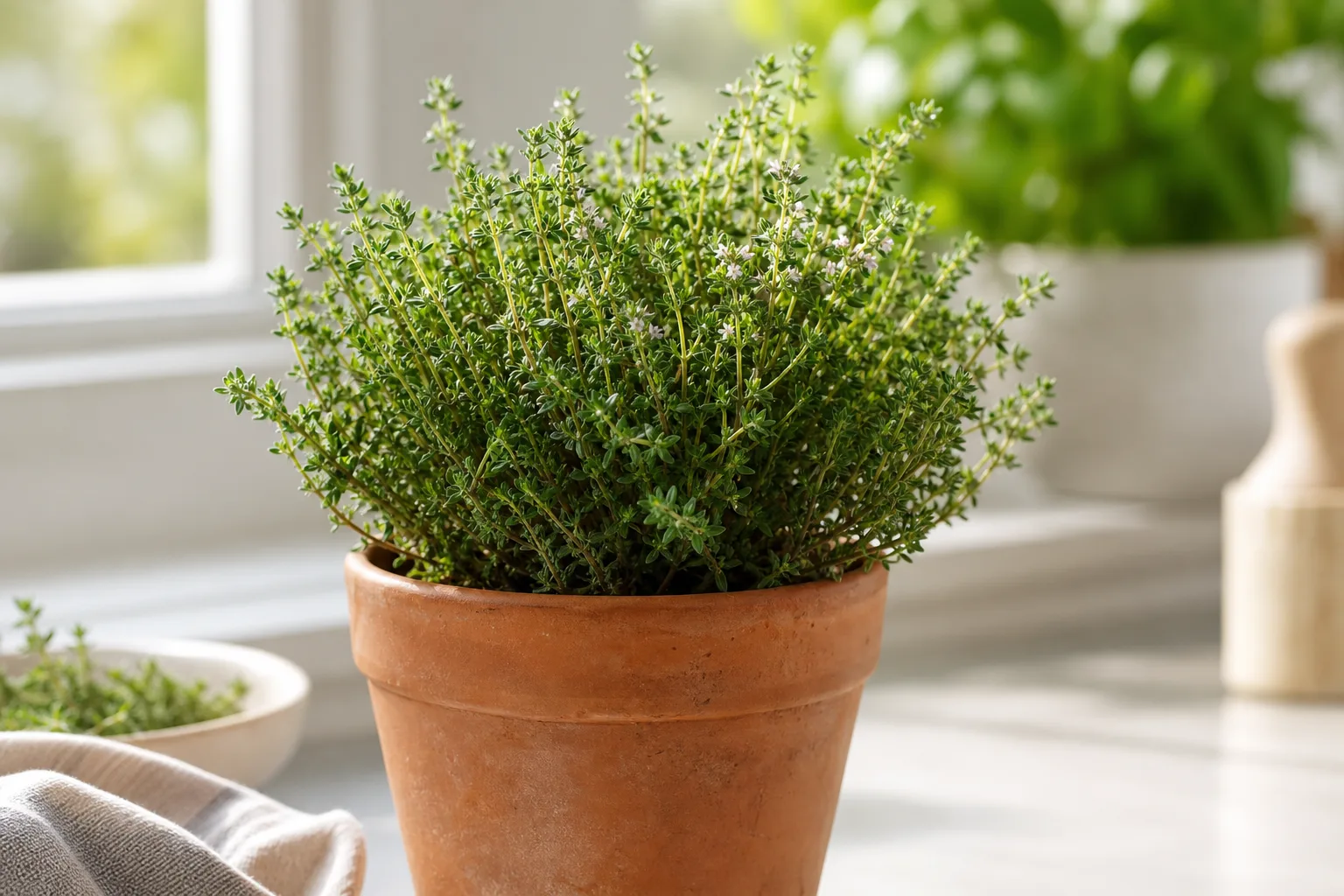
Pruning Thyme: What to Cut First (and What to Leave)
Pruning Thyme: What to Cut First (and What to Leave)
Quick answer and first safe cut
Before shaping common thyme (Thymus vulgaris), trace one healthy green shoot back to the point where its leafy growth meets the older woody framework. Make your first cut only on a stem that is fully dead, damaged or frost-blackened, and stop above healthy green growth. Thyme is a woody-based evergreen herb; old bare stems may not reshoot reliably, so a hard haircut can leave permanent gaps. The RHS profile describes T. vulgaris as a small evergreen shrub with woody-based stems.
If no stem is clearly dead, do not cut yet. Decide whether the goal is light shaping, harvest or removal of a specific damaged shoot. The Thyme overview explains how light, drainage and watering affect the plant’s shape and vigor.
When to prune common thyme
For routine shaping, prune lightly in mid- to late spring after new growth begins, or soon after flowering if the plant needs tidying. The RHS recommends those windows for shrubby thymes and cautions that hard cuts into old wood may fail to reshoot (RHS how-to-grow guide). NC State Extension recommends trimming common thyme when it becomes leggy and cutting back in early spring and summer to limit woody growth (NC State Extension).
In India and similar warm climates, use active, mild growth rather than a calendar date. Avoid a heavy trim during peak heat, prolonged monsoon wetness or a cool, slow-growth period. If a plant is healthy and compact, it may need only occasional harvesting rather than formal pruning.
Inspect the plant before shaping
Look for living green leaves and flexible shoots, then identify bare brown stems and any fully dead or broken material. A woody stem is not automatically dead: check for green leaves or fresh buds along it. If the stem is entirely dry and brittle with no living shoots, remove it back to a healthy junction rather than shortening every branch to the same height.
A sparse, stretched plant may be responding to inadequate light rather than needing more severe pruning. Improve the position using the Thyme light guide before cutting away large amounts of growth. Pruning can reshape healthy shoots, but it cannot correct low light, soggy soil or root damage.
How to prune step by step
- Choose one clear goal: remove dead growth, shorten a few long green stems, or lightly tidy after flowering.
- Use clean, sharp scissors or bypass pruners.
- Start with fully dead or damaged stems, cutting back to a live leafy point or stem junction.
- For shape, shorten green shoots selectively rather than shearing the whole plant into a tight ball.
- Step back and reassess before making another round of cuts.
The Plantura guide recommends pruning thyme in spring, removing dead shoots and cutting above a set of leaves or a node (Plantura). Keep the crown open and preserve enough leafy stems to continue growth.
Where exactly to cut
For green stems, make a clean cut just above a pair of leaves or a visible node where new growth can continue. Leave a small amount of stem above that node so you do not damage the buds. For dead or damaged stems, follow the stem down until it meets living growth, then remove the dead section at that junction.
Bonnie Plants also advises cutting thyme above visible new growth and not below into leafless wood (Bonnie Plants). Do not make a flat cut across the entire woody crown; common thyme’s green shoots are the reliable places for regrowth.
How much growth to remove
Keep routine shaping conservative: remove no more than about one-third of the leafy growth in one session, and less if the plant is small, stressed or recently repotted. Gardening Know How recommends limiting shaping cuts to one-third and spreading a larger reduction over more than one season (Gardening Know How). Bonnie Plants and The Spruce give a similar one-third limit for trimming or harvest (Bonnie Plants; The Spruce).
That limit applies to healthy green growth, not as permission to cut one-third of the plant into bare wood. If a large portion is old and leafless, keep the cuts above live growth and renew the plant gradually or propagate a replacement.
What not to cut
Do not cut deeply into the bare, leafless base of woody stems. RHS warns these cuts may not reshoot, and the Plantura guide similarly places cuts just above the woody portion and above a leaf node (RHS how-to-grow guide; Plantura). Avoid stripping every green tip, removing all flowering stems if you want pollinators, or pruning a plant that is actively wilting from root or moisture stress.
Do not confuse old but living wood with dead wood. If uncertain, remove only a clearly dead tip and wait for new growth before making structural cuts.
Shaping and post-flowering maintenance
Use small selective cuts to reduce a few long or crossing shoots and keep thyme compact. After flowering, a light trim of green growth can tidy the plant and encourage branching. Penn State Extension notes that trimming thyme can limit woody growth or stimulate new growth (Penn State Extension). If you prefer flowers for bees, prune only part of the plant and leave some flowering stems.
Harvesting can also keep a young plant in shape. Cut a few leafy tips for cooking, but leave enough green growth for the plant to recover. If your plant has become leggy, check light before repeatedly trimming it; use the Thyme light guide to prevent the same shape problem from returning.
What to do with an old woody plant
An older thyme plant with a bare center may not respond well to a drastic cut. Try light renewal on one or two live sections in spring, leaving most leafy growth intact. If it fails to produce new shoots from those cuts, do not keep cutting lower. Gardener’s Supply notes that older thyme can become woody and sluggish and recommends spring division to start new plants (Gardener’s Supply).
A healthy green shoot can also be used to make a cutting while the mother plant remains intact. The Thyme propagation guide explains how to root it. Replacing an exhausted plant is often safer than forcing regrowth from old bare wood.
Tool hygiene and handling
Use sharp bypass pruners or clean scissors that make a neat cut instead of crushing the stem. Brush off soil and plant debris; if you are removing diseased material, clean the blade between plants. This reduces the chance of moving disease from one plant to another. Keep harvested stems separate from material removed for suspected disease or rot.
Wear gloves if you prefer, especially when cutting many stems or handling a plant with insects. Thyme is commonly grown as a culinary herb, but do not use treated or diseased cuttings in food.
Recovery and aftercare
After a light trim, keep thyme in strong light and let the soil dry between waterings as usual. Do not immediately fertilize or repot a healthy plant just because it has been pruned. If the plant is in a hot, dry spell, check moisture more often, but avoid keeping the root zone wet. The Thyme watering guide covers the dry-down method.
Look for firm new shoots at leafy nodes over the next few weeks during active growth. If stems remain bare, brown or soft, the cut may have gone too deep or the plant may have another problem. Pruning will not fix poor drainage; check the Thyme soil guide if the crown or roots stay damp.
Mistakes to avoid
- Cutting the whole plant back into leafless old wood.
- Removing more than one-third of green growth in one session.
- Shaping a low-light plant before correcting its placement.
- Pruning hard during heat, monsoon saturation or slow winter growth.
- Treating every woody stem as dead without checking for green shoots.
- Feeding or repotting automatically after a routine trim.
If a trim was too heavy, stop cutting and give the plant stable light and drainage. Do not attempt to correct a bad cut with a second, larger cut.
When not to prune
Delay routine shaping if thyme is severely dry, waterlogged, recently divided or struggling with root damage. Remove only clearly dead or diseased material when necessary, then correct the root-zone problem. If the plant is naturally compact and flowering well, there may be no reason to trim it beyond harvesting.
For an old plant with few green shoots, take cuttings from the healthy growth instead of cutting deeply into bare stems. The Thyme propagation guide is the safer route when renewal cuts have little live growth to work with.
Conclusion
Prune common thyme lightly, starting with only dead or damaged stems and then shaping green growth above visible leaf nodes. Spring growth or the period just after flowering is usually the best time for routine trimming. Keep the total reduction modest and avoid deep cuts into leafless old wood; if the plant is exhausted, propagate a healthy shoot or replace it rather than forcing a risky hard cut.
Related Thyme guides
- Thyme overview connects pruning to the full care routine.
- Thyme light helps prevent stretched, sparse growth.
- Thyme watering covers moisture checks during recovery.
- Thyme soil explains drainage around the woody crown.
- Thyme propagation shows how to make a replacement from healthy green shoots.