How to Water Thyme: Moisture Checks, Pots and Seasons
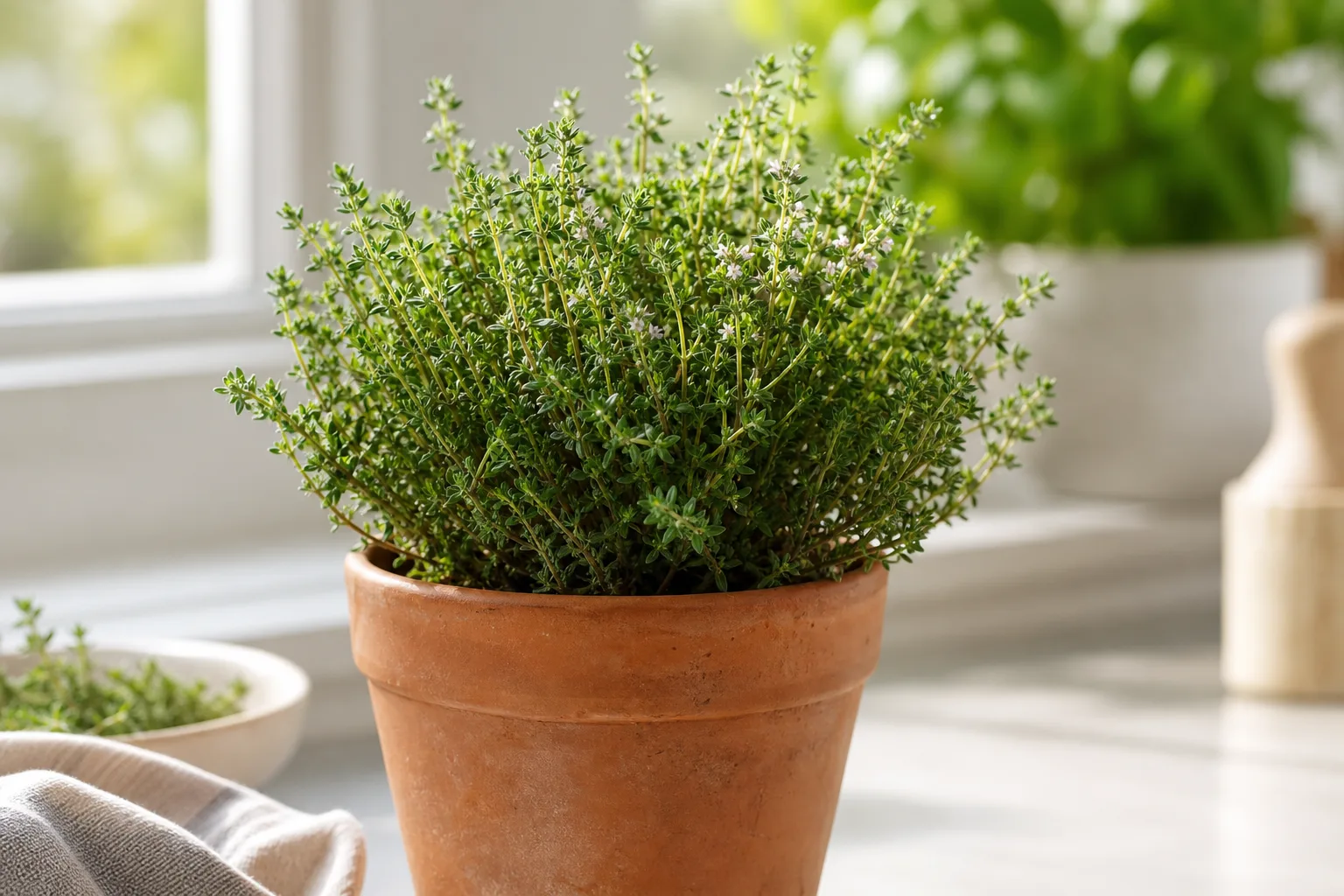
How to Water Thyme: Moisture Checks, Pots and Seasons
How to Water Thyme: Moisture Checks, Pots and Seasons
Thyme needs a dry-down between waterings
Common thyme (Thymus vulgaris) prefers soil that dries between waterings. Water it thoroughly when the root zone has dried, then allow excess water to drain. Do not keep it on a fixed weekly schedule. NC State Extension describes thyme as drought-tolerant once established and adapted to dry, well-drained soil (NC State Extension); the RHS plant profile likewise lists drought tolerance.
That rule has one important exception: new transplants and young cuttings need closer moisture checks while their roots establish. Even then, the aim is evenly moist around the developing roots, not waterlogged soil. For the plant’s full conditions, start with the Thyme overview; for mix and drainage, use the Thyme soil guide.
Why common thyme is vulnerable to overwatering
Thyme is a woody-based herb from Mediterranean growing conditions, not a bog plant or a thirsty tropical herb. Penn State Extension notes that established plants need little watering, while young plants should be kept moist during establishment (Penn State Extension). Plantura similarly recommends checking the soil and allowing it to dry between waterings (Plantura).
Roots sitting in cold, airless, saturated mix are more concerning than a short dry interval for an established plant. If the pot remains wet, first examine the mix, container and rain exposure before watering again. The Thyme light guide also matters: a plant in dim light uses water more slowly than one growing in bright sun.
Watering newly planted thyme
Water a new thyme plant thoroughly after planting so the root ball and surrounding mix make contact. During the first few weeks, check the soil more frequently than you would for an established plant. If the mix is drying and the plant is still settling in, water again before the whole root ball becomes severely dry. Penn State Extension recommends keeping young plants moist while established plants require less supplemental water (Penn State Extension).
Do not water every day just because the plant is new. Feel below the surface first, and make sure drainage holes are open. If a recently planted thyme wilts while the mix is wet, extra water is not the fix; check whether roots are oxygen-starved or the pot is holding runoff.
Watering established thyme outdoors
Once garden-grown thyme is established, rainfall may provide most of its water in many climates. During a prolonged hot, dry spell, water deeply at the base when the soil around the roots has dried. NC State identifies common thyme as drought-tolerant and suited to dry, sandy or rocky soil (NC State Extension). A small, frequent sprinkle encourages shallow wetting and does little to correct a dry root zone.
The exact interval depends on soil, rainfall, sun and temperature. Check beneath the mulch or surface crust rather than judging only by how the top looks. The RHS advises free-draining conditions and warns against winter wet for thyme (RHS how-to-grow guide).
Watering thyme in a pot
Containers dry faster than garden beds in hot, sunny weather, but they can also stay waterlogged when oversized or filled with dense mix. Plantura notes that container thyme dries more quickly and should be checked more often, while still letting the soil dry between waterings (Plantura). The Spruce likewise recommends occasional, thorough watering and more frequent checks for young plants (The Spruce).
Keep thyme in a pot with drainage holes and do not leave it standing in a water-filled saucer. If the root ball dries in a day during extreme heat, check it daily but water only when the mix actually needs it. For container size and recovery after a move, see the Thyme repotting guide.
Check moisture below the surface
Use a finger or wooden skewer to check the mix about 2–3 cm below the surface. Plantura recommends this depth and advises watering once the soil there is dry (Plantura). For a deeper pot, check more than one spot: the surface can be dry while the centre of the root ball remains cool and damp.
Lift the pot occasionally to learn how it feels when dry versus freshly watered. A noticeably lighter pot is a useful cue, but combine it with a soil check. Do not rely on a moisture meter alone in a gritty mix unless you know how it behaves in that particular container.
Water deeply and let the pot drain
When the mix has dried sufficiently, pour water slowly over the soil until it runs from the drainage holes. Let the pot drain completely, then empty the saucer or cachepot. This wets the root zone more evenly than repeated small sips on the surface. Water near the base rather than repeatedly soaking foliage; Plantura recommends directing water at the base because wet leaves can encourage fungal growth (Plantura).
If water runs straight down the side without wetting the root ball, apply it in two or three slow passes a few minutes apart. If it pools on the surface for a long time, the mix may be compacted or too fine. The Thyme soil guide covers ways to restore drainage.
Adjust for heat and active growth
Hot weather, wind and strong sun can make a small pot dry quickly. Check containers more often during heat waves, especially on exposed balconies, but do not water automatically every day. Plantura notes that high-summer thyme may need more frequent watering in hot, dry weather and that pots dry faster than beds (Plantura).
As temperatures fall or growth slows, soil may stay moist longer. Let the dry-down guide the interval. If a potted plant is moved into stronger light, monitor the mix more often for the first couple of weeks; the Thyme light guide explains how to acclimate it without creating heat stress.
Manage rain and monsoon humidity
In rainy or humid climates, natural precipitation may be enough, and sheltering a pot from repeated downpours can be more important than adding water. Keep the container elevated slightly if drainage holes rest against a flat surface, and empty any saucer after rain. The RHS warns that thyme dislikes winter wet (RHS how-to-grow guide); warm monsoon saturation poses a similar practical drainage challenge even though the temperatures differ.
In India’s wet season, place a pot where it still receives strong light and airflow but does not collect days of continuous rain. Do not move it into deep shade just to keep it dry. If garden soil holds water, improve the site or grow thyme in a raised, open mix rather than trying to manage heavy soil with a strict watering calendar.
Reduce watering during cool or dim periods
Thyme generally uses less water when light and growth slow. Check the root zone, but expect longer intervals in cool weather, short winter days or a dim indoor room. The RHS specifically recommends free-draining soil and protection from excessive winter wet for thyme (RHS how-to-grow guide).
Do not carry a summer watering routine into winter without checking. A pot near a bright window may still dry, while one in a cool, low-light room can remain damp much longer. Avoid fertilizing a plant that is not actively growing; the Thyme fertilizer guide explains how feeding relates to growth.
Read overwatering and drought signs
Overwatering is more likely when soil stays wet, leaves yellow or soften, stems collapse near the crown, or the pot develops a sour smell. Dry stress is more plausible when the mix is dry through the root zone and leaves or shoots lose firmness. Do not diagnose from wilting alone; dry roots and damaged wet roots can both cause a drooping appearance.
The RHS profile describes common thyme as drought-tolerant (RHS plant profile), but young plants and small pots still need monitoring in hot weather. If the plant looks stressed, check moisture and drainage before either increasing the water or moving it into harsher sun.
Separate root rot from drought stress
If the pot is wet and the plant is collapsing, stop watering and inspect drainage. Smelly, dark, mushy roots are consistent with root damage from prolonged wet conditions; remove only clearly dead tissue with clean tools and repot into a fresh, open mix if the plant has viable roots and shoots. Do not fertilize a plant with damaged roots.
If the mix is dry down to the root ball, water thoroughly and let excess drain. A wilted plant that perks up after watering was more likely short of moisture; one that remains limp in wet soil needs a root-zone assessment. The Thyme repotting guide explains how to minimize stress when a damaged or compacted mix needs replacement.
Fix drainage before changing frequency
If the soil stays wet long after watering, changing the interval may not be enough. Check for blocked holes, a decorative outer pot holding runoff, an oversized container, or a dense peat-rich mix that dries slowly. Gardening Know How emphasizes good drainage and a light soil texture for thyme (Gardening Know How).
Use a smaller pot when the root mass is small, refresh degraded mix, and select a container with clear drainage. Do not add gravel at the bottom as a substitute for a drainage hole. The Thyme soil guide gives mix adjustments for garden and container conditions.
Keep leaves and crown from staying wet
Water the root zone rather than spraying the whole plant. Thyme tolerates dry air better than persistently damp foliage and crowded growth. Bonnie Plants notes that thyme needs well-drained conditions and that poor drainage can contribute to root rot (Bonnie Plants). Space neighboring plants so air can pass around the stems, and remove dead leaves from the pot surface.
The plant’s own foliage may catch rain outdoors; that is different from keeping the root zone continuously saturated. Focus on drainage and how long the mix remains wet rather than trying to keep every leaf dry.
Use a practical watering routine
- Check soil below the surface before watering.
- If the root zone is still cool or damp, wait and check again later.
- If it has dried sufficiently, water slowly until runoff appears.
- Let the pot drain and empty the saucer.
- Record roughly how long dry-down took, then adjust for weather and light.
A weekly reminder to inspect is more useful than a weekly watering rule. As growth, pot position and seasons change, the mix will dry at different speeds. If you are also deciding how much to feed, check the Thyme fertilizer guide after confirming that light, roots and moisture are appropriate.
Conclusion
Water common thyme when the root zone has dried, then water thoroughly and let excess drain. Young plants need closer checks while they establish; mature plants are drought-tolerant and generally need less supplemental water. Containers, hot balconies and small pots can dry quickly, while monsoon rain, winter wet and dim indoor positions can keep roots saturated. Check the soil, drainage and light before changing frequency.
When to use this page vs other Thyme guides
- Use Thyme overview for the complete care picture.
- Read Thyme soil when the pot remains wet or drains slowly.
- See Thyme light when dry-down changes after a move.
- Use Thyme fertilizer before adding nutrients to slow growth.
- Visit Thyme repotting if roots or old mix are the issue.
Related Thyme guides
- Thyme overview puts watering in context with light, soil and growth.
- Thyme soil covers drainage and mix structure.
- Thyme light explains how exposure changes drying speed.
- Thyme fertilizer helps decide whether a growing plant needs feeding.