Thyme Light Needs: Full Sun, Windows and Heat
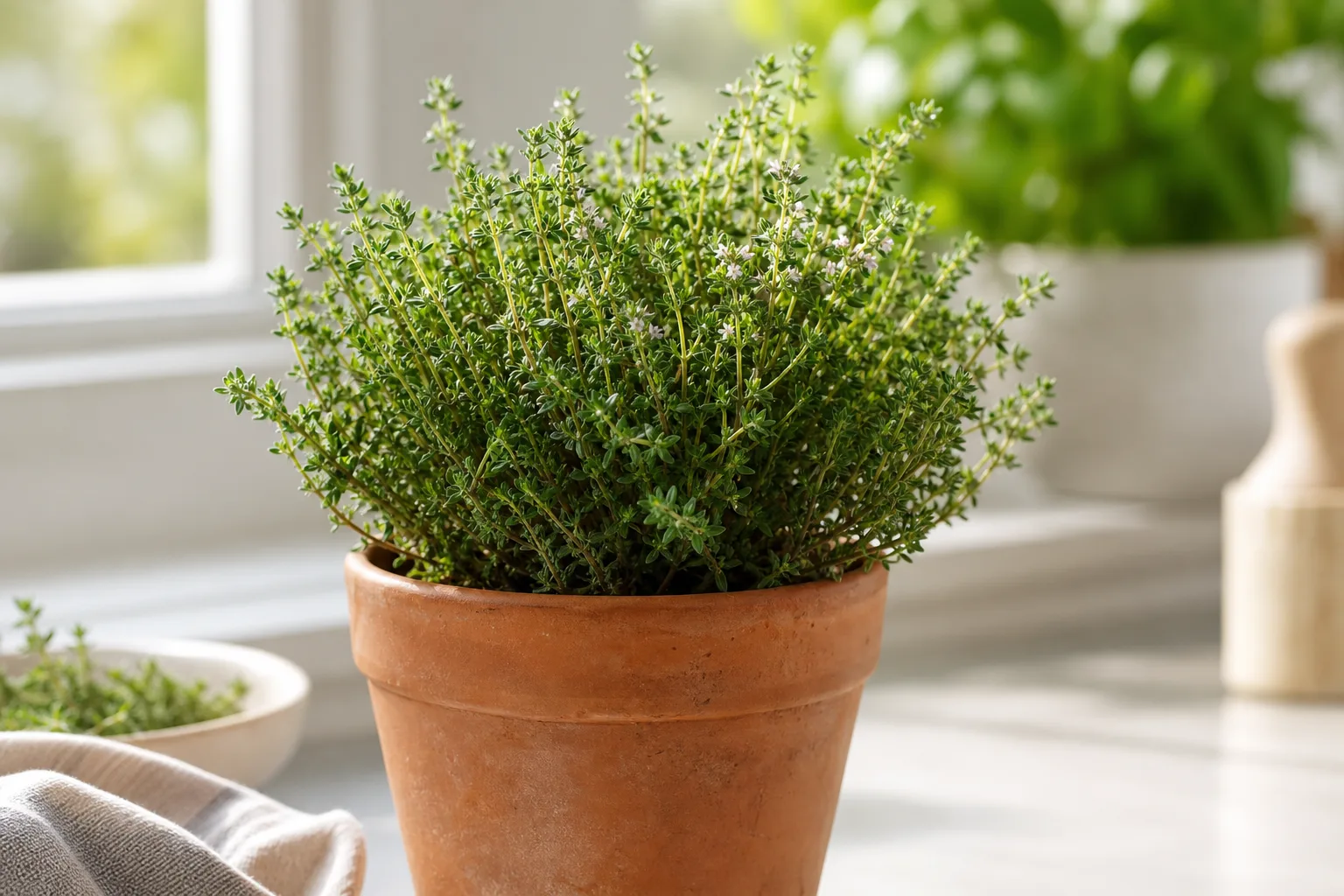
Thyme Light Needs: Full Sun, Windows and Heat
Thyme Light Needs: Full Sun, Windows and Heat
The short answer: thyme wants sun
Common thyme (Thymus vulgaris) grows best in full sun. Choose the brightest practical place you have: a sunny outdoor bed, balcony, or a window that receives several hours of direct light. The NC State Extension profile and RHS profile both list full sun as its preferred position.
Thyme can survive less-than-ideal light for a while, but survival is not the same as steady, compact growth. If shoots lengthen, lean toward a window, or become thin and widely spaced, increase light before changing fertilizer. For overall growing conditions, start with the Thyme overview and use the Thyme watering guide to adjust watering after a move.
Why common thyme needs a bright position
Common thyme is a low, woody-based Mediterranean herb adapted to sunny, relatively dry places. That habitat helps explain why a bright, open position and a freely draining root zone work together: shade slows growth and drying, while wet mix around a slow-growing plant creates avoidable stress. The RHS describes thyme as a sun-loving herb suited to warm sites (RHS how-to-grow guide).
Do not confuse common thyme with creeping thyme simply because both are sold under the same common name. T. vulgaris forms a small bushy mound and is generally grown for culinary leaves; creeping species spread low across the ground. Penn State Extension lists common thyme for full sun to partial shade, but the sunnier end of that range is the better starting point for a compact culinary plant (Penn State Extension).
How many hours of sun to aim for
Aim for roughly six or more hours of direct sun each day when growing outdoors. Gardening Know How describes thyme as needing six to eight hours of full sun, and The Spruce gives a similar range (Gardening Know How; The Spruce). Treat the number as a practical target, not a stopwatch requirement: season, latitude, window glass, heat and plant acclimation all affect how much useful light reaches the leaves.
Bright shade or a bright room without direct sun may keep a thyme plant alive, but it often produces slower, looser growth. A plant that is not growing much in winter may simply be responding to shorter days; avoid compensating with extra water or fertilizer while growth is slow.
Choose an outdoor location
In a garden, choose a spot with open sky and sun for much of the day. A rock garden, raised bed or sunny border can work if water drains away quickly. Avoid a position underneath dense shrubs or on the shaded north side of a wall. The RHS recommends a warm, sunny location with free drainage for thyme (RHS how-to-grow guide), and Bonnie Plants also describes thyme as a full-sun herb (Bonnie Plants).
If the garden receives strong sun only in the morning, try it before assuming the site is unsuitable. Observe the plant’s new growth over several weeks: sturdy shoots and a compact outline are better evidence of a workable spot than one hot afternoon. The full Thyme soil guide helps distinguish a light issue from a root-zone problem.
Place thyme on a balcony or patio
Balconies vary sharply by orientation and nearby buildings. Track direct sun on the actual pot rather than relying only on whether the balcony is called east-facing or south-facing. Move the container to the brightest place that does not repeatedly overheat it or leave it soaked by rain.
In very hot regions, morning sun with some protection from the harshest late-afternoon heat can be a useful compromise for a potted plant, especially after a move from shade. This is a practical adjustment for local heat, not a reason to keep thyme in dim light. If the plant becomes thin or leans, increase the hours of direct light gradually.
Find the brightest workable indoor window
For indoor thyme, use the brightest window available and place the pot close enough to the glass to receive direct light. A sunny south- or west-facing window may provide strong light in cooler climates; in hot climates, glass can heat leaves and pots, so observe the plant during the hottest part of the day. The Spruce recommends a sunny windowsill for indoor thyme and notes its preference for six to eight hours of light (The Spruce).
A room that feels bright to a person can still be dim for a sun-loving herb if the pot sits several metres from the window. Keep it away from deep interior shelves and move it closer to the light source before pruning leggy growth. If window light is inadequate through winter, try a grow light or move the plant outdoors when conditions become suitable.
When a grow light can help
A grow light can supplement short winter days or a weak window, especially if thyme is kept indoors year-round. Use a plant-rated full-spectrum fixture according to its manufacturer’s distance and timing instructions; avoid placing a hot lamp so close that it warms or dries the leaves excessively. A timer makes light more consistent than switching the lamp on only when the plant looks pale.
Watch the newest growth after a change. If new stems stay compact and leafy, the added light is helping. If growth remains sparse, also check root health, watering and drainage. The plant’s response is more useful than assuming every LED bulb supplies the same intensity.
Read low-light symptoms accurately
Low light commonly shows up as elongated stems, larger gaps between leaf pairs, a plant leaning toward the window, and slow production of new shoots. The plant may also become open in the centre. These signs indicate that the current position is not supporting the compact form growers want, even if older leaves remain green.
Move the pot into brighter light gradually and assess fresh growth; existing stretched stems will not shorten. Prune only after new shoots are growing so the plant retains enough leafy tissue. The Thyme pruning guide explains where to trim woody growth safely.
Tell shade stress from watering and root problems
A drooping or yellowing thyme plant does not automatically need more sun. If the potting mix stays wet, roots may be struggling from poor drainage; if it is very dry, the plant may need water. Check the mix at root depth before moving a stressed plant into hotter direct sun. The Thyme watering guide shows how to make that check, and the Thyme soil guide covers a dense mix that stays damp.
Change one factor at a time. If the plant has both low light and wet soil, improve drainage and increase light carefully rather than exposing it suddenly to full afternoon heat. This makes the response easier to read and reduces the chance of adding a second stress while correcting the first.
Acclimate thyme before stronger sun
A thyme plant bought from a shaded nursery bench or kept indoors should not be moved straight into the strongest midday sun. Start with a few hours of gentler morning sun, then increase exposure over about a week as long as leaves remain firm and unscorched. If the plant already grows outdoors in full sun, it does not need this transition when moved to a similar site.
After the move, inspect the newest and most exposed leaves. Pale, crispy patches can indicate sudden sun scorch; stretched new stems suggest the plant still needs more light. Do not change watering to a rigid schedule during acclimation—the container may dry faster in the new position, so check the root zone more often.
Manage heat without putting thyme in deep shade
In an Indian summer or a hot, enclosed balcony, direct sunlight can coincide with high leaf and pot temperatures. If a recently moved plant shows midday stress, give it a short recovery period in bright morning sun and light afternoon protection, then reassess. Avoid a dark indoor corner as a permanent response; it may trade heat stress for persistent low light and slow dry-down.
A light-coloured pot, spacing for airflow and protection from reflected heat off a metal wall can make the site easier to manage. Keep the root mix draining freely, and use the Thyme soil guide if the pot remains hot and wet for long periods.
Adjust light and water together
A brighter location usually increases how quickly a container dries; a dimmer location can slow water use. After moving thyme, check moisture more often for the first couple of weeks, but water only when the mix has dried sufficiently below the surface. Do not keep the same watering interval if light, temperature or season has changed.
This is why the Thyme watering guide pairs naturally with light adjustments. If growth is slow in winter, the plant may use less water even when it remains near a bright window. Keep the pot draining and avoid leaving it in a saucer of runoff.
Rotate and space pots for even growth
If a plant is in a window, turn the pot a quarter-turn every week or two so that one side does not receive all the light. Outdoor pots need not be rotated if sun reaches them evenly, but leave enough space for air movement and to avoid shading by larger neighbouring plants. The RHS notes that thyme grows in sunny positions in beds and containers (RHS how-to-grow guide).
Do not repeatedly move the plant between very different conditions just to chase the sun. A stable bright position gives it time to grow evenly, and any change can be judged from the new shoots.
A pet-aware windowsill setup
If cats or dogs can reach the pot, choose a stable windowsill or shelf where it cannot be knocked over. The ASPCA lists common thyme (Thymus vulgaris) as non-toxic to cats and dogs (ASPCA Animal Poison Control); that classification does not mean pets should eat large amounts or access concentrated thyme oils. Keep the pot secure and avoid placing it where chewing can damage both the plant and the container.
A simple placement routine
First, mark how many hours direct sun reaches the current spot. Second, move thyme closer to the strongest suitable light source, changing exposure gradually if it has been shaded. Third, check soil moisture at depth because dry-down may change with the new placement. Finally, judge success from compact new growth over the next few weeks rather than trying to reverse old stretched stems.
For a plant that still declines in a sunny site, review the broader Thyme overview and check whether wet soil, a root problem or recent transplant stress is more likely than light alone.
Conclusion
Common thyme prefers full sun, with at least several hours of direct light as a practical starting point. Outdoors, choose an open sunny site; indoors, use the brightest window or supplement weak light. In very hot climates, soften the harshest afternoon exposure for a stressed container without settling for deep shade. Acclimate gradually, then match watering to the new dry-down rate.
When to use this page vs other Thyme guides
- Use Thyme overview for the complete care picture.
- Read Thyme watering when a move to brighter light changes how quickly the pot dries.
- See Thyme soil if the root zone stays wet despite a sunny position.
- Use Thyme pruning to manage existing stretched or woody stems.
- Read Thyme fertilizer before feeding a slow-growing plant.
Related Thyme guides
- Thyme overview connects light to the full care routine.
- Thyme watering covers moisture checks after a placement change.
- Thyme soil helps create a fast-draining root zone.
- Thyme pruning explains how to encourage a compact shape.