Thyme Soil Guide: Drainage, Mix and pH
Thyme Soil Guide: Drainage, Mix and pH
Thyme Soil Guide: Drainage, Mix and pH
The short answer: drainage comes first
Common thyme (Thymus vulgaris) grows best in a loose, free-draining root zone. Use sandy, gritty or loamy soil that allows excess water to escape rather than dense mix that stays wet. NC State Extension describes thyme as suited to dry, sandy or rocky soils with good drainage (NC State Extension). The RHS profile lists chalk, loam and sand as suitable soil types and specifies well-drained conditions.
If your thyme is declining, check how quickly water moves through the pot or bed before adding fertilizer. A dense, wet mix is more likely to be the problem than a need for richer soil. The Thyme watering guide explains how soil structure changes the time between waterings.
Why common thyme needs an open root zone
Thyme is a woody-based Mediterranean herb. Its roots need air as well as moisture; a mix that stays saturated can leave them stressed even when the foliage looks thirsty. The RHS describes thyme as a sun-loving plant for free-draining soil, and recommends avoiding winter wet (RHS how-to-grow guide). Penn State Extension likewise describes thyme soil as light, dry and well drained (Penn State Extension).
That differs from herbs that grow best in rich, consistently moist soil. Keep thyme in a medium that accepts water but drains away surplus. The Thyme overview places soil in context with light, watering and pruning.
Soil texture that suits thyme
A suitable mix feels loose and crumbly, not sticky or compacted. Sand, small gravel or horticultural grit can increase the coarse mineral fraction; a potting medium provides structure and some moisture-holding capacity. Gardening Know How recommends light, sandy or rocky soil for thyme and stresses drainage where garden soil is heavy (Gardening Know How). Plantura similarly emphasizes well-drained soil for common thyme (Plantura).
Avoid using fine beach sand or construction sand with unknown salts or contaminants. Choose clean horticultural grit or coarse sand intended for growing media. The goal is a stable, airy mix, not a pot filled with pure sand that dries too fast and holds too little root moisture.
Make heavy garden soil drain better
If garden soil is clayey and remains sticky after rain, thyme may do better in a raised bed, rock garden or container than in a planting hole amended only with a small pocket of grit. A shallow amendment surrounded by dense clay can collect water rather than drain it. Improve a broad area with coarse organic and mineral structure, or raise the planting zone so water can move away.
The RHS lists loam and chalk as suitable where drainage is good, rather than requiring a single soil type (RHS profile). In wet climates, site selection and elevation matter as much as the mix ingredients. Do not place thyme in a low spot where runoff repeatedly pools.
Mix a container medium for thyme
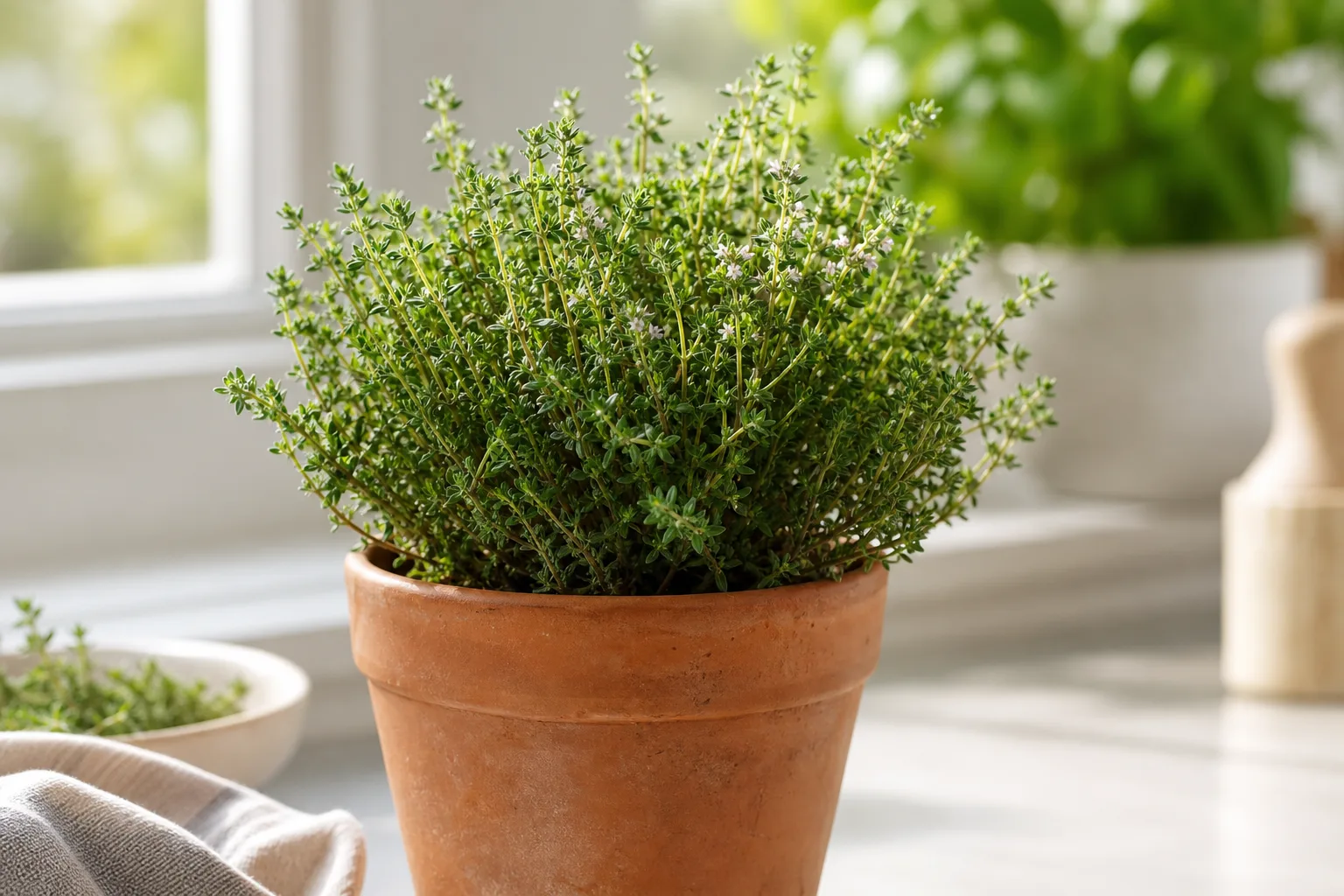
For a pot, begin with a reliable potting mix and blend in a substantial amount of coarse horticultural grit or perlite so water drains freely. Keep enough organic component for the root ball to hold some moisture between checks, but avoid a heavy, compost-rich mix that stays wet. The Spruce recommends sandy or loamy soil and describes terracotta as useful because it dries more readily than some pot materials (The Spruce).
There is no single universal ratio for every pot, climate and ingredient. Test a small batch: it should wet evenly, then release excess water promptly. If water sits on the surface or the mix forms a dense plug, add more coarse material or select a lighter base. The Thyme repotting guide covers moving the plant without burying its woody crown.
Choose a practical soil pH
Common thyme generally suits neutral to mildly alkaline soil. NC State lists a neutral-to-alkaline preference, Penn State reports a pH of 6.3, and RHS lists neutral or alkaline conditions (NC State Extension; Penn State Extension; RHS profile). Those references differ slightly in how they characterize the preferred range, so treat pH near neutral as a useful broad target rather than chasing a precise number.
If thyme grows well, do not amend soil just to move a test result by a fraction. Test pH when you have a reason, such as persistently poor growth in a bed with known acidity or alkalinity. Do not add lime or sulfur without understanding the current soil and following local extension guidance.
Keep the mix lean but not lifeless
Thyme does not need a highly enriched medium. Penn State notes established plants require no fertilizer under ordinary conditions (Penn State Extension). Bonnie Plants also emphasizes drainage for thyme, though its planting advice differs from some extension guidance on how much compost and fertilizer to use (Bonnie Plants). For a container, choose a modestly fertile base, then rely on light and drainage rather than repeated additions of rich material.
If growth is weak, first confirm the plant receives enough sun and the mix is not waterlogged. A Thyme fertilizer guide can help decide whether a dilute feed is appropriate after those basics are corrected.
Use compost carefully
A small amount of mature compost can improve the structure of very poor garden soil, but a thick, rich layer is unnecessary for thyme. Excess organic matter can hold too much moisture in a small container. Gardening Know How advises avoiding overly rich, moist soil for thyme (Gardening Know How).
Do not confuse improving soil structure with adding more nutrients. Coarse mineral material helps drainage; compost contributes organic matter and nutrients. Use the type of amendment that addresses the actual problem, and change one thing at a time.
Choose containers that help soil dry
Use a pot with one or more open drainage holes, sized to the root ball. Unglazed terracotta can lose moisture through its walls more readily than plastic, while glazed ceramic and plastic usually hold moisture longer. Container material changes the dry-down rate but cannot compensate for a dense mix or blocked holes. Plantura notes that potted thyme dries sooner than garden-grown plants, so check more often while still allowing the soil to dry between watering (Plantura).
Do not jump to an oversized pot to avoid frequent checks. A large volume of soil around a small root system stays wet longer. If roots are tightly circling, move up only one container size and use fresh, open mix.
Drainage holes matter more than gravel
A drainage hole is essential. Water needs a route out of the pot; a layer of stones at the bottom does not make an otherwise sealed container drain. Keep the hole clear of compacted soil and elevate the pot slightly if it rests on a surface that blocks runoff.
After watering, empty the saucer or decorative outer pot. The Thyme watering guide offers a practical soak-and-drain routine. If the container has no hole and cannot be drilled, keep thyme in a draining nursery pot set inside the decorative cover.
Mulch lightly and keep the crown open
A light mineral mulch such as grit can reduce splashing and keep the base from being buried in wet organic debris. Keep mulch away from the woody crown and do not use a thick, moisture-trapping layer in a humid climate. The crown needs airflow and should remain at or just above the soil surface after planting.
For a garden bed, leave enough space around thyme for air movement and access for pruning. The Thyme pruning guide explains how to remove crowded growth without cutting into old bare wood.
Match watering to the soil mix
The right watering interval depends on how quickly the medium dries. A gritty container mix in hot sun may need more frequent checks than a clay pot in cool, rainy weather. Do not copy a schedule from another grower unless the pot size, exposure and mix are similar. The Thyme light guide explains why a sunnier placement usually changes dry-down.
After watering, the mix should drain rather than remain saturated. If it is dry at the surface but wet deeper down, wait. If water runs around the root ball without soaking it, re-wet slowly or replace a hydrophobic, degraded mix.
Adjust soil care for humid and rainy climates
In tropical or monsoon conditions, drainage and airflow deserve extra attention. Use a raised bed or container if garden soil stays saturated after heavy rain. Keep the pot under bright shelter during prolonged downpours, but do not place it in deep shade. The RHS warns that thyme is vulnerable to winter wet (RHS how-to-grow guide); in warm climates, prolonged rain creates a comparable moisture-management problem.
In drier inland sites, avoid making the soil so coarse that a small pot becomes parched within hours. Balance drainage with enough fine material for an even wetting, then observe how fast the root zone dries in the actual location.
Read signs of a poor soil setup
A pot that stays heavy and wet for several days, water that pools on the surface, yellowing lower leaves, or a soft, dark crown can point to poor drainage or excessive moisture. A mix that shrinks away from the pot wall and will not absorb water evenly may be degraded or hydrophobic. Small plants that dry completely within a day may have too little root volume, an undersized pot, or exposure that is too hot.
Do not diagnose every yellow leaf as a nutrient shortage. Check root condition, light and watering first. The Thyme overview helps compare those factors before you repot or add fertilizer.
Repair or replace a failing mix
If the existing mix is compacted but the roots are healthy, improve it at the next suitable repotting rather than repeatedly poking holes around the plant. Remove loose old mix gently, preserve healthy roots and settle the plant into a fresh, free-draining blend at its previous depth. Water once to settle the mix and let the pot drain.
If only the garden bed is heavy, change the planting site or raise the growing area instead of creating a small amended pocket. Keep the plant in bright light while it recovers and avoid feeding until new growth appears. See the Thyme repotting guide for timing and aftercare.
Conclusion
Common thyme needs open, well-drained soil more than rich soil. Use a sandy or gritty structure, keep the woody crown uncovered, and choose a pot with free drainage. Neutral to mildly alkaline conditions are a sensible broad target, but drainage, sun and a measured watering routine matter more than chasing a precise pH. If the mix stays wet, repair the root environment before feeding.
When to use this page vs other Thyme guides
- Use Thyme overview for the full care plan.
- Read Thyme watering when you need to adjust dry-down checks.
- Visit Thyme repotting to refresh compacted container mix.
- See Thyme light if growth stays sparse in a suitable soil.
- Use Thyme fertilizer after confirming light and drainage are sound.
Related Thyme guides
- Thyme watering pairs moisture checks with the soil mix.
- Thyme repotting covers pot size and mix replacement.
- Thyme fertilizer explains restrained feeding.
- Thyme overview connects soil with light and pruning.