Not Enough Light on Tulsi: Causes, Checks & Fixes
Quick answer
Not enough light makes Tulsi stretch toward windows, thin its leaves, and lose aroma and purple tint. First step: move the pot to your brightest spot-full sun outdoors or a south or west window indoors-and adjust watering to match faster growth.
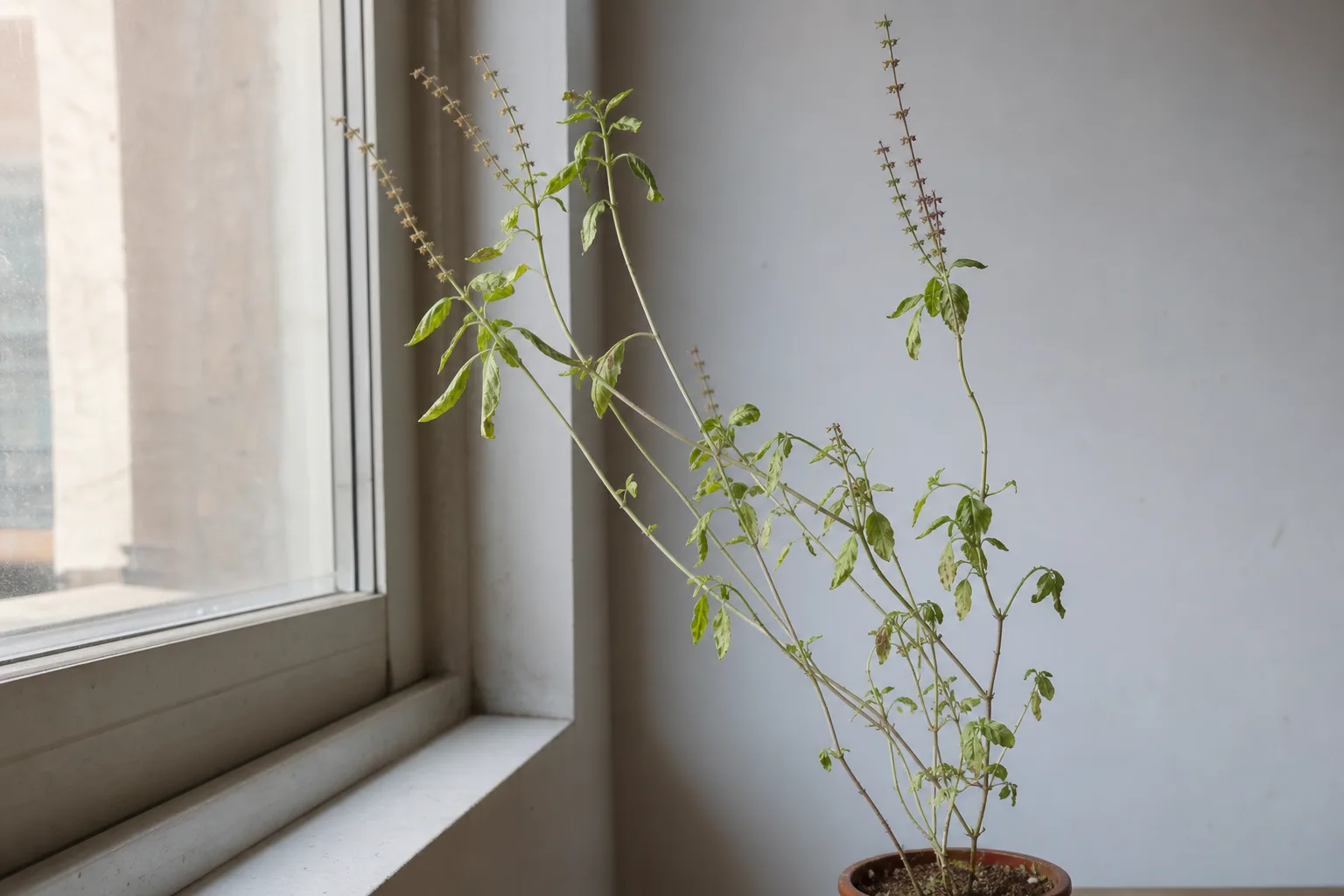
Not Enough Light on Tulsi: Causes, Checks & Fixes
This guide covers not enough light on Tulsi. See also the general Not Enough Light guide, watering, and light pages for this plant.
Not Enough Light on Tulsi: Causes, Checks & Fixes
Quick answer
Tulsi (Ocimum tenuiflorum, holy basil) is a sun-loving culinary and medicinal herb, not a low-light houseplant. Missouri Botanical Garden notes that holy basil grows best in full sun. When light is too low-common on indoor windowsills through winter-the plant stretches toward the brightest pane, leaves thin and pale, purple stems fade green, and the signature clove-mint aroma weakens.
First step: move the pot to your brightest available location-outdoor full sun when temperatures stay above 15°C (59°F), or a south or west window indoors. Do not fertilize, repot, or drench with water on day one. Give the plant one to two weeks in better light, then adjust watering to match faster dry-down.
This page owns placement, color fade, wet-soil-in-shade, and acclimation. If your main problem is long sparse stems in already-bright light with neglected pinching, see leggy growth on Tulsi instead.
What not enough light looks like on Tulsi
Low light on Tulsi shows up as a pattern across growth habit, leaf quality, and soil rhythm:
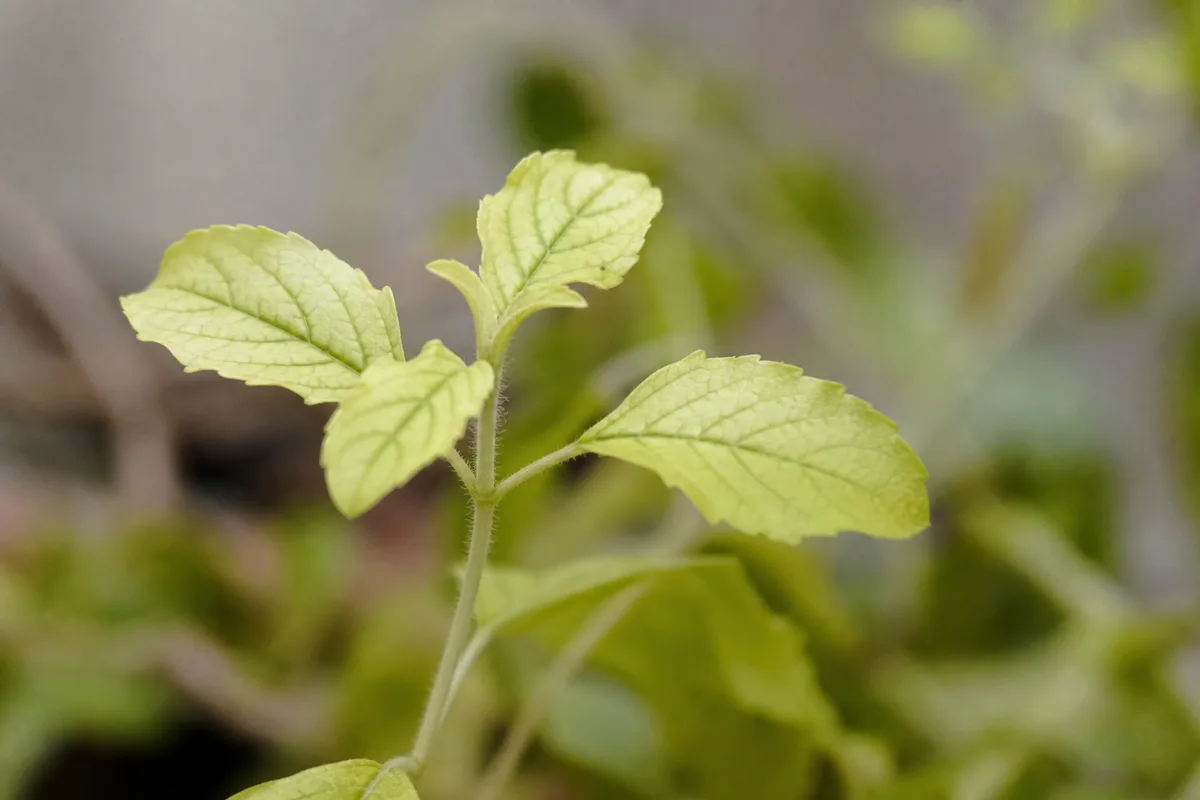
Not Enough Light symptoms on Tulsi - compare with healthy tissue on the same plant.
Leaf and stem quality
- Newest leaves opening smaller, thinner, and paler green than leaves formed in full sun
- Purple stem pigment fading toward plain green on indoor specimens
- Weak aroma when you crush a leaf-one of the clearest Tulsi-specific low-light signals
- Soft, floppy new growth that cannot hold upright without leaning
Growth habit
- Strong lean toward the brightest window or door
- Long gaps between leaf pairs on new shoots-etiolation as the plant reaches for photons
- Stalled or very slow growth, especially November through February indoors
- Fewer flowering spikes and smaller inflorescences when light is chronically low
Secondary stress signals
- Potting mix staying wet for days after you would normally water again
- Yellow lower leaves while the crown still pushes pale thin growth-often low light plus overwatering overlap
- Fungus gnats rising when wet surface soil never dries in a dim corner
Compare with leggy growth on Tulsi: that guide covers shape and pinching when light is adequate but harvest rhythm was neglected. Leggy form can happen in a bright east window if you never pinch; low light adds pale thin leaves, weak aroma, and wet-soil slowdown across the whole plant.
Why Tulsi gets not enough light
Tulsi is bred for full sun
Holy basil belongs with other Mediterranean and tropical sun herbs. The RHS basil growing guide recommends a warm sunny site-Tulsi needs similar or brighter exposure. Indoor growers often treat it like a pothos on a north shelf; that mismatch produces stretch within two to three weeks.
Winter windowsill drop
Daylight hours shrink and the sun angle lowers through winter. A Tulsi that thrived on a summer balcony may etiolate at the same indoor sill by January even though the pot never moved. University of Minnesota Extension notes herbs need strong light for dense growth.
Overhangs, sheers, and furniture shade
Sheer curtains, tinted glass, deep window recesses, and neighboring buildings can cut effective light below what Tulsi needs while the room still feels bright to human eyes. The plant responds to photons at the leaf surface, not ambient room brightness.
Low light slows water use
Tulsi in shade transpires slowly. Soil that dried every two days in summer sun may stay wet a week indoors in winter-raising yellow lower leaves and root stress even when your Tulsi watering guide has not changed. Light correction often fixes dry-down without Tulsi repotting guide.
Confusion with legginess from skipped pinching
A Tulsi in a decent east window can grow tall and sparse if you never harvest or pinch-apical dominance, not placement failure. Check aroma and leaf thickness: weak scent and paper-thin pale leaves mean light is still the limiter. Thick leaves in a bright spot with only tip growth mean pinching-see leggy growth.
How to confirm the cause
Work through these checks in order:
- Aroma test - Crush the newest leaf. Weak or absent clove-mint scent strongly suggests insufficient light on Tulsi.
- Leaf thickness - Compare newest leaves to those from summer outdoor growth. Paper-thin pale leaves confirm light stress.
- Shadow test - Hold your hand above foliage at midday. Full sun casts a sharp shadow; dim indoor light gives almost none.
- Lean direction - Strong phototropism toward one window means the plant is actively seeking light.
- Soil dry-down - If mix stays wet for days, low light may be slowing uptake. Note whether yellow lower leaves accompany wet soil.
- Pinch history - If light is clearly strong and aroma is normal but stems are lone and tall, switch to the leggy-growth guide.
The first fix to try
Move the pot to full sun outdoors when temperatures allow, or the brightest south or west window indoors. Acclimate over three to five days if moving from deep shade-harden off by increasing exposure gradually to avoid sun scorch on pale indoor leaves.
Do not change fertilizer or repot on day one. Better light is the foundation.
Step-by-step recovery
- Relocate - Outdoor full sun is ideal above 15°C (59°F). Indoors, south or west glass beats east; north rarely works long-term for Tulsi.
- Acclimate - Increase light incrementally if the plant was in deep shade. Watch for bleached patches on the first full-sun day.
- Adjust watering - Water when the top inch of soil is dry. Brighter light means faster dry-down-overwatering houseplants in dim conditions often paired with this problem.
- Wait for new growth - Judge the next two or three leaf sets. Thicker, greener, more aromatic foliage confirms the fix.
- Pinch or harvest stretched tissue - Once compact new growth appears, cut back long pale stems above a node pair to encourage branching. Regular harvest is Tulsi’s natural pinching.
- Supplement winter light - A full-spectrum LED 20–30 cm above the canopy for 12–14 hours daily can bridge short winter days indoors.
Recovery timeline
| Stage | What to expect |
|---|---|
| Week 1 | Lean may persist; first new leaves may still be thin while acclimating |
| Week 2–3 | Aroma and leaf thickness should improve on new growth in adequate light |
| Week 4–6 | Side shoots emerge from harvest cuts in warm bright conditions |
| Month 2+ | Old pale stretched stems do not revert-remove them once replacement growth is established |
Lookalike symptoms
| Pattern | What you see | Likely cause | Where to go |
|---|---|---|---|
| Low light (this page) | Pale thin leaves, weak aroma, lean, wet soil | Insufficient photons | Brighter placement |
| Leggy from no pinching | Long stems but normal aroma in bright spot | Skipped harvest/pinching | Leggy growth |
| Overwatering | Yellow lower leaves, sour smell, wet mix | Root stress | Overwatering |
| Aphids | Curled distorted new growth, sticky honeydew | Pest | Aphids |
| Cold stress | Purple-blackened leaves after frost exposure | Temperature, not light | Move to warmth |
Mistakes to avoid
- Treating Tulsi like a shade houseplant - It will survive briefly in low light, then stretch and weaken.
- Fertilizing before fixing light - Nutrients cannot replace sun for an herb.
- Keeping the same watering calendar after moving to sun - Dry-down speeds up; check soil depth instead.
- Expecting old pale stems to thicken - Only new growth recovers; harvest or prune old tissue.
- Ignoring wet soil in the dim corner - Fix light and dry-down together.
When to worry
Low light alone rarely kills Tulsi overnight. Escalate when:
- Multiple leaves yellow while soil stays wet and smells sour
- Stems soften at the base-possible root rot from overwatering in shade
- New growth stays pale and thin after four weeks in confirmed full sun-recheck actual exposure or pests
- Outdoor plants show frost damage-move to warmth, not just more light
How to prevent light problems next time
Grow Tulsi where full sun is realistic for most of the growing season. Bring pots indoors only when temperatures drop, and place them at the brightest window or under a grow lamp. Harvest top pairs of leaves weekly during active growth-that controls height and improves bushiness. If your home cannot deliver strong light, accept that indoor Tulsi will be a short-season plant or switch to a lower-light herb instead of fighting biology.
For stretch-specific pinching workflows when light is already adequate, see leggy growth on Tulsi.
When to use this page vs other Tulsi guides
- Tulsi watering guide - Use for routine moisture checks before assuming not enough light is the main issue.
- Tulsi problems hub - Browse all 5 common issues on this species.
- Leggy Growth on Tulsi - Different entry point when symptoms overlap with not enough light.
- Yellow Leaves on Tulsi - Different entry point when symptoms overlap with not enough light.