Overwatering on Tulsi: Causes, Checks & Fixes
Quick answer
Overwatering on tulsi keeps holy basil roots in soggy mix without dry-down time-often from a summer watering schedule applied in a cool winter room. First step: stop watering until the top inch of soil feels dry and empty any saucer water.
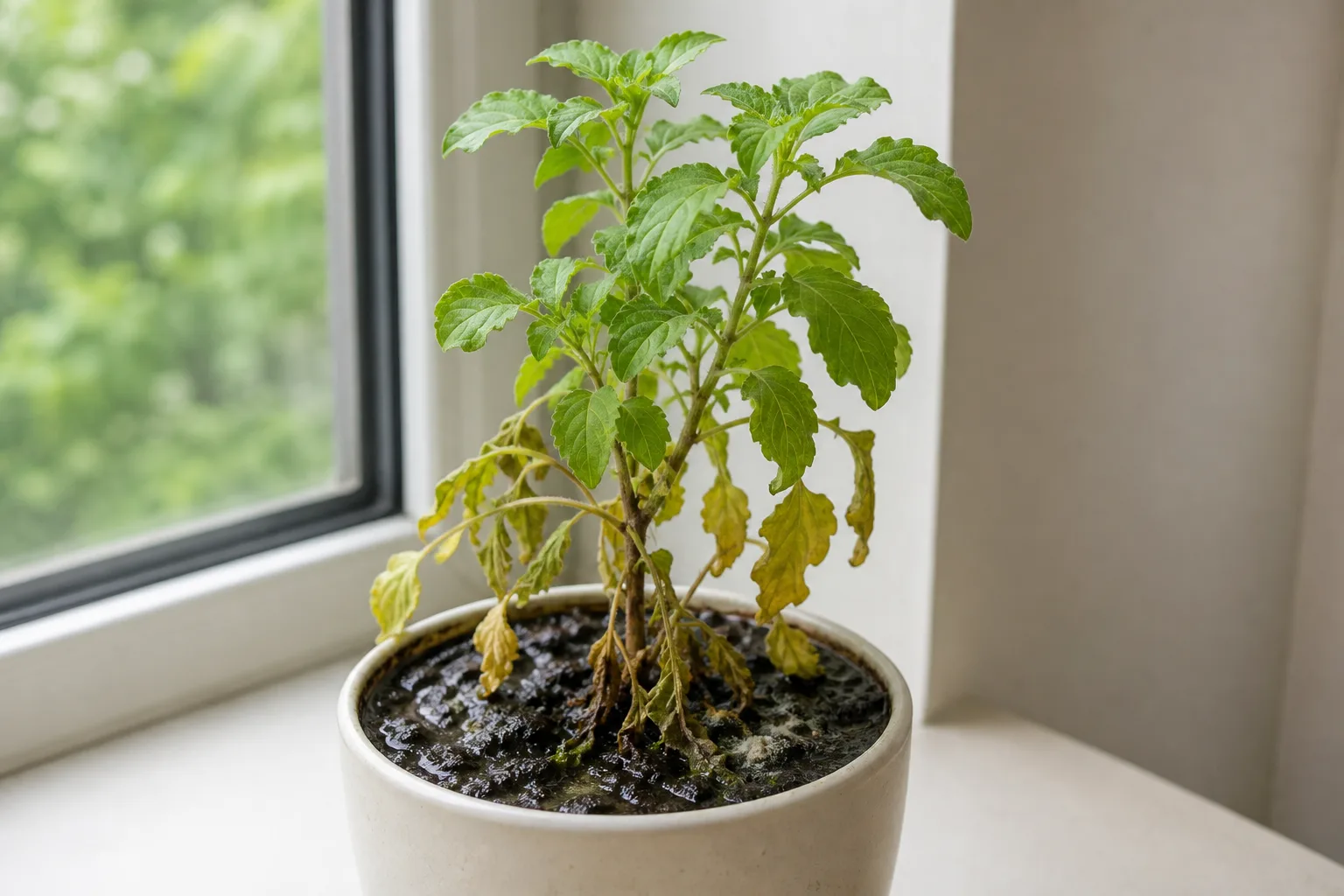
Overwatering on Tulsi: Causes, Checks & Fixes
This guide covers overwatering on Tulsi. See also the general Overwatering guide, watering, and light pages for this plant.
Overwatering on Tulsi: Causes, Checks & Fixes
Quick answer
Overwatering on tulsi (Ocimum tenuiflorum, holy basil) happens when moist soil becomes constantly saturated-not when you water generously once after a dry spell. Tulsi wants evenly moist, well-drained soil during active growth, but herb roots still need air between drinks. Soggy mix displaces oxygen, fine roots die back, and the plant shows drought symptoms on wet soil.
First step: stop watering until the top inch of soil feels dry, and empty any water sitting in the saucer or cachepot. Do not add more water because leaves look limp. On tulsi, wilting with damp soil usually means roots are failing-not that the plant needs another soak.
For full seasonal rhythm and moisture checks, see the tulsi watering guide. If mushy roots and sour smell are already present, escalate to root rot on tulsi.
What overwatering looks like on Tulsi
Tulsi’s fast summer growth and “loves water” reputation hide how quickly containers turn waterlogged. Above soil, overwatering often shows as:
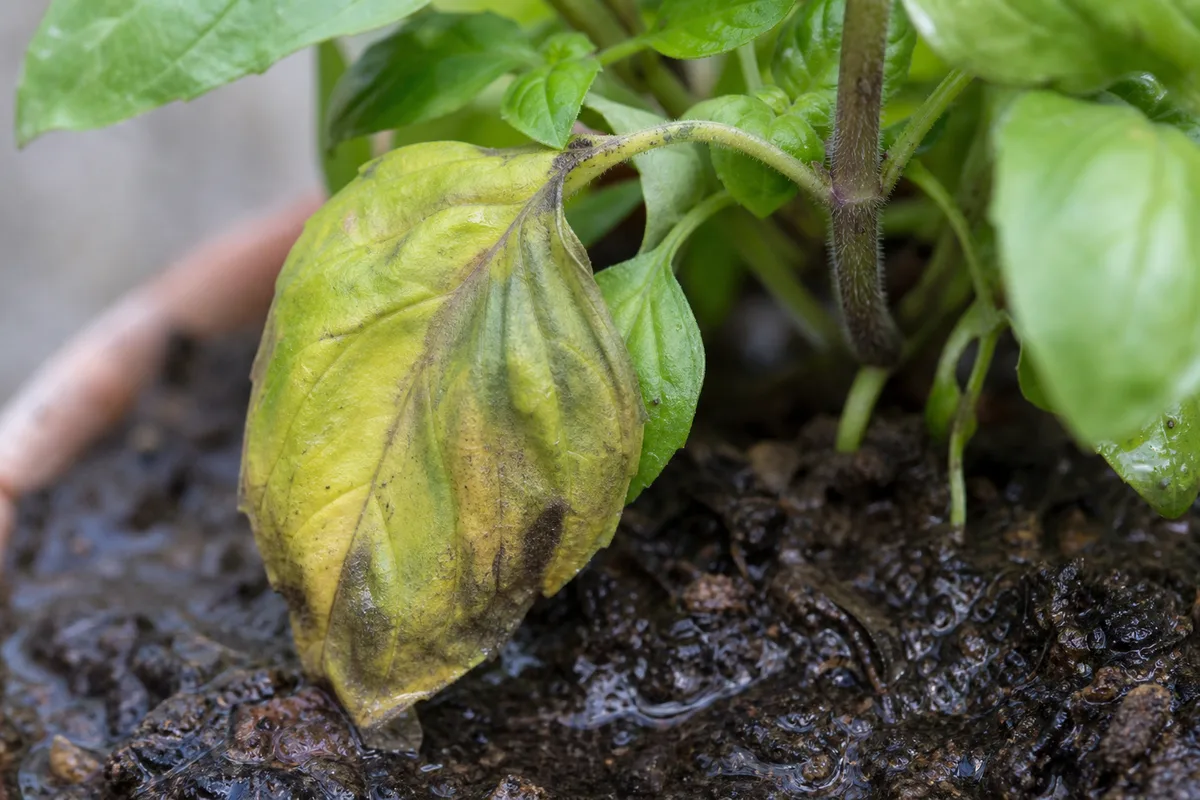
Overwatering symptoms on Tulsi - compare with healthy tissue on the same plant.
- Yellow lower leaves that drop while newer tips may still look green briefly
- Wilting or drooping even though the mix feels wet to the touch-the wet-soil wilt paradox
- Soft or darkening stems at the soil line where roots sit deepest
- Dull fragrance and thin papery leaf texture compared to a healthy bushy plant
- White or green mold on the compost surface
- Small fungus gnats flying up when you water or move the pot-often linked to chronic saucer water and wet mix
- Sour or swampy smell from drainage holes or when you lift the pot edge
- Stalled new shoot tips even though light seems adequate
The cruel trap is that tulsi wilts like a thirsty plant while sitting in wet soil. Damaged roots cannot absorb water even when the pot is heavy. Many growers see limp leaves and water again-which speeds decline toward root rot.
Below soil, healthy tulsi roots are firm and pale white or cream. Overwatered tissue turns brown, soft, or slimy. On this fast-growing aromatic herb, root damage often appears before dramatic leaf symptoms, so unpotting early matters when smell or stem softness appears.
Normal aging to ignore: A few yellow bottom leaves on a heavily harvested plant in good light and evenly moist (not soggy) soil can be simple old foliage. Overwatering is a pattern: persistent wetness, soft bases, smell, gnats, and spreading yellowing-not one leaf alone. For tip-only browning without wet soil, see brown tips on tulsi.
Overwatering vs. underwatering vs. root rot
Tulsi wilts dramatically for both too much and too little water. The fix depends on which side of the line you are on.
| Pattern | Most likely cause | Key check | First direction |
|---|---|---|---|
| Heavy wet pot, yellow lower leaves, no mush yet | Overwatering (this page) | Stop watering; check drainage | Dry-down pause |
| Heavy wet pot, mushy roots, sour smell, wilt persists | Root rot (advanced decay) | Unpot and inspect roots | See root rot |
| Light dry pot, soil pulls from wall, perks after soak | Underwatering | Finger at 1 inch depth | See underwatering |
| Midday wilt, firm stems, dry-ish mix, evening recovery | Heat stress | Wilting time of day | Reduce afternoon scorch |
| Wet soil + white gnats at surface | Chronic wetness (rot risk) | Probe mid-depth moisture | Dry-down; see fungus gnats |
| Yellow whole leaves, wet soil, no smell yet | Overwatering early stage | Pot weight + stem firmness | This page |
The diagnostic that separates overwatering from almost every lookalike on tulsi: limp leaves on soil that is still wet at depth. Healthy roots pull water upward; rotting roots cannot, so the canopy collapses even though the mix feels damp.
Why Tulsi gets overwatered
Holy basil evolved in tropical and subtropical Southern Asia as a sun-loving herb that grows rapidly in warmth. In a pot, that biology meets conditions that keep roots airless: limited drainage, calendar watering, and seasonal light drops growers underestimate.
Common tulsi-specific triggers:
- Watering on habit, not soil checks - A sunny terrace pot in June may need water every 2–3 days, but the same plant in a cool north-facing room in January may take 10–14 days to dry the same depth
- “Moist” confused with “wet” - NC State notes holy basil prefers good drainage with moist soil, meaning damp at depth after drainage-not a swampy surface day after day
- Winter indoor slowdown ignored - Lower light reduces photosynthetic demand. Cooler room temperatures slow root metabolism. Applying a July schedule to that pot drowns roots in cold, stagnant moisture (University of Maryland Extension - overwatering)
- Low light plus frequent water - Tulsi in a short-day winter window grows slowly and drinks little; excess water just sits
- No drainage holes or full saucers - Standing water at the base suffocates roots; sealed decorative pots are especially risky
- Heavy peat or cocopeat-only mix - Dense organic media compacts and stays wet; tulsi needs moisture retention and perlite for airflow
- Plastic pots indoors vs. terracotta outdoors - An 8-inch terracotta pot on a sunny terrace dries faster than the same plant in plastic on a dim sill; calendar watering fails after seasonal room moves
- Balcony monsoon saturation - Heavy rain plus manual top-ups keep mix saturated for days; reduce hand watering when storms soak the pot
- Fear of underwatering - Tulsi wilts dramatically when dry, so owners overcorrect after one dry spell
- Daily harvest without moisture checks - Pinching leaves does not replace checking whether the root zone actually dried
Pathogens such as Pythium find favorable conditions in cool, waterlogged mix (University of Maryland Extension - root rots). The primary cause is still culture-too much water, poor drainage, or both-not random infection.
How to confirm the cause
Work through these checks before Tulsi repotting guide or cutting:
- Soil moisture at 1 inch depth - Soggy or cold-wet for days after one watering confirms excess moisture. Dry throughout with a light pot suggests underwatering instead.
- Pot weight - Heavy days after watering means water is not leaving. Very light with wilted leaves means drought.
- Wilting pattern - Wilt + wet soil = suspect root failure. Wilt + dry soil that revives within hours after a soak = drought. For persistent wet-soil wilt, see wilting on tulsi.
- Stem base firmness - Pinch the stem at soil level. Firm and green or purple is healthier; mushy or hollow means advanced stress toward root rot.
- Smell and surface - Sour odor, mold, or fungus gnats point to chronic wetness.
- Light and season - Is growth slow in winter while you still water every two to three days? That mismatch fits overwatering.
- Drainage test - Water once and confirm excess runs freely from holes. If it pools, fix drainage before blaming the plant.
Unpot if the base is soft, smell is sour, or yellowing spreads while soil stays wet. Rinse roots gently and look for firm white tissue versus brown slime.
Lookalikes to rule out
| Clue | More likely cause |
|---|---|
| Soil dry, pot light, wilt recovers after deep soak | Underwatering |
| Oldest leaves only yellow; firm roots; even moisture | Normal aging or heavy harvest |
| Midday flop on slightly dry mix, evening recovery | Heat stress - not overwatering |
| White fuzz on wet surface only | Surface mold - see mold on soil |
| Small dark flies when you water | Fungus gnats - wet-soil indicator |
First fix for Tulsi
Stop watering until the top inch of mix feels dry, and empty the saucer completely.
That single pause breaks the wet cycle and lets you read whether roots are still functioning. Do not fertilize, mist heavily, or repot on day one unless the base is already mushy or the mix smells sour-those cases need root inspection, not more moisture.
If soil is only slightly over-wet with firm stems and no smell, drying the top layer and fixing saucer drainage is often enough. Jump to repotting only when inspection shows decay or decline continues after a 5–7 day dry-down pause.
Step-by-step recovery
Mild overwatering - firm stems, no smell
- Pause irrigation - Let the top inch dry. Tilt the container to pour out trapped saucer water.
- Improve light and airflow - Move tulsi to the brightest spot available without scorching leaves. Better light increases water use.
- Fix drainage - Confirm holes are clear; empty cachepots within 30 minutes after any future watering.
- Resume watering on the top-inch-dry rule - Water basil-family herbs when the top inch dries during active growth; wait longer in cool, low-light months.
Moderate overwatering - some yellow leaves, slight stem softness
- Complete steps 1–3 above.
- Unpot and inspect - Rinse soil from roots gently. Trim brown, mushy sections with clean scissors. Keep firm white root tissue.
- Repot if roots were trimmed or mix is sour - Use fresh compost with 15–20% perlite in a clean pot with drainage holes. Do not reuse soggy mix. Size the container to the root mass-not dramatically larger.
- First water after repot - Water once until drainage runs, then wait for the top inch to dry before the next drink.
- Hold fertilizer - Stressed roots cannot handle salts. Resume half-strength feed only after new shoots look healthy for two weeks.
Severe overwatering - mushy roots, sour smell, crown softness
Follow the moderate protocol, but if most root mass is rotten and firm green stems remain above the rot line, take 8–10 cm stem cuttings from healthy tips and root them in water or moist perlite. Tulsi roots easily during warm active growth. Full salvage steps are on root rot on tulsi.
Harvest note: Avoid heavy pinching from root-compromised plants until new growth confirms roots are functioning again. Lightly damaged leaves with firm stems may still be usable if no pesticides were applied; discard heavily rotted tissue.
Recovery timeline
Mild overwatering - Soil was wet too long but roots stayed firm. After you dry the top layer and fix drainage, expect perky leaves within a few days and new side shoots within 7–14 days.
Moderate damage - Some mushy roots trimmed, plant repotted. Foliage may look rough for 2–3 weeks while new roots form. Judge success by firm new tips, not old yellow leaves.
Severe stress - Most roots lost. Recovery from cuttings takes 2–4 weeks for roots, then bushy regrowth after a hard pinch. Old damaged leaves will not green up again.
Signs recovery is working: New shoots emerge, stem bases stay firm, soil dries at a predictable rate between waterings, gnat numbers drop.
Signs it is getting worse: Spreading softness up stems, more yellowing while soil stays wet, sour smell returns after repot, no new growth for three weeks in warm light-escalate to the root rot guide.
What not to do
- Watering because leaves wilt without checking soil - On tulsi, wet-soil wilt means stop watering, not soak again
- Repotting into a much larger pot - Extra wet compost around a small root ball prolongs saturation
- Misting leaves instead of fixing drainage - Surface moisture does not replace root-zone oxygen
- Keeping a summer calendar schedule through winter - Reduce frequency when growth slows; see the watering guide
- Using heavy garden soil in pots - It compacts and waterlogs; use potting mix plus perlite
- Leaving runoff in decorative outer pots - Double-pot setups hide standing water at the base
- Fertilizing to “perk up” a soggy plant - Salt stress on damaged roots worsens decline
- Harvesting heavily during recovery - Pinching diverts energy from root repair
How to prevent overwatering on Tulsi
Match water to how fast this specific pot dries, not to tulsi’s reputation for liking moisture.
- Check before every drink - Press a finger 1 inch deep. Water when dry at that depth during active growth; wait longer in cool, low-light months
- Use drainage holes and empty saucers - Most container plants prefer moist, not soggy, soil; trays must be dumped regularly
- Amend mix with 15–20% perlite - Keeps tulsi’s preferred moisture retention without compaction (UC IPM - basil cultural tips)
- Right-size the pot - Oversized pots stay wet in the center; root-bound pots dry unevenly
- Give enough sun - Holy basil prefers full sun; light-starved plants use less water than you expect
- Adjust for season and container - Summer terrace terracotta may need checks every 2–3 days; indoor plastic in winter may go 7–14 days
- Reduce watering after monsoon rains - Let storm-saturated pots dry before adding more
Tulsi is forgiving when you catch wet soil early. The plant fails when soggy conditions persist long enough for roots to rot-usually a drainage or schedule problem, not a single overpour. For the complete seasonal schedule, follow the tulsi watering guide.
When to worry
Treat as urgent if:
- Stem bases soften or blacken at the soil line while mix stays wet
- Sour smell spreads from drainage holes
- Yellowing accelerates across multiple stems within days
- Wilting persists on a heavy wet pot after a 5–7 day dry-down pause
- Fungus gnat numbers spike alongside spreading yellow leaves
These signs point toward advancing root rot. Unpot and inspect roots rather than waiting for spring.
Related Tulsi problems
- Tulsi watering - finger-test depth, winter slow-dry, and wilting vs. overwatering
- Root rot on tulsi - when wet soil progresses to mushy roots and crown decay
- Wilting on tulsi - wet-soil wilt paradox vs. drought and heat stress
- Yellow leaves on tulsi - lower-leaf yellowing patterns on wet vs. dry mix
- Fungus gnats on tulsi - flies that signal chronic surface wetness
- Mold on soil on tulsi - white fuzz that often co-occurs with overwatering
When to use this page vs other Tulsi guides
- Tulsi watering guide - Use for routine moisture checks before assuming overwatering is the main issue.
- Tulsi problems hub - Browse all 5 common issues on this species.
- Yellow Leaves on Tulsi - Different entry point when symptoms overlap with overwatering.
- Wilting on Tulsi - Different entry point when symptoms overlap with overwatering.
- Mold on Soil on Tulsi - Different entry point when symptoms overlap with overwatering.