Brown Tips on Tulsi: Causes, Checks & Fixes
Quick answer
Brown tips on tulsi usually mean leaf margins dried out before roots could resupply water-often from a dry spell in a sunny pot, fertilizer salt buildup, or harsh sun after a move. First step: stick your finger 1 inch into the soil; if it is dry and the pot feels light, soak until water runs from the drainage holes.
Brown Tips on Tulsi: Causes, Checks & Fixes
This guide covers brown tips on Tulsi. See also the general Brown Tips guide, watering, and light pages for this plant.
Brown Tips on Tulsi: Causes, Checks & Fixes
Quick answer
Brown tips on tulsi (Ocimum tenuiflorum, holy basil) almost always mean leaf margins dried out faster than roots could resupply water. Tulsi is a fast-transpiring, sun-loving herb in a pot that dries quickly on a balcony or bright windowsill-so tips, the farthest point from the root zone, scorch first.
First step: stick your finger about 1 inch (2–3 cm) into the compost. If it feels dry and the pot is light, soak until water runs freely from the drainage holes and empty the saucer afterward. Do not trim, repot, or fertilize until you know whether the mix was dry, the plant sat in harsh afternoon sun, salts built up after feeding, or winter heating vents desiccated the margins.
For full watering rhythm and seasonal checks, see the tulsi watering guide.
Brown tips vs. yellow leaves vs. root rot on tulsi
These three problems overlap on container holy basil but need different first moves:
| Pattern | What you see | Soil / pot | First move |
|---|---|---|---|
| Brown tips | Dry, tan-to-brown margins only; blade stays green | Often dry top inch OR moist with salt crust OR moist after sun scorch | Soak if dry; shade if sun-scorched; flush if salts |
| Yellow leaves | Whole-leaf chlorosis, often lower leaves first | Soggy and cold-wet OR bone dry in full sun OR cool room | Match water to soil state; see yellow leaves on tulsi |
| Root rot | Wilting with soft stems at base; margins may brown secondarily | Wet for days; heavy pot; sour smell possible | Stop watering; inspect roots - see root rot on tulsi |
Tip burn is a margin warning. Yellowing is a whole-leaf stress signal. Soft stems on wet mix is a root emergency - do not keep soaking to fix brown edges when rot is the real problem.
What brown tips look like on tulsi
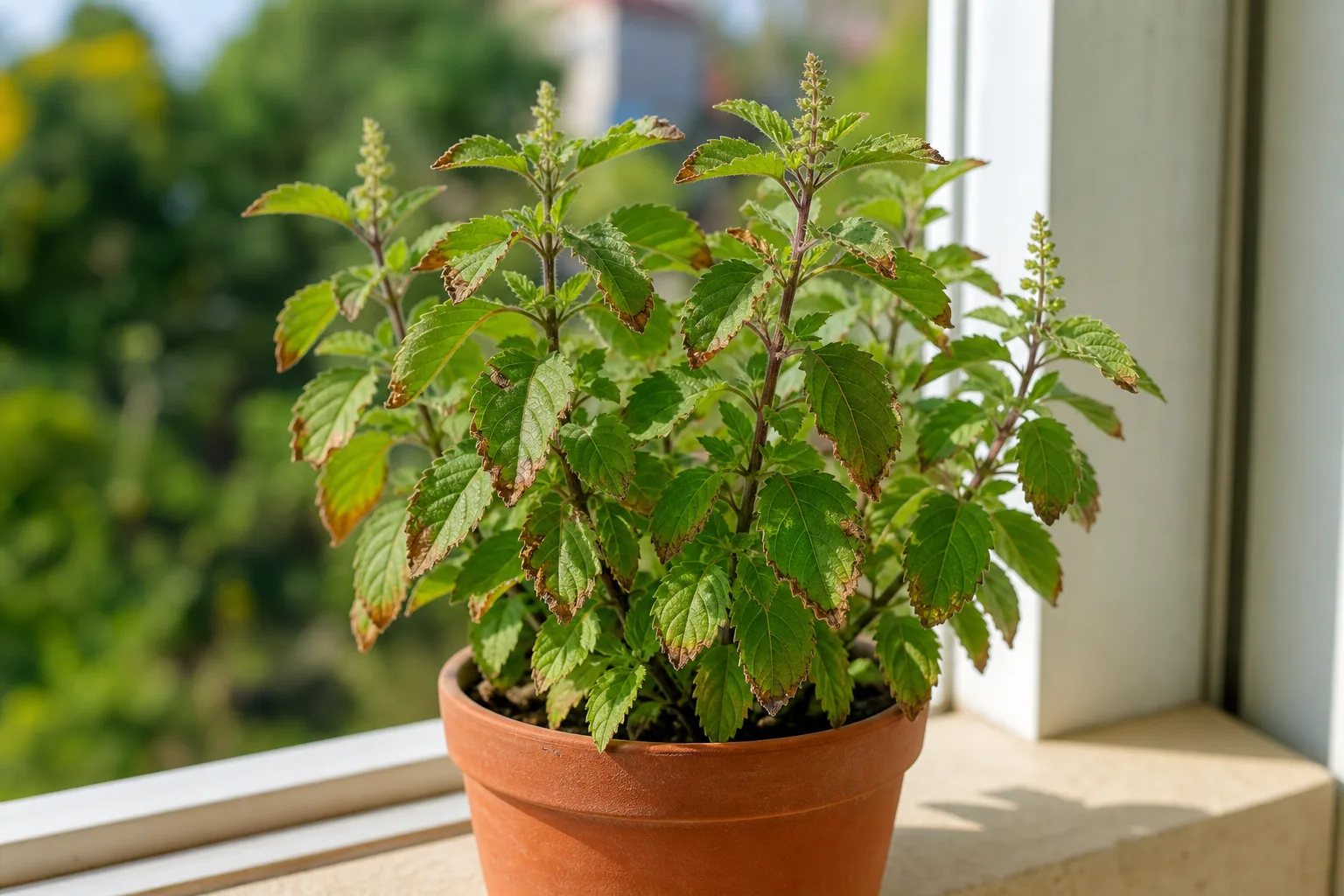
On tulsi, tip burn usually starts as dry, tan-to-brown edges on otherwise green, aromatic leaves. The damage is often:
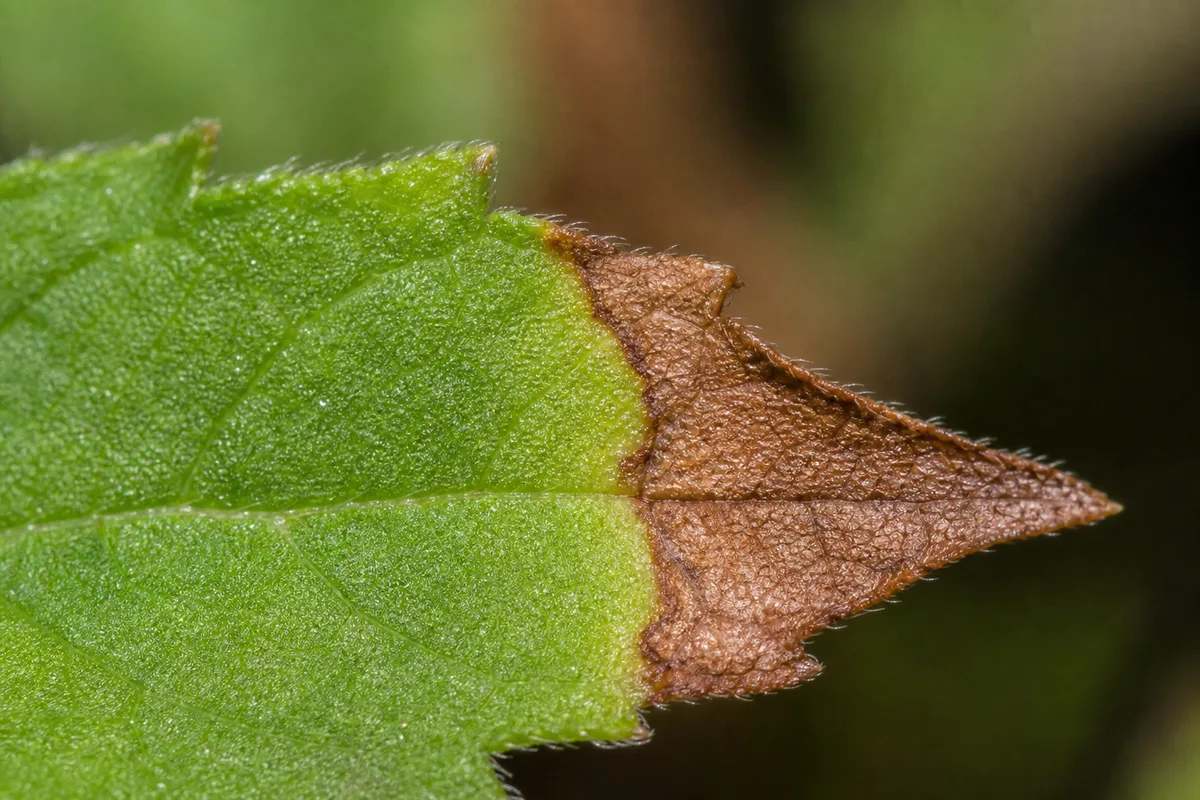
Brown Tips symptoms on Tulsi - compare with healthy tissue on the same plant.
- Confined to the outer margin and very tip, not round spots in the leaf center
- Crispy and papery when you pinch the edge, not soft or wet
- More common on older outer leaves and the sun-exposed side of the pot
- Sometimes paired with slight wilting or a duller clove scent if drought triggered it
Healthy tulsi leaves are soft, fragrant, and serrated along the edges. Tip burn leaves the blade green while the edge dies back in a narrow band-sometimes only a millimetre, sometimes several millimetres if stress repeated.
Krishna (purple-stemmed) and Rama (green) tulsi types show the same margin-burn pattern; Krishna leaves may look more dramatic when purple pigments fade on stressed edges, but the cause-and-fix logic is identical.
Not tip burn: Yellowing of whole lower leaves with wet soil fits overwatering on tulsi. Water-soaked brown patches that spread inward suggest fungal issues, not classic margin burn. Fine stippling plus webbing on undersides is spider mites on tulsi, not dryness alone. A single narrow brown edge on an old heavily harvested stem may be normal aging or harvest wear - not an active crisis - when new shoots at the crown stay clean.
Why tulsi gets brown tips
Tulsi evolved for warm, bright conditions with steady moisture in well-drained soil. NC State Extension notes holy basil prefers full sun and moist, well-drained soil but does poorly in waterlogged conditions-a small terrace pot in all-day summer sun is a high-demand setup where margins fail first when water lags behind transpiration.
Underwatering and boom-bust watering
Underwatering and boom-bust watering are the most common triggers. Tulsi watering guidance recommends checking the top inch before every drink; outdoor pots in hot summer sun often need water every 2–3 days, and a missed cycle on a sunny balcony can crisp edges within hours. Tulsi wilts dramatically when dry but the damage often shows at leaf tips before you notice the whole plant flagging.
Heat and afternoon sun scorch
Heat and afternoon sun scorch brown tips even when soil is moderately moist. Tulsi wants six or more hours of direct sun outdoors, but leaves formed in dim indoor light burn easily if you move the plant straight to a hot south- or west-facing window or terrace without acclimation. Dark pots, reflected heat from walls, and glass that magnifies afternoon rays all cook leaf edges.
Fertilizer and salt buildup
Fertilizer and salt buildup burn margins from the root zone outward. University of Maryland Extension links excess soluble salts to leaf-tip burn on container plants. White crust on the soil surface or pot rim after repeated liquid feed is a strong salt clue-common on tulsi that gets heavy-handed feeding in a small pot. See the tulsi fertilizer guide for half-strength schedules and flush protocol.
Winter heating-vent dry air
Winter heating-vent dry air browns margins on indoor tulsi without changing your watering habit. Leaves closest to radiators or forced-air vents often show narrow edge burn while new growth elsewhere stays clean. This overlaps with the dedicated low-humidity on tulsi page-here the focus is margin burn that appears when dry soil and hot sun are ruled out.
Cold drafts and low temperatures
Cold drafts and sustained cool exposure damage tulsi margins and stall growth. Michigan State University Extension notes that basil shows chilling injury below 54°F (12°C)-necrosis and stalled growth without necessarily killing the plant immediately. Holy basil shares that tropical Lamiaceae sensitivity. Sustained temperatures below about 50°F (10°C) on a winter windowsill or near an air-conditioning vent produce brown-tipped, dull leaves even when watering seems adequate. Move pots away from drafts and protect outdoor containers before nights approach 55°F (13°C).
Hard or softened tap water
Hard or softened tap water can leave mineral salts in small containers over months, contributing to marginal burn alongside fertilizer. Flushing periodically matters if you feed regularly.
Heavy ritual harvest vs. environmental burn
Daily harvest on heavily pinched stems can mimic tip wear: removing large leaf sets from the same stem leaves narrow brown edges on older tissue while the plant is otherwise healthy. That is mechanical aging, not drought - confirm with normal soil moisture and clean new shoots at the crown before you change watering.
Tulsi is not a classic low-humidity casualty like calathea. Occasional dry indoor air may nudge margins in winter, but for most tulsi growers the real enemies are dry compost, hot sun, and salts-not misting deficits alone.
How to confirm the cause
Work through these checks in order:
- Soil moisture at 1 inch - Dry with a light pot strongly suggests drought tip burn. Wet deep down with soft stems points to root stress, not simple thirst. Use the finger test from the watering guide.
- Recovery test - If soil is dry, soak once. Turgor returning within a few hours confirms underwatering; persistent wilt on wet mix means look elsewhere.
- Sun and heat exposure - Did tips brown after a heat wave or a move to a sunnier spot? Are damaged leaves on the south- or west-facing side of the plant?
- Salt clues - Recent fertilizer, white crust on soil, or brown tips that appeared while compost stayed moist fit salt burn.
- Vent and season - Winter indoor browning on leaves facing a heating vent, with evenly moist soil and no recent feed, fits dry-air margin burn.
- Temperature - Is the pot below 55°F (13°C) at night or in a cold draft? Cold-stressed tulsi browns margins before yellowing spreads.
- Pest scan - Hold leaves to the light. Fine stippling plus webbing on undersides is spider mites, not clean margin necrosis alone.
If only oldest lower leaves on heavily harvested stems have narrow brown tips and new shoots are clean, you may be seeing normal aging-not an active care crisis.
Dry soil vs. salt vs. sun-scorch decision table
| Clue | Dry-soil tip burn | Salt burn on moist mix | Sun / heat scorch | Winter vent desiccation |
|---|---|---|---|---|
| Top inch of soil | Dry; pot feels light | Moist; white crust possible | Moist to dry; hot exposure | Moist; heating vent nearby |
| When it started | After missed watering / heat wave | Days after feeding | After move to stronger sun | Cold season indoors |
| Leaf pattern | Crispy margins; may wilt first | Margins on multiple leaves; no wilt | Sun-facing side worse | Vent-side leaves first |
| First fix | Thorough soak (+ double-soak if hydrophobic) | Stop feed; flush 2–3× | Afternoon shade; acclimate | Move away from vent |
| Urgency | Same day if wilted | Within 48 hours | Same day in heat | Low unless spreading |
First fix for tulsi
If the top 1 inch of compost is dry, water thoroughly now.
Set the pot in the sink or outdoors, water until it drains from the bottom, wait ten minutes, and water once more so a dry root ball rewets. Empty the saucer. That single correction fixes most tulsi tip burn in home kitchens and on balconies.
Do not repot, fertilize, or spray pesticides on day one. Stacking treatments on a plant that simply dried out adds stress without diagnosis.
Step-by-step recovery
After the first soak-or if soil was already moist-follow the path that matches your checks:
Drought and uneven moisture
- Shift to a steady rhythm: keep compost evenly moist during active growth, checking daily when temperatures climb above 30°C (86°F) on outdoor pots.
- Bottom-water for ten to twenty minutes if water runs down the sides of hydrophobic, shrunken mix.
- Move the pot out of the hottest afternoon rays while soil moisture stabilizes-morning sun with brief afternoon shade during heat waves is enough for vigorous tulsi.
Heat and sun scorch
- Relocate away from the hottest afternoon glass or terrace exposure during heat waves, or use light shade cloth on exposed patios.
- Water early in the day when heat is forecast; tulsi in full sun uses water faster than tulsi in bright indirect light indoors.
- Acclimate indoor tulsi over seven to ten days before leaving it in all-day outdoor sun. See the tulsi light guide for sun minimums.
Salt and fertilizer burn
- Stop feeding until new growth looks healthy for two weeks.
- Flush the pot: run clean water through until it drains freely, repeat two to three times, and discard saucer water each time. Colorado State Extension links excess salts to marginal scorch on container plants.
- Resume half-strength liquid feed every four to six weeks in spring and summer only, per the fertilizer guide and UMN herb container guidance.
Winter dry-air margins
- Move the pot away from heating vents and radiators; rotate so no single side faces the heat source daily.
- Group with other plants or use a pebble tray for local humidity if margins keep browning on vent-side leaves.
- Do not overwater to compensate for dry air-wet soil in a cool winter room invites root problems.
Cold damage
- Move tulsi above 55°F (13°C) and away from drafty windows and AC vents.
- Trim badly damaged leaves after conditions stabilize; new growth at warm temperatures confirms recovery.
Cosmetic cleanup
- Snip brown tips with clean scissors, following the natural leaf curve.
- Harvest whole stems above a leaf node instead of picking only damaged tips-pinching encourages the bushy regrowth tulsi handles well. See pruning on tulsi.
Recovery timeline
Stabilization often takes two to seven days once watering, shade, or salt correction matches the cause-wilting should ease and tip browning should stop spreading.
Visible recovery is new growth: clean shoot tips and fresh leaves without margins burning. Expect that within one to two weeks in warm active growth; slower on a cool indoor winter windowsill.
Old brown edges never heal. They stay tan until you trim or harvest the stem. A plant with brown-tipped lower leaves but clean new shoots is recovering fine.
Worsening signs: margins creep down entire leaves, new shoots brown immediately after emerging, stems soften at the base while soil stays wet, or the plant declines despite corrective watering-those warrant a root inspection for rot or a hard look at chronic salt damage. See root rot on tulsi if stems soften on wet mix.
Lookalike symptoms
- Underwatering wilt - Whole plant limp, very dry mix, revives after one soak; tips may brown on the same stems. See underwatering on tulsi.
- Sun scorch - Brown patches on the sun-facing side after a hot day while shaded leaves stay green; soil may be adequately moist. Move to afternoon shade rather than watering more.
- Whole brown or yellow leaves - Often advanced drought, root rot, or nutrient stress-not isolated tip burn. Inspect roots and check for yellow leaves on tulsi.
- Spider mites - Pale stippling across the leaf blade plus fine webbing; margins may crisp secondarily in hot dry air. Rinse undersides and treat pests.
- Normal aging / harvest wear - Oldest stems with narrow tip browning while vigorous new growth continues at the crown. Harvest or cut back the stem.
What not to do
Do not water on a calendar without checking the pot-tulsi in summer sun may need water every 2–3 days while the same plant indoors in winter may need only once every 7–10 days.
Avoid heavy fertilizer to “green up” browned tips; salts make margin burn worse on container herbs.
Do not place a sun-grown tulsi in a dim corner to “rest” it-weak light produces leggy, pale growth. Shade during heat, not full-time darkness.
Skip misting as the main fix; it does little for root-zone drought or salt buildup in a dry pot.
Do not confuse tip burn with root rot and keep watering when stems are soft and soil is soggy-that path kills tulsi quickly.
How to prevent brown tips next time
- Check compost daily in hot summer weather on outdoor pots; container herbs dry faster than in-ground plants.
- Use morning sun and afternoon shade on balconies and terrace rails during heat waves above about 35°C (95°F).
- Feed at half strength on a sensible schedule; flush salts every few months if you feed regularly.
- Repot when roots fill the pot and the mix alternates between bone-dry and briefly wet.
- Harvest and pinch often-regular harvesting keeps fresh growth coming and removes older leaves that show tip wear first.
- Keep winter indoor tulsi away from heating vents and confirm the room stays above 55°F (13°C).
When to worry
Escalate if brown margins spread to whole leaves within days, new shoots brown as they open, or stems soften while soil stays wet-inspect for root rot rather than trimming tips.
Persistent tip burn on every new leaf after flushing and shade adjustment suggests chronic salt load or a root-bound pot; repot with fresh mix per the repotting guide.
If the plant collapses despite corrective watering, unpot and check roots. Firm white roots with a dry surface mix mean keep adjusting water; mushy roots mean rot protocol, not tip trim.
Can you still use tulsi leaves with brown tips?
For culinary and ritual harvest, narrow brown margins from drought or winter dry air on otherwise healthy, pesticide-free leaves are generally acceptable-trim the dead edge and use the green portion. Rinse herbs under running water before use; do not wash produce with soap or household cleaners.
Heavily scorched leaves with more brown than green are better discarded.
If you treated the plant with neem oil, insecticidal soap, or any pesticide while investigating pest lookalikes, follow the product label’s pre-harvest interval before using leaves in tea or prasad. Many registered neem products allow application up to the day of harvest on herbs, but intervals vary by formulation-read your label. When in doubt after chemical treatment, wait for untreated new shoots and rinse harvested leaves thoroughly.
When to soak, flush, repot, or inspect roots
Use this closing path once you have read the dry-vs-salt-vs-sun signals:
- Routine thorough soak - Dry top inch, light pot, firm stems, no salt crust. Empty saucer; recheck in 4–6 hours for turgor return.
- Salt flush (2–3 passes) - Brown margins on moist mix after recent feeding, white crust on soil, or tip burn on every new leaf despite correct watering. Stop fertilizer; flush before the next feed.
- Repot with fresh mix - Tip burn persists on all new growth after flush and shade correction; roots circle the pot; mix alternates between bone-dry and briefly wet. See repotting on tulsi.
- Same-day root inspection - Stems soften at the base, soil stays wet for days, wilt returns after soaking, or sour smell from the mix. Follow root rot on tulsi before trimming more leaves.
Getting that fork right matters more than misting leaves or trimming cosmetic edges. Tulsi forgives one dry spell quickly when roots are healthy-it does not forgive repeated wrong-branch soaking when rot is already present.
Related tulsi problems
- Overview - species context, temperature floors, and quick care
- Watering - seasonal rhythm, finger-test depth, winter slowdown
- Fertilizer - half-strength feeding and salt-flush protocol
- Light - sun minimums and acclimation
- Low humidity - winter vent desiccation deep-dive (scope: whole-plant dry air, not margin-only burn)
- Underwatering - drought wilt and dry-down logic
- Overwatering - wet-soil stress vs. tip burn
- Yellow leaves - whole-leaf chlorosis vs. margin burn
- Root rot - soft stems on wet mix; do not confuse with tip trim
- Repotting - chronic salt load and root-bound pots
- Pruning - harvest rhythm and cosmetic cleanup
FAQs
Are brown tips on tulsi from too much or too little water?
Both can cause browning, but the patterns differ. Underwatering produces dry, crispy brown edges on otherwise green leaves with light pot weight and dry soil 1 inch down-often after a missed watering on a sunny balcony. Overwatering more often yellows whole leaves and softens stems while soil stays wet; tip burn alone with moist mix points to salt buildup or sun scorch instead. Check soil moisture at the top inch before deciding.
Can over-fertilizing cause brown tips on tulsi?
Yes. Excess fertilizer salts in a small container burn leaf margins from the root zone outward, often with white crust on the soil surface or pot rim after recent feeding. Stop fertilizer immediately, flush the pot with plain water two to three times until it drains freely, and wait four to six weeks before resuming at half strength. See the tulsi fertilizer guide for the full flush protocol.
Will brown tulsi leaf tips turn green again?
No. Brown tip tissue is dead and will not re-green. Recovery shows up as new leaves and fresh shoot tips emerging without browning once watering, light, or salt issues are corrected. Trim old damaged tips for appearance if you like, but judge success by new growth, not old leaves.
Is low humidity really the main cause of brown tips on tulsi?
Dry indoor air can brown margins near heating vents in winter, but for most tulsi growers the bigger triggers are dry compost in a sunny pot, fertilizer salts, or sun scorch after a move to stronger light. Tulsi is a sun-loving Lamiaceae herb, not a classic low-humidity casualty like calathea. Check soil moisture and recent feeding before assuming humidity alone is the problem.
Can I still use tulsi leaves with brown edges in tea?
Leaves with narrow brown margins from drought or winter dry air are generally fine to harvest if the plant has not been treated with pesticides. Rinse under running water before use. If you applied neem oil, insecticidal soap, or any spray for pest lookalikes, follow the product label’s harvest interval before using leaves in tea or prasad.
When to use this page vs other Tulsi guides
- Tulsi watering guide - Use for routine moisture checks before assuming brown tips is the main issue.
- Tulsi problems hub - Browse all 5 common issues on this species.
- Yellow Leaves on Tulsi - Different entry point when symptoms overlap with brown tips.