Low Humidity on Tulsi: Causes, Checks & Fixes
Quick answer
Low humidity on tulsi browns leaf margins on the side facing heating vents while soil stays evenly moist-common on overwintered holy basil in heated rooms below about 40% RH. First step: move the pot away from vents and set it on a pebble tray with the base above the water line.
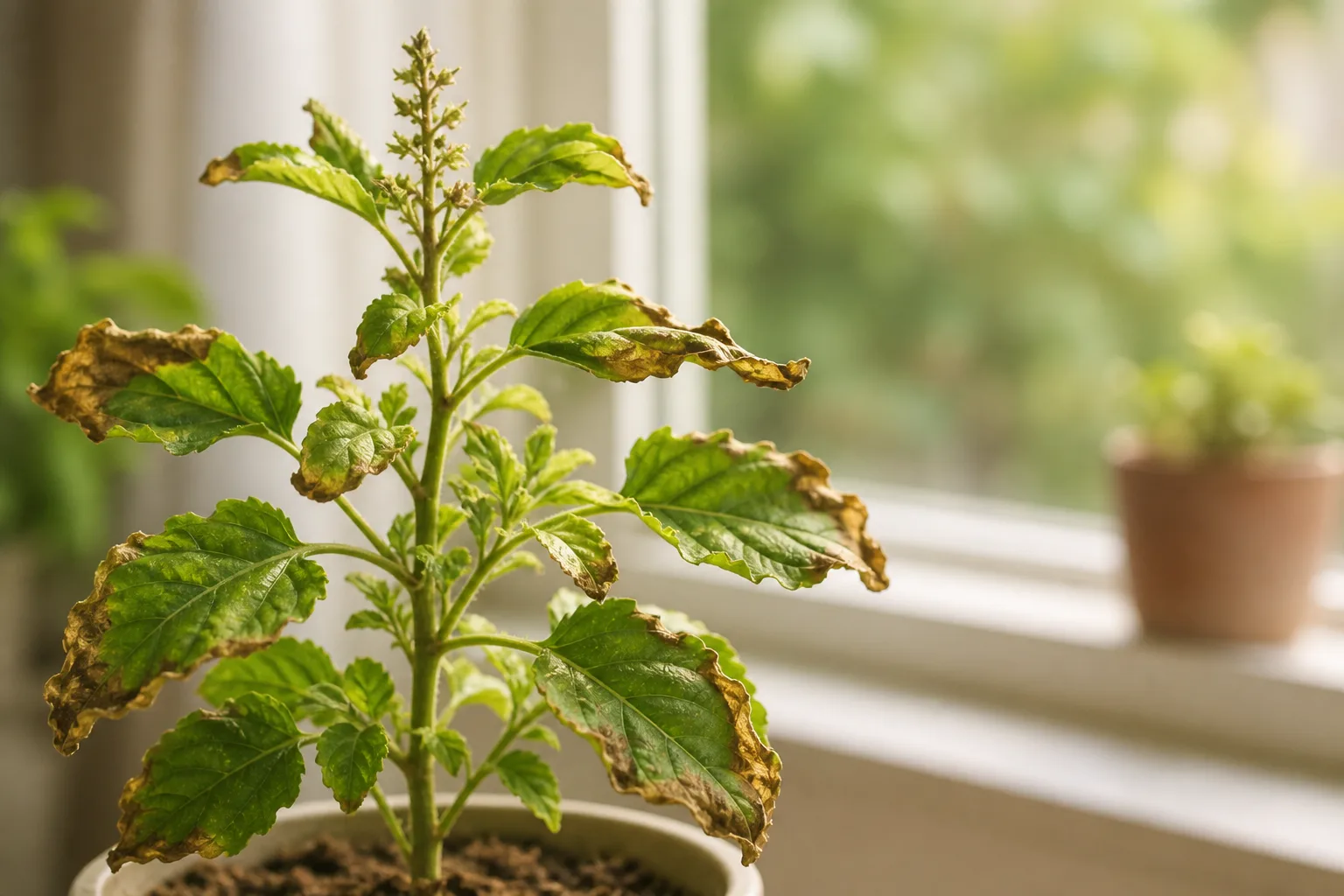
Low Humidity on Tulsi: Causes, Checks & Fixes
This guide covers low humidity on Tulsi. See also the general Low Humidity guide, watering, and light pages for this plant.
Low Humidity on Tulsi: Causes, Checks & Fixes
Quick answer
Low humidity on tulsi (Ocimum tenuiflorum - holy basil) shows up as dry, tan-to-brown leaf margins on an otherwise green, aromatic plant-often on the side facing a heating vent, radiator, or forced-air register while the compost stays evenly moist. Winter overwintering is the classic scenario: you brought a sun-loving tropical herb indoors, central heating dried the room air, and leaf edges desiccated before roots ran out of water.
First step: move the pot away from heat vents and set it on a pebble tray with the pot base above the water line so evaporation raises local humidity without soaking roots. Grouping with other plants adds a small bump; a room humidifier nearby is the most reliable fix for persistently dry rooms.
Confirm you are not chasing the wrong problem-dry soil and a light pot mean underwatering on tulsi, not humidity alone. Margin burn with moist mix overlaps with brown tips on tulsi; this page focuses on dry-air desiccation when watering rhythm looks fine. For baseline care while you adjust humidity, see the tulsi overview and watering guide.
A common winter scenario
Picture tulsi on a south-facing windowsill directly above a radiator in January. The hygrometer beside the pot reads 22 to 25% RH, the top inch of compost feels evenly moist, and the pot has moderate weight-but leaves on the vent-facing side show narrow tan bands along the margins while new growth on the far side still looks clean. You have not changed watering since moving the plant indoors for frost protection. That pattern-moist soil, low RH, vent-side margin burn after an outdoor-to-indoor move-is low humidity stress, not drought. Moving the pot 3 feet (1 m) from the register, adding a pebble tray, and grouping it with a second herb often stops spread on new tips within one to two weeks without extra watering.
Why tulsi struggles in dry indoor air
Tulsi evolved in the warm, humid tropics and subtropics of southern Asia. NC State Extension describes holy basil as native to tropical and subtropical regions where it grows in moist, well-drained soil under full sun-a climate nothing like a heated winter living room running at 22% relative humidity beside a south-facing window.
Indoors, three factors stack against tulsi:
- Winter heating strips moisture from room air. Illinois Extension notes winter heating makes homes fairly dry for indoor herbs and recommends keeping pots away from direct heat sources while clustering plants or using a humidifier.
- Harvest-driven transpiration - tulsi produces soft, serrated leaves on square Lamiaceae stems and regrows tips constantly when light is adequate. More leaf surface area means more water lost to dry air, even when roots still hold moisture.
- Margin-first damage pattern - on moisture-loving herbs, the thinnest leaf tissue at the outer edge dries before the whole blade wilts. Colorado State Extension explains that when a plant cannot replace transpiration losses fast enough, leaf tissue farthest from major veins dehydrates first, which is why margins scorch before the leaf center collapses.
Tulsi is not as humidity-demanding as calathea or ferns, and it tolerates average home conditions during active growth. Problems spike when winter heating pushes ambient humidity well below typical indoor comfort levels for weeks-especially on plants parked above a vent. Penn State Extension notes heated winter homes often fall below 30% RH, while many houseplants benefit from humidity higher than that dry baseline. The same dry air that crisps margins also favors spider mites on tulsi, which thrive in warm, dry indoor conditions.
What low humidity looks like on tulsi
On holy basil, dry-air stress has a recognizable pattern if you know what to compare against drought or salt burn.
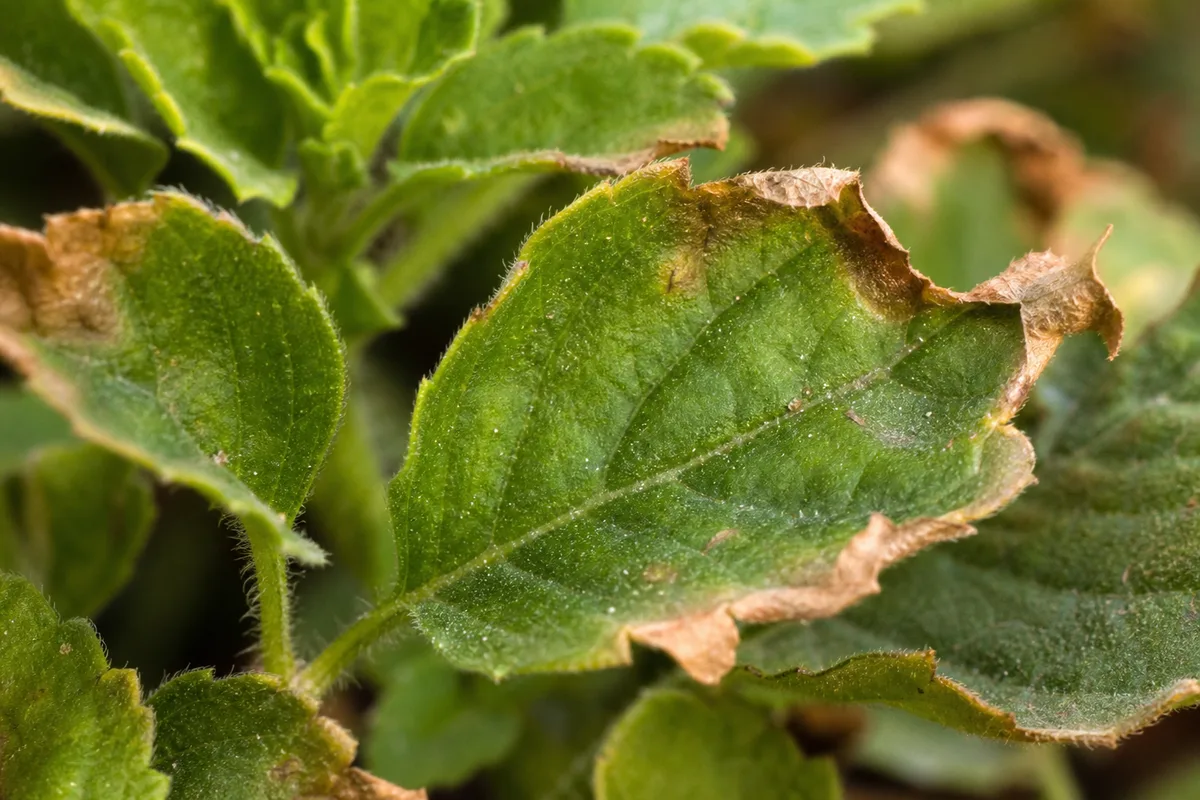
Low Humidity symptoms on Tulsi - compare with healthy tissue on the same plant.
Typical signs include:
- Narrow tan-to-brown bands along leaf margins and tips, crispy and papery when pinched-not soft or water-soaked
- Damage concentrated on leaves closest to the heating vent or radiator, while growth on the far side of the pot may look cleaner
- Older outer leaves and heavily harvested stems often show damage first; newest tips may stay green briefly before dry air catches up
- Soil moisture looks normal - the top inch may feel evenly moist and the pot has moderate weight; the plant does not show the dramatic midday wilt of severe drought
- No sticky residue or clustered insects - unlike aphids on tulsi; if you see fine pale dots plus silk webbing, dry air may be paired with mites
Healthy tulsi leaves are soft, fragrant, and serrated. Low-humidity damage keeps the blade mostly green while the outer margin dies back in a dry band-sometimes only a millimetre wide at first, widening if dry air persists.
Not low humidity alone: Whole-plant limpness with bone-dry compost and a very light pot fits underwatering. Yellow lower leaves with soggy soil deep down points to overwatering on tulsi. White crust on soil after feeding suggests salt burn-covered on brown tips. Uniform stippling across the leaf surface plus webbing is mites, not dryness alone.
How to confirm low humidity
Work through these checks in order so one correction proves what actually helped.
- Hygrometer reading near the pot - Place a small hygrometer a few inches above the pot rim for 24 hours. Persistently below about 40% RH with margin burn on vent-facing leaves strongly suggests dry air. Kitchens and bathrooms often read higher; living rooms above radiators often read lower.
- Vent and heat-source proximity - Is the pot on a windowsill directly above a radiator, beside a forced-air floor vent, or under a wall register? Rotate the pot and note whether damaged leaves always face the same direction.
- Soil moisture at 1 inch - Press a finger into the compost. Evenly moist mix with crispy margins fits humidity stress. Bone-dry, light pot means rule out underwatering before buying a humidifier.
- Recovery test after relocation - Move the pot at least 3 feet (1 m) from active heat vents and add a pebble tray. If margin burn stops spreading on new growth within one to two weeks while watering stays the same, dry air was likely the driver.
- Pest scan on undersides - Hold leaves to the light and check for pale stippling and fine silk. UMN Extension notes mite infestations are particularly common during hot, dry conditions-indoor winter windowsills qualify.
- Season and recent move - Did symptoms appear within weeks of bringing outdoor tulsi indoors for frost protection? That transition into heated dry air is the highest-risk window.
Confirmed low-humidity diagnosis requires margin burn with reasonable soil moisture, low RH near the pot, and vent proximity-not yellow leaves on wet mix alone.
First fix for tulsi: raise ambient humidity safely
Move the pot away from heating vents and set it on a pebble tray with the base above the water line.
Fill a shallow tray with pebbles and water to just below the top of the stones. Rest the tulsi pot on the pebbles so the drainage hole never sits in standing water-Nebraska Extension describes this method to increase humidity around foliage without waterlogging roots. Refill the tray as water evaporates.
Do not repot, fertilize, or mist heavily on day one. One targeted environmental correction first-stacking treatments hides the response and can stress an already desiccated plant.
If margins keep browning after the pebble tray
- Run a small humidifier near the plant (not pointing directly at leaves) until RH near the pot stays roughly 40 to 60%. UNH Extension recommends a portable humidifier near plants for consistent winter humidity; this beats misting for sustained moisture in heated rooms. Penn State Extension notes pebble trays alone may not raise whole-room RH much-pair them with grouping or a humidifier when air stays extremely dry.
- Group pots - placing tulsi beside other herbs raises local humidity slightly through shared transpiration. Illinois Extension recommends clustering indoor herbs in winter. Keep leaves from touching so mites cannot walk stem to stem.
- Relocate within the room - a bright kitchen counter away from the radiator often outperforms a south windowsill directly above a heat source, as long as the plant still gets adequate light per the light guide.
Lookalike causes on tulsi
| Clue | Low humidity | Underwatering | Salt / fertilizer burn | Heat scorch |
|---|---|---|---|---|
| Soil at 1 inch | Evenly moist | Bone dry | Often moist | May be moist |
| Pot weight | Moderate | Very light | Moderate to heavy | Moderate |
| Leaf pattern | Crisp margins near vent side | Crisp tips; whole plant may wilt | Margins on multiple leaves after feeding | Sun-facing side browns after heat spike |
| Season | Winter indoors | Any; worse in hot sun | After recent fertilizer | After move to harsh afternoon sun |
| Next check | Hygrometer + vent distance | Soak and watch turgor | White crust; flush pot | Shade during heat wave |
If the table still leaves you unsure, start with the watering guide finger test-drought is more common overall than humidity alone on tulsi, but moist soil plus vent-side margin burn is the humidity fingerprint.
What not to do
Do not overwater to compensate for dry air. Wet soil in a cool winter room invites root problems while leaves keep crisping from the vent above. UMN herb guidance warns that constantly soggy soil encourages root rots on indoor herbs-moist roots in airy, free-draining mix is the goal, not waterlogging.
Avoid misting as your primary humidity fix on kitchen tulsi. Iowa State Extension notes misting dries too quickly to raise humidity effectively; foliage that stays damp in cool indoor light can develop fungal spotting on Lamiaceae herbs. Humidifier or pebble-tray evaporation is safer for plants you harvest.
Do not fertilize a stressed plant to push new growth. Salts in a dry, stressed pot worsen margin burn. Hold feed until new shoots look healthy for two weeks after humidity correction.
Do not ignore stippling after margin burn. Dry air and spider mites often arrive together on indoor holy basil-rinse undersides if you see silk or pale dots.
Skip placing the pot back on the radiator because the window is sunny. Light matters, but a tulsi above a heat vent in very dry winter air will keep losing margins. Bright indirect light away from the vent beats blazing heat plus dry air.
Recovery timeline
Stabilization - Margin burn should stop spreading within one to two weeks after relocating away from vents and adding a pebble tray or humidifier, assuming soil moisture stays appropriate.
Visible recovery - Look for clean new shoot tips and fresh leaves without edge burn. Expect that within two to four weeks on a warm indoor windowsill with adequate light; slower if the plant is cool and semi-dormant in midwinter.
Old damage does not heal - Brown, crispy edges stay tan until you trim or harvest the stem. A plant with damaged lower leaves but clean new growth is recovering fine.
Worsening signs - Margins creep inward across whole leaves while soil stays wet, new tips brown immediately as they emerge, stippling spreads with webbing, or stems soften at the base. The last case means inspect for root rot on tulsi, not more humidity.
How to prevent dry-air damage next winter
- Check RH near the pot with a hygrometer when you bring tulsi indoors before frost-plan a humidifier or pebble tray before margins crisp, not after.
- Keep overwintered tulsi away from heating vents and rotate the pot weekly so one side does not face the heat source continuously.
- Maintain watering by check, not calendar - water when the top inch is dry, then soak thoroughly; winter slowdown means longer intervals, not extra drinks for dry air.
- Rinse foliage monthly in dry months to knock off dust and early mites before populations build.
- Quarantine new herbs two weeks before placing them beside holy basil on the same shelf-mites ride in on dry, dusty foliage.
For species-wide winter rhythm and temperature floors, see the tulsi overview temperature and humidity section.
Related tulsi guides
- Overview - species context, winter overwintering, and humidity targets
- Watering - finger-test depth and seasonal slowdown
- Brown tips - drought, salts, and sun scorch vs. dry-air margins
- Spider mites - stippling and webbing in dry winter heat
- Underwatering - dry soil and wilt logic
- Wilting - whole-plant turgor loss with multiple causes
- Overwatering - wet-soil stress when you overcompensate for dry air
Conclusion
Low humidity on tulsi is a winter indoor environment problem, not a mystery disease. Confirm low RH near the pot, vent-side margin burn, and evenly moist soil-then move away from heat sources and raise local humidity with a pebble tray or humidifier. Old edges stay brown, but clean new shoots within a few weeks mean you fixed the right stressor. Do not overwater dry air away, watch for mites in the same conditions, and use the brown tips and watering guides when drought or salts fit the pattern better than humidity alone.