Underwatering on Tulsi: Causes, Checks & Fixes
Quick answer
Underwatered tulsi wilts dramatically, feels light in the pot, and often shows soil pulling away from the pot wall. First step: water thoroughly until drainage runs free-or bottom-soak 20–30 minutes if the mix has gone hydrophobic-then resume when the top inch of soil dries.
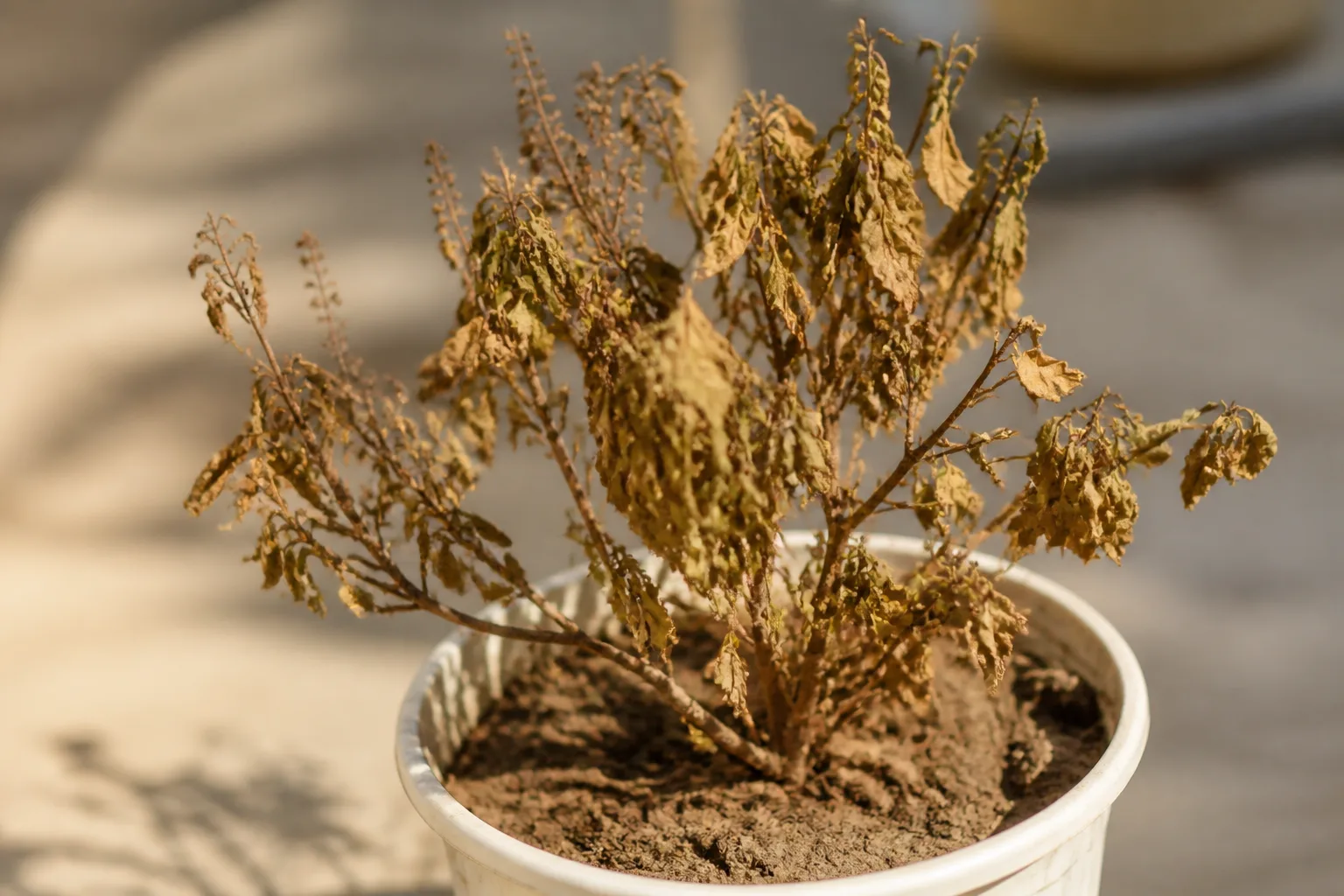
Underwatering on Tulsi: Causes, Checks & Fixes
This guide covers underwatering on Tulsi. See also the general Underwatering guide, watering, and light pages for this plant.
Underwatering on Tulsi: Causes, Checks & Fixes
Quick answer
Your tulsi looked fine at breakfast and collapsed by lunch on a hot balcony-that pattern is classic drought stress on Ocimum tenuiflorum, the aromatic holy basil most growers mean when they say tulsi. Unlike slow-to-wilt houseplants, tulsi is a fast-growing herb whose thin leaves and herbaceous stems have little water storage. When the root zone dries below what the canopy is losing to transpiration, stems flop dramatically.
First step: water thoroughly until excess runs from drainage holes. If water runs straight through a gap between dry soil and the pot wall, bottom-soak the container in a tray for 20–30 minutes so the centre rewets, then drain fully. After that single rescue drink, reset your routine to water when the top inch (roughly 2–3 cm) of mix feels dry-not on a calendar day.
For ongoing watering rhythm, seasonal intervals, and the full moisture-check workflow, see the tulsi watering guide. This page focuses on diagnosing drought, ruling out lookalikes, and executing recovery.
Dry soil vs. wet soil - when is it really underwatering?
Wilting tulsi triggers the instinct to pour water-but both drought and chronic wetness can make leaves droop. Check soil and pot weight before you decide.
| Signal | Underwatering (dry roots) | Overwatering (wet roots) |
|---|---|---|
| Pot weight | Noticeably light when lifted | Heavy even days after watering |
| Soil at 1 inch depth | Dusty, dry, may pull from pot wall | Cool, clingy, or soggy |
| Stem base | Firm, not mushy | Soft, darkened, or slimy |
| Smell at soil line | Dry, earthy | Sour or musty |
| Recovery after deep soak | Perks within hours to a day | Stays limp or worsens |
| Best next step | Thorough soak, then dry-down rhythm | Stop watering; inspect drainage and roots |
If the mix is wet throughout and stems are soft at the soil line, treat this as overwatering or possible root rot-not thirst. For the wet-soil wilt paradox without full rot, see wilting on tulsi.
What underwatering looks like on Tulsi
Tulsi does not hide drought stress. The most reliable early sign is dramatic wilting-stems and leaves hang limp as if the plant overheated, even on a mild day when the pot has gone dry. Extension herb guidance warns never to allow plants to wilt between waterings. Touch the leaves: they feel thin and papery rather than firm and springy. Fragrance is noticeably weaker when the root zone has been dry too long.
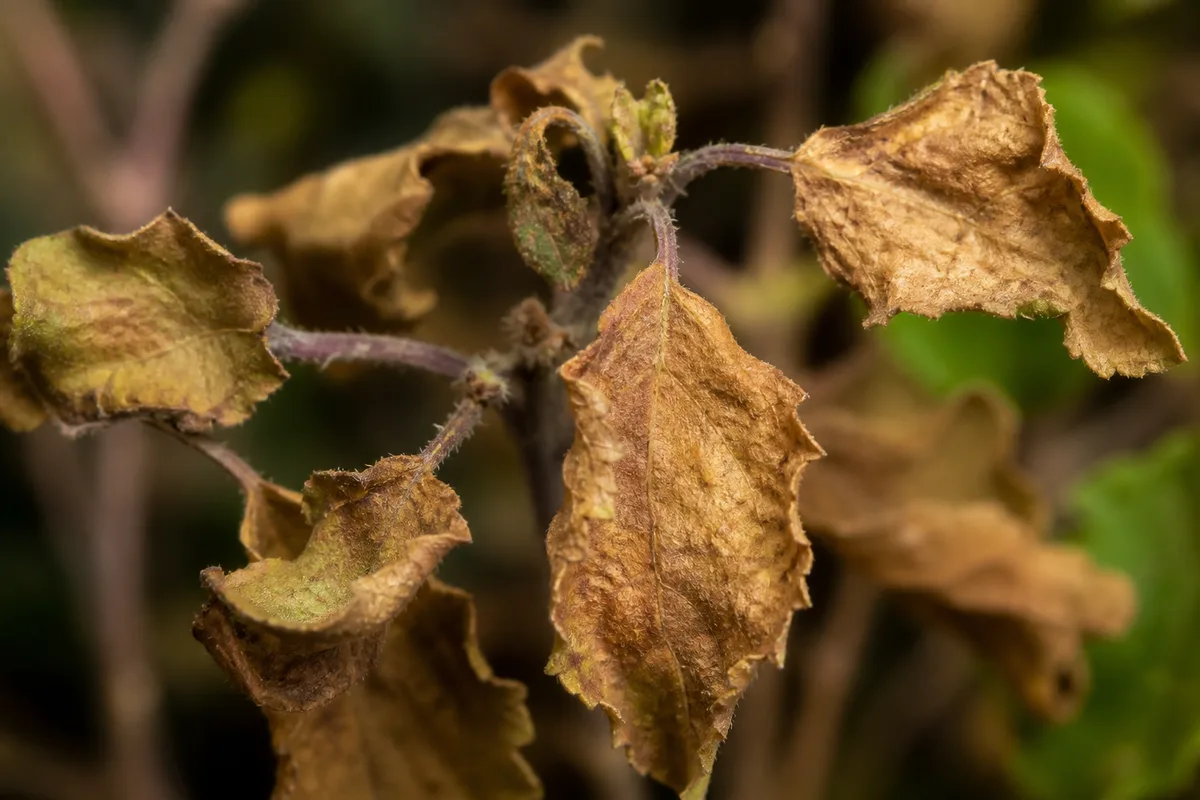
Underwatering symptoms on Tulsi - compare with healthy tissue on the same plant.
Other patterns that point to dry roots rather than disease:
- Dry, lightweight pot when lifted-waterlogged tulsi feels heavy; drought-stressed tulsi feels hollow
- Soil pulling away slightly from the pot sides after prolonged dryness
- Crispy brown edges on older leaves, especially lower ones
- Slowed shoot tips even though light seems adequate
- Afternoon collapse on hot days that repeats until you increase watering frequency
- Smaller emerging leaves after repeated dry cycles
Chronic underwatering adds premature yellowing and leaf drop on the oldest foliage. Tulsi redirects water to new tips; lower leaves sacrifice first. That yellowing can look like a nutrition problem, but dry mix and daily wilting cycles tell you moisture is the root cause. For yellowing without repeated drought, see yellow leaves on tulsi.
Why Tulsi gets underwatered
Tulsi evolved in tropical and subtropical Southern Asia as a sun-loving herb that grows rapidly in warmth. In a pot, that biology meets conditions that dry out fast: limited soil volume, porous terracotta, full sun on a balcony, and harvest-driven transpiration after heavy leaf removal.
Fast summer growth and small balcony pots
A bushy tulsi with serrated oval leaves transpires heavily in sun. A small terrace pot can dry in 24 to 48 hours during peak summer, while the same plant in a cool north-facing room in winter may take more than a week to dry the same depth. NC State Extension notes holy basil prefers good drainage with moist soil-consistently available moisture without waterlogging-which is hard to maintain in a 4-inch pot baking on a south-facing railing.
Calendar watering in peak heat
Watering every Sunday regardless of pot dryness guarantees underwatering in July and overwatering in January. UC IPM basil cultural guidance emphasises that container herbs in hot weather need frequent checks-not fixed dates. Use calendar reminders as prompts to inspect the pot, not as permission to pour.
Fear of root rot after one wet spell
Many growers underwater tulsi because they fear rot after one soggy episode. Tulsi does poorly in waterlogged soils and rots in airless, saturated mix-but skipping drinks because the plant wilted once last month leaves fine root hairs dry and brittle. The fix for rot is better drainage and less frequency, not letting the entire root ball desiccate.
Hydrophobic mix channeling
Peat-heavy or aged mixes can repel water after hard dry-out. The surface may look briefly damp after a quick splash while the centre stays dry. Water channels down the gap between soil and pot wall instead of rewetting the root ball-creating hidden drought at the root-ball centre while you think you watered.
Heavy harvest water demand
Cutting large bundles of leaves for tea or prasad removes transpiring surface area temporarily, but regrowth pulls more water from roots. A freshly harvested tulsi in active summer growth often needs a deep soak the same day. Dry stress during flush growth also produces smaller, tougher leaves and can encourage premature flowering.
How to confirm the cause
Work through these checks before changing anything else:
- Soil moisture at depth - Push a finger into the top inch of mix. Dusty and dry confirms drought. Damp or cool at that depth points away from simple underwatering.
- Pot weight - Lift the container after learning what a freshly watered pot feels like. Very light weight with wilted foliage strongly suggests dry roots.
- The recovery test - Water deeply once. If turgor returns within two to six hours and stems stand upright again, drought was the issue. Wilt that persists on wet soil suggests root rot or heat damage instead.
- Soil gap test - Look for a visible gap between mix and pot wall; that indicates shrinkage from prolonged dryness.
- Smell at the base - Sour or swampy odour means rot, not drought. Dry, earthy smell fits underwatering.
- Skewer mid-depth check - Insert a dry wooden skewer to mid-depth. If it pulls out clean and dry with a light pot, water now. Moisture line or clinging crumbs mean wait.
If the mix is wet throughout, stems are soft at the soil line, and wilt continues after soaking, stop treating this as underwatering and inspect for root rot.
Lookalikes to rule out
- Overwatering / root rot - Wilt on wet soil, mushy lower stems, sour smell. Soaking makes it worse; inspect roots instead. See overwatering on tulsi.
- Heat stress alone - Wilting between noon and 4 p.m. with slightly dry but not desiccated mix; plant recovers by evening without a dramatic soak if soil moisture was adequate. NC State Extension notes that basil and other tender annuals commonly wilt in midday heat as a protective response.
- Transplant shock - Wilt for one to two weeks after repotting with otherwise moist mix; keep soil evenly moist and avoid harsh afternoon sun until new white root tips appear.
- Low humidity stress - Crispy tips with otherwise adequate soil moisture; more common near heaters or AC vents. See low humidity on tulsi.
- Drooping from mixed stress - When wilting overlaps several causes, work through drooping leaves on tulsi after confirming dry soil.
The fastest separator remains dry mix plus rapid recovery after one deep soak. Rot and drought both wilt tulsi; only drought perks up quickly when roots are still healthy.
First fix for Tulsi
Soak the entire root ball until water drains freely from the bottom holes.
Place the pot in a sink or saucer. Water slowly in two or three passes, waiting thirty seconds between pours so the mix absorbs instead of flooding out instantly. For a badly dried root ball that repels water, set the pot in a tray of water for 20–30 minutes so capillary action rewets the centre-then let excess drain for fifteen minutes before returning it to its spot.
Do not fertilize, repot, or prune heavily on the same day. One thorough rehydration tells you whether the plant still has viable roots. If it perks up, your only job next is to keep moisture steady-not to stack extra interventions.
Step-by-step recovery
After the rescue soak, stabilize care based on severity:
Mild (slight afternoon wilt, dry top inch, firm stem base):
- Water thoroughly once, confirm drainage.
- Resume checking the top inch daily; water when dry.
- Expect firm leaves within hours to a day.
Moderate (full plant collapse, light pot, soil gap visible):
- Execute deep soak or bottom-water as above.
- Move temporarily out of harsh afternoon sun-bright morning light is fine.
- Check moisture every morning for one week; do not wait for leaves to wilt before watering.
- Hold harvest to light pinching for five to seven days while fine roots rebuild.
Severe (repeated daily collapse, brittle stems at base, chronic dry cycles):
- Deep soak once, then inspect roots by sliding the plant gently from the pot.
- Trim only fully brown, crispy tissue; keep yellowing leaves until new growth appears.
- Repot only if the mix cannot be rewet or the pot is clearly too small-use fresh, well-draining mix with drainage holes.
- If deep soaking fails to restore turgor within 24 hours, suspect root damage beyond simple drought and consider starting fresh cuttings from firm upper stems.
Hold fertilizer until new growth looks normal for seven to ten days. Salt on drought-stressed roots adds stress without speeding recovery.
Recovery timeline
Hours: Mildly wilted tulsi often stands upright again within two to six hours of a deep soak. Basil-family herbs commonly recover turgor quickly after thorough watering when roots remain healthy.
Days: New shoot tips should look perky within three to five days if watering stays consistent. Crispy leaf margins remain brown permanently.
One to two weeks: Expect normal harvestable regrowth once fine roots rebuild. If the plant still wilts daily despite wet mix, suspect rot or a pot that is too small-not ongoing underwatering.
Worsening signs: Stems turn brittle and brown at the base, leaves stay limp after repeated soaks, or growth stalls entirely. Those patterns mean root damage went beyond simple drought-inspect roots and consider propagation from healthy upper stems.
What not to do
Do not mist leaves instead of soaking soil-tulsi drought is a root problem, and surface misting does not rewet a dry root ball.
Avoid waiting for a calendar reminder when the pot is light and leaves droop in the afternoon. Tulsi needs moisture checks, not fixed weekly dates.
Do not assume all wilting means overwatering and skip a drink. Many growers underwater tulsi because they fear rot; confirm dryness at one inch depth first.
Skip heavy pruning during recovery-stripping the plant removes leaves that help it rebuild energy after drought.
Do not leave the pot in a full saucer after soaking for days; drain excess so you do not swing from drought to waterlogged roots. University of Maryland Extension warns that standing water and chronic wetness suffocate roots-especially indoors in winter.
Avoid fertilizing a collapsed plant before it rehydrates. Feed only after steady new growth returns.
How to prevent underwatering on Tulsi next time
Match watering to how fast your specific pot dries, not a generic herb schedule. Outdoors in hot summer sun, many medium tulsi pots need water every two to three days; small balcony pots may need daily checks. Indoors in bright light, every four to seven days is common. In winter indoors, stretch to every seven to ten days or longer-always confirming with a soil check rather than a date on the calendar.
Learn the light-pot baseline. Lift the container after a thorough watering and drainage-that heft is your reference. When weight drops sharply and the top inch is dry, water now.
Use the finger-and-skewer pair. The top inch dryness test works on loam-based mixes tulsi prefers. In airy coco or perlite-heavy mixes, pair the finger test with a skewer to mid-depth.
Size the container for growth rate. A root-bound plant in a too-small pot dries twice daily in July heat. See the tulsi overview and repotting guide when the mix dries faster than you can keep up despite correct technique.
Water after large harvests when regrowth surges in summer. Steady moisture during flush growth keeps flavour strong-dry stress produces weaker-tasting leaves even before visible wilt.
Refresh hydrophobic mix that has started repelling water. Adding compost improves both retention and rewetting.
For the full seasonal interval table, winter slowdown rules, and daily moisture-check workflow, use the tulsi watering guide.
When to use this page vs. the watering guide
Use this page when tulsi has already wilted or collapsed and you need to confirm drought, rule out wet-soil lookalikes, and execute a rescue soak with realistic recovery expectations.
Use the watering guide when the plant is stable and you want ongoing rhythm-how often to check in summer vs. winter, pot-weight baselines, skewer depth tests, and how to avoid both drought and rot over the long term.
If symptoms overlap several moisture-stress pages-chronic wilting, mixed yellowing, or unclear wet-vs-dry signals-start here for drought confirmation, then cross-check water stress, wilting, and drooping leaves as needed.
When to worry
Treat same-day if the whole plant lies flat, stems feel brittle at the base, or it has wilted severely more than twice in one week. Tulsi rebounds quickly from a single dry spell but loses fine roots after chronic drought, which slows regrowth for weeks.
Escalate to root inspection if deep soaking fails to restore turgor within 24 hours, soil stays wet without improvement, or a sour smell develops-those are rot clues, not drought.
If repeated daily wilt persists after you corrected the schedule and pot size, consult a local extension office or master gardener program-chronic collapse may indicate root-bound plants, excessive heat exposure, or underlying rot masked as thirst.
Conclusion
Underwatering on tulsi is usually a volume-and-frequency problem: a fast-growing, sun-loving herb in a pot that dried faster than you expected-especially on a hot balcony in summer. Confirm it with dry mix at depth, light pot weight, and rapid perk-up after one thorough soak. Prevent it by checking moisture every warm day, learning your pot’s hydrated weight, and watering when the top inch dries-not when the calendar says so. Tulsi forgives a single missed drink; it struggles when drought becomes a weekly habit.
Related tulsi guides: Overview · Watering · Overwatering · Wilting · Drooping leaves · Yellow leaves