Drooping Leaves on Tulsi: Causes, Checks & Fixes
Quick answer
Drooping leaves on Tulsi usually trace to one of five stresses: dry soil, wet failing roots, cold below 50°F (10°C), heavy harvest, or weak light. First step: press your finger 2–3 cm into the mix and lift the pot before you change anything.
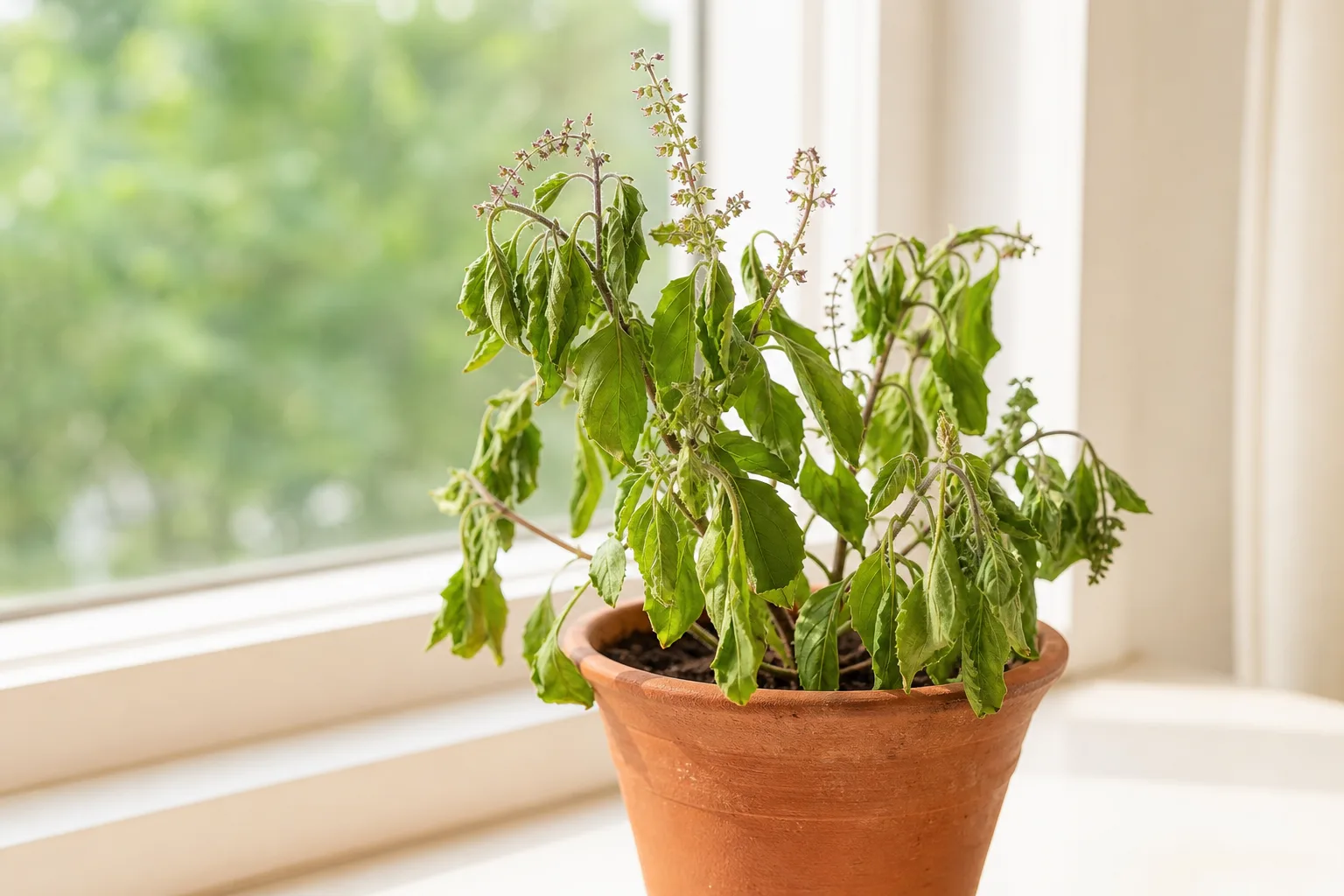
Drooping Leaves on Tulsi: Causes, Checks & Fixes
This guide covers drooping leaves on Tulsi. See also the general Drooping Leaves guide, watering, and light pages for this plant.
Drooping Leaves on Tulsi: Causes, Checks & Fixes
Quick answer
Drooping leaves on Tulsi (Ocimum tenuiflorum, holy basil) mean the plant is losing turgor-leaves and stems hang instead of standing crisp. Unlike a single afternoon wilt that snaps back overnight, drooping often lingers for days and points to an ongoing stress: dry roots, wet failing roots, cold damage, harvest overload, or chronic low light.
First step: check soil moisture depth and pot weight before you water, prune, or repot. Press your finger 2–3 cm into the mix. A dry, light pot with firm stems means soak deeply. A wet, heavy pot with soft stem bases means stop watering and inspect roots-not another drink.
This page focuses on chronic or recurring droop and the five causes above. For sudden afternoon collapse and the acute dry-vs-wet wilt fork, see wilting on Tulsi. For ongoing watering rhythm, see the tulsi watering guide.
Wet soil vs. dry soil - the Tulsi droop decision
The two most common droop triggers look similar above ground but need opposite fixes. Use pot weight and stem firmness-not leaf sadness alone.
| Signal | Dry-soil droop | Wet-soil droop |
|---|---|---|
| Pot weight | Light | Heavy |
| Soil at 2–3 cm | Dry, pale, sometimes pulled from rim | Dark, clingy, wet for days |
| Stem base (pinch test) | Firm green square stem | Soft, dark, or mushy |
| Lower leaves | Papery, dull fragrance | Yellow while tops still sag |
| Smell at drain hole | Neutral or earthy | Sour or swampy |
| After correct first fix | Perks within 2–12 hours | Days to weeks; may not recover |
| Best first action | Deep soak until water drains | Stop watering; check roots |
Holy basil does poorly in waterlogged soils yet drinks heavily in full sun-a small terracotta pot on a summer terrace can go bone-dry in one afternoon while the same plant droops on soggy winter mix indoors when evaporation slows.
What drooping looks like on Tulsi
On holy basil, drooping shows as limp, downward-hanging leaves on stems that lose their usual upright posture. New shoot tips often sag first because they have the thinnest tissue. The spicy clove-mint fragrance drops off when turgor is low.
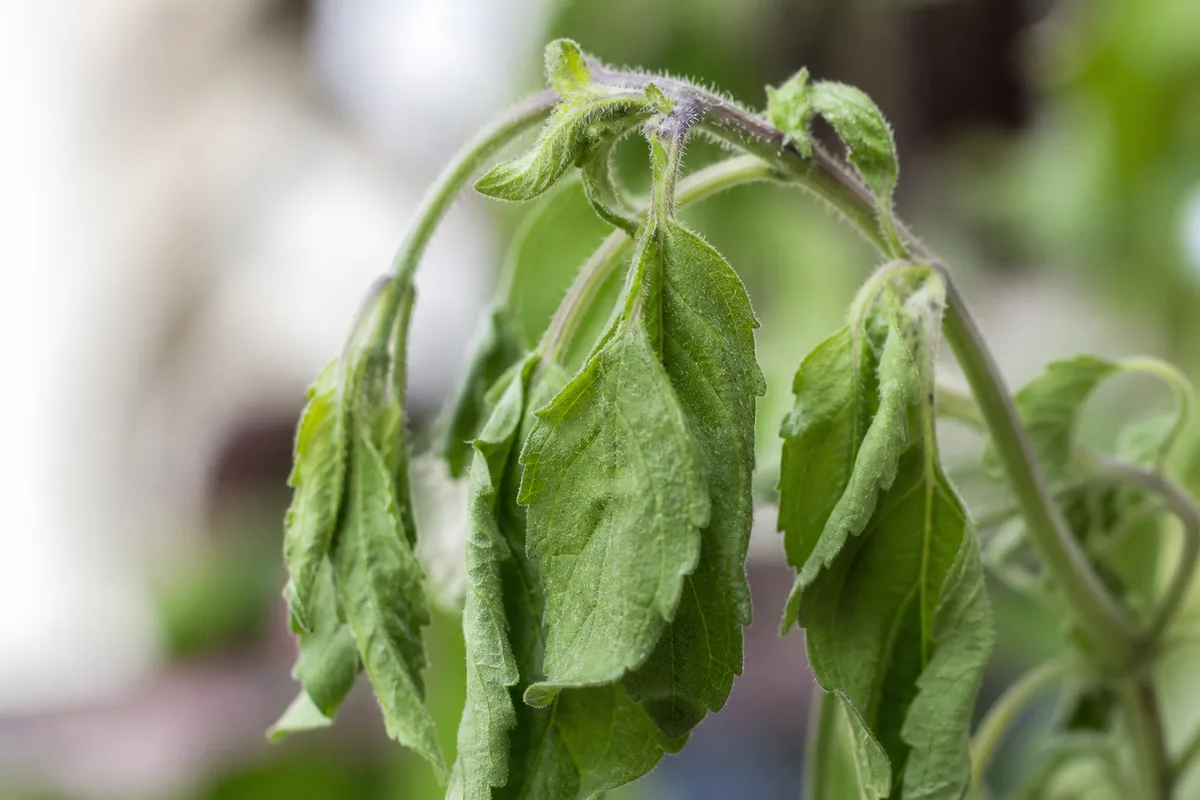
Drooping Leaves symptoms on Tulsi - compare with healthy tissue on the same plant.
Patterns that narrow the cause:
- Dry-soil droop - Mix is hard or dusty at depth; pot feels light. Leaves feel papery. Stems stay firm when pinched above the soil line. Common on hot balconies where a 20 cm terracotta pot dries before evening.
- Wet-soil droop - Mix stays dark and damp for days despite surface dryness. Lower leaves yellow. Stem bases feel soft on the square Lamiaceae stem. Typical after moving a summer balcony plant indoors for winter without slowing the watering rhythm.
- Cold droop - Uniform limpness after a cold night below about 50°F (10°C), often near a drafty window. Stems may stay firm but growth stalls. Leaves do not perk after watering because roots are not the limiter-temperature is.
- Harvest-stress droop - Whole plant slumps for one to three days after heavy leaf picking for tea or prasad, even when moisture was correct. Remaining leaves look tired; stems stay firm; mix moisture is normal.
- Low-light chronic sag - Long gaps between leaf pairs, pale thin foliage, and a floppy canopy in a dim room. Mix often stays wet longer than you expect. See not enough light on Tulsi and leggy growth on Tulsi.
Drooping tulsi leaves rarely return to perfect form once they have been limp for more than a day or two. Judge recovery by firm new shoots, not by old leaves standing upright again.
Why Tulsi leaves droop
Holy basil evolved for full sun and moist, well-drained soil in tropical and subtropical regions of Southern Asia. That biology makes container tulsi sensitive to both drought and chronic wetness-and to cold, harvest rhythm, and weak light in ways generic houseplant advice misses.
Overwatering and root failure (wet soil, soft stems)
This is the trap most tulsi growers hit after monsoon-season balcony watering or winter indoor care. Wet soil displaces air from root zones; without oxygen, roots stop functioning and root rot from overwatering follows. Leaves droop while soil stays soggy-the wet-soil droop paradox. Tulsi in sealed decorative pots, saucers that hold standing water, or heavy peat mixes without perlite is especially vulnerable indoors in winter. For the full rescue path, see root rot on Tulsi and overwatering on Tulsi.
Underwatering on terrace and in full sun
Tulsi root balls should not dry out completely. In small pots on a sunny balcony, mix can go from moist to dust-dry in 24–48 hours during peak summer. Heavy harvesting strips foliage that would otherwise shade the soil and slow evaporation. Edge shoots may look fine while the centre droops.
A documented pattern: a 20 cm terracotta pot on a south terrace, limp by 2 p.m. on a June afternoon, bone-dry mix, deep soak, perked within 90 minutes-healthy roots, simple thirst.
Cold below 50°F (10°C)
Tulsi is a tropical herb with no cold-hardening mechanism. Sustained temperatures below about 50°F (10°C) stall metabolism; leaves lose turgor uniformly. Michigan State University Extension notes that basil shows chilling injury below 54°F (12°C)-drooping, necrosis, and stalled growth without necessarily killing the plant immediately. Move pots away from drafty windows and protect outdoor containers before nights approach 55°F (13°C). See the tulsi overview for overwintering strategy.
Harvest-stress droop after heavy picking
Tulsi is grown for continuous harvest. Removing a large share of foliage at once reduces the plant’s ability to maintain turgor on remaining leaves for one to three days-even when you watered correctly. Stems stay firm; mix moisture is normal; new tips resume growth once the plant rebalances. Avoid heavy harvests from a plant that is already drooping from water or cold stress.
Low-light leggy sag
In dim corners, tulsi stretches toward light with long internodes and thin leaves that flop under their own weight. Soil dries slowly in weak light, so chronic droop can pair with wet mix-a double trap. Fix placement before you water more. See the light guide.
How to confirm the cause
Work through these checks in order. You need only a finger, pot lift, and maybe a gentle unpot.
- Surface moisture - Dry 2–3 cm down with a light pot points to drought. Wet surface with a heavy pot points to excess moisture or poor drainage.
- Stem firmness - Pinch the square stem above the soil line. Firm green tissue fits drought, heat, harvest stress, or cold. Soft, mushy bases fit rot.
- Smell - Sour or musty odour from the drainage hole suggests decay. Neutral or earthy smell fits normal or dry soil.
- Leaf pattern - Yellow lower leaves with wet mix suggest root stress. Uniform limp leaves on dry mix suggest underwatering.
- Recent harvest - Heavy picking in the last 72 hours? Harvest stress is likely if water rhythm has been steady.
- Temperature - Cold night below 50°F (10°C) or plant near an AC vent? Cold droop fits before rot or drought.
- Light level - Leggy pale growth in a dim room? Light is the limiter, not thirst.
- Root check (if wet and not improving) - Slide the plant out. Healthy tulsi roots are white to cream and firm. Rot shows brown, black, or translucent mush.
University of Minnesota Extension advises never allowing herbs to wilt between waterings, but also warns that constantly soggy soil encourages root rots-the diagnosis hinges on which extreme you are actually running.
First fix for Tulsi
Match your action to moisture and stem firmness, not to how sad the leaves look.
Dry path: deep soak and check again in hours
If mix is dry and pot is light with firm stems: water deeply once until water runs from drainage holes. Empty the saucer within 15 minutes. For very dry, hydrophobic mix, bottom-soak the pot in a basin for 20–30 minutes, then drain fully. Shoot tips should stiffen within 2–12 hours if roots are healthy.
Wet path: stop water, improve drainage, trim mushy roots
If mix is wet and stems are still firm: stop watering. Move the pot to bright light with good airflow. Recheck in 24 hours. Do not fertilize.
If mix is wet and stems are soft, or roots are mushy: stop watering, unpot, trim all brown slimy roots back to firm tissue, and repot into fresh perlite-amended mix with open drainage. That is a rescue path, not a same-day soak. See root rot on Tulsi.
Cold path: warm bright spot and protect from drafts
If droop followed a cold night and stems are firm: move to a consistently warm spot above 60°F (15°C) with bright light. Do not flood cold-stressed roots in already-wet winter mix-check moisture before watering.
Do not stack repotting, pruning, fertilizer, and pesticide on the same day. One targeted correction first; stacking hides which fix helped and can stress the plant further.
Step-by-step recovery
For dry-soil droop
- Soak until the root ball is evenly moist, not just the surface.
- Move out of harsh afternoon sun for 24 hours to reduce water loss while roots rehydrate.
- Resume checking the top inch (2–3 cm) before each watering.
- Snip stems that stay brown and crispy after 48 hours.
For rot-related droop
- Unpot and rinse roots gently with lukewarm water.
- Cut away all mushy roots and any soft stem tissue at the base.
- Repot into fresh mix with 15–20% perlite; use a pot with drainage holes only slightly larger than the trimmed root mass.
- Water once lightly to settle mix, then let the top 2–3 cm dry before the next drink.
- Hold fertilizer until new shoots look healthy for two weeks.
For cold droop
- Relocate away from drafty windows and outdoor cold snaps.
- Provide bright light; supplement with a grow light if days are short.
- Water only when the top inch is dry-cold soil holds moisture longer.
For harvest-stress droop
- Hold further heavy harvests for one week.
- Keep mix evenly moist but never soggy.
- Pinch only the topmost tips once new growth firms up.
For low-light droop
- Move to full sun outdoors or the brightest window indoors.
- Acclimate gradually over one to two weeks if jumping from dim to strong sun.
- Adjust watering downward if the old rhythm overwaters in the new spot.
Recovery timeline
Mild drought droop often improves within 2–12 hours after a proper soak-you should see shoot tips stiffen the same day.
Harvest-stress droop typically corrects within 3–7 days once picking pauses.
Cold droop may take 7–14 days before new tips look normal if temperatures stay warm.
Root rot recovery is slower: expect two to four weeks before steady new growth if enough firm stem and root tissue remains.
Worsening signs: stems blacken from the base up, every shoot collapses despite dry-down treatment, or no new tips appear after three weeks in warm light.
Lookalike symptoms to rule out
- Acute afternoon wilt - Sudden slump that may recover overnight; use the wilting guide for the fast moisture fork.
- Yellow leaves only - May be nitrogen shortage or overwatering without full droop. See yellow leaves on Tulsi.
- Leggy pale growth - Long gaps between leaf pairs in dim light; stems flop but mix is often moist. See not enough light on Tulsi.
- Aphid damage - Curled new tips with sticky residue; drooping is local to infested shoots. See aphids on Tulsi.
- Water stress overlap - When several stressors combine, see water stress on Tulsi after confirming dry vs. wet soil.
What not to do
Do not add water because leaves look limp when soil is already wet-that deepens rot. Avoid letting tulsi bake dry repeatedly in small terracotta pots on hot balconies; repeated drought cycles damage fine root hairs even when the plant perks up each time.
Do not repot into a much larger container on day one unless roots are visibly rotting-extra wet soil volume dries slowly and invites more rot. Skip fertilizer on stressed plants; salts on damaged roots worsen droop.
Do not harvest heavily from a drooping plant before you identify the cause. Do not move drooping tulsi into blasting midday sun to “dry it out” when the real problem is wet roots.
If you treat pests while harvesting leaves for tea or cooking, use food-safe methods such as a strong water rinse or insecticidal soap labeled for edible herbs.
How to prevent drooping leaves next time
- Water by touch, not calendar - Check the top 2–3 cm; soak when dry, never when soggy. Summer terrace pots may need checks every 2–3 days; winter indoor pots may need water only every 7–14 days. See the watering guide.
- Use containers with drainage and empty saucers after every watering.
- Match light to water demand - Full sun increases transpiration; adjust checks accordingly. See the light guide.
- Move indoors before cold - Bring pots inside before nights drop toward 50°F (10°C).
- Harvest regularly but leave canopy - Enough foliage shades the soil surface and maintains turgor.
- Give full sun outdoors or bright indirect light indoors - Weak light produces chronic sag that no extra water fixes.
UC IPM notes that basil requires regular watering and prefers moist soil-but moist means evenly damp with drainage, not a swamp that never dries.
Practical checks
Urgency check
Treat as urgent if bases soften, rot smell spreads, pests cover multiple shoots, or several shoots fail at once while conditions stay wet or declining.
Best inspection order
Newest growth → bases/roots → moisture rhythm → temperature and drafts → light level → leaf undersides for pests.
Severity note
Use spreading damage and root firmness-not a single blemish-to decide how fast to act.
When to worry
Treat immediately if the stem base goes soft, drooping spreads to all shoots while soil stays wet, or roots are mostly mush on inspection. Those patterns rarely self-correct with another soak.
You can usually wait until your next scheduled check if the pot is simply light and dry, stems are firm, and droop appeared after one hot afternoon or a heavy harvest.
If droop persists after correcting moisture, light, and drainage for two weeks-especially with yellowing and stunting-consider disease lookalikes and start clean plants in fresh compost rather than nursing the same root system indefinitely.
When to use this page vs. the wilting guide
| Use this drooping-leaves page when… | Use the wilting guide when… |
|---|---|
| Leaves hang down for days without a single dramatic event | The whole plant slumps suddenly after heat or a missed drink |
| You notice chronic sag in winter indoor light | You need the fast dry-vs-wet fork for acute afternoon collapse |
| Harvest, cold, or low-light droop is the main suspect | Stem bases went soft on wet soil today |
| You want a five-cause checklist with recovery branches | You want step-by-step rot rescue and heat-wilt timing |
Both pages share the same core rule: check moisture depth and pot weight before you water.
Conclusion
Drooping leaves on Tulsi are a checklist problem, not a single disease. Dry mix and a light pot mean soak; wet mix and soft stems mean stop watering and inspect roots; cold nights mean warmth first; heavy harvest means pause picking; dim light means move the pot before you water more. Judge success by new firm shoots-not by old leaves standing tall again.
Related tulsi guides: Overview · Watering · Wilting · Overwatering · Underwatering · Root rot · Water stress · Not enough light