Root Rot on Tulsi: Causes, Checks & Fixes
Quick answer
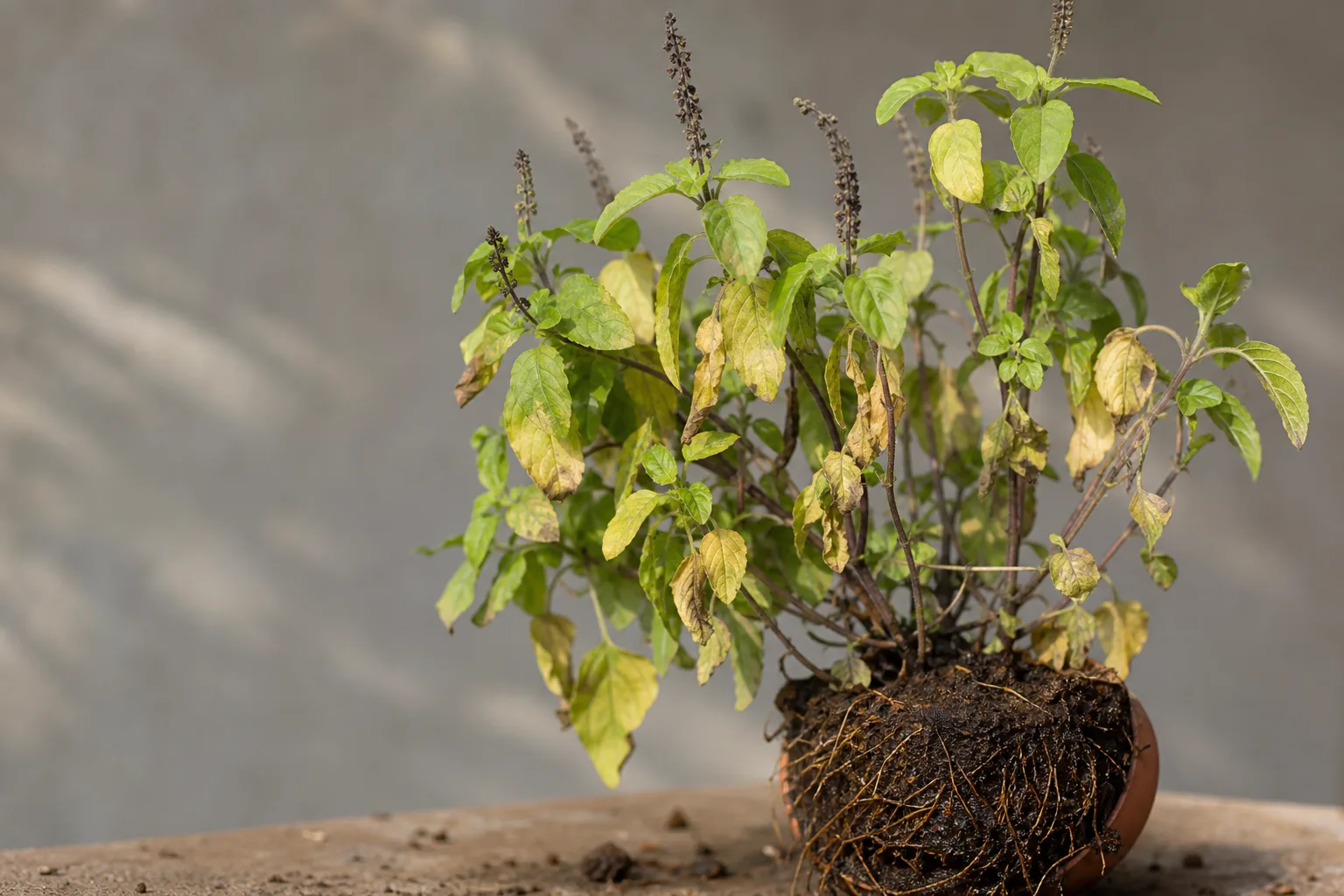
Root rot on tulsi means waterlogged mix has suffocated roots on this fast-growing holy basil herb. First step: stop watering, confirm the top inch is still wet while leaves hang limp on a heavy pot-that wet-soil wilt pattern means damaged roots, not thirst. Unpot only when decline continues after a dry-down pause.
Root Rot on Tulsi: Causes, Checks & Fixes
This guide covers root rot on Tulsi. See also the general Root Rot guide, watering, and light pages for this plant.
Root Rot on Tulsi: Causes, Checks & Fixes
Quick answer
Root rot on tulsi (Ocimum tenuiflorum, holy basil) is the severe endpoint of roots suffocating in soil that stayed too wet too long. On this fast-growing aromatic herb whose thin leaves wilt dramatically, the damage shows up as brown or black mushy roots, a sour smell at drainage holes, yellow lower leaves, and limp foliage on a heavy wet pot-the wet-soil wilt paradox that tricks growers into watering again.
First step: stop watering immediately. Do not repot, fertilize, or harvest heavily on day one. Lift the pot-if it feels heavy and leaves hang limp despite moisture at the top inch, you are in root failure, not a drought emergency. Let the upper root zone approach dryness, empty any saucer or cachepot runoff, and stabilize bright light before unpotting.
This page covers confirmed and suspected root rot on tulsi-the numbered unpot-and-trim protocol, severity branches, propagation fallback for harvest growers, and prevention aligned with the tulsi watering guide. For early wet-soil stress before roots collapse, see overwatering on tulsi. For the wet-soil wilt paradox without full rot, see wilting on tulsi.
Root rot vs. overwatering vs. other lookalikes
Root rot is not a separate mystery disease-it is what happens when overwatering and poor drainage never break. Tulsi can look nearly identical at first: limp leaves, dull fragrance, slowed tips. The difference is depth and reversibility.
| Pattern | Most likely cause | Key check | First direction |
|---|---|---|---|
| Heavy wet pot, mushy roots, sour smell, wilt persists | Root rot (advanced decay) | Unpot and inspect roots | Trim, repot, pause water |
| Wet soil 5+ days, yellow lower leaves, no mush yet | Overwatering (early stage) | Stop watering; check drainage | See overwatering |
| Light dry pot, soil pulls from wall, perks after soak | Underwatering | Finger at 1 inch depth | See underwatering |
| Midday wilt, firm stems, dry-ish mix, evening recovery | Heat stress | Wilting time of day | Reduce afternoon scorch |
| Wet soil + white gnats at surface | Chronic wetness (rot risk) | Probe mid-depth moisture | Dry-down; see fungus gnats |
The diagnostic that separates root rot from almost every lookalike on tulsi: limp leaves on soil that is still wet at depth. Healthy roots pull water upward; rotting roots cannot, so the canopy collapses even though the mix feels damp.
What root rot looks like on Tulsi
Unlike slow-to-wilt houseplants, tulsi announces stress within hours-but root rot adds signs below the soil line that drought does not share.
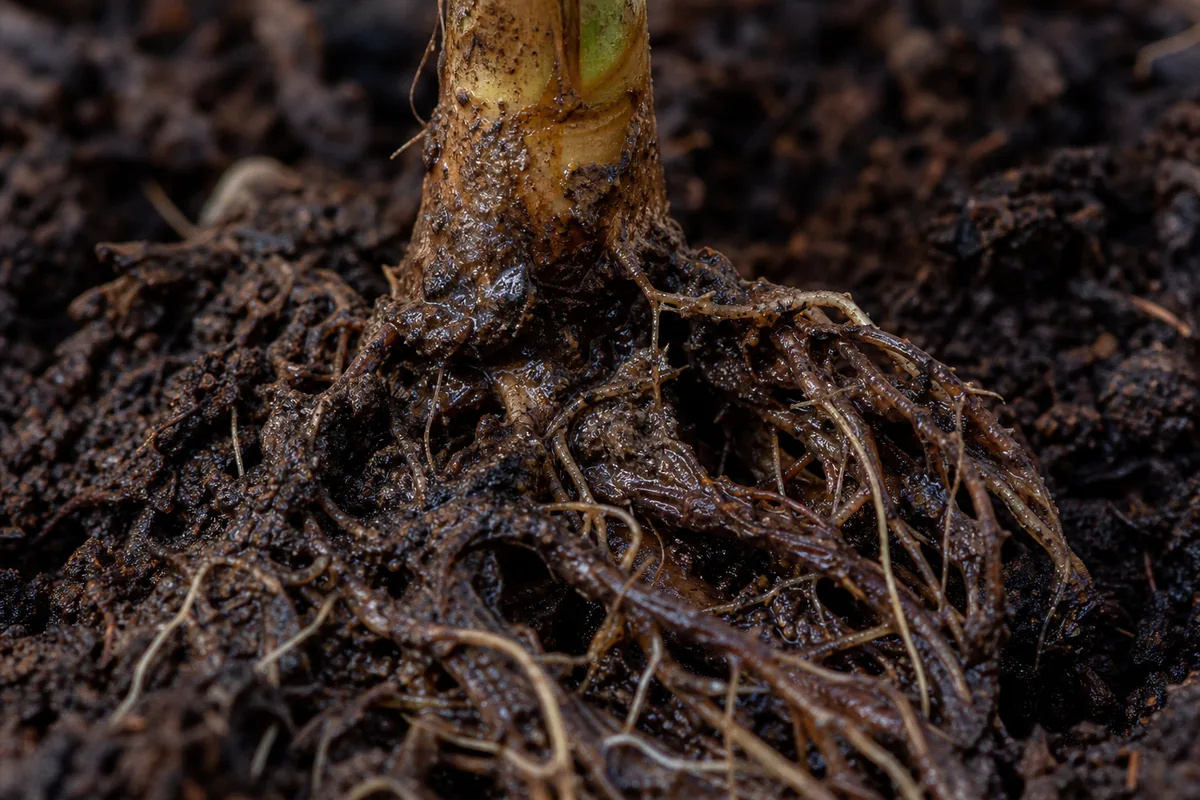
Root Rot symptoms on Tulsi - compare with healthy tissue on the same plant.
Above-soil signs
- Wilt on wet soil - leaves hang limp while the pot feels heavy and the top inch stays cool and clingy
- Yellow lower leaves that drop while tips stay green briefly, then fail
- Dull fragrance and thin papery leaf texture compared to a healthy bushy plant
- Stem softness or darkening at the soil line - crown involvement is urgent
- Sour, fermented, or swampy smell from drainage holes or when you lift the pot edge
- White fungus gnats hovering near the surface after weeks of persistent wetness
- Slowed or stopped new shoot tips even though light seems adequate
Below-soil signs (visible after unpotting)
- Brown to black roots that feel mushy, slimy, or hollow
- Outer root sheath slipping away from an inner thread-classic Pythium decay on herb roots
- Most of the root mass left behind in the pot when you lift the plant
- Firm white or pale tan roots mixed with rotted sections-salvage is possible only where firm tissue remains
What root rot usually is not: dramatic wilt on a light dry pot that perks within hours after one soak (underwatering); temporary midday flop on slightly dry mix that recovers by evening (heat stress); or a single lower yellow leaf over months without wet-soil smell (see yellow leaves on tulsi).
Why Tulsi gets root rot
Holy basil evolved in tropical and subtropical Southern Asia as a sun-loving herb that grows rapidly in warmth. In a pot, that biology meets conditions that keep roots airless: limited drainage, calendar watering, and seasonal light drops growers underestimate.
Winter indoor overwatering
Winter kills more indoor tulsi through overwatering than underwatering. Lower light reduces photosynthetic demand. Cooler room temperatures-especially below 18°C (64°F) at night-slow root metabolism. Soil that dried in three summer days may take ten or more in December. Applying a July terrace schedule to that pot drowns roots in cold, stagnant moisture. Pathogens like Pythium find favorable conditions in cool, waterlogged mix.
Terrace-to-indoor move without schedule change
A Krishna or Rama tulsi that thrived on a two-day balcony schedule in July may rot within two weeks if the same pot moves to a cool north window with unchanged watering. Leaves yellow as light drops-many growers compensate with extra water instead of adjusting light first. That combination is one of the most common rot triggers for terrace growers bringing plants indoors.
Plastic pots, cachepots, and poor drainage
A moisture-retaining plastic pot in dim winter light is the highest-risk combination for tulsi root rot. Decorative cachepots without drainage trap every watering session’s runoff unless you lift the inner container, drain fully, and replace. Blocked holes, dense garden soil in containers, and oversized pots that hold unused wet volume all extend the wet cycle-holy basil does poorly in waterlogged soils. See the tulsi soil guide for drainage mix targets.
Monsoon saturation and balcony growing
Outdoor tulsi during heavy rain needs manual watering paused and confirmed drainage-not sympathy pours on top of saturated mix. Wind and heat on sunny balconies dry pots fast in summer; monsoon weeks reverse that clock entirely.
How to confirm root rot
Work through these checks in order before stacking treatments.
- Pot weight - Heavy and hard to tilt with limp leaves and no recent deep soak suggests chronic wetness. Very light weight points toward drought instead.
- Top-inch moisture - Push a finger into the top inch. Cool clingy soil on a heavy pot with sour smell raises rot suspicion. Dusty dry soil means look at underwatering first.
- Smell and drainage - Sour or fermented odour from holes confirms anaerobic conditions. Confirm holes are open and saucers are empty.
- Stem base firmness - Press gently at the soil line. Mushy dark tissue on wet mix is urgent; firm green square stems fit a milder case.
- Wilt recovery test - If you have not watered recently and wilt persists on wet soil, roots are likely failing. Do not soak again to “test”-that deepens rot.
- Skewer mid-depth check - A dry wooden skewer to mid-depth that pulls out with clinging wet crumbs on a heavy pot supports rot suspicion over simple thirst.
- Unpot inspection - Slide the plant from its container. Rinse soil gently from roots. Firm white roots mean reconsider lookalikes; brown mushy roots with sour mix confirm rot.
You have confirmed root rot when wet soil pairs with mushy brown or black roots, sour smell, wilt that does not resolve after appropriate dry-down, and/or soft tissue at the crown.
First fix for Tulsi
Your first action is one clear step: stop watering while you confirm wet-soil wilt versus dry-soil thirst. Do not stack repot, prune, fertilize, and pesticide on the same day.
Step 1 - Pause water and stabilize light
Pause all watering until the top inch of mix approaches dryness. Empty saucers and cachepots completely. Move the plant to the brightest available spot so remaining healthy roots can recover uptake-dim corners keep mix wet longer. Wait three to five days after the surface dries before deciding whether unpotting is necessary. Mild root stress sometimes stabilizes once oxygen returns without immediate repot.
Step 2 - Unpot, trim, air-dry, and repot
If leaves keep declining after a dry-down cycle, unpot and inspect:
- Remove the plant from its pot and rinse soil from roots gently under lukewarm running water or by swishing in a clean bowl.
- Identify rotted tissue - brown, black, slimy, or hollow roots and any soft dark stem at the crown.
- Trim all mushy roots and soft stem with clean, sharp scissors. Sterilize blades with rubbing alcohol between cuts if rot is extensive.
- Let cut surfaces air-dry two to four hours on newspaper in shade-do not bake roots in direct sun.
- Repot into fresh well-drained mix per the soil guide, in a clean container sized to the trimmed root mass with open drainage holes. See repotting on tulsi for technique.
- Water once lightly after repot to settle mix, then pause until the top inch dries before the next drink. Do not fertilize until new growth resumes.
Step 3 - Severity branches
Mild - Mostly firm white roots with a small mushy section; trim only decayed tissue, repot same-size or slightly smaller pot, expect stabilization within one to two weeks.
Moderate - Roughly one-third to half the root mass is mushy; aggressive trim, smaller pot, four to six weeks before reliable new shoot tips.
Severe / crown rot - Soft stem spreading upward, most roots gone, sour mix throughout. Salvage only if firm green wood remains above the rot line; otherwise discard and propagate.
Propagation fallback - When roots are mostly gone but firm stems with healthy nodes remain, take a four-to-six-inch cutting, remove lower leaves, root in water or moist perlite, and start fresh. Tulsi roots readily in warm active growth. See propagation on tulsi.
Recovery timeline
Mild rot after trim and repot - Decline stops within seven to fourteen days; old yellow leaves may not re-green but no new yellowing spreads. First firm new shoot tips often appear within two to three weeks in warm bright conditions.
Moderate rot - Expect four to eight weeks before consistent new growth and stable fragrance return. Some lower leaves drop during stabilization-that is normal, not failure.
Severe crown involvement - Soft mush climbing the stem often means the plant cannot recover regardless of repotting. Judge by firm new apical growth and a pot that cycles from heavy after a light watering to noticeably lighter within five to ten days in summer-not by saving every old leaf.
Improving signs: No new yellowing, mix dries at a predictable rate, stem base stays firm, new leaves emerge with normal colour and scent.
Worsening signs: Rapid leaf drop continues, mix stays sour ten-plus days after last water in bright light, soft stem climbs upward, wilt returns immediately after light watering.
Post-trim watering rhythm
After repot, give one light soak to settle mix, then wait until the top inch dries before the next drink. Heavy soaking on day two re-saturates trimmed roots before they callus. Return to the full top-inch-dry rule from the watering guide only when new growth or firm existing leaves suggest roots are functioning again.
Harvest and prasad during recovery
Do not harvest heavily from root-compromised tulsi until new top growth confirms recovery. Pinching large bundles for tea or prasad removes transpiring leaf area the weakened root system cannot support. Light tipping of one or two firm shoots is acceptable once decline has stopped for a week.
What not to do
- Water wilted leaves when soil is wet at depth - the single fastest way to convert recoverable stress into full rot.
- Fertilize a waterlogged or freshly repotted plant - stressed roots do not need feed and salts can damage cut surfaces.
- Repot into a larger pot to “help drying” - extra soil holds moisture longer around a reduced root mass.
- Use dense garden soil or blocked drainage holes - herb roots need air as much as water.
- Keep watering on a summer calendar in winter - cold slow uptake makes wet cycles longer.
- Leave standing water in saucers or cachepots - empty within thirty minutes after every soak.
- Discard the plant before checking for salvageable cuttings - firm stems above rot often root faster than the parent recovers.
How to prevent root rot next time
Prevention on tulsi is disciplined watering: check the top inch before every pour, soak until drainage runs, empty all runoff, and adjust interval for season-often every one to three days on a hot summer balcony and every seven to fourteen days indoors in winter.
Use a right-sized pot with open drainage and fast-draining mix enriched with perlite or coarse sand. Terracotta breathes faster than glazed ceramic or plastic; adjust frequency when you change pot type. Place the plant where it receives full sun to bright indirect light so it uses water at a reasonable rate.
After moving tulsi indoors from summer outdoors, reset expectations and watch dry-down for four weeks before trusting an old schedule. For the full prevention workflow including Pythium context and winter rules, see the tulsi watering guide root-rot section.
Related Tulsi guides
- Overview - species context and quick care
- Watering - seasonal rhythm, root-rot prevention, winter slowdown
- Overwatering - early wet-soil stress before full decay
- Wilting - wet-pot versus dry-pot diagnostic
- Underwatering - drought rescue and lookalike separation
- Soil - drainage mix for container holy basil
- Repotting - emergency versus seasonal repot timing
- Propagation - stem-cutting salvage after root loss
- Yellow leaves - when yellowing is not rot
- Fungus gnats - chronic wetness indicator
Conclusion
Root rot on tulsi is almost always a drainage-and-frequency failure that went too long: roots suffocating in cold or stagnant wet mix while leaves wilt in the paradox that looks like thirst. Confirm it with heavy wet pots, mushy brown roots, sour smell, and wilt that does not resolve after appropriate dry-down. Your first move is stop watering-not another soak. Salvage with trim-and-repot when firm white roots remain; start a fresh cutting when they do not. Prevention beats surgery: match watering to light, season, and pot type, and let the top inch dry before every drink.