Spider Mites on Tulsi: Causes, Checks & Fixes
Quick answer
Spider mites on tulsi cause pale stippling and fine webbing on serrated leaves in hot, dry air. First step: isolate the pot and rinse every leaf underside with a forceful stream of lukewarm water.
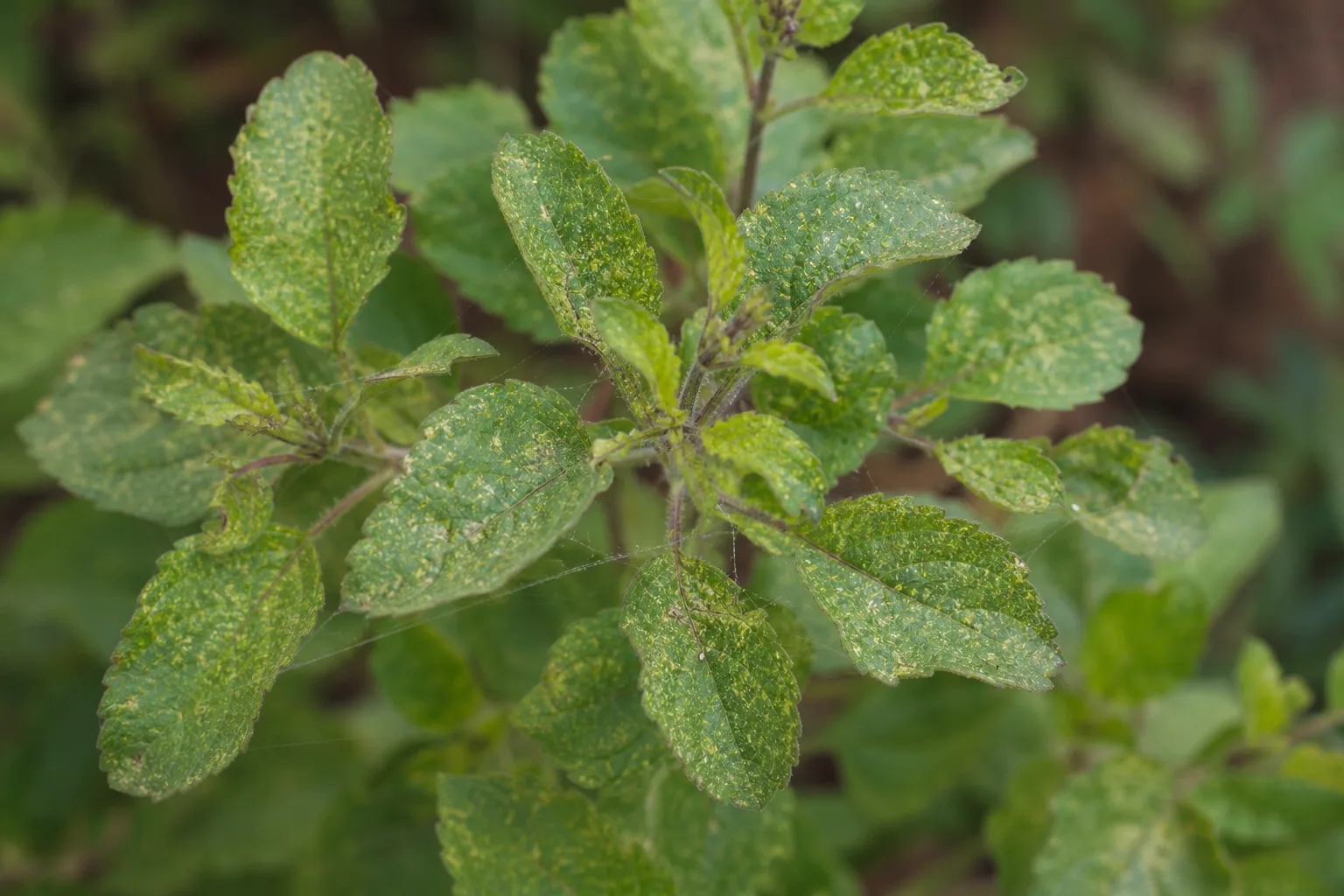
Spider Mites on Tulsi: Causes, Checks & Fixes
This guide covers spider mites on Tulsi. See also the general Spider Mites guide, watering, and light pages for this plant.
Spider Mites on Tulsi: Causes, Checks & Fixes
Quick answer
Spider mites on tulsi (Ocimum tenuiflorum - holy basil) show up as pale speckling, dull bronzing, and fine silk on soft, serrated herb leaves-often on the newest harvestable shoots before you notice anything wrong on top. The usual indoor culprit is the two-spotted spider mite (Tetranychus urticae), an arachnid that thrives in warm, dry air exactly like the microclimate above a winter windowsill beside a heating vent.
First step: isolate the pot and rinse every leaf underside with a forceful stream of lukewarm water. That single action knocks off live mites and eggs, limits spread to neighboring basil or mint on the same shelf, and buys time to confirm the diagnosis before you reach for sprays.
For baseline light and watering rhythm while you treat, see the tulsi overview and watering guide. Dry air that favors mites overlaps with low humidity on tulsi-address both environment and pests, not one alone.
What spider mites look like on Tulsi
Tulsi leaves are oval, serrated, and aromatic on square mint-family stems. Mite damage appears quickly on this soft foliage and can look like a nutrition or watering problem at first glance.
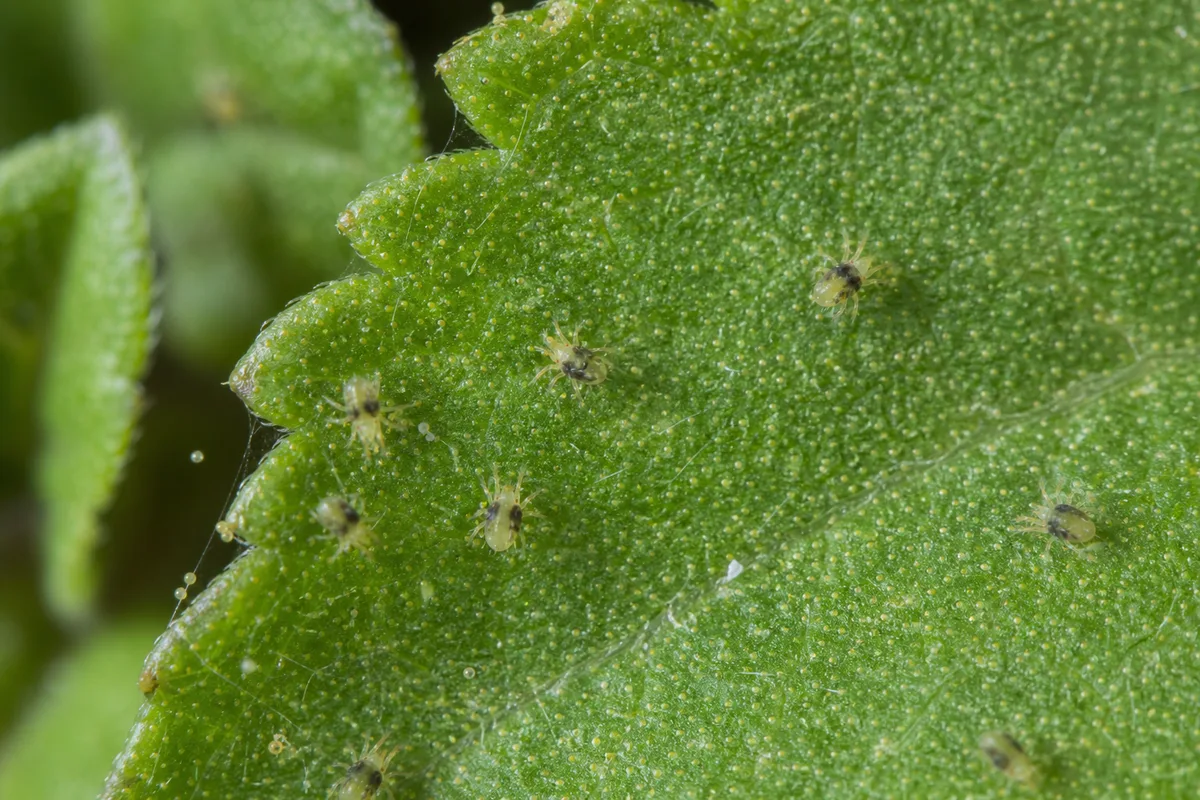
Spider Mites symptoms on Tulsi - compare with healthy tissue on the same plant.
Typical signs on Rama, Krishna, and Kapoor holy basil include:
- Tiny yellow or white flecks across the upper leaf surface-the classic stippled look from punctured cells
- Leaves turning dull, dusty, or bronze as feeding continues; severely hit foliage may crisp at the edges
- Fine webbing at leaf joints, stem tips, or along petioles-often visible only with side light or magnification
- Slowed regrowth on shoots you would normally pinch for tea; new tips may look pale or stunted
- No sticky residue-unlike aphids on tulsi, spider mites do not leave honeydew
Krishna tulsi carries purple-green foliage with stronger color on stems and veins. Early stippling can look like normal vein contrast until you compare affected leaves to healthy ones on the same shoot-mite dots are uniform pinpricks across the blade, not color confined to veins alone. Rama tulsi shows stippling more obviously on green leaves but still requires an underside check because the glossy top surface hides damage.
Because tulsi produces fresh tips constantly when light is adequate, mites often colonize newest harvestable growth first. Weekly pinching for tea or prasad doubles as an early-warning inspection if you look at undersides, not just the top surface.
Why Tulsi gets spider mites
Tulsi wants steady moisture in the root zone, bright light, and warm temperatures-see the light guide for placement details. Spider mites do the opposite: they reproduce fastest when air is hot and dry. The mismatch shows up in real homes:
- Winter windowsills where sun heats leaves while central heating dries the air
- Sacred-herb overwintering indoors beside radiators or heating vents-warm, dusty, and rarely rinsed
- Crowded kitchen herb shelves where tulsi, sweet basil, and mint pots touch and mites walk stem to stem
- Recently moved outdoor tulsi brought inside without quarantine-outdoor colonies ride in on undersides
Tulsi’s fast, aromatic growth does not cause mites, but it gives them lots of tender leaf area to feed on once conditions favor them. Dusty foliage on plants that are never rinsed also makes it easier for populations to hide and multiply unnoticed.
Stressed tulsi-root-bound, drought-stressed, or sitting in a dim corner-shows damage faster because the plant has less reserve to replace stippled leaves. Healthy, well-watered holy basil can still get mites; dry air is the main accelerator, not weak roots alone.
How to confirm the cause
Work through these checks before treating. You want to separate spider mites from lookalikes that hit tulsi for different reasons.
- Paper tap test - Hold a suspect leaf over white paper and tap the underside firmly. Tiny moving specks (pinpoint size) strongly suggest mites. Static debris alone does not.
- Webbing check - Look at square stem joints and leaf undersides with a hand lens or phone macro. Silk threads plus stippling confirm mites; stippling alone may be early feeding.
- Moisture and roots - Press a finger 1–2 inches into the mix. Soggy soil with yellow lower leaves fits overwatering, not mites. Dry, light pot weight with wilt fits drought.
- Sticky or curled tips - Sticky new shoots with clustered insects point to aphids, not mites. Mealybugs show white cottony patches in leaf axils.
- Gray-white leaf coating - Powdery mildew wipes off as powder; no mites on paper tap.
- Adjacent plants - Inspect sweet basil, mint, and other Lamiaceae herbs on the same shelf. Mites spread plant to plant; a single tulsi with uniform yellowing and no speckling pattern is less likely to be mites.
Confirmed diagnosis requires stippling plus either moving specks or webbing on multiple leaves-not yellow leaves alone.
First fix for Tulsi
Move the pot away from other herbs and rinse all foliage thoroughly.
Use a sink sprayer, shower head, or strong mister set to a firm stream. Angle sprays up into leaf undersides-that is where mites and eggs concentrate on serrated tulsi foliage. Repeat the rinse two or three times per session, letting water run off between passes. Wash your hands and any snips afterward so you do not carry mites to clean plants.
Do not apply fertilizer, repot, or spray oils on the same day as your first discovery. Confirm active mites after the rinse, then move to repeat treatments if speckling spreads or webbing returns within a few days.
Step-by-step recovery
After the initial rinse, follow this order based on severity:
- Improve the local environment - Move tulsi out of direct heat drafts. Grouping pots can raise humidity slightly, but do not crowd leaves so they stay touching. A pebble tray or humidifier nearby helps; misting alone is a minor, temporary bump. See low humidity on tulsi for longer-term humidity fixes.
- Repeat water rinses - For light infestations, rinsing every two to three days for two weeks may be enough. Focus on undersides and new tips.
- Apply insecticidal soap if mites persist - Use a product labeled for spider mites on edible plants. Coat undersides until runoff; soaps only kill on direct contact and leave no residual protection, so missed mites survive. Repeat every five to seven days for at least three cycles to catch newly hatched mites.
- Consider horticultural oil as an alternative - On tulsi that is not in blazing direct sun, a labeled horticultural or plant-based oil can smother mites on contact. Test one leaf first-soft herb foliage can burn if oil is applied in hot sun or too strong a mix.
- Prune heavily infested shoots - Cut out stems coated in webbing and bag them before discarding. That lowers pest load and improves spray coverage on what remains. Do not compost infested clippings indoors.
- Hold the harvest - Wait until the label’s re-entry or harvest interval passes before using leaves for tea or cooking. When in doubt, harvest from stems you rinsed only with plain water and keep sprayed sections for ornamental recovery.
Skip broad-spectrum insecticides on kitchen tulsi unless a label explicitly allows food crops. Some products kill predatory mites and can flare spider mite numbers after an initial knockdown.
Recovery timeline
Old stippled leaves rarely return to solid green. They may stay speckled or bronze even after the colony is gone. Measure success by:
- No new webbing on fresh tips within seven to ten days
- Clean new growth emerging from nodes within two to three weeks
- Stable harvest rhythm returning-enough clean leaves to pinch without seeing moving specks
If new shoots still emerge stippled after three soap cycles and regular rinsing, the infestation is active or reinfestation is occurring from a nearby host plant.
Lookalike symptoms on Tulsi
| What you see | Likely cause | How to tell it apart |
|---|---|---|
| Uniform yellow lower leaves, wet soil | Overwatering / root stress | No stippling pattern; no webbing; stem base may feel soft |
| Curled, sticky new tips | Aphids | Visible colonies; honeydew; no fine silk |
| White cotton in axils | Mealybugs | Waxy blobs; not fast stippling |
| Brown crispy edges, dry soil | Drought / heat stress | No moving specks; whole margins burn, not fine dots |
| Gray-white leaf coating | Powdery mildew | Wipes off as powder; no mites on paper tap |
| Pale, leggy stems | Insufficient light | No webbing; internodes stretch; see light guide |
Mistakes to avoid
- Stopping after one rinse or one spray - Mite eggs hatch on a cycle; a single treatment rarely clears a colony.
- Spraying only the tops of leaves - Mites live and lay eggs on undersides; top-only coverage wastes product.
- Using homemade dish-soap mixes on edible tulsi - They burn soft foliage and are not labeled for food crops.
- Harvesting immediately after spraying - Respect label intervals on herbs you plan to drink or cook with.
- Ignoring neighboring pots - Sweet basil, mint, and other Lamiaceae herbs on the same shelf often share the infestation.
- Applying horticultural oil in hot midday sun - Leaf scorch on tulsi is common; treat in morning or evening.
- Assuming high humidity alone cures an outbreak - Humidity slows reproduction but does not remove an established colony without rinsing or contact sprays.
How to prevent spider mites on Tulsi
Prevention on holy basil is mostly about environment and inspection, not pesticides:
- Rinse foliage weekly in dry seasons-especially winter-when you water. Tulsi handles gentle washing well when the pot drains freely afterward.
- Keep tulsi in bright light (6+ hours direct sun outdoors or strong indoor light) without baking it against a single-pane window above a heat vent.
- Quarantine new herbs for two weeks before placing them beside established tulsi.
- Harvest and pinch regularly and inspect undersides when you do-early colonies are easiest to rinse away.
- Maintain steady moisture without waterlogging; follow the watering guide rhythm rather than a calendar schedule.
- Space pots so leaves do not touch; mites crawl short distances between touching foliage.
Outdoor tulsi in summer often stays cleaner because rain and predatory insects keep mites in check. Re-check plants when you bring pots back indoors in fall.
When to worry
Escalate or start fresh if:
- Webbing covers most of the plant and returns within days of thorough rinsing
- Multiple herbs on one shelf show stippling despite isolation attempts
- New growth stays distorted after three properly timed soap or oil cycles
- The plant is mostly bronze with few healthy stems-starting from clean cuttings may cost less effort than saving an exhausted root ball
Tulsi roots easily from stem cuttings. A severely webbed pot can often be replaced by rooting clean side shoots from a less-affected edge, rinsing them well, and potting in fresh mix-provided the core stock is not entirely encased in silk.
Related Tulsi care and problems
Core guides: Tulsi overview · Light · Watering · Low humidity
Related problems: Aphids · Overwatering · Wilting
Conclusion
Spider mites on tulsi are a dry-air pest problem, not a mystery disease. Confirm them with stippling plus moving specks or webbing on undersides, then isolate and rinse first. Repeat rinses or labeled insecticidal soap on a five- to seven-day schedule until new tips grow in clean. Old leaves may stay speckled, but harvestable holy basil can recover within a few weeks when humidity improves and you stay consistent with treatment.
When to use this page vs other Tulsi guides
- Tulsi watering guide - Use for routine moisture checks before assuming spider mites is the main issue.
- Tulsi problems hub - Browse all 5 common issues on this species.