Mealybugs on Water Lettuce: Causes, Checks & Fixes
Quick answer
Mealybugs on water lettuce usually hitchhike on new floating mats or colonize rosette crowns and leaf bases that sit partly dry at the waterline. First step: scoop affected rosettes into a separate quarantine tub and remove visible insects by hand-never pour alcohol, soap, or neem into an occupied aquarium or pond.
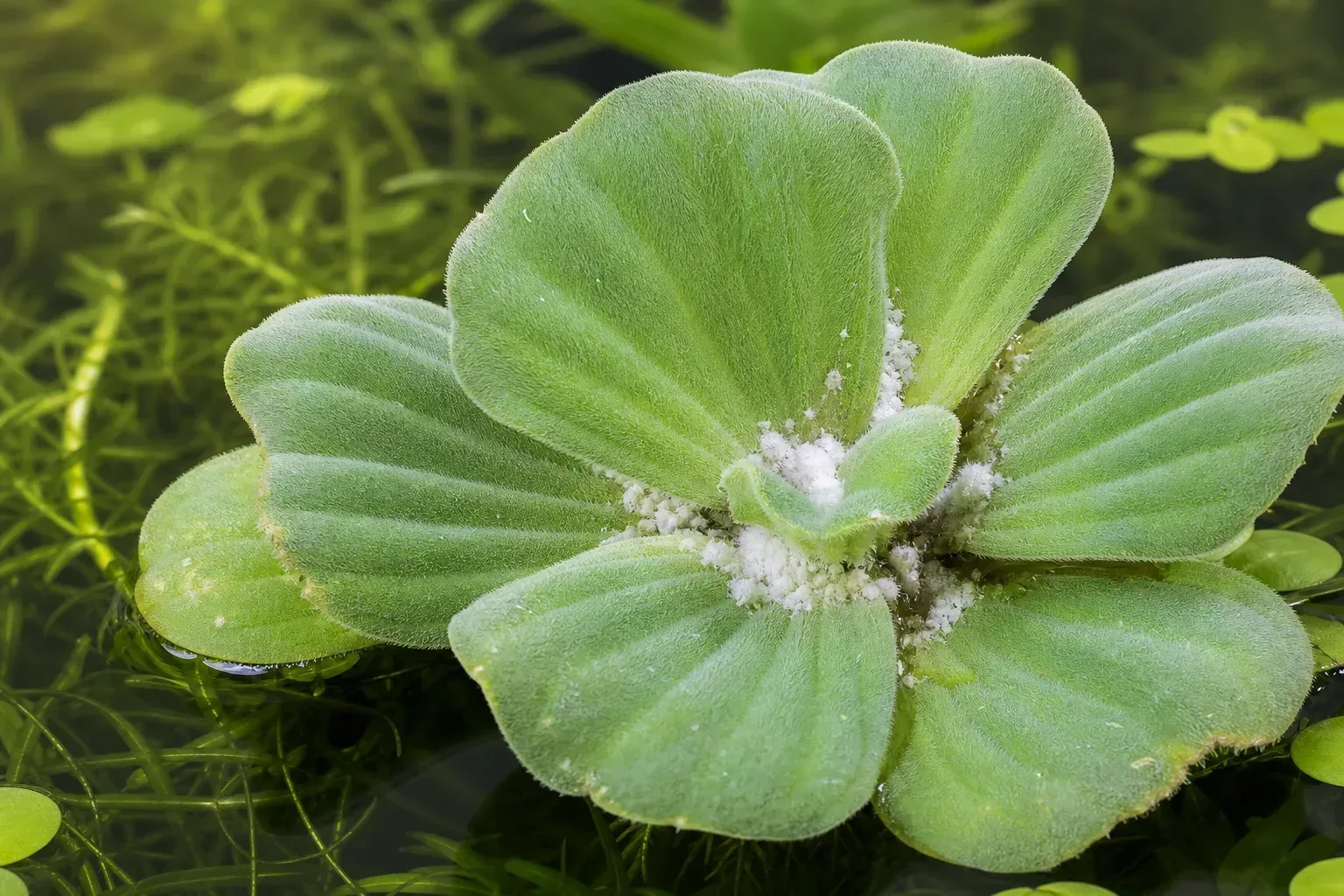
Mealybugs on Water Lettuce: Causes, Checks & Fixes
This guide covers mealybugs on Water Lettuce. See also the general Mealybugs guide, watering, and light pages for this plant.
Mealybugs on Water Lettuce: Causes, Checks & Fixes
Quick answer
Mealybugs on water lettuce (Pistia stratiotes) are uncommon in a stable, fully submerged community aquarium-but they show up often enough on new floating mats, grow-out tubs, and rosettes that sit partly dry at the waterline. Mealybugs are soft, wax-covered insects that feed on plant sap and leave sticky honeydew-a very different problem from normal Pistia melt, cold-water yellowing, or dirty tank water.
First step: scoop affected rosettes into a separate quarantine tub and remove every visible insect by hand. Do not treat inside an occupied tank with rubbing alcohol, neem, or insecticidal soap on day one. Water lettuce is cheap to replace through daughter plants; fish, turtles, and shrimp are not.
For species context and responsible disposal rules, see the water lettuce overview.
Why water lettuce gets mealybugs
Water lettuce is a free-floating aquatic plant whose rosettes live at the air–water interface with feathery roots trailing below. That habitat is not a classic mealybug host the way fuzzy houseplants or emersed Echinodorus rosettes are-but mealybugs still arrive through specific entry routes:
Nursery hitchhikers. Pistia often ships mixed with other aquatic plants grown emersed in greenhouses. Mealybugs are common stowaways on emersed aquarium plants and cling to leaves, damp packaging, or pot rims-not because water lettuce is a preferred food source, but because it traveled beside infested stock.
Surface-dry rosettes at the tank rim. Mats pushed against aquarium edges, filter outflows, or shallow grow-out tubs leave velvety leaf tissue partly exposed. Mealybugs thrive in warm, sheltered spots on plant tissue. Land-dwelling mealybugs cannot survive long fully submerged, but they persist on crowns and folded leaf bases that stay above the waterline.
Overcrowded mats in grow-out tubs. Fast-growing water lettuce produces daughter plants on short stolons and can cover a tub within weeks. When the surface fills to the rim, outer rosettes pack together and dry slightly between water changes-creating protected crevices mealybugs prefer.
Daughter stolons as reinfestation paths. One infested rosette in a stolon chain can reseed clean neighbors after manual removal if you miss cotton hidden in the folded bases where new leaves emerge.
Stress does not cause mealybugs, but yellowing or melting Pistia from cold water or poor light makes white colonies harder to spot against pale tissue. Fix baseline water temperature and light in parallel with pest removal, not instead of it.
What mealybugs look like on water lettuce
Water lettuce rosettes are much larger than duckweed-typically 5–25 cm (2–10 inches) across in home aquariums-so mealybug colonies look like cottony white clusters tucked into specific spots rather than a fine dust across the whole mat.
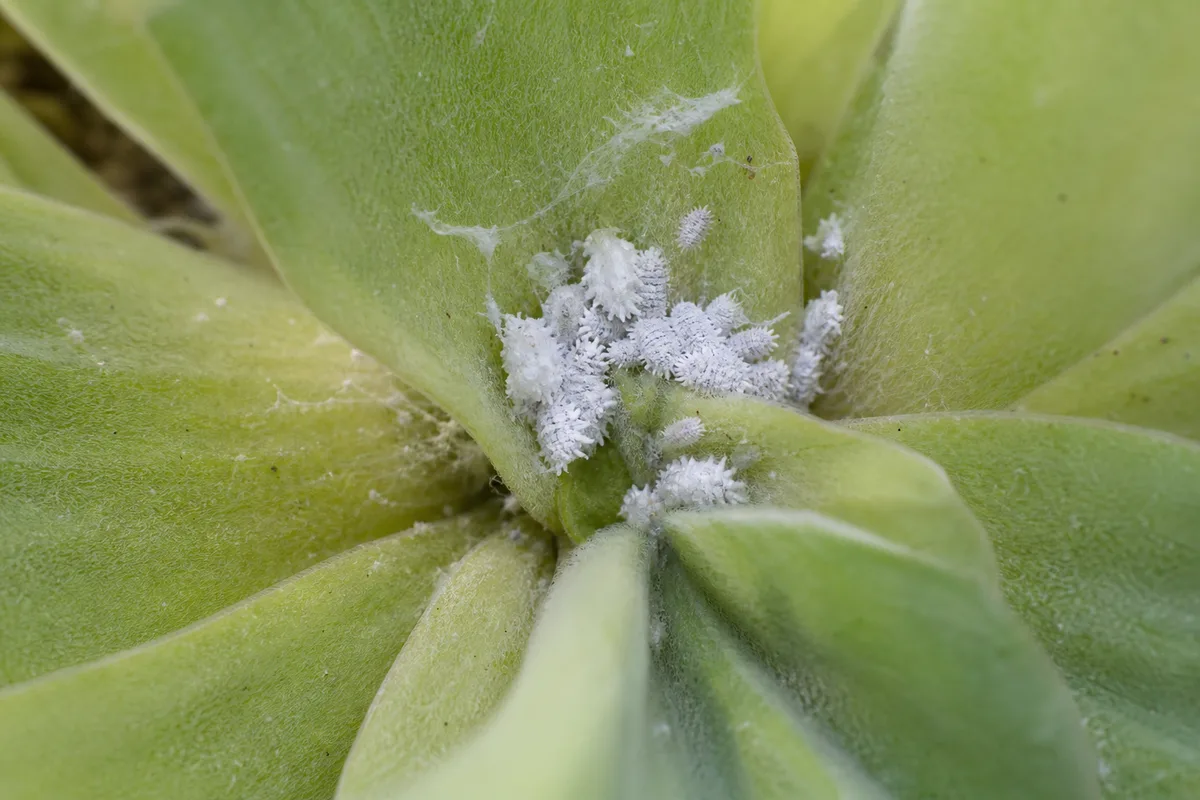
Mealybugs symptoms on Water Lettuce - compare with healthy tissue on the same plant.
Typical mealybug signs on Pistia:
- White, waxy, cottony masses at the rosette crown where new velvety leaves fold together-not classic houseplant “leaf axils,” but the same sheltered crevice idea on a floating rosette
- Clusters along short stolons connecting daughter plants to the parent rosette
- Pinhead colonies on feathery roots near the surface, where root tissue meets air above the waterline
- Sticky honeydew on tub walls, glass, or hardscape below the mat
- Yellowing or slowed growth on rosettes directly under heavy feeding clusters
- Ants near outdoor grow tubs or greenhouse benches-ants farm honeydew and protect mealybug colonies
What healthy water lettuce looks like instead:
- Firm, evenly green velvety rosettes with long hair-like roots trailing into the water
- No greasy stickiness on tank walls unrelated to biofilm
- Steady daughter-plant production on stolons in warm, lit water
Sooty mold can grow on honeydew excretions, appearing as dark smudges on rosette edges or container rims. That mold is a secondary clue that sap-feeding insects-not water quality alone-are present.
Compared with mealybugs on duckweed, Pistia’s larger rosettes make manual tweezers removal easier-but colonies can hide deeper in folded leaf bases at the crown than on tiny fronds.
How to confirm the cause
Work through these checks before treating:
- Location on the plant - Mealybugs sit on rosette crowns, stolons, and surface-zone root tissue. White dust floating freely in water or hopping on the surface is more likely perlite, pollen, or springtails.
- Crush test - Press a cotton swab onto a white cluster. Mealybugs smear pink or red when crushed; mineral deposits, perlite, and biofilm do not.
- Submersion check - Push suspect rosettes fully under water for several minutes. Mealybugs die underwater like other land-dwelling insects. If white material persists only on tissue that stays above the surface, that supports mealybug ID.
- Movement - Newly hatched crawlers are tiny but mobile. Watch with a hand lens; mealybugs shift slowly, unlike inert debris.
- Source timing - New batches from nurseries, pond swaps, or friend donations right before symptoms appear strongly suggest hitchhikers rather than a spontaneous tank outbreak.
- Tank-mate check - Confirm no recent emersed plants, Wabi-Kusa builds, or paludarium additions shared the same quarantine space. Aphids on water lettuce can co-occur as another sap feeder on soft new tissue.
If rosettes stay fully submerged, grow steadily, and white spots wipe off as loose grit with no pink smear, mealybugs are unlikely-look at water mineral content, perlite from potted stem-plant debris, or decaying organic matter instead.
First fix for water lettuce
Scoop affected rosettes into a separate quarantine container filled with clean dechlorinated water, then manually remove every visible mealybug with tweezers or a cotton swab.
This keeps treatment away from turtles, fish, shrimp, and snails in the main display. Pistia propagates through daughter plants; sacrificing one contaminated rosette or mat is safer than contaminating a whole tank.
In quarantine only:
- Pick off cottony clusters with fine tweezers, working into folded leaf bases at the crown
- Dab remaining insects with a cotton swab dipped in 70% isopropyl alcohol-test on a few leaves first and watch for bleaching over 24 hours
- Discard heavily coated rosettes rather than trying to save every cluster
- Change quarantine water after manual removal to rinse away honeydew and crawlers
- Separate visibly clean daughter plants onto a second stolon in another tub as backup stock
Do not pour alcohol, insecticidal soap, or neem directly into an occupied turtle tank or community aquarium. Contact treatments must reach the insects directly-and dense floating mats make thorough in-tank coverage impossible without poisoning aquatic life.
Once manual removal is complete, hold cleaned rosettes in quarantine for one to two weeks and re-inspect daily at the waterline before adding any plants to the main tank.
Step-by-step recovery
After the initial quarantine scoop and hand removal:
- Skim outer rosettes - Remove the top layer where mats sit highest and driest against tub walls. Pistia regenerates from daughters on stolons.
- Repeat manual removal every three to five days - Mealybug crawlers hatch over multiple weeks; one pass rarely clears an emersed infestation.
- Keep fronds fully floating - Lower water level slightly so no rosettes rest on dry tub walls, or add a gentle surface ripple so mats do not bake against the rim.
- Improve quarantine water quality - Run clean dechlorinated water, moderate aquarium or pond light, and stable temperature (70–85°F / 21–29°C) so remaining rosettes outgrow damage faster.
- Trace the stolon chain - Inspect every daughter rosette connected by stolons; one missed parent can reinfest the batch.
- Return to main tank only when clear - No new cottony clusters for at least seven days at the waterline, with no honeydew on tub walls.
If manual control fails after three weekly rounds in quarantine, discard the entire batch and restart from a trusted submerged source or clean daughters rather than escalating pesticides near aquatic animals.
Recovery timeline
Manual removal shows results within a few days when the infestation is small-often just a handful of nursery hitchhikers on a new cup of Pistia. Expect two to four weekly inspection passes before calling the batch clean, because mealybug egg sacs can hatch in waves.
Water lettuce recovery is measured by clean daughter rosettes forming on stolons and firm new velvety growth-not by old yellowed leaves, which may stay marked. In warm, lit quarantine water, a healthy remainder often spreads across the surface again within two to three weeks through vegetative daughter-plant production.
If colonies reappear daily after two weeks of careful removal, the source is likely reinfestation from container edges, shared tools, or nearby emersed plants-not the floating mat alone.
Lookalike symptoms to rule out
| Sign | Mealybugs | Perlite / grit | Biofilm | Cold melt / acclimation stress |
|---|---|---|---|---|
| Texture | Waxy, cottony clusters on tissue | Hard, irregular grains | Slimy on glass, not on leaves | Soft yellow-brown tissue collapse |
| Crush test | Pink smear | No smear | N/A | N/A |
| Location | Crown, stolons, surface roots | Loose in water or on debris | Tub walls | Whole rosette or mat section |
| Submersion | Persists only above waterline | Rinses away | Unchanged | Pattern unrelated to dry rim |
Perlite or grit from plant pots - White, hard, irregular grains that rinse off freely and do not smear pink. Common when Pistia arrives mixed with potted stem-plant debris.
Springtails on the water surface - Tiny jumping specks with water-repellent bodies. They live on the surface film and do not form cottony clusters on rosette tissue.
Biofilm or fungal growth on tub walls - Slimy or stringy, not waxy cotton on plant tissue. Improves with water changes; no insects present under magnification.
Water lettuce melt from cold water or acclimation - Whole sections turn yellow-brown and dissolve after a temperature drop or tank move. Pattern is patchy mat collapse, not isolated white cotton balls on green rosettes.
Normal feathery roots - Healthy Pistia roots are long, hair-like, and white to pale green underwater. Mealybugs look waxy and greasy at the surface zone, not filamentous along the full root length.
Mistakes to avoid
Do not spray insecticides, alcohol, or horticultural oils into a turtle tank or stocked aquarium. Treat rosettes at the sink or in quarantine water only.
Do not assume every white speck on Pistia is a mealybug. Over-treating clean mats wastes time and risks chemical exposure.
Do not add new water lettuce directly to a display tank without quarantine. Inspecting plants before introduction is the top prevention step.
Do not let quarantine tubs overflow until rosettes pile against dry edges-that recreates the sheltered habitat mealybugs use.
Do not rely on fish or turtles to eat mealybugs off emersed fronds. Aquatic grazers may consume submerged tissue but will not reliably clean insects from dry surface rosettes before crawlers spread.
Do not release discarded infested plants into lakes, rivers, or storm drains. Pistia stratiotes is an invasive aquatic weed in many regions-bag for household trash per the overview disposal guidance.
Do not return outdoor-seasoned Pistia to indoor tanks without rinse and quarantine-patio tubs and greenhouse benches are common hitchhiker sources.
Water lettuce care cross-check during treatment
While removing mealybugs, keep baseline floating culture steady:
- Water temperature at 70–85°F (21–29°C)-cold water slows recovery and mimics unrelated melt. See the watering guide.
- Surface calm - deflect filter outflow so mats are not pinned under hot, dry micro-spray near lights.
- Light - moderate to bright at the water surface per the light guide; do not blast recovering rosettes with unacclimated full sun.
- Partial coverage - keep roughly one-third to one-half of the surface open for gas exchange while quarantine tubs stay uncrowded.
Avoid excess nitrogen fertilizer in grow-out tubs during quarantine-tender new tissue attracts egg-laying mealybugs-but do not skip nutrients entirely in long quarantine holds or rosettes will melt for unrelated reasons.
How to prevent mealybugs next time
Quarantine every new batch in a separate container for at least one week. Inspect rosette crowns daily at the waterline with a hand lens before any plants enter the main tank.
Buy clean stock when possible. Submerged Pistia from established tanks carries fewer emersed hitchhikers than mixed nursery shipments with pot debris.
Keep grow-out tubs managed. Skim excess weekly so mats do not pack against dry rims. Maintain steady filtration and partial water changes so rosettes stay fully hydrated.
Isolate tools and nets. Rinse nets and cups used in quarantine before they touch display tanks.
Inspect companion plants. If you also grow emersed Echinodorus, pothos rafts, or Wabi-Kusa in the same room, mealybugs on those setups can spread to surface floaters through shared tools or close proximity.
Start backup daughters early. Use the propagation guide to maintain a clean second tub of daughter rosettes so you can discard a treated batch without losing your whole cover crop.
When to worry
Treat as urgent when you find cottony clusters on Pistia the same day you planned to add it to a turtle or fish tank, when honeydew and ants appear around an outdoor grow tub, or when multiple quarantine containers show new clusters after shared tool use.
Discard and restart rather than fight when:
- Colonies return on most rosettes after three weekly manual treatments
- The batch arrived with heavy infestation mixed through the mat and emersed pot debris
- You cannot maintain a separate quarantine space away from the display tank
Fully submerged water lettuce in a stable, clean aquarium with no recent plant additions rarely develops mealybugs on its own. Sudden white clusters after months of healthy growth usually mean a new introduction-trace that source before treating the whole tank.
Conclusion
Mealybugs on water lettuce are almost always a quarantine and surface-rosette problem, not a typical submerged-tank disease. Confirm cottony clusters with a crush test, scoop rosettes into isolation, and remove insects by hand before any plants return to turtle or aquarium water. Pistia grows back fast through daughter stolons; protecting tank mates from pesticides and hitchhikers matters more than saving every rosette.
When to use this page vs other Water Lettuce guides
- Water Lettuce watering guide - Use for routine moisture checks before assuming mealybugs is the main issue.
- Water Lettuce problems hub - Browse all 3 common issues on this species.
- Yellow Leaves on Water Lettuce - Different entry point when symptoms overlap with mealybugs.
- Slow Growth on Water Lettuce - Different entry point when symptoms overlap with mealybugs.