Low Humidity on Zinnia: Causes, Checks & Fixes
Quick answer
Low humidity rarely limits outdoor zinnias in full sun-it more often affects indoor starts near heating vents and favors spider mites. For garden plants, focus on base watering rather than misting foliage.
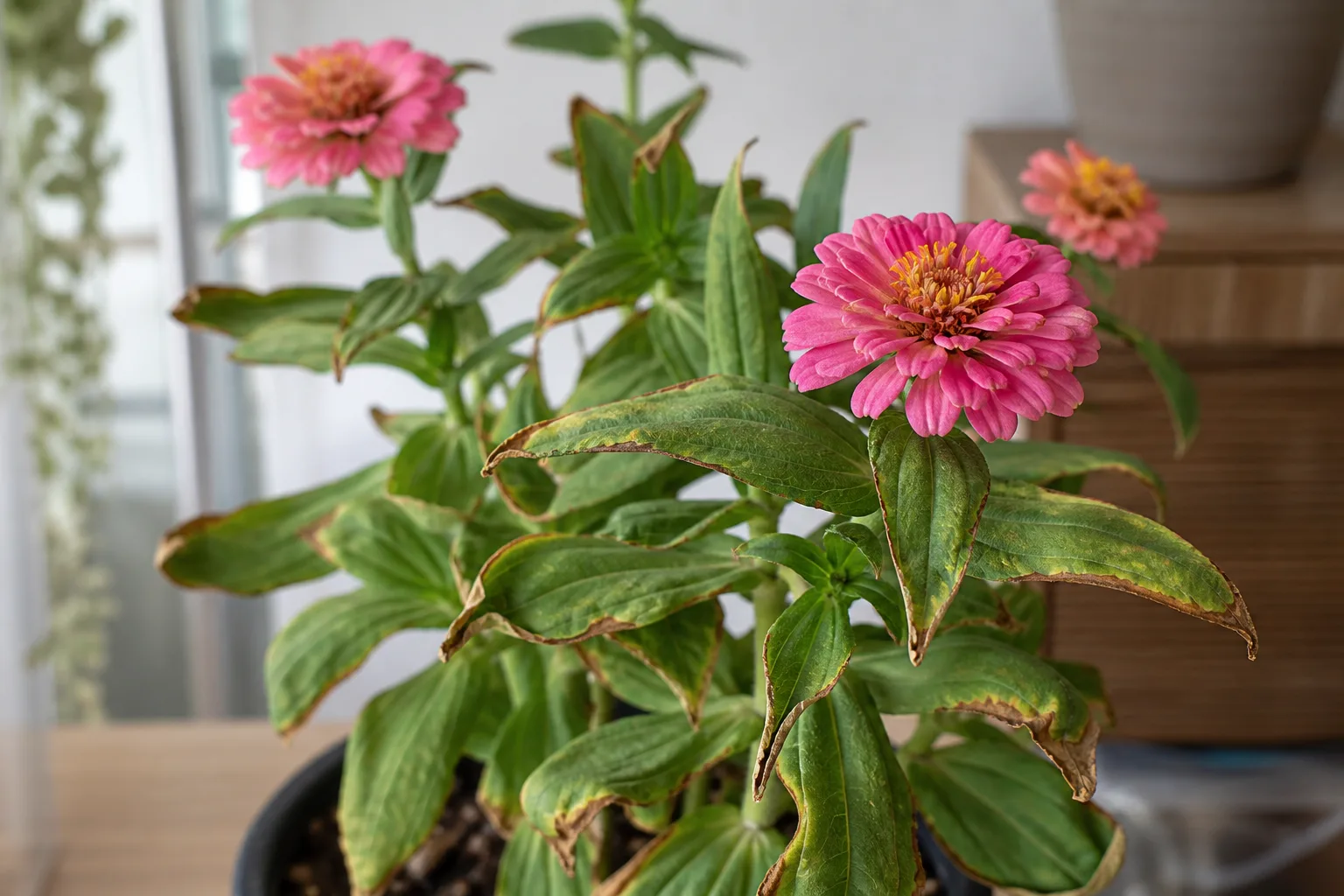
Low Humidity on Zinnia: Causes, Checks & Fixes
This guide covers low humidity on Zinnia. See also the general Low Humidity guide, watering, and light pages for this plant.
Low Humidity on Zinnia: Causes, Checks & Fixes
Quick answer
Outdoor gardeners: Low humidity is almost never what limits zinnias in a sunny bed. Zinnia elegans is a heat- and drought-tolerant summer annual built for open, dry summer air-not tropical houseplant humidity. Skip room humidifiers on outdoor pots; fix base watering and mite scouting instead.
Indoor seed starters: Dry winter air near heating vents, hot grow lights, and trays that lost their humidity dome too early can crisp leaf margins and invite spider mites on young zinnia starts. The first fix is not misting foliage-it is even moisture at the roots, gentle airflow, and removing domes at the right time after germination.
Do outdoor zinnias need higher humidity?
No. Garden zinnias in full sun for eight or more hours perform best in warm, open conditions with freely draining soil. They tolerate drier air better than sticky humid conditions that fuel powdery mildew in stagnant canopies.
If your outdoor zinnias look stressed in summer, the usual culprits are underwatering during heat waves, spider mites in dry spells, or heat scorch on container edges-not ambient humidity below some houseplant threshold. A humidifier on a patio pot will not replace base watering when the top 1 to 2 inches of soil dry.
Why low humidity matters on Zinnia
Zinnias split into two very different humidity stories depending on where they grow.
Outdoor garden beds and containers in full sun. Low ambient humidity is normal and acceptable. Zinnias transpire heavily in heat; when soil moisture does not keep pace, leaf edges crisp even though the air is merely “average” for summer. Spider mites surge on drought-stressed plants during hot, dry weather-the combination of dry air plus dry roots matters more than dry air alone.
Indoor seedling trays and pre-transplant starts. Zinnia seeds germinate in four to eight days at 70 to 75°F under a plastic cover. After emergence, seedlings need bright light and warm soil-but keeping a humidity dome on too long invites damping off, while removing it abruptly near a heating vent can desiccate tender cotyledons. Dry indoor air favors spider mites on houseplants; zinnia flats under grow lights in heated rooms face the same risk window before plants move outdoors.
Greenhouse and polytunnel edge case. Enclosed starts on heated benches can swing between humid germination domes and dry afternoon air once vents open. The fix is staged dome removal and airflow-not treating mature outdoor-bound zinnias like tropical foliage plants.
The opposite problem-high humidity trapping moisture between crowded stems-causes powdery mildew and Alternaria blight. Dry air does not produce white flour-like leaf film; humid stagnant air does.
What low humidity looks like on Zinnia
Indoor zinnia starts in dry air:
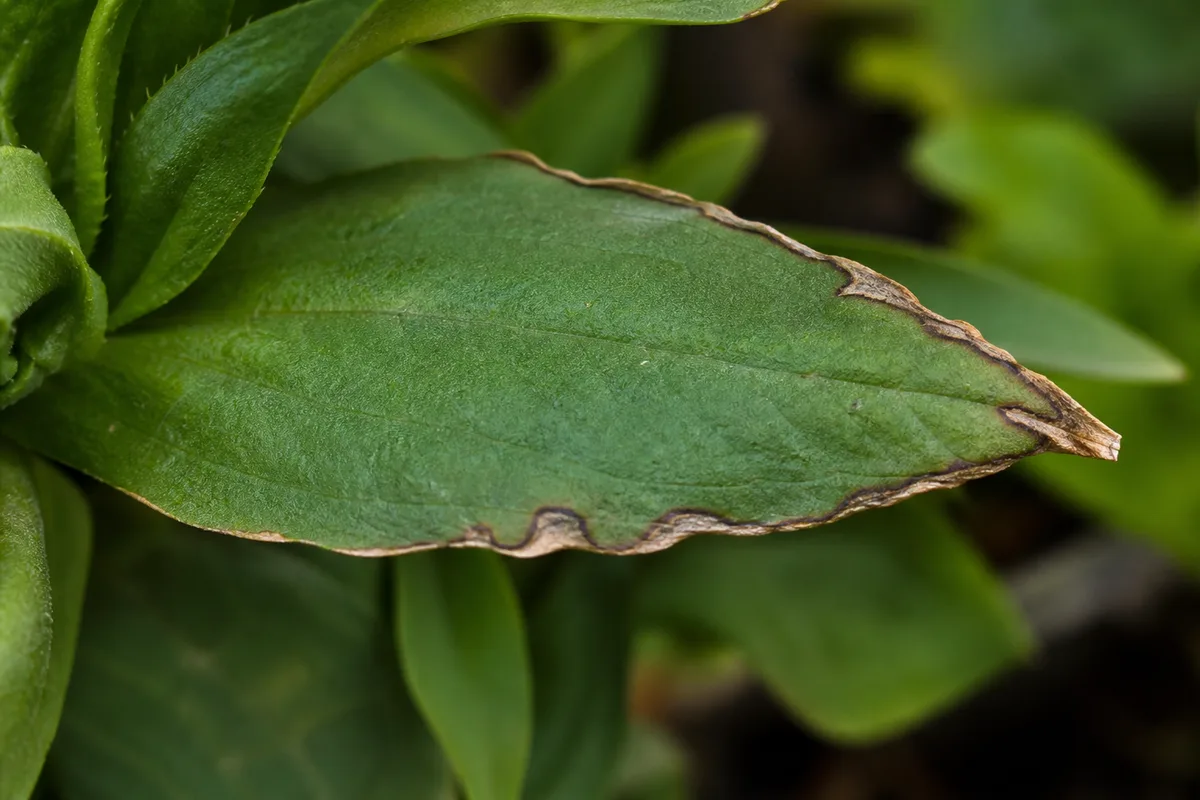
Low Humidity symptoms on Zinnia - compare with healthy tissue on the same plant.
- Crispy brown or tan margins on cotyledons or first true leaves while the rest of the blade stays green
- Dull, slightly curled leaf edges on trays near heating vents, south-facing windowsills, or heat mats without bottom moisture
- Fine yellow-white stippling on upper leaf surfaces when spider mites follow dry stress-confirm with webbing on undersides
- Fast surface drying on peat-heavy mix between waterings, with seedlings wilting midday despite morning watering
Outdoor zinnias (usually drought or mites, not humidity):
- Midday wilt that recovers after deep base watering-classic underwatering in heat, not low humidity
- Bronzed or stippled lower leaves during hot dry weeks-often spider mites when a tap test shows crawling specks
- Crisp outer leaf tips on container zinnias baking against reflective walls-overlap with heat stress on sun-exposed pots
What dry-air damage is not:
- White flour-like coating on leaf faces - powdery mildew from humid crowded beds; see high humidity on Zinnia
- Soft yellow wilting on wet soil - root problems or overwatering, not dry air
- Seedlings collapsing at the soil line - damping off from overly wet mix and stagnant air under a dome left too long
How to confirm the cause
Work through these checks in order:
- Location split - Are these outdoor garden zinnias or indoor seedling trays? Outdoor plants in full sun rarely need humidity intervention.
- Soil moisture - Stick a finger 3 cm into the mix. Dry soil with crisp tips points to underwatering before dry air.
- Mite tap test - Hold white paper under a suspect leaf cluster and tap the stem. Crawling specks confirm spider mites, not humidity alone.
- Mildew exclusion - Rub a suspicious white patch on a leaf. Powdery mildew smears as dry white film; mite stippling does not wipe off as uniform powder.
- Dome and vent context - Note whether seedlings still sit under a closed humidity dome, near a heating vent, or under hot lights after the first true leaves appeared.
- Recovery after watering - If crisp edges lift within hours of deep base watering outdoors, drought was the driver-not ambient humidity.
- Neighbor pattern - Mite stippling spreading tray to tray in dry indoor air differs from one parched container on a hot balcony.
First fix for Zinnia
Outdoor zinnias: Water deeply at the base when the top 3 cm of soil dries. Do not mist foliage or add humidifiers-wet leaves in evening invite mildew, and zinnias need dry flower surfaces more than moist air.
Indoor zinnia starts: Remove any humidity dome if seedlings have been up for more than a day, switch to bottom-watering so the surface can dry slightly between drinks, and run a gentle fan for airflow across the flat. If mites are confirmed, rinse leaf undersides with plain water in the morning and repeat every two to three days before escalating sprays.
One action first-do not stack humidifiers, foliar misting, and repotting on day one.
Step-by-step recovery
For indoor seedling trays:
- Remove the humidity dome as soon as green zinnia seedlings are visible-UMN Extension recommends letting media dry slightly between waterings after germination to avoid damping off.
- Bottom-water until moisture wicks up, then let the top 1 cm dry before the next drink.
- Add gentle airflow across the tray to discourage stagnant pockets that favor both damping off and mites.
- Rinse undersides every two to three days if a tap test confirms mites; follow the full protocol on spider mites on Zinnia if webbing spreads.
- Begin hardening off 10–14 days before transplant: start with one to two hours in shaded outdoor air, increase exposure gradually, and introduce morning sun over two weeks.
- Transplant only after frost danger passes and soil warms-outdoor zinnias in full sun and well-drained soil rarely show indoor-style dry-air crisping once established.
For outdoor garden and container zinnias:
- Deep base water when the top 3 cm is dry; empty saucers on pots so roots do not sit wet overnight.
- Morning rinse during hot dry mite-prone weeks if stippling appears-direct spray upward into leaf undersides.
- Move heat-stressed containers off blazing reflective surfaces if edges crisp despite adequate watering.
- Thin crowded rows to 20–30 cm so air moves-even moisture matters more than raising humidity.
Recovery timeline
Indoor seedlings with minor edge crisping often push clean new true leaves within five to seven days once dome timing, watering, and airflow improve. Mite control on flats typically takes one to two weeks of repeated rinses if colonies were active.
Outdoor zinnias recover from drought-linked crisping within hours of proper watering-turgid leaves return the same day. Crisp or stippled old leaves do not revert to perfect green; judge success by unstained new growth and clean buds.
Transplants may look rough for several days after hardening off if moved too fast-allow the full 10–14 day acclimation before expecting outdoor vigor.
Lookalike symptoms to rule out
| What you see | Likely cause | Key differentiator |
|---|---|---|
| Crisp tips after hot dry week, no mites on tap test | Underwatering | Dry top 3 cm; recovery within hours of deep watering |
| Yellow-white stippling + fine webbing | Spider mites | Crawling specks on white paper; hot dry weather |
| White flour-like film on leaf faces | Powdery mildew | Humid stagnant canopy; smears when rubbed |
| Midday wilt on wet heavy soil | Overwatering / root stress | Soft lower leaves; sour or soggy mix |
| Bleached patches on sun-exposed pot edges | Heat stress | Radiant heat from walls or pavement; adequate soil moisture |
| Seedlings toppling at soil line | Damping off | Mushy stem base; overly wet mix under closed dome |
Mistakes to avoid
Do not mist outdoor zinnia foliage hoping to raise humidity-powdery mildew thrives in humid stagnant air, and wet leaves overnight invite disease unrelated to your dry-air concern.
Do not run a room humidifier on outdoor patio zinnias in full sun. Fix watering and spacing instead.
Do not leave humidity domes on zinnia trays after emergence to “protect” seedlings from dry air-stagnant wet conditions cause damping off faster than dry edges cause trouble.
Do not confuse indoor crispy starts with outdoor humidity deficiency. Garden zinnias are not Calatheas; they do not need 60% ambient RH in the bed.
Do not skip the mite tap test before buying humidifiers for stippled leaves-mites and drought bronzing both appear in dry weather.
How to prevent low-humidity stress on Zinnia
Indoor starts: Use a dome only until zinnia seedlings emerge, then remove it and bottom-water. Keep trays at 70 to 75°F with bright light, run a gentle fan, and harden off for 10–14 days before planting out. Scout undersides weekly in heated seed-starting rooms.
Outdoor beds: Water at the base when the top 3 cm dries per the zinnia watering guide. Space plants for airflow. Rinse container zinnias occasionally during dusty dry spells if mites are common in your area-physical disruption beats humidifiers.
Climate-specific note: In desert regions with extremely low RH and relentless heat, container zinnias may need more frequent watering checks-not higher ambient humidity. Mulch lightly to slow surface drying.
When to worry
Escalate on indoor flats when mite webbing covers most seedlings, stippling jumps to every cell in a tray within a week, or cotyledons collapse while mix stays saturated-that is damping off, not dry air, and needs immediate tray isolation.
Outdoors, low humidity alone rarely kills zinnias in full sun. Worry when combined drought and mite damage defoliates plants late in the season with limited time to rebloom, or when crisping persists despite correct base watering-then inspect for root-bound pots or chronic heat stress.
Related Zinnia guides
- Spider mites on Zinnia - tap test, water knockdown, and dry-spell scouting
- High humidity on Zinnia - powdery mildew and stagnant canopy problems (the opposite trigger)
- Zinnia watering guide - when the top 3 cm dries, base watering, and seedling dry-down
- Underwatering on Zinnia - crisp edges from dry roots in heat
- Heat stress on Zinnia - container scorch on blazing surfaces
- Zinnia overview - full sun, spacing, and culture basics
Conclusion
Low humidity is a minor outdoor zinnia problem and a real indoor seed-starting problem. Garden plants in full sun need steady base watering and mite prevention-not humidifiers or foliar misting. Indoor trays need correct dome timing, bottom-watering, airflow, and a gradual hardening-off schedule before transplant. Confirm mites and drought before treating dry air, and keep humid-air disease separate from dry-air stress.
About this guide: Written by sai-ananth and reviewed by the LeafyPixels Review Board. Plant problem guidance was checked against university extension resources on zinnia culture, seed-starting, spider mites, and powdery mildew. Reviewed 2026-06-16.
Related Zinnia guides
- Zinnia overview
- Zinnia watering
- Zinnia light
- Brown Tips on Zinnia
- Spider Mites on Zinnia
- Yellow Leaves on Zinnia
- All Zinnia problems
Conclusion
Use this page to confirm low humidity on Zinnia by pattern and pot checks-not by treating every houseplant the same. When symptoms overlap with sibling pages, follow the linked guide for the matching cause before stacking fertilizer, repotting, or pesticide.